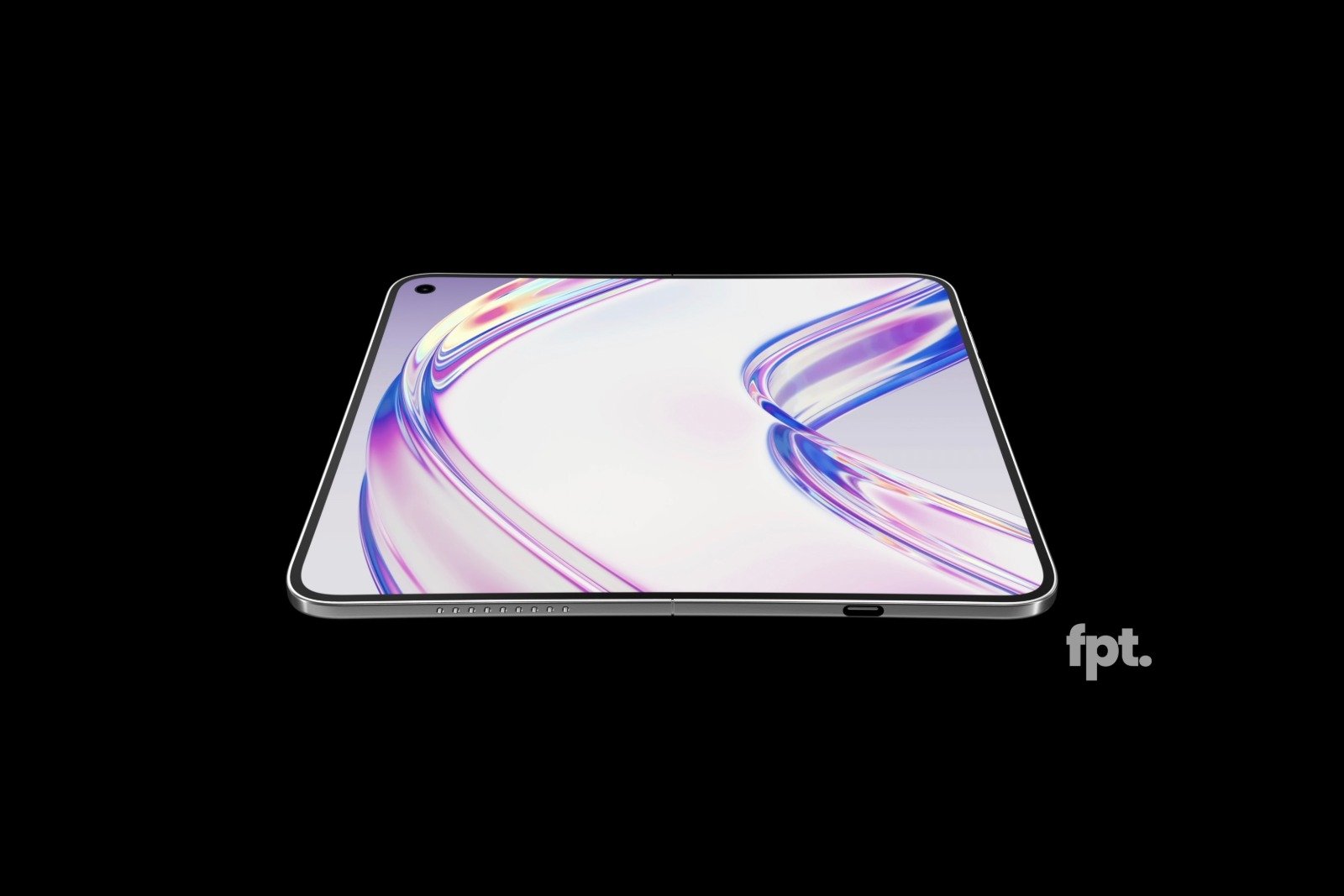
Rumors about a foldable iPhone have been circulating for years, but for a long time the topic remained in the realm of speculation. That's changing now. Reliable analysts, leakers, and supply chain sources are providing increasingly concrete details that paint a coherent overall picture: Apple is working on the iPhone Ultra, a foldable smartphone in a book-like format. The market launch is expected in the fall of 2026, possibly alongside the iPhone 18 series. We've summarized below what is currently known about the device, what it's supposed to look like, how much it will cost, and when it will be released.
Foldable smartphones have been around for several years. Samsung, Huawei, and other manufacturers have established the form factor, with varying degrees of success. Apple has so far watched from the sidelines. This isn't a sign of backwardness, but rather reflects typical Apple strategy: wait until the technology is mature enough, and then enter the market with a product that redefines the category.
That's precisely what makes the iPhone Ultra so interesting. Apple isn't entering the market as a pioneer, but as a perfectionist. Initial reports suggest that Apple intends to address some of the biggest weaknesses of foldable smartphones, including the visible crease in the display, hinge durability, and battery life. Bloomberg reporter Mark Gurman calls the device "the most significant overhaul in iPhone history" and places it on a par with milestones like the iPhone 4, iPhone 6, and iPhone X. Whether Apple will live up to this claim remains to be seen. The technical details known so far certainly sound promising.
Name: iPhone Ultra instead of iPhone Fold
Why Apple avoids the name "Fold"
Apple's foldable iPhone has long been referred to in media reports as the "iPhone Fold," but that doesn't seem to be Apple's plan. The Weibo-based leaker Digital Chat Station claims the device will be released under the name "iPhone Ultra." Shortly afterward, the equally reliable leaker Instant Digital confirmed this assessment and listed the fall lineup as iPhone 18 Pro, iPhone 18 Pro Max, and iPhone Ultra.
The decision to use the Ultra name fits into Apple's existing brand strategy. The term is already used for the Apple Watch Ultra, the M1 Ultra and M3 Ultra chips, and CarPlay Ultra. Bloomberg reporter Mark Gurman had previously reported that Apple could extend the Ultra designation to other product lines, including an OLED MacBook and future AirPods with cameras. With the iPhone Ultra, the foldable iPhone would not be positioned as a niche product, but rather as the premium flagship of the entire iPhone line.
Overall Design: book format, not clamshell
Form factor and dimensions
The iPhone Ultra is expected to operate on a book-like principle, featuring a large inner screen that unfolds like a book. This has been confirmed by Bloomberg reporter Mark Gurman, considered one of the most reliable sources for Apple internal information. This makes the device similar to the Samsung Galaxy Z Fold and fundamentally different from the compact clamshell design of the Galaxy Z Flip. According to leaker Instant Digital, Apple initially considered a flip design but abandoned these plans because the form factor would not have offered compelling new uses.
Analyst Ming-Chi Kuo has provided specific figures regarding the dimensions. When folded, the device is expected to be between 9 and 9.5 mm thick, and only 4.5 to 4.8 mm thick when unfolded. Weibo-based leaker Instant Digital recently specified that the minimum thickness when unfolded will be 4.8 mm. Leaked dimensions indicate a height of approximately 120.6 mm and a width of around 83.8 mm when closed, making the device significantly more compact but wider than current iPhones.
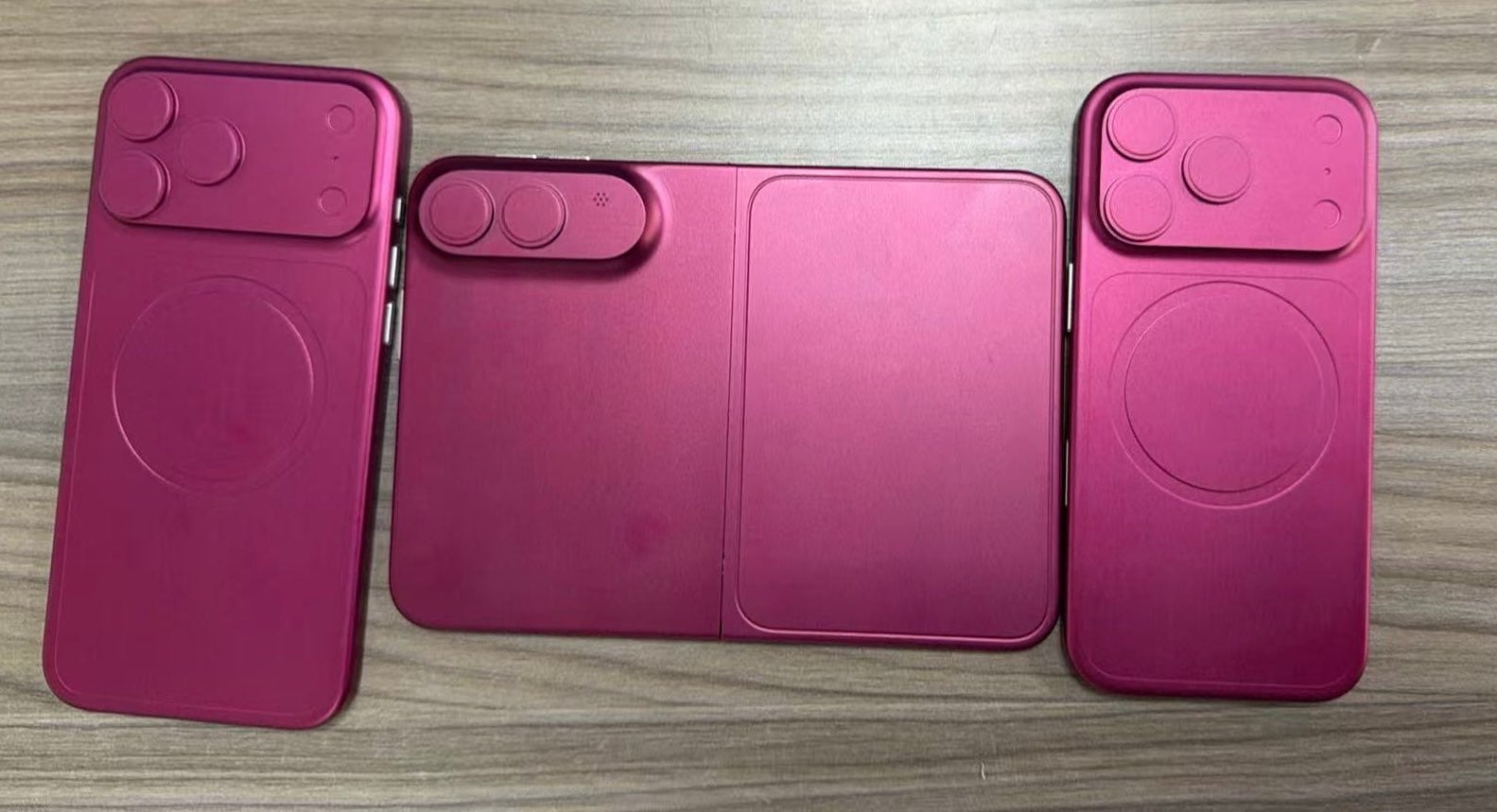
Dummy models confirm Design
In early April 2026, well-known leaker Sonny Dickson published the first photos of dummy models of the iPhone Ultra alongside the iPhone 18 Pro and iPhone 18 Pro Max. These non-functional prototypes confirmed the wider, almost square format when closed and matched previous CAD drawings. A subsequent video from another leaker showed the devices in motion, confirming the wide aspect ratio, reminiscent of a miniature tablet.
Button layout and camera cutout
The iPhone Ultra's button placement differs from current iPhone models. According to Instant Digital, the volume buttons will be located on the top right of the device, similar to the iPad mini. The power button and camera controls, however, will remain on the right side, as with other current iPhones. A camera cutout, similar to the iPhone Air, is also expected on the left side of the back of the device.
Display: Two screens for two usage modes
Outdoor and indoor screen
The iPhone Ultra will be equipped with two displays that function depending on the usage situation. When folded, an outer screen is available, similar to a classic iPhone display, designed to easily handle everyday tasks. When unfolded, a large inner screen, similar to an iPad, opens.
There are slightly differing reports regarding the exact display sizes from various sources. A report from The Information cites 5.3 inches for the front screen and 7.7 inches for the inner screen. Other sources indicate a 5.5-inch outer screen and a 7.8-inch inner screen. It is currently impossible to definitively determine which figures are correct. However, the sources agree that the unfolded display will be roughly the size of an iPad mini.
According to Mark Gurman, the unfolded iPhone Ultra will offer an iPad-like user interface, including multitasking with two apps side-by-side. iOS 27 is said to be specifically optimized for this form factor, with sidebars on the left edge of the screen, similar to those found in iPad apps. However, it will not be a full-fledged iPadOS with a windowing system, but rather a modified version of the iPhone.
Resolution and screen protection
Rumors suggest the inner display will be roughly the size of an A6 sheet of paper and have a resolution of 2,713 × 1,920 pixels. The outer display is expected to have a resolution of 2,088 × 1,422 pixels. Apple is said to be using an improved film technology for the display protection: a transparent polyimide film will be applied as a protective layer to ultra-thin glass, making the display more durable than previous foldable devices.
According to leaker Digital Chat Station, Apple is using a dual-layer structure made of ultra-thin glass (UTG), in which the display is embedded between two layers of glass and thus does not come into direct contact with the hinge mechanism. This arrangement is intended to distribute the mechanical stress across multiple layers, improving both durability and minimizing the visible crease line.
Visibility of the crease: Apple's technical trick
Significantly reduced, but not completely eliminated
The visible crease in the middle of the inner screen is one of the most persistent problems with foldable smartphones. Apple has dedicated considerable effort to addressing this issue. Analyst Ming-Chi Kuo initially reported that the iPhone Ultra would offer a virtually "crease-free" inner display. Mark Gurman of Bloomberg later qualified this statement, saying that Apple was using technology that significantly reduces the crease without eliminating it entirely.
More concrete figures come from production sources: The folding depth is to be controlled to less than 0.15 mm, and the folding angle to less than 2.5 degrees. This would be a significant improvement over the competition. According to Ming-Chi Kuo, the solution consists of two components: First, a metal plate is used to distribute and control the stress generated during bending. Second, Apple uses liquid metal in the hinge, which is manufactured using a die-casting process and is intended to improve durability as well as minimize screen creases.
Gurman summarizes it as follows: Apple engineers believe they have solved the problems with screen quality and overall durability, two long-standing weaknesses of foldable devices.
Housing and hinge: Durable materials
Titanium, stainless steel or aluminum?
According to Ming-Chi Kuo, the casing will be made of titanium, while the hinge will consist of a combination of titanium and stainless steel. The frame itself will be made of a titanium alloy to prevent deformation, a solution Apple has already used in the ultra-thin iPhone Air.
Analyst Jeff Pu has a slightly different view, assuming that Apple will combine aluminum and titanium, while Kuo favors a mix of stainless steel and titanium. The exact material combination that will ultimately be used is therefore not yet definitively settled among analysts.
An interesting recent assessment of the hinge by Kuo is that it is expected to have an average selling price of around 70 to 80 US dollars in mass production, significantly below the original market expectations of 100 to 120 US dollars or more. Kuo attributes this cost reduction to the optimization of the assembly design and Foxconn's influence on production scaling.
Cameras: Four lenses, thoughtfully placed
Rear cameras and interior camera
The iPhone Ultra is expected to have a total of four cameras, as confirmed by Bloomberg's Mark Gurman. On the back, there will be two lenses, each with a 48-megapixel resolution, according to Weibo leaker Digital Chat Station. Dummy models from Sonny Dickson confirm the dual-camera setup on the back, featuring a pill-shaped camera module. Additionally, there will be a front-facing camera on the outer screen and an under-screen camera (USC) beneath the inner screen.
Front camera placement
The front-facing camera of the outer screen is expected to be a punch-hole camera. According to a report by The Information, it will be located in the upper left corner of the outer screen. This arrangement allows for taking photos and making calls in both states of the device without a camera interrupting the valuable inner display.
MagSafe: May not be on board
Dummy models do not show a MagSafe ring
A striking observation in the leaked dummy models: The back of the iPhone Ultra lacks a MagSafe ring, while it's clearly visible on the dummy units of the iPhone 18 Pro and Pro Max. If the final device does indeed forgo MagSafe, that would be a surprising concession for a device in this price range. Even the less expensive iPhone 17e supports MagSafe. However, it's possible the feature will be added to the final product. Dummy models don't always reveal all the details of the finished device.
Authentication: Touch ID instead of Face ID
Side-mounted fingerprint sensor
One of the most surprising design decisions concerns the unlocking method. Both Ming-Chi Kuo and Mark Gurman have confirmed that the iPhone Ultra will forgo Face ID. Instead, it will use a side-mounted Touch ID button, a method Apple already employs in the iPad, iPad Air, and iPad mini. The reason is purely practical: space is extremely limited in the compact interior of a foldable device, and the sensors required for Face ID would take up too much of it.
Mobile communications: Apple's second-generation modem
C2 modem without physical SIM
According to Mark Gurman, the iPhone Ultra uses Apple's second-generation C2 modem for its cellular connection. Apple first used the C1 modem in the iPhone 16e, followed by the C1X in the iPhone Air. The C2 is said to be faster overall and will be the first iPhone to support mmWave in the US. Gurman also stated that the device will not have a physical SIM card slot; it will rely exclusively on eSIM.
Battery life: A record for an iPhone
High-density cells and slim components
The iPhone Ultra is expected to have the largest battery ever installed in an iPhone. Apple is achieving this not only through high-density battery cells but also by slimming down internal components. According to a Korean blog that has leaked detailed information about unreleased products in the past, the display driver, for example, will be made more compact to create more space for battery cells. Combined with the energy-efficient C2 modem and other efficiency improvements, this promises solid battery life on paper.
iPhone Ultra: Storage options and RAM
Three configurations starting from 256 GB
According to leaker Instant Digital, the iPhone Ultra will be offered in three storage variants: 256 GB, 512 GB, and 1 TB. A 2 TB option, like the one available for the iPhone 17 Pro Max, will not be offered initially. The Korean tech website The Bell reports that the RAM will be 12 GB, the same as the iPhone Air and the iPhone 17 Pro models.
Color options: For now, only black and white
Limited selection at launch
According to Mark Gurman, Apple is currently testing only black and white as color options with suppliers. However, Gurman explicitly points out that these plans could change before launch. Those hoping for vibrant colors should therefore wait. Whether Apple will offer further options at launch is currently unknown.
Price: The most expensive iPhone ever
Price estimates range between $1,999 and $2,900
The iPhone Ultra won't be a cheap device. According to Instant Digital, the three storage variants will cost 15,999, 17,999, and 19,999 yuan in China. Observers have converted these figures, taking into account Apple's usual regional price adjustments, to the following US prices: approximately $1,999 for 256 GB, $2,199 for 512 GB, and $2,399 for 1 TB. Other conversions arrive at higher figures, with starting prices as high as $2,320.
Mark Gurman reports that the device will exceed the $2,000 mark. This would make the iPhone Ultra by far the most expensive iPhone Apple has ever released. For comparison, the current most expensive model, the iPhone 17 Pro Max with 2TB, costs $1,999.
Kuo's recent assessment of the hinge is interesting: its production costs, at $70 to $80, are significantly below the original market expectations of over $100. Whether Apple will pass these savings on to consumers in the form of a lower price or improve its own profit margins is currently unclear.
Market launch: Autumn 2026, expected in September
Production status and planned launch
Production preparations for the iPhone Ultra have made significant progress in recent weeks. According to leaker Instant Digital, Foxconn has already begun test production. Weibo leaker Fixed Focus Digital confirms that the production lines are in their final stages and the device will most likely be unveiled alongside the iPhone 18 series. Even in the event of a delay, it would be no more than a month.
Mark Gurman supports this assessment, reporting that the iPhone Ultra is still slated for a September release. The device is expected to be available "around the same time" or "shortly after" the iPhone 18 Pro models. There is a precedent for a staggered launch: in 2017, the iPhone X was unveiled in September but didn't hit the market until November.
Apple has also increased its display inventory by 20 percent and, according to Fixed Focus Digital, has prepared an initial stock of 11 million units. However, reports from Nikkei Asia in April pointed to production problems with the hinge and display, which temporarily raised concerns about a delay to 2027. Recent reports, however, indicate that these problems have been largely resolved.
The iPhone Ultra: Apple's biggest gamble in years
On paper, the iPhone Ultra is Apple's most ambitious device in years. It combines two displays, four cameras, the largest iPhone battery to date, Apple's latest modem, and a host of technical innovations designed to address the classic weaknesses of foldable smartphones. For the first time, an iPhone offers true multitasking with two apps running side-by-side. The price will be high, and so will the expectations.
Whether Apple achieves its self-imposed goals and redefines the foldable smartphone market will likely become clear in the fall of 2026. Until then, the iPhone Ultra remains the most talked-about device in the industry, and every new detail generates buzz. Rightly so. The best products for you: Our Amazon storefront offers a wide selection of accessories, including those compatible with HomeKit. (Image: FrontPageTech x Asherdipps)
- Apfelpatient Weekly #1
- Password Manager Comparison: Apple, 1Password and Bitwarden
- iMac M5: All the Rumors at a glance
- Mac mini M5: All the Rumors at a glance
- Mac Studio M5: All the Rumors at a glance
- The new Apple TV 4K awaits Siri: All the Rumors about the Update
- New AirPods Pro: Camera, Gestures and H3 Chip planned
- Apple in April 2026: These Products and Updates are coming soon
- Siri in iOS 27: Everything we know so far about the AI reboot
- Apple turns 50: Five decades that changed the World
- Apple TV in April 2026: All the highlights at a glance
- AirPods Buying Guide: Pro 3 vs. AirPods 4 vs. Max 2
- Apple Music vs. Spotify: Which streaming Service is worth it?
- Studio Display vs. Studio Display XDR: Is the extra cost worth it?
- Mac Buying Guide M4: Mac mini vs. Mac Studio vs. iMac
- MacBook Air vs. Neo: Is the extra cost worth it?
- MacBook Pro M5: 14 vs. 16 inch – Which is worth it?
- MacBook Air M5: 13 vs. 15 inch – Which size is worth it?
- iPhone Buying Guide: iPhone 17 vs. Air vs. 17e
- iPad Buying Guide 2026: Which iPad is right for you?
- Apple Watch Buying Guide: Ultra 3 vs. Series 11 vs. SE 3
- MacBook Air vs. MacBook Pro 2026: Which is worth it?
- Apple AI Pin: All the info on the new wearable
- iPhone 17 vs. iPhone 17 Pro: Which model is really worth it?