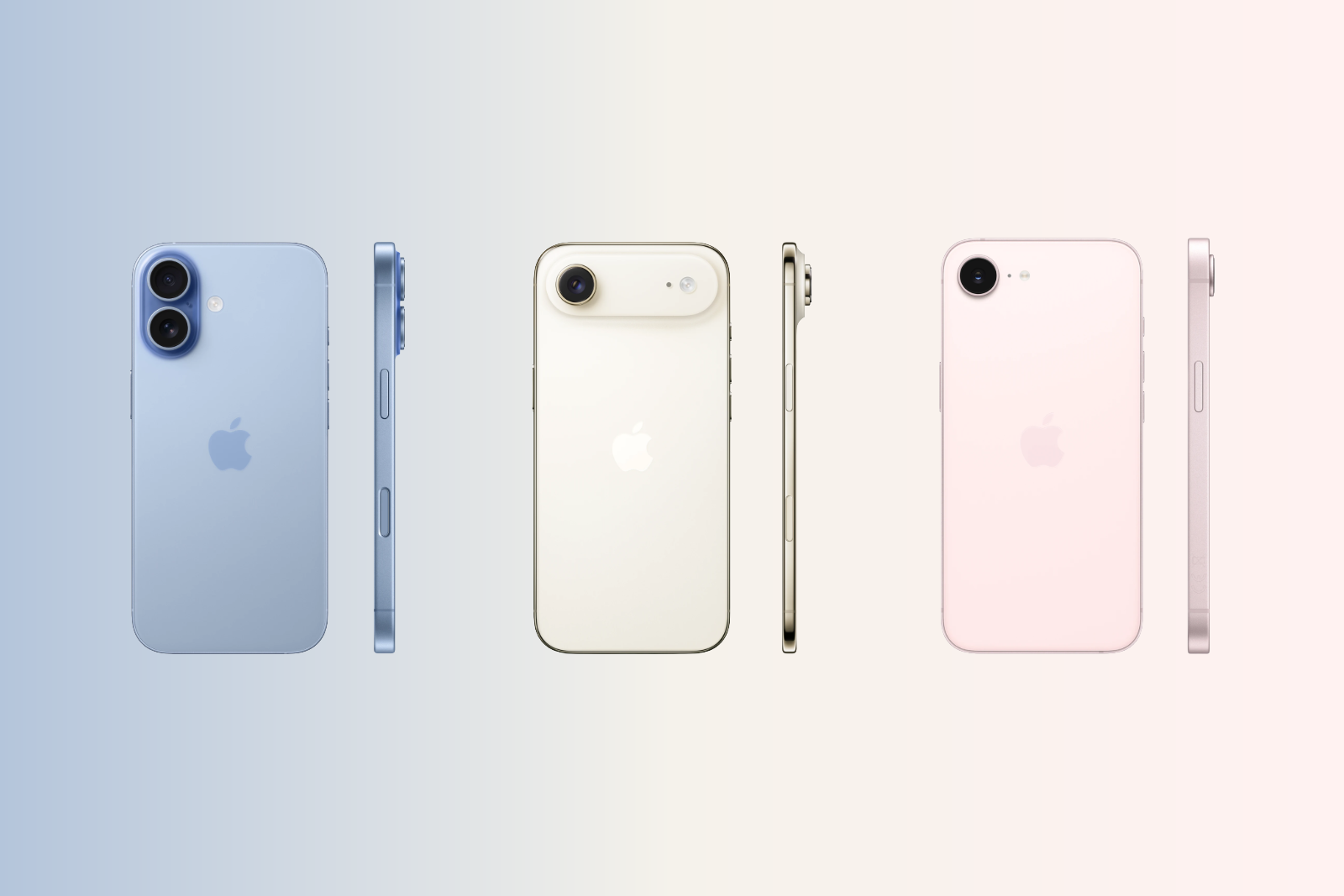
Apple offers three iPhones – the iPhone 17, the iPhone Air, and the iPhone 17e – to suit different needs. All three feature the A19 chip, Face ID, Apple Intelligence, and USB-C. The differences lie in the camera, display, design, connectivity, and price. This buying guide shows which model is right for whom – excluding the Pro models, which are covered in a separate comparison.
The 2025/2026 iPhone lineup is broader than ever before. With the iPhone Air, Apple introduced its first model defined by its ultra-thin design – thinner than any iPhone to date. At the same time, the iPhone 17, with its 120Hz display and dual-camera system, represents a significant leap forward, while the iPhone 17e, the most affordable model with Apple Intelligence, provides an entry point into the current generation. Understanding the actual differences can save you a lot of money – or allow you to invest specifically in the features that truly matter in everyday use.
All three models are currently available in the Apple Store Germany:
- iPhone 17e: from €699
- iPhone 17: from €949
- iPhone Air: from €1,199
There is a €500 price difference between the cheapest and most expensive models. The Pro models (iPhone 17 Pro and iPhone 17 Pro Max) are not covered in this comparison – they are covered in a separate article.
Design and workmanship
iPhone 17
- Aluminum frame with colored glass backing
- Ceramic Shield 2 on the front
- 149.6 x 71.5 x 7.95 mm
- 177 g
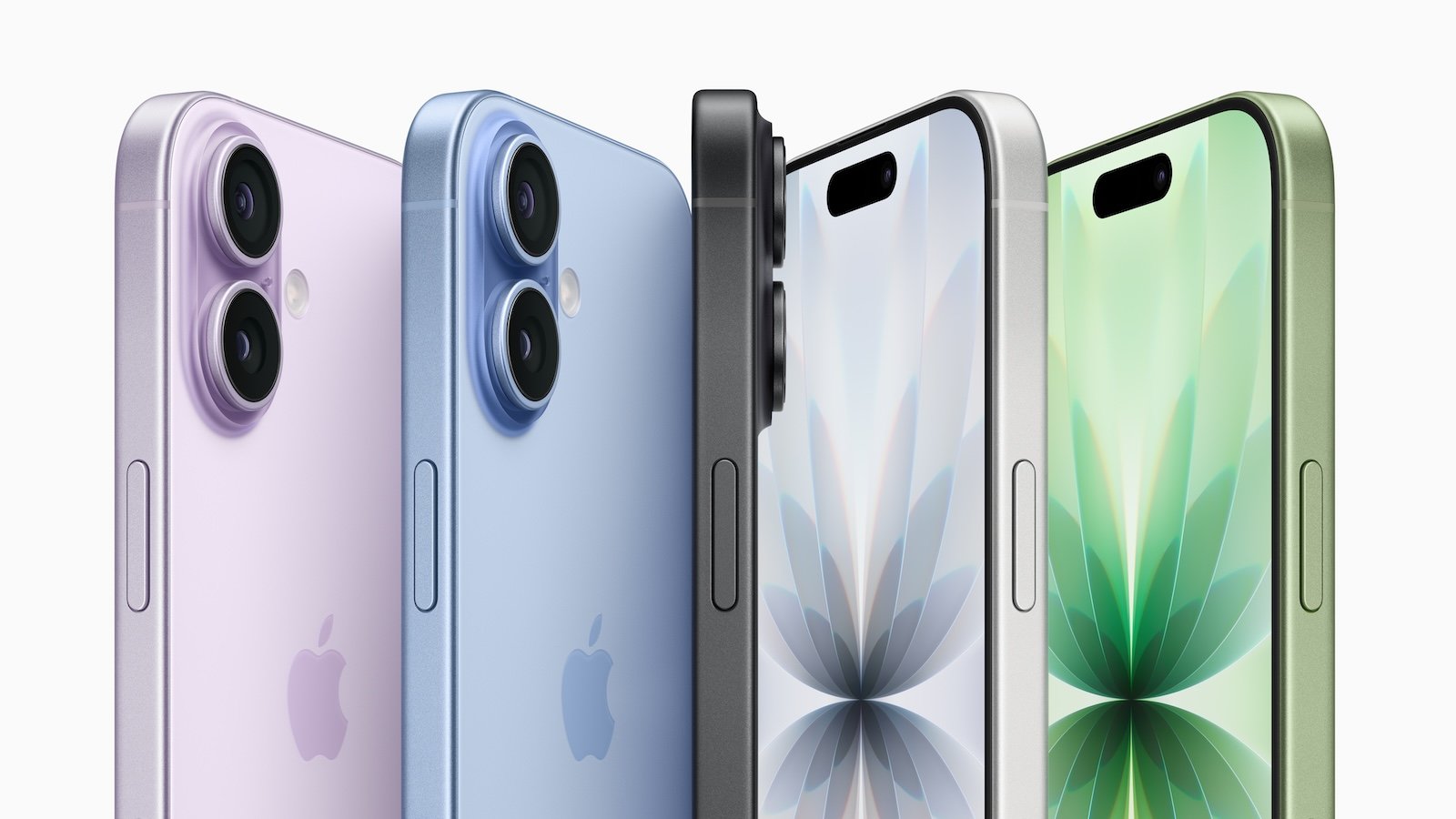
- Colors: Black, White, Mist Blue, Sage, Lavender (5 colors)
- IP68 (up to 6 meters, 30 minutes)
iPhone Air
- Titanium case with Ceramic Shield 2 on the front and Ceramic Shield on the back
- 156.2 x 74.7 x 5.64 mm – the thinnest iPhone ever
- 165 g – the lightest of the three models
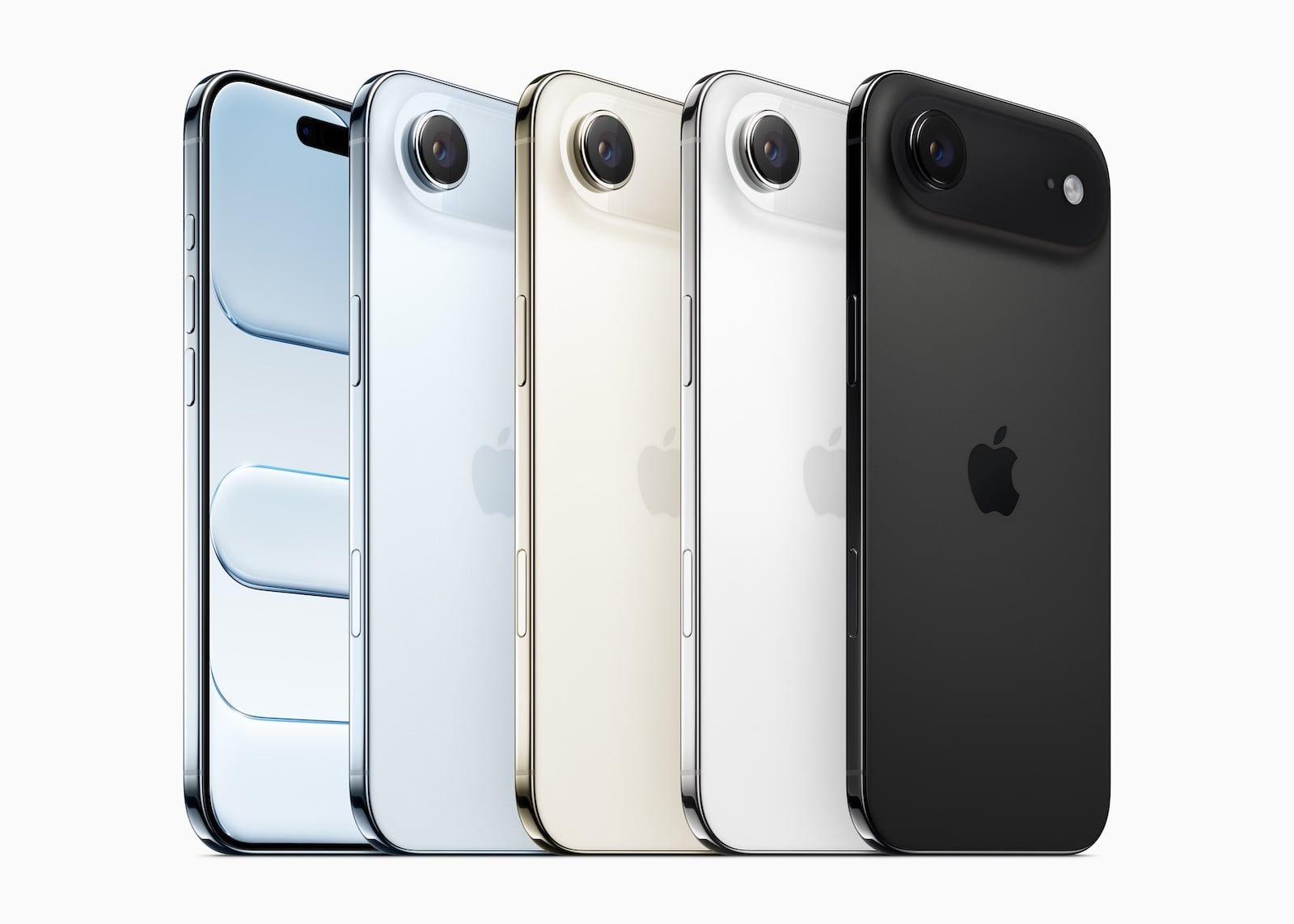
- Colors: Space Black, Cloud White, Light Gold, Sky Blue (4 colors)
- IP68 (up to 6 meters, 30 minutes)
iPhone 17e
- Aluminum frame with glass back
- Ceramic Shield 2 on the front
- 146.7 x 71.5 x 7.80 mm – the most compact model
- 170 g
- Colors: Black, White, Light Pink (3 colors)
- IP68 (up to 6 meters, 30 minutes)
The iPhone Air stands out with its titanium casing and a thickness of just 5.64 mm. It's about 2 mm thinner than the iPhone 17 and iPhone 17e. This has consequences: To achieve this extreme slimness, Apple made compromises with the camera and speakers.
The iPhone 17 is the largest of the three models and offers the widest selection with five colors. The iPhone 17e is the most compact and lightest aluminum iPhone in the lineup.
Design conclusion: If you're looking for maximum thinness and premium materials (titanium), go for the Air. If you want a solid all-around iPhone with the widest range of colors, choose the iPhone 17. The 17e is the most compact and affordable option.
Display
| Feature | iPhone 17 | iPhone Air | iPhone 17e |
|---|---|---|---|
| Display size | 6.3 inches | 6.5 inches | 6.1 inches |
| Technology | OLED, Super Retina XDR | OLED, Super Retina XDR | OLED, Super Retina XDR |
| Resolution | 2622 x 1206 (460 ppi) | 2736 x 1260 (460 ppi) | 2,532 x 1,170 (460 ppi) |
| ProMotion (120 Hz) | Yes | Yes | No (60 Hz) |
| Always-on Display | Yes | Yes | No |
| Dynamic Island | Yes | Yes | No |
| Brightness (typical) | 1,000 nits | 1,000 nits | 800 nits |
| HDR peak brightness | 1,600 nits | 1,600 nits | 1,200 nits |
| Outdoor peak brightness | 3,000 nits | 3,000 nits | n/a |
| Contrast ratio | 2.000.000:1 | 2.000.000:1 | 2.000.000:1 |
The iPhone Air has the largest display of the three models at 6.5 inches. All three use OLED technology with P3 Wide Color and True Tone. The key difference lies in the refresh rate: the iPhone 17 and Air offer 120Hz ProMotion for smoother scrolling and more responsive operation. The iPhone 17e remains at 60Hz.
The iPhone 17e also does without the always-on display and Dynamic Island. Instead, it has the classic notch. With a typical brightness of 800 nits and 1,200 nits for HDR, it falls significantly short of the other two models.
Display Conclusion: The iPhone 17 and Air offer an equivalent premium display with 120 Hz and always-on display. The 17e has a good OLED display, but lacks ProMotion, always-on display, and Dynamic Island – this is the biggest noticeable difference in everyday use.
Chip and Performance
| Feature | iPhone 17 | iPhone Air | iPhone 17e |
|---|---|---|---|
| Chip | A19 | A19 Pro | A19 |
| CPU | 6-Core (2P + 4E) | 6-Core (2P + 4E) | 6-Core (2P + 4E) |
| GPU | 5-Core | 5-Core | 4-Core |
| Neural Engine | 16-Core | 16-Core | 16-Core |
| Raytracing | Yes | Yes | Yes |
The iPhone Air is the only one of the three models to use the A19 Pro chip . However, in the iPhone Air it comes with a 5-core GPU, while the A19 Pro in the iPhone 17 Pro has a 6-core GPU. In everyday use, the difference is barely noticeable with identical CPU configurations.
The iPhone 17e has a 4-core GPU instead of 5 cores. This can make a difference in demanding games or graphics tasks, but for typical everyday use, the performance is more than sufficient.
All three models fully support Apple Intelligence.
Performance summary: In everyday use, all three models are equally fast. The A19 Pro in the Air theoretically offers more headroom, while the GPU difference in the 17e is only noticeable during intensive gaming.
Camera
This is where the biggest differences between the three models lie.
iPhone 17 – Dual Camera
- 48 MP Fusion main camera (26 mm, ƒ/1.6, OIS with sensor shift, 100 % Focus Pixels)
- 48 MP Fusion Ultra Wide Angle (13 mm, ƒ/2.2, 120° field of view, Hybrid Focus Pixel)
- 2x optical zoom, 4x zoom range, up to 10x digital zoom
- 48 MP macro photos
- Spatial photos and videos
- Cinema mode up to 4K Dolby Vision
- Action mode
- Dual recording (front and rear camera simultaneously)
- 18 MP Center Stage Front Camera (ƒ/1.9, Autofocus)
iPhone Air – Single camera
- 48 MP Fusion main camera (26 mm, ƒ/1.6, OIS with sensor shift, 100 % Focus Pixels)
- No ultra-wide-angle camera
- No macro photos
- No spatial photos and videos
- Up to 10x digital zoom
- Cinema mode not available
- Action mode up to 2.8K Dolby Vision
- Double recording
- 18 MP Center Stage Front Camera (ƒ/1.9, Autofocus)
iPhone 17e – Single camera
- 48 MP Fusion main camera (26 mm, ƒ/1.6, OIS, Hybrid Focus Pixel)
- No ultra-wide-angle camera
- No macro photos
- No spatial photos and videos
- Up to 10x digital zoom
- No cinema mode, no action mode
- No duplicate recording
- 12 MP TrueDepth front camera (ƒ/1.9, autofocus) – no center stage
The iPhone 17 is the only one of the three models with two rear cameras. The 48MP ultra-wide camera enables wide-angle shots, macro photos, and 3D photos – features completely absent in the Air and the 17e.
Despite having only one camera, the iPhone Air features the same high-quality 48MP Fusion sensor as the iPhone 17. Image quality for regular photos and portraits is comparable. However, those needing wide-angle, macro, or 3D photography will have to opt for the iPhone 17.
The iPhone 17e also has only one camera, but with Hybrid Focus Pixels instead of the full 100 % Focus Pixels. The front camera is smaller at 12 MP and does not offer a center stage.
Camera Conclusion: The iPhone 17 offers the most versatile camera system of the three models. The Air takes comparable photos with its main camera, but lacks ultra-wide and macro lenses. The 17e delivers solid photos, but has the weakest front and rear cameras.
Battery and Charging
| Feature | iPhone 17 | iPhone Air | iPhone 17e |
|---|---|---|---|
| Video playback | Up to 30 hours | Up to 27 hours | Up to 26 hours |
| Streaming | Up to 27 hours | Up to 22 hours | Up to 21 hours |
| Fast Charging | 50 % in 20 min (40W) | 50 % in 30 min (20W) | 50 % in 30 min (20W) |
| MagSafe | Up to 25 W | Up to 20 W | Up to 15 W |
| Qi2 | Up to 25 W | Up to 20 W | Up to 15 W |
The iPhone 17 has the best battery life and fastest charging of the three models. With a 40W power adapter, it reaches 50 percent in just 20 minutes – the Air and the 17e take 30 minutes with a 20W power adapter.
There are clear differences in wireless charging: The iPhone 17 supports MagSafe with up to 25W, the Air with 20W and the 17e with only 15W.
Battery verdict: The iPhone 17 leads in both battery life and charging speed. The Air's thinness comes at the cost of shorter battery life and slower charging. The 17e offers solid battery life throughout the day, but has the slowest wireless charging.
Connectivity
| Feature | iPhone 17 | iPhone Air | iPhone 17e |
|---|---|---|---|
| Wi-Fi | WLAN 7 (N1 Chip) | WLAN 7 (N1 Chip) | WLAN 6 |
| Bluetooth | 6 | 6 | 5.3 |
| 5G | Yes | Yes (Apple C1X) | Yes (Apple C1X) |
| USB | USB 2.0 | USB 2.0 | USB 2.0 |
| UWB | 2nd Generation | 2nd Generation | No |
| Thread | Yes | Yes | No |
| SIM | Nano-SIM + eSIM | eSIM only | Nano-SIM + eSIM |
| DisplayPort over USB-C | Yes | No | No |
| Camera control | Yes | Yes | No |
The iPhone Air and iPhone 17e use Apple's own C1X cellular modem for 5G – the iPhone 17 uses an external modem. All three support USB 2.0 via USB-C.
One important difference: The iPhone Air can only be used with eSIM and does not have a physical SIM card slot. Anyone needing a nano-SIM will have to opt for the iPhone 17 or 17e.
The iPhone 17 is the only one of the three models to offer DisplayPort output via USB-C, enabling a wired connection to external monitors.
The iPhone 17e does without the Ultra Wideband chip, Thread support, and the physical camera control button.
Connectivity summary: The iPhone 17 and Air are on par with Wi-Fi 7, Bluetooth 6, and UWB. The 17e lags behind with Wi-Fi 6, Bluetooth 5.3, and the lack of UWB. The Air is the only model without a SIM card slot.
Audio
- iPhone 17: Integrated stereo speaker
- iPhone Air: Integrated speaker (mono)
- iPhone 17e: Integrated stereo speaker
The iPhone Air is the only model with just a mono speaker – a compromise necessitated by its extremely thin design. When playing music, videos, or podcasts without headphones, the sound is noticeably less spatial than with the stereo speakers of the iPhone 17 and 17e.
Which model is right for whom?
iPhone 17e (from €699) – the right choice if:
- Looking for a modern iPhone with Apple Intelligence at the best price?
- The camera is sufficient for everyday photos and social media.
- A compact, lightweight device is preferred.
- It's possible to do without 120 Hz, always-on display and Dynamic Island.
- The budget should remain below 800 euros.

iPhone 17 (from €949) – the right choice if:
- The most versatile camera system of the three models is desired (dual camera with ultra-wide-angle and macro).
- A 120Hz display with always-on and Dynamic Island is important.
- The best battery life and fastest charging (25W MagSafe, 40W wired) are needed.
- Stereo speakers and DisplayPort output are appreciated.
- A physical SIM card is required.
iPhone Air (from €1,199) – the right choice if:
- The thinnest and lightest iPhone is desired (5.64 mm, 165 g)
- A premium titanium case with ceramic shielding on the front and back is highly valued.
- The largest display (6.5 inches) with 120 Hz is preferred.
- The ultra-wide-angle camera, stereo speakers and SIM card slot can be omitted.
- Design and comfort are more important than maximum functionality.
All differences at a glance
| Feature | iPhone 17e | iPhone 17 | iPhone Air |
|---|---|---|---|
| Price from | 699 € | 949 € | 1.199 € |
| Display | 6.1″ OLED, 60 Hz | 6.3″ OLED, 120 Hz | 6.5″ OLED, 120 Hz |
| Always-on | No | Yes | Yes |
| Dynamic Island | No | Yes | Yes |
| Brightness (typical) | 800 nits | 1,000 nits | 1,000 nits |
| Chip | A19 (4-Core GPU) | A19 (5-Core GPU) | A19 Pro (5-Core GPU) |
| rear camera | 48 MP (Single) | 48 MP + 48 MP (Dual) | 48 MP (Single) |
| Ultra wide angle | No | Yes (48 MP) | No |
| Macro photos | No | Yes | No |
| Front camera | 12 MP | 18 MP Center Stage | 18 MP Center Stage |
| Camera control | No | Yes | Yes |
| Battery (Video) | 26 hours. | 30 hours | 27 hours. |
| Fast Charging | 50 % in 30 min (20W) | 50 % in 20 min (40W) | 50 % in 30 min (20W) |
| MagSafe | 15 W | 25 W | 20 W |
| Housing | Aluminum + Glass | Aluminum + Glass | Titanium + Ceramic Shield |
| Thickness | 7.80 mm | 7.95 mm | 5.64 mm |
| Weight | 170 g | 177 g | 165 g |
| Wi-Fi | WLAN 6 | WLAN 7 | WLAN 7 |
| Bluetooth | 5.3 | 6 | 6 |
| SIM | Nano-SIM + eSIM | Nano-SIM + eSIM | eSIM only |
| Speakers | Stereo | Stereo | Mono |
| Memory | 256 / 512 GB | 256 / 512 GB | 256 / 512 GB / 1 TB |
| Colors | 3 | 5 | 4 |
| Apple Intelligence | Yes | Yes | Yes |
Which iPhone is really worth it?
The iPhone 17 is the most well-rounded of the three. It offers the most versatile camera system with a dual-camera setup and ultra-wide lens, the best battery life, the fastest charging, stereo speakers, and a top-notch 120Hz display—all at a price that's €250 less than the Air. For most users, it's the smartest choice.
The iPhone Air is a design statement. Those who want the thinnest, lightest iPhone with a titanium casing and the largest display get exactly that – but must accept compromises in camera (no ultra-wide lens), audio (mono speaker), battery life, and charging speed. It's aimed at those who value comfort and aesthetics more than maximum functionality.
The iPhone 17e is the smartest entry point into the current iPhone generation. For €699, you get Apple Intelligence, a solid 48MP camera, Face ID, and all-day battery life. If you can do without 120Hz, Always-on Display, Dynamic Island, and the second camera, you save €250 compared to the iPhone 17—and still get a fully-fledged, modern iPhone. The best products for you: Our Amazon storefront offers a wide selection of accessories, including those for HomeKit. (Image: Apple x Apfelpatient)
- iPad Buying Guide 2026: Which iPad is right for you?
- Apple Watch Buying Guide: Ultra 3 vs. Series 11 vs. SE 3
- MacBook Air vs. MacBook Pro 2026: Which is worth it?
- Apple AI Pin: All the info on the new wearable
- iPhone 17 vs. iPhone 17 Pro: Which model is really worth it?
- Apple is reportedly preparing six new products
- iPhone Fold: All rumors and facts at a glance
- Apple radically restructures its iPhone lineup: All the details
- AirPods Max 2: All audio improvements at a glance
- AirPods Max 2: New feature for the Digital Crown
- AirPods Max 2 overview: What's stayed the same
- AirPods Max 2 vs. AirPods Max 1: All the differences in detail
- iOS 27: These are the new features Apple is planning for the iPhone
- M6 MacBook Pro: Apple plans major changes
- Apple 2026: These new devices are still expected
- MacBook Neo changes the role of the iPad as a laptop replacement
- Apple TV 2026: Why Apple prefers to wait rather than rush into delivery
- MacBook Neo: Why this Apple notebook is so important
- MacBook Neo vs. MacBook Air: The most important differences
- Studio Display vs. Studio Display XDR: All the differences
- M5 MacBook Air vs. M4 MacBook Air: The differences
- iPhone 17e vs. iPhone 16: Which one is worth it?
- iPhone 17e vs. iPhone 16e: All the differences
- M4 iPad Air vs. M3 iPad Air: All the differences
Frequently Asked Questions: iPhone Buying Guide
The biggest differences lie in the camera and display. The iPhone 17 is the only one of the three models with a dual camera, including an ultra-wide and macro lens. The iPhone 17 and Air have a 120Hz display with always-on display and Dynamic Island, while the 17e has a 60Hz display without these features. The Air stands out with its extremely thin titanium casing (5.64 mm).
No. The iPhone Air only has a single 48MP Fusion main camera. Apple omitted the ultra-wide camera to achieve its extremely thin design. Macro photos and 3D shots are also not possible. Those who need these features will have to opt for the iPhone 17.
Yes. All three models – iPhone 17, Air, and 17e – fully support Apple Intelligence. This includes the writing tools, Image Playground, Genmoji, smart summaries, and the improved Siri.
The iPhone Air costs €250 more than the iPhone 17, primarily due to its titanium casing, A19 Pro chip, and larger 6.5-inch display. However, the iPhone 17 has the edge in terms of features – with a dual camera, better battery, faster charging, and stereo speakers. The Air's price premium is mainly for its design and materials.
No. The iPhone 17e uses the classic notch instead of the Dynamic Island. The always-on display and 120Hz ProMotion technology are also missing on the 17e. These features are only available starting with the iPhone 17.
The iPhone 17 offers up to 30 hours of video playback. The iPhone Air manages 27 hours, and the iPhone 17e 26 hours. The iPhone 17 also leads in charging: 50 percent in 20 minutes with a 40W power adapter, while the Air and 17e take 30 minutes.
No. The iPhone Air only supports eSIM and does not have a physical SIM card slot. It stores up to eight eSIM profiles. If you need a nano-SIM, you'll have to choose the iPhone 17 or iPhone 17e – both have a slot for nano-SIM plus eSIM.