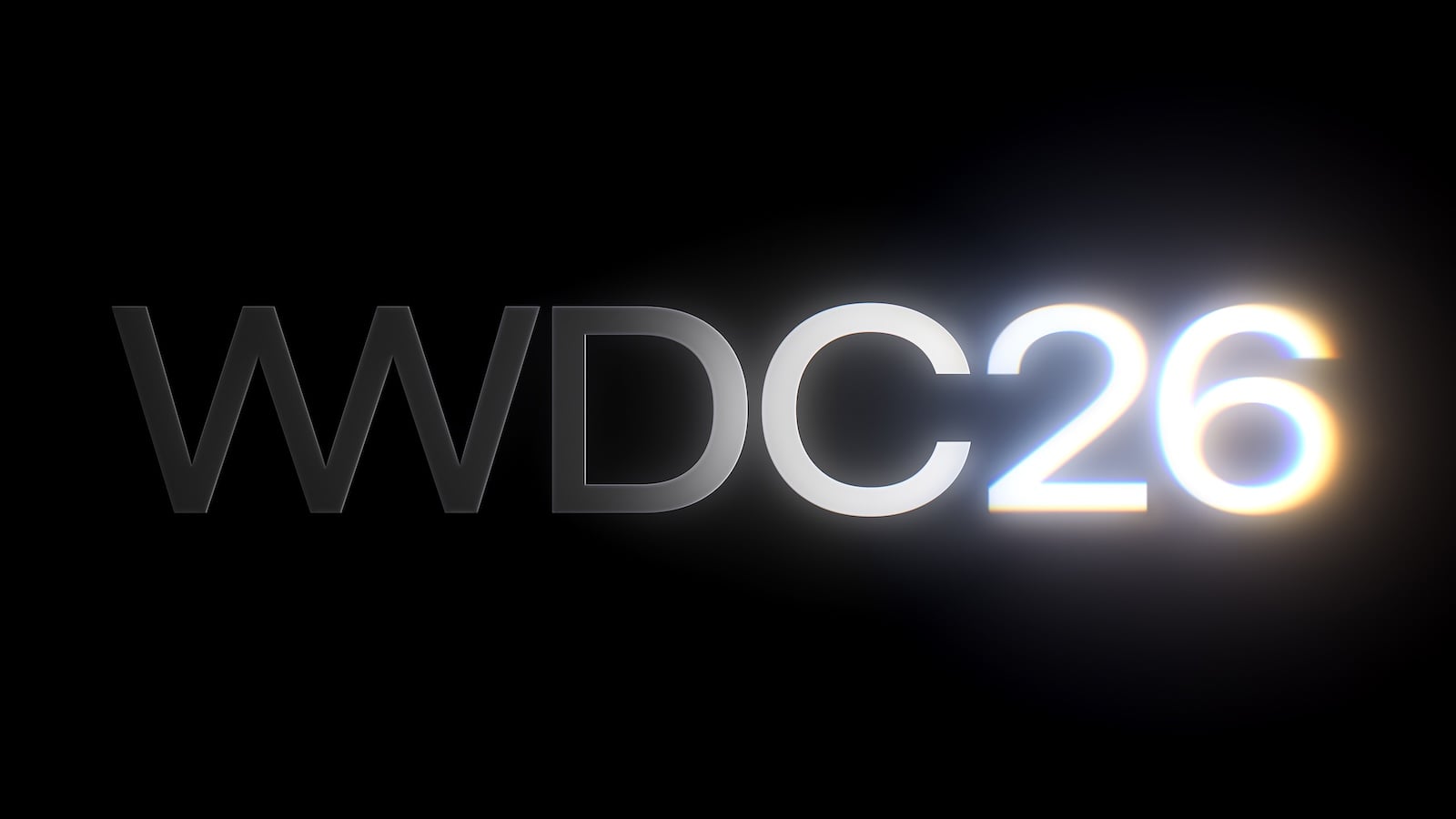
Apple is hosting its Worldwide Developers Conference from June 8th to 12th, 2026 – and this time, AI will be the main focus. The new Gemini-based Siri with its Glow design, iOS 27, a potential Core AI framework, a planned opening of the App Store to AI agents, and possible hardware premieres: We've summarized what you can expect from WWDC 2026.
WWDC is Apple's most important software event of the year – and in 2026 it could become the most strategically crucial in recent years. Apple is under considerable pressure in the AI age: ChatGPT, Claude, and Gemini are setting the standards, while the personalized Siri announced in the summer of 2024 has yet to be released. With iOS 27, Apple aims to showcase the biggest Siri overhaul ever, introduce a new AI framework for developers, and retell its AI story. Furthermore, this will be Tim Cook's last WWDC as CEO. The reins will be handed over to John Ternus on September 1, 2026.
WWDC 2026 – the most important points in brief
| # | Information |
|---|---|
| Date | June 8th to 12th, 2026 |
| Keynote | Monday, June 8, 2026, 7:00 PM German time |
| Format | Primarily online, special event at Apple Park on June 8th. |
| Platforms | Apple Developer App, apple.com, YouTube |
| Expected software | iOS 27, iPadOS 27, macOS 27, watchOS 27, tvOS 27, visionOS 27 |
| According to Apple, the focus is on | „AI advancements“, new software and developer tools |
| Siri app | Auto-deleting chats, beta label also in the final release |
| macOS 27 Name | Hottest candidates: Emerald or Big Bear |
| macOS 27 Design | Liquid-glass fine-tuning with improved readability and contrast |
| Photos app | Three new AI tools (Extend, Enhance, Reframe) |
| Camera app | Fully customizable with its own visual intelligence mode |
| App Store | Planned opening for AI agents and Vibe coding apps |
| Streaming in the EU | Google Cast and other protocols as AirPlay alternatives |
| Last WWDC under Cook | Yes – Ternus will take over on September 1, 2026 |
Date, format and stream
Apple officially announced WWDC 2026 on March 23. The 37th Worldwide Developers Conference will take place from June 8 to 12, 2026 – primarily online, with a special event at Apple Park on the first day. The keynote will start on Monday, June 8, 2026, at 10:00 AM Pacific Time. For Apple fans in Germany, that means 7:00 PM German Summer Time.
The stream will be available as always via the Apple Developer app, apple.com, and Apple's YouTube channel. Following the keynote, the Platforms State of the Union - a technical in-depth session for developers - will be held later that same day. The rest of the week will consist of over 100 video sessions and interactive Group Labs, where developers can speak directly with Apple engineers.
Remarkably, Apple explicitly named "AI advancements" as the focus of the conference in its press release. Last year, the Liquid Glass design concept was the main focus – AI was largely omitted in 2025. This shift in emphasis is no coincidence.
Cook's last WWDC: The context of the keynote
WWDC 2026 will be Tim Cook's last major appearance as CEO. Apple officially confirmed on April 20, 2026, that Cook will hand over operational leadership to John Ternus on September 1, 2026, and transition to the role of Executive Chairman. Cook's last day as CEO is August 31, 2026. Until then, he will remain CEO—and thus also host the keynote address. At the same time, Johny Srouji was promoted to Chief Hardware Officer, taking over Ternus's previous role.
What does this mean for WWDC? Observers expect Cook and Ternus to co-lead the conference. Cook will provide strategic guidance through the vision, while Ternus will present himself as the designated successor and the company's hardware voice. Learn more about the incoming Apple CEO in our John Ternus biography and look back at 15 years of the Cook era in our Tim Cook career profile.
The change in leadership increases the pressure. Apple needs to deliver on its AI story – and visibly so. A mere software update would be met with ridicule in the current climate.
The new Siri – the central theme of iOS 27
If iOS 27 has one main theme, it's Siri. Apple's voice assistant is facing the biggest overhaul in its history – and Apple has already provided the first visual hint even before the keynote itself.
The glow design from the WWDC invitation
Apple insider Mark Gurman of Bloomberg reports in his Power On newsletter that the official WWDC 26 graphic already offers a glimpse of the new Siri look. Specifically, according to Gurman, the glow effect around the number "26" in the logo corresponds exactly to the visual anchor Apple has planned for the redesigned Siri. When Siri is activated, a "Search or Ask" indicator will appear in the Dynamic Island, accompanied by a glowing cursor and a subtle glowing border around the pill itself. The glow effect will also return to the search bar of the separate Siri app, ensuring visual consistency.
According to Gurman, Apple's choice to present the WWDC artwork against a black background is no coincidence: the effect is most pronounced in Dark Mode. Important: Some of the new Siri features are expected to be available only on iPhone 15 Pro or newer – Apple Intelligence requires specific hardware. While Dynamic Island is available starting with the iPhone 14 Pro, not all features will work on that device.
The search bar is activated via a new system-wide gesture: Swiping down from the top center of the screen brings the "Search or Ask" bar to the forefront in any app. Tapping the bar switches between Siri, ChatGPT, Gemini, or other providers as the search source. If Siri is activated using the traditional side button or wake word, a transparent results card initially appears in the Dynamic Island; swiping down transforms it into a full chat mode with small integrated cards for weather, notes, or upcoming appointments.
Standalone Siri app – Apple follows the chatbot model
According to Bloomberg, Siri will get its first dedicated app with iOS 27. It will be pre-installed on iPhones, iPads, and Macs and structured similarly to apps from OpenAI, Anthropic, or Google: an overview of past conversations, a favorites function, a search field, and suggestions for new chats. The chat format is said to resemble iMessage. Traditional activation methods via the side button or voice wake word will remain available. Siri will thus become both a fast system assistant and a fully-fledged chat interface.
Apple is planning a radical step: Siri is to become capable of dialogue – with multi-stage conversations, context-sensitive questions, image generation, document analysis, and deep access to personal data from emails, messages, and files. Furthermore, reports indicate that Siri will replace the current Spotlight search, thus becoming the central search engine on the iPhone. True multitasking is also under discussion – Siri is expected to be able to analyze and execute multiple commands from a single input.
Auto-deleting chats and beta labels
Two details from Mark Gurman's recent Bloomberg report give the new Siri app its distinct identity. First, Apple is adopting the auto-delete feature familiar from iMessage for the Siri app. Users will have three options: delete history after 30 days, delete after one year, or keep it indefinitely. This answers a key question that has lingered since the Gemini collaboration was announced: What happens to the content users enter into an Apple chatbot that technically runs on Google models? The queries will be routed through Apple's private cloud computing service, not through open Google servers, and according to the report, Google will not be allowed to use the conversations to train its own models.
Secondly, Apple is surprising everyone with an unusual decision: Even in the final version of iOS 27, the new Siri app will likely still carry a beta label. Apple Intelligence itself was also marked as a beta when it debuted in iOS 18 – but with Siri, the overhaul originally promised for 2024 is now two years late. The beta label should give Apple internal leeway to deliver individual features later or publicly fix problems without appearing unfinished. An opt-out switch is also planned, allowing users to leave the Siri beta – the exact technical details of how this will work are still unclear.
Gemini in the engine room – confirmed since the beginning of 2026
Apple and Google officially confirmed their partnership in early 2026: The next generation of Apple Intelligence will be built on Gemini technology. At Google Cloud Next 2026 in Las Vegas, Cloud chief Thomas Kurian recently reaffirmed the collaboration publicly – and thus mentioned Apple by name for the first time as a Gemini cloud customer. According to Bloomberg, the Gemini team is developing a custom model tailored to Apple for the Siri chatbot, which is expected to be comparable in performance to Gemini 3.
Apple's diversification strategy is noteworthy. With iOS 27, Apple is opening its AI system to third-party models via a new system called "Extensions"—not just in Siri, but across the entire Apple intelligence architecture. Users who install Anthropic's Claude app or Google's Gemini app will be able to set these models as the AI source for writing tools, Image Playground, and other system functions. Gemini would thus be the default partner, but not a monopoly.
Apple has meticulously planned the system: According to Bloomberg, Siri will use different voices depending on the AI model in use – queries answered by Apple's own system will sound different from responses from, say, Claude. This allows users to hear which AI they are currently speaking to. For developers, this creates a platform-wide interface: Those with a powerful AI model can integrate it not only into their own apps but also directly into Apple's system functions.
The issue of commissions is slowing down app integration
As ambitious as the new Siri sounds, the project is stalling at a crucial point: app integration. The Information reports that Apple has been contacting developers worldwide for months to integrate app functions directly into the new Siri – such as flight bookings, calendar invitations, or content sharing. The technical basis is likely the App Intents framework, which Apple announced some time ago but never fully released.
Enthusiasm in the developer community, however, is muted. The main reason: concerns about future commissions. Apple has reportedly indicated that it will not charge fees for Siri integrations in the early stages – but has not explicitly ruled them out for the future. These reservations are particularly evident among the three largest Chinese tech companies. Baidu, Alibaba, and Tencent are all said to be in talks with Apple, but are unwilling to enter into a partnership that could potentially involve fees later on. Given the scale of these companies, even a small commission could quickly add up to substantial sums.
For WWDC, this means that if the keynote manages without any significant third-party demos, it would be a clear indication of the difficulties in negotiations. Ideally, Apple should present a handful of showcase apps – preferably not just from major Western players, but also recognizable examples from the Chinese market.
iOS 27 – the "Snow Leopard" update with clever, detailed improvements
Bloomberg reporter Mark Gurman describes iOS 27 as a kind of "Snow Leopard update": In addition to major Siri improvements, Apple is focusing primarily on performance, stability, and battery life. Outdated code is being removed, and parts of the system are being rewritten. The result: faster response times, more efficient processes, and longer battery life.
Specifically, the following changes are known:
- Undo and redo for the home screen: A feature Mac users have known for decades is finally coming to the iPhone. Anyone who has moved icons and widgets and wants to revert to the original layout will soon be able to do so with the touch of a button. According to Bloomberg, the new buttons will appear in the customization menu.
- Liquid Glass Slider: The Liquid Glass effect, introduced with iOS 26, is to become more finely adjustable. Instead of just "Clear" or "Tinted," there is a slider for stepless control.
- New Wallpaper Feature: Apple is planning a new feature for custom wallpapers in iOS 27, going beyond what iOS 26 already offered with spatial wallpapers and AI-generated photo scenes. The exact functionality is still unclear, but the report mentions a dedicated wallpaper feature integrated into the system. With this, Apple is responding to an area particularly well-suited for AI: visual personalization without external apps or image editing workflows.
- Tab bar fix in key apps: Apple is reversing a decision it made in iOS 26. The search button returns to the main navigation in Podcasts, TV, Music, Health, and News, instead of being a separate floating button. The on-screen keyboard also gets a new animation – it will now visibly slide into view from the bottom of the screen, instead of simply appearing.
- Safari with a new start page and "Organize Tabs": Safari introduces a new start page with four tabs – Favorites, Bookmarks, Reading List, and History are now on a single screen for the first time. Additionally, "Organize Tabs" is an optional toggle that automatically groups open tabs by topic – a significant improvement over the alphabetical sorting introduced with iOS 26. The feature appears in beta versions for iOS 27, iPadOS 27, and macOS 27.
- Weather app with "Conditions" section: The weather app adds a "Conditions" section directly on the main page, which displays temperature, rain and wind in more detail without having to switch to the detail pages.
- Image Playground gets a quality boost and new AI providers: Apple's AI image generation app is being completely revamped, according to Bloomberg. A new "Describe a change" option will be added, allowing users to edit generated images afterward via text input. At the same time, Apple's own image models will receive a significant quality upgrade, closing the gap with specialized AI tools. Image Playground is also opening up to additional third-party models: In addition to ChatGPT, which was previously the only external source, Google's Nano Banana will also be available, and other providers are expected to follow. This puts Image Playground on the same platform-based approach as the new extensions system for Siri.
- System-wide grammar check in the style of Grammarly: iOS 27 gets a system-wide grammar checker that integrates deeply into the operating system. The feature appears in a translucent menu that slides up from the bottom of the screen and directly compares the original text with the revised suggestion. Individual corrections can be accepted, all suggestions can be accepted at once, or they can be ignored. A pause function and navigation between selected text passages complete the concept – with this feature, Apple is functionally approaching Grammarly.
- Write With Siri and Help Me Write: Apple is making its previously hidden writing tools more visible. A "Write With Siri" toggle appears directly above the keyboard, and a "Help Me Write" button is displayed as soon as Siri is activated within a text field. Both elements act as visual triggers, embedding the AI tools in the writing flow instead of keeping them hidden in deeper menu levels.
- Shortcuts become a conversation: With iOS 27, the Shortcuts app focuses on a simple question: "What should your shortcut do?" A text field then appears where the desired action is described in natural language. The system automatically creates the shortcut based on this description. Apple is thus replacing the visual, modular model with an AI-powered conversation – a leap that should be especially appealing to beginners who have previously been hampered by the visual complexity.
- Genmoji suggesting themselves: Apple is planning a new Genmoji feature for iOS 27 that could eliminate the need to manually type a description. Based on the user's photo library and frequently typed phrases, the system will automatically suggest relevant Genmoji – for example, for recurring pet names or current conversation topics. According to Bloomberg, the corresponding toggle will appear in the keyboard settings of iOS 27 and iPadOS 27 and can be disabled. The processing is expected to take place locally on the device, as before.
- Wallet with "Create a Pass": Bloomberg has confirmed the Wallet upgrade, including its specific name and features. Using the "+" symbol, users will soon be able to scan QR codes from tickets, membership cards, or admission passes and transform them into a fully functional digital pass – or create one entirely from scratch. Three templates are available: Standard (orange), Membership (blue), and Event (purple), each with customizable images, colors, and text. Apple is thus catching up in an area where Google Wallet has offered a comparable feature since August 2024.
- Share receipts via photo: Another new Wallet feature is designed to simplify splitting shared bills. Users simply photograph the receipt, assign individual items to their respective recipients, and the system automatically generates corresponding payment requests – including their share of taxes and tips. This feature can be accessed via both the Wallet and Messages apps, and payments can also be authorized from the Apple Watch. The catch for German users: This feature is tied to Apple Cash and is therefore initially limited to the US.
- AirPods settings reorganized: Apple has completely redesigned the AirPods controls in Settings. There will be no separate companion app – AirPods will remain within the Settings app, continuing to be a special case in Apple's lineup alongside the Apple Watch and Vision Pro, which each have their own dedicated apps. However, iOS 27 introduces a clean break within the menu itself: The collection of features that has grown over the years, including head gestures, hearing aid functionality, sleep tracking, and others, will be reorganized, according to Bloomberg, to be "more functional, better organized, and streamlined." The new interface is expected to look identical across iOS 27, iPadOS 27, and macOS 27.
- The Photos app now features three new AI tools: "Extend" uses AI to expand images beyond their original frame, "Enhance" optimizes exposure, color, and sharpness in one step (Apple's answer to Google's "Magic Editor," but entirely on the device), and "Reframe" shifts perspectives in 3D photos after the fact—an important step for Vision Pro content. According to Bloomberg, Extend and Reframe are not yet working reliably in internal tests; individual tools may shift.
- Camera app fully customizable with Visual Intelligence mode: According to Bloomberg, the camera app will be "fully customizable." Users decide which controls are visible and where they are located—Apple internally refers to these as "widgets." Selection is made via a transparent drawer in three categories: Basic, Manual, and Settings. Options include flash, exposure, timer, depth of field, photographic styles, and resolution. In addition to the standard layout, there is an advanced layout for professional users. Each shooting mode—photo, video, and the new Siri mode—gets its own set of widgets. Visual Intelligence is integrated into the camera app and gets its own mode alongside Photo, Video, Portrait, and Panorama. In the new mode, the shutter button displays the Apple Intelligence logo instead of the classic white circle. Specific applications: Nutrition tables on food packaging are scanned and calories and macronutrients are transferred directly to the health app; phone numbers and addresses on business cards end up in the contacts app; physical event tickets and membership cards are automatically transferred to Wallet.
- Stricter network security: iOS 27 and macOS 27 are designed to more critically examine network connections and improve protection against unsafe Wi-Fi networks.
- AI keyboard: A new autocorrect feature with AI-powered word and text suggestions is reportedly being tested. However, according to Gurman, Apple has not yet made a final decision.
- AI Calendar App: Apple is reportedly working on a smarter appointment organization system.
iOS 27 for the iPhone Ultra
A key driver of iOS 27 is new hardware: Apple's first foldable device, dubbed the iPhone Ultra, is slated for release in fall 2026. The device is expected to have a 7.8-inch OLED display internally (slightly smaller than the iPad mini) and a 5.5-inch external display. When unfolded, it will be just 4.5 millimeters thick, making it the thinnest iOS device ever. Inside, it will feature the A20 chip (as in the iPhone 18 Pro), the C2 modem, eSIM-only functionality, Touch ID instead of Face ID, and presumably no telephoto lens. iOS 27 will be adapted for this device: When unfolded, the system will display an iPad-like layout with two apps side-by-side and sidebars in many Apple apps – but without iPadOS multitasking and without support for iPad apps. According to Bloomberg reporter Mark Gurman, the device will represent "the most significant overhaul in iPhone history."
A new clue from China sheds more light on the technical details. According to Weibo leaker Fixed Focus Digital, Apple is working on a feature internally described as "Parallel View." This refers to a technology that automatically adapts smartphone apps at the system level for wide displays – without requiring developers to redesign their applications. The leaker borrows the name from a similarly named feature in Huawei's HarmonyOS, explicitly only as a point of comparison for the type of solution. Apple's own model is iPadOS, where the system has long handled automatic adaptation to landscape mode. Without this mechanism, almost every iPhone app would appear on the 7.8-inch display in a narrow strip with wide black borders – hardly an appealing sight on a premium device. Whether Apple will demonstrate the split-screen function in the keynote or only reveal it in the fall alongside the device itself remains to be seen. More details in our iPhone Ultra overview.
Health+ is coming – but in a stripped-down version.
Apple originally planned a comprehensive Health+ service: an AI agent, health reports, wellness tips, and medical explainer videos. According to reports, Health+ will not be released in its full version with iOS 27. Instead, individual, scaled-down components will be included – such as suggestions based on existing health data. Apple is apparently proceeding with caution when it comes to sensitive health data.
Satellite functions expanded
According to Bloomberg, Apple is working on several new satellite features for the iPhone: Apple Maps via satellite, photo sharing via satellite connections, and a satellite framework for developers. It's unclear whether all these features will be included in iOS 27 or will arrive in later updates.
Four iPhones are likely to lose support
According to a Weibo leak from Instant Digital, an insider known for accurate Apple predictions, the iPhone 11 generation, including the iPhone 11 Pro, iPhone 11 Pro Max, and iPhone SE 2, will be dropped from the iOS 27 compatibility list. The new minimum standard would then be the iPhone 12. Only the third-generation iPhone SE would be compatible. The reason: The A13 chip is no longer powerful enough to meet the requirements. Important: The leak is not officially confirmed – some observers consider this move surprising given the "Snow Leopard" nature of iOS 27. Apple will confirm the final device list at its keynote address on June 8th.
Core AI – a new framework for developers
One of the most strategically important announcements will likely only be briefly mentioned on stage – but it represents a potentially major leap forward for developers. Mark Gurman reports that Apple plans to replace the Core ML framework with a new, modernized "Core AI." Apple has not yet officially confirmed this move, but Gurman is considered a reliable source.
Core ML has existed since 2017 as the central interface for machine learning in apps. With iOS 27, it is set to be replaced by a solution that is significantly more focused on modern large-language models and generative AI. For developers, this means more powerful tools, easier integration of external AI models, and a more direct connection to Apple's own models as well as those of third-party providers. According to Gurman, both frameworks could coexist for a while before Core ML is completely superseded. The name change from "ML" to "AI," according to Gurman, reflects the fact that "machine learning" is an outdated term for modern AI applications.
App Store opens up to AI agents
In parallel with its focus on software, Apple is reportedly working on a fundamental overhaul of its App Store rules, according to a report by The Information. The focus is on AI agents and so-called vibe-coding apps. The latter allow users without programming knowledge to create their own apps and websites using a natural language prompt. In March, Apple began blocking updates for several popular apps of this type because they violated App Store rules—specifically, the prohibition against executing code that modifies the functionality of the app itself or other apps.
Traditional approval processes simply cannot accommodate this dynamic app behavior. AI agents exhibit the same characteristics and therefore encounter a rule architecture designed for statically delivered software. Apple must therefore not only adapt the App Store framework in individual cases, but fundamentally expand it.
Apple aims to solve three problems simultaneously: AI agents must not spread malware or circumvent security mechanisms. They must adhere to Apple's billing logic and cannot evade App Store fees. And the spontaneous creation of small apps within other apps must not become a security vulnerability after Apple has already approved the respective main application.
WWDC would be the obvious occasion to outline a new agent concept. A hybrid approach is more realistic: a general strategy announcement in the keynote, followed by concrete developer APIs in the beta phases over the summer. One thing is clear: Apple needs to catch up in an area where Android, OpenAI, and Anthropic are already more broadly positioned.
Google Cast instead of AirPlay – iOS 27 opens up in the EU
In the EU, AirPlay could lose its special status starting with iOS 27. According to a recent Bloomberg report, Apple is working on an interface that supports third-party streaming protocols like Google Cast (formerly Chromecast) at the system level – including the option to set them as the default. This would allow users to stream video, photo, and audio content from their iPhone, iPad, or Mac to compatible speakers and TVs without having to go through individual apps or Bluetooth.
The implications extend beyond Google Cast. Theoretically, any streaming protocol could be natively integrated into iOS, creating the technical foundation for integration with competing streaming services. This stems from the Digital Markets Act, which obligates gatekeepers like Apple to dismantle exclusive system advantages if they disadvantage competing services. AirPlay, as the only natively supported streaming protocol, fell into this category.
As with previous DMA adjustments, the opening is likely to remain limited to the EU. In the US and other markets, AirPlay would thus remain the only system-wide embedded streaming standard. For many Apple users in Europe, however, the effect would be noticeable in everyday use: hotel TVs, conference room screens, and numerous smart TV models currently rely on Google Cast instead of AirPlay – native iOS integration would finally close this gap in everyday use. Whether Apple will address the topic in the WWDC keynote or only reveal it through developer documents and beta phases remains to be seen.
macOS 27 – AI integration and touch readiness
While iOS 27 is likely to dominate the spotlight, macOS 27 will get its own dedicated section. The key topics:
- Liquid Glass Refinement: According to Bloomberg, Apple is planning a "minor redesign" for macOS 27. The Liquid Glass design language, introduced with macOS 26 Tahoe, is to be specifically refined to address certain weaknesses – particularly regarding transparency, shadows, and contrast. Sidebars with semi-transparent backgrounds and text against dynamic background content have been frequently criticized in recent months. Internally, Apple does not see the design concept itself as the problem, but rather its original implementation – macOS 27 is intended to deliver Liquid Glass in the form the design team originally envisioned.
- Deeper AI integration: The new Siri app will also be pre-installed on the Mac. Tools such as OpenAI's Codex, Anthropic's Claude, and Apple's own models will be directly available in Xcode and Spotlight.
- Stricter network security: Like iOS 27, macOS 27 also tightens network auditing.
- Touch preparation in the background: According to Gurman, macOS 27 is being prepared for the touch operation of the upcoming MacBook Ultra – with larger buttons, more touch-friendly controls, and a redesigned interaction layer. Since the MacBook Ultra will be unveiled later, Apple is unlikely to prominently showcase the touch adjustments in the keynote, but rather integrate them quietly into macOS 27. The full picture will only become clear with the hardware reveal later.
The name of macOS 27 is still undecided, but two candidates have emerged shortly before WWDC. First, macOS Emerald: Emerald Bay is part of Lake Tahoe, so macOS Emerald would thematically continue the current macOS Tahoe – similar to how macOS High Sierra was originally a refined version of macOS Sierra. Second, macOS Big Bear: The name "Project Big Bear" reportedly appeared in the filename of the WWDC 2026 hashtag graphic that Apple shared on X – a reference to Big Bear Lake in California, albeit an indirect one. Furthermore, Apple trademarked over twenty California-inspired names back in 2014 – including California, Diablo, Mammoth, Pacific, Redwood, and Shasta. Apple's final choice will be revealed at the keynote on June 8.
watchOS 27, tvOS 27, visionOS 27 and iPadOS 27
The 2026 update for the Apple Watch is relatively low-key. According to Bloomberg, instead of major new features, watchOS 27 focuses on stability, performance, and targeted improvements. The main focus is on a hardware-level optimization: the Apple Watch's heart rate measurement is expected to become noticeably more accurate. The report doesn't provide details on the specific implementation – whether the improvement will be achieved through a higher sampling rate, different sensor logic, or new evaluation algorithms remains unclear. Since heart rate provides the foundation for sleep tracking, workout analyses, recovery reports, and health alerts, more accurate readings would have an impact across almost all health functions.
In addition, according to Gurman, Apple is unveiling one of its most exclusive watch faces for the first time: Modular Ultra, previously only available on the Apple Watch Ultra, will also be coming to the Series models in a simplified version. The large central complication, the row of three smaller complications above the time, and the bezel displays will be removed – leaving behind a more open layout with the time at the top and three complications below. With this, Apple is loosening the strict separation between the Ultra and standard Apple Watch for the first time where it makes functional sense.
The highly anticipated AI health coach, "Project Mulberry," is not part of the WWDC package. Originally planned for iOS 26.4, the project was scaled back in early 2026 because Apple internally deemed it uncompetitive against WHOOP, Oura, and Google Fitbit. Eddy Cue has taken over the Apple Health group and is leading the development. A launch with the initial iOS 27 release is considered unlikely – Bloomberg places the launch "later in the iOS 27 release cycle," which could mean iOS 27.1 in October, iOS 27.4 in spring 2027, or a point update in between. However, the redesigned Health app could be available at the iOS 27 launch, supplemented by the AI-powered coaching features in later updates.
tvOS 27 is likely intended primarily to bridge the waiting period for the new Apple TV 4K and the HomePad smart display. The software will probably be prepared for the personalized Siri, which is central to the upcoming Apple Home devices. More information can be found in our overview of the new Apple TV 4K and the Apple HomePad.
According to recent reports, visionOS 27 will be the quietest update in this year's software family. While visionOS 26 was a feature-packed powerhouse with spatially anchored widgets, generative photo scenes, and PlayStation VR2 controller support, visionOS 27 focuses primarily on performance, stability, and system-wide consistency with the other 27-series versions. However, one feature stands out from the otherwise understated package: the new Siri, which is also coming to the Vision Pro. Especially on a headset where voice input feels more natural than on the iPhone, it could become the update's hidden highlight. The AI tools of the Photos app (Extend, Enhance, Reframe) are also migrating to the headset – adding even more depth to spatial photos and immersive content.
iPadOS 27 is expected to seamlessly incorporate the features of iOS 27, plus iPad-specific multitasking and Apple Pencil improvements.
Hardware at WWDC 2026 – the open question
Apple traditionally combines software announcements with selective hardware releases at WWDC. Leading up to 2026, it long looked like a hardware extravaganza was in store – but the global memory chip crisis has disrupted those plans.
Mac Studio M5 – postponed to October
The Mac Studio, originally slated to feature the M5 Max and potentially the M5 Ultra, was expected to be the WWDC hardware highlight. Bloomberg reporter Mark Gurman reported on April 19, 2026, that the launch had been postponed to October due to a global memory chip shortage. According to reports, Apple is prioritizing notebook production, which is less affected by RAM bottlenecks than desktops with high memory configurations. All the details on the chip, specs, and pricing can be found in our Mac Studio M5 overview. Cook confirmed in the earnings call that the Mac Studio is also currently experiencing a shortage, and these bottlenecks are expected to persist for several more months. The October postponement of the M5 model thus aligns with Apple's current supply chain situation.
Mac mini M5 – Cook confirms supply shortages
Regarding the Mac mini, Tim Cook officially confirmed in a CNBC interview and during the Q2 2026 earnings call what many had already suspected: Apple simply cannot meet demand. The Mac mini is "a great platform for AI and agentic tools" - and the speed at which buyers are recognizing this has exceeded Apple's own expectations. According to Cook, supply shortages already existed during the quarter, they persist, and are expected to continue for several more months. Currently, many configurations are completely sold out in the online Apple Store.
Background: The Mac mini and Mac Studio have become favorites in the AI community. Those who want to run local AI models often opt for Apple Silicon because of its price-performance ratio, energy efficiency, and shared memory between the CPU and GPU. Apple is currently under pressure on three fronts with the Mac: the Mac mini, Mac Studio, and the MacBook Neo, introduced in March, are all in short supply – primarily due to the global DRAM shortage and the limited availability of advanced chip manufacturing processes.
What does this mean for WWDC? On the one hand, an update to the Mac mini M5 and M5 Pro is long overdue; on the other hand, Apple is unlikely to unveil a product it can't deliver. A WWDC premiere of the Mac mini M5 therefore seems less probable than it did just a few weeks ago. See our Mac mini M5 article for the full overview.
MacBook Ultra – postponed to 2027
According to Gurman, the exciting new high-end MacBook is affected by the memory chip crisis and is now expected to arrive in early 2027 instead of late 2026. The MacBook Ultra will be Apple's first MacBook with a touchscreen, combined with an OLED display, Dynamic Island instead of a notch, M6 Pro and M6 Max chips (TSMC 2nm), a thinner design, and, for the first time, integrated 5G cellular connectivity via a C2 modem. The device will not replace the current MacBook Pro but will be positioned as a new premium tier above it – with a correspondingly higher price. Reports indicate that macOS 27 will be optimized for touch operation, with larger buttons and more touch-friendly controls. A WWDC announcement is therefore considered unlikely. For more details, see our MacBook Ultra overview.
iMac M5 – earliest autumn
According to Gurman, the iMac with the M5 processor won't arrive until after the Mac Studio and Mac mini – presumably in September or October 2026. A WWDC unveiling seems highly unlikely. More on the specs can be found in our iMac M5 overview.
Apple Glasses – the wild card
An Apple Glasses unveiling at WWDC 2026 would be a major coup – but it hasn't become any more likely recently. The original roadmap called for a reveal at the end of 2026 and delivery in early 2027. According to a recent Bloomberg report, the market launch has now been pushed back to the end of 2027 – Apple reportedly needs about a year more. This information fits into the rumor mill surrounding Apple Glasses that has been growing for months, but it significantly pushes the timeline back. While Apple likes to showcase new product categories well in advance of their release – the Vision Pro was unveiled in 2023 about eight months before its market launch – a reveal at WWDC 2026, with a late 2027 launch, would be about a year and a half before sales, and thus unusually early even for Apple.
The main reason for the delay lies in the software. While the revamped Siri is still reportedly on track for a release this year, Apple's visual AI technology is considered the bigger challenge and might not reach the necessary level until the end of 2026. Since the glasses are primarily intended as a hardware platform for Apple Intelligence, their initial appeal depends heavily on how well this AI performs. Four designs are said to be in the testing phase, and an N401 chip based on the Apple Watch is confirmed as the core hardware component – but smart glasses without compelling AI would be a weak showing, and that's precisely what Apple apparently wants to avoid. A full presentation at WWDC now seems unlikely under the new timeline.
AirPods Ultra – possible, but unlikely
The AirPods Ultra with cameras and H3 chip are one of Apple's six new product categories, according to Gurman. A premiere is conceivable, but as with the Glasses, Apple will only showcase AI hardware if the AI itself is convincing. More in our AirPods Ultra overview.
Services and new apps
In addition to software and hardware, Apple traditionally announces services updates at WWDC. Several topics are emerging for 2026:
- Apple TV: With new hits like "Severance" and "The Studio," Apple has significantly boosted the brand value of Apple TV. At WWDC, tvOS-related adjustments are conceivable – more personalization, better recommendations through AI.
- Apple Music and Apple Podcasts : Both services received updates with iOS 26, such as the Playground playlist feature in Apple Music. Further AI-powered recommendation features are likely for iOS 27.
- Apple Maps with ads: Apple is preparing to introduce advertising to Apple Maps. Initial indications appeared in iOS 26.5 beta builds. The official unveiling could take place at WWDC.
- iCloud and Wallet: With the Wallet upgrade in iOS 27, Apple is also expected to adjust iCloud plans. However, concrete details are still lacking.
- App Store: Reports indicate that the new extension system for Siri and the planned opening to AI agents will create a new marketplace for AI extensions.
Developer tools – Xcode with AI agents
In the developer area, three topics are particularly in focus:
- Xcode with AI agents: Apple has already integrated Anthropic's Claude Agent and OpenAI's Codex into Xcode. WWDC could reveal an expansion of this integration – possibly with Apple's own coding models.
- Foundation Models Framework: The framework presented at WWDC 2025, which allows developers to use Apple's own offline-running AI models, is likely to be expanded.
- Apple Intelligence Extension: The AI features are to be integrated into more apps – especially third-party apps via open interfaces.
Adjustments are also possible in the Developer Program. App Store rules, new frameworks for Apple Glass, and updates for Swift are traditionally discussed in the State of the Union meeting.
Release schedule: What's coming when
WWDC is the presentation – not the release. Apple's update schedule continues to follow the familiar pattern:
- June 8, 2026: Presentation of iOS 27 and other updates in the keynote address
- From June 8th: First developer beta available
- Mid-July 2026: Public beta starts
- September 2026: Final release alongside the iPhone 18 Pro
The most important open question: Which Siri features will be available on day one – and which will Apple postpone to later updates? Google has publicly confirmed that the new Siri will be released no later than December 31, 2026. That's Apple's latest deadline, and it's unlikely to be extended this time.
Price and platform – WWDC is free
As in previous years, the conference is completely free. The online sessions, Group Labs, and keynotes are accessible to all developers worldwide. The only paid element is the Apple Developer Program (99 euros per year) – but this is not required for WWDC attendance.
Who should watch the keynote live?
For developers, WWDC 2026 is a must-attend event. The new Core AI framework, new Siri APIs, an expanded Foundation Models stack, and a fundamentally redefined App Store policy for AI agents will shape the tooling landscape for years to come. Anyone building Apple apps should watch the keynote and at least the Platforms State of the Union live.
For power users, the software presentations on June 8th are the highlight. iOS 27 and macOS 27 will shape devices for a year – those who want to install the public beta starting in July will get their first real impression on the keynote evening.
For AI enthusiasts, WWDC 2026 will be the most exciting in years. Apple's answer to ChatGPT, Claude, and Gemini hinges on the Siri demos during the keynote. Anyone wanting to understand the AI strategy of one of the world's largest tech companies should keep the evening of June 8th free.
For hardware enthusiasts, the situation is sobering. The global memory chip crisis and AI-driven demand have disrupted Apple's Mac roadmap. The Mac Studio M5 has been postponed until October, the MacBook Ultra to early 2027. Tim Cook has just confirmed that the Mac mini shortages will persist for several more months – making a WWDC premiere less likely. The most likely source of hardware excitement would be a first look at the Apple Glasses, although this has become less probable after the recent delay of their market launch – perhaps accompanied by a subtle hardware refresh on the sidelines of the keynote.
This is how you stay up-to-date throughout the summer
As in previous years, we'll be covering WWDC and the subsequent beta phases in detail: live reports on the keynote, in-depth articles on every new iOS 27, macOS 27, and other features, tips and guides on all relevant innovations, and ongoing updates from the developer and public betas right up to the final release in September. To stay up-to-date, follow us on social media. You can also activate push notifications directly from Apfelpatient – so the most important news arrives on your iPhone immediately.
WWDC 2026 – what's next?
WWDC 2026 is more than just a software event. It's Apple's opportunity to reshape the AI narrative, honor Tim Cook's legacy, and give John Ternus his first major platform. With Glow Siri, Core AI, the opening of the App Store to AI agents, and a comprehensive software roadmap, Apple has enough material for a strong keynote - provided the demos work and the issue of developer commissions doesn't become a major sticking point.
Anyone who wants to follow the keynote live can find all streaming platforms, the exact time and more for the event evening in our WWDC 2026 live stream guide.
The best products for you: Our Amazon Storefront offers a wide selection of accessories, including for HomeKit. (Image: Apple)
- iPhone Ultra (iPhone Fold): All rumors and facts at a glance
- Apple TV in June 2026: All the highlights at a glance
- Apfelpatient Weekly #8
- New Apple TV 4K: All the rumors about the update
- HomePod 3 & HomePod mini 2: All the rumors at a glance
- Apple Glasses: All the rumors at a glance
- iPhone 18 Pro: All the rumors at a glance
- Apfelpatient Weekly #7
- iPhone 2027: All the rumors about the anniversary model
- MacBook Ultra: All the rumors at a glance
- Apple Watch Ultra 4: All the rumors at a glance
- Apfelpatient Weekly #6
- Apple Watch Series 12: All the rumors at a glance
- Apfelpatient Weekly #5
- AirPods Ultra: All the rumors at a glance
- Apple TV in summer 2026: The strongest lineup yet
- Siri strategy: Why AI choice is Apple's most important step in years
- Mac Studio M5: All the Rumors at a glance
- iPhone 18: All the rumors at a glance
Frequently Asked Questions: WWDC 2026
WWDC 2026 will take place from June 8th to 12th, 2026. The keynote will start on Monday, June 8th, 2026, at 7:00 PM German time (10:00 AM Pacific Time).
The stream is available via the Apple Developer App, apple.com, and Apple's YouTube channel. All three channels are free and require no registration.
Apple will unveil iOS 27, iPadOS 27, macOS 27, watchOS 27, tvOS 27, and visionOS 27. According to Apple, the focus will be on "AI advancements" and new developer tools.
Yes. Cook will remain CEO until August 31, 2026, and will likely deliver the keynote address together with John Ternus, who will take over on September 1.
Hardware availability for 2026 is uncertain. The Mac Studio M5 has been postponed until October, and the MacBook Ultra (Apple's first MacBook with a touchscreen and OLED display) until early 2027. According to Tim Cook, the Mac mini is also in short supply for several more months, making a WWDC premiere unlikely. Apple Glasses were long considered the biggest hardware hope – but after their market launch reportedly slipped to late 2027, even a first on-stage presentation seems improbable.
Siri is getting a new Glow design in Dynamic Island, a standalone chat app, interactive conversations, image generation, and deeper access to personal data. The technology is based on Google's Gemini.
According to a Weibo leak, the iPhone 11, iPhone 11 Pro, iPhone 11 Pro Max, and iPhone SE 2 will lose support. The minimum standard would then be the iPhone 12. Apple will confirm the final list on June 8th during the keynote address.
Apple is reportedly working on a new set of rules that would allow AI agents and Vibe-coding apps in the App Store without compromising security and privacy standards. A first hint of this could be revealed at WWDC 2026, with concrete developer APIs likely to follow during the beta phases over the summer.
The first developer beta starts immediately after the keynote on June 8th. The public beta follows in mid-July. The final release will arrive in September 2026 alongside the iPhone 18 Pro.