
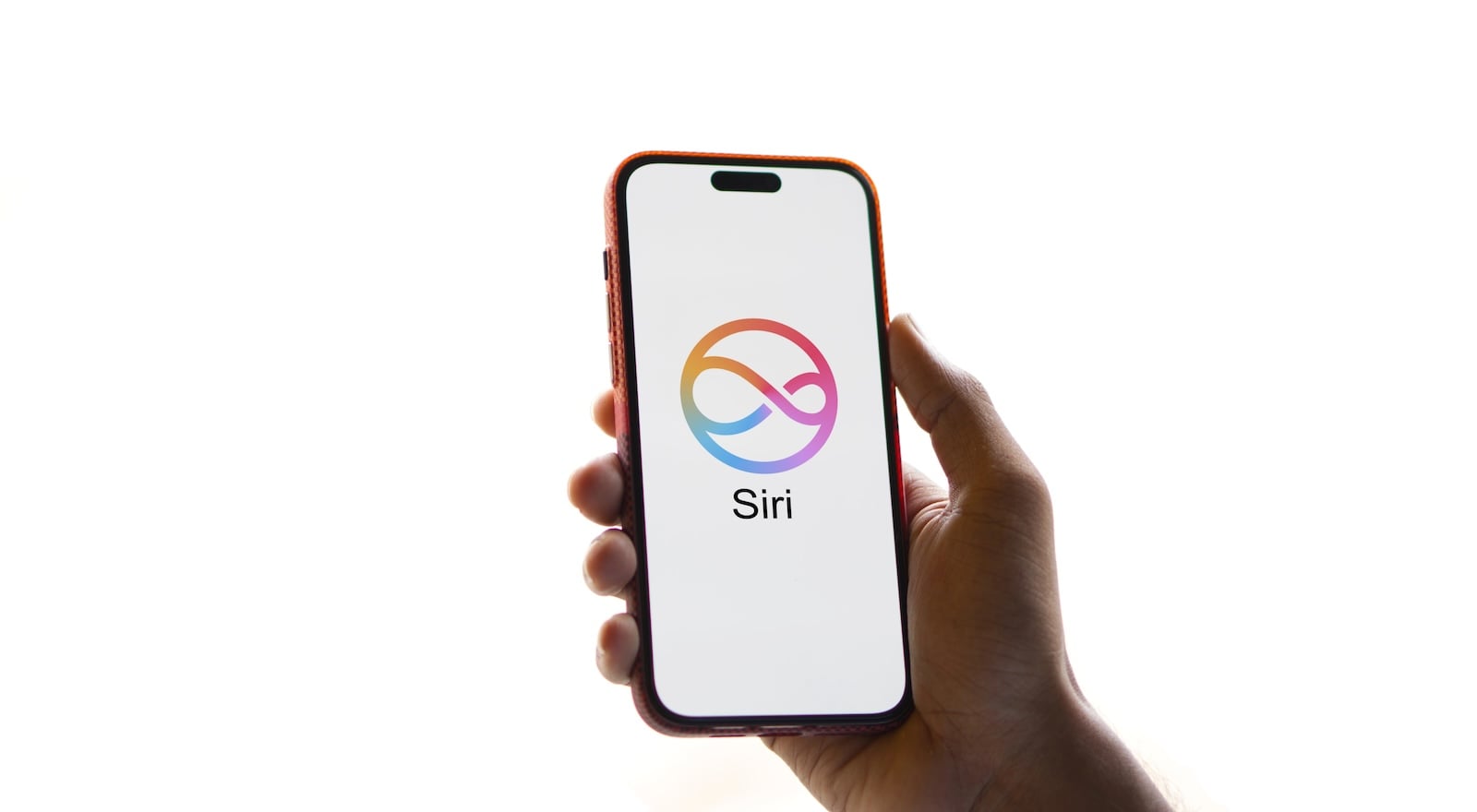
Apple is opening up Siri, the writing tools, and other AI features in iOS 27 to third-party models like Google Gemini and Anthropic Claude. What initially sounds like a technical detail could prove to be the most strategically important Siri decision in recent years – and free Apple from a long-standing impasse.
For the past two years, Siri's story has primarily been one of postponed promises. Personalized features, which Apple prominently announced back in 2024, were months in the making. It wasn't until the switch to Google Gemini in early 2026 that noticeable progress was made on the voice assistant, and now comes the next, far bigger step. With iOS 27, users will be able to choose their preferred AI model for Siri and Apple Intelligence – a concept Apple officially calls Extensions and which extends beyond Siri's voice capabilities to encompass the entire Apple Intelligence ecosystem. What begins as a technical opening is, in reality, a realignment of the AI strategy.
Freedom of choice instead of dependence
Until a few months ago, Apple's AI future hinged on a single question: How quickly could the company catch up with OpenAI, Google, and Anthropic? With each quarter that passed without a personalized Siri, this question became more pressing. The current solution reframes the discussion. Apple no longer needs to prove that its own models can compete with the leading providers - users can simply choose the model that best suits their workflow. Those who prefer Claude can run writing tools and Siri requests through Anthropic. Those who rely on Google can opt for Gemini. And those who trust Apple's own models remain within the Apple ecosystem. A race has transformed into a marketplace.
Platform instead of product
The real break with this decision is conceptual. In recent years, Apple has repeatedly tried to market AI capabilities as a closed Apple product – with its own foundation models, its own server stack via private cloud compute, and tight integration with Apple apps. With the Extensions system, Apple is opening up to the platform. External AI providers can connect to Siri, writing tools, Image Playground, or Mail summaries via a standardized interface. This creates a new distribution channel for developers: those with a strong model can now deploy it not only in their own app, but directly within the system functions that Apple users use every day. This openness is what Apple has long avoided – and what now makes the platform significantly more attractive.
Competition becomes a driver for quality
The multi-vendor logic brings with it a quality that Apple has sorely lacked over the past two years: speed. Every time an AI provider releases a new model, competitors push hard to catch up. This pressure is precisely what's missing in a closed system with only one voice AI. As soon as users can switch between Gemini, Claude, and Apple's own AI, every improvement becomes immediately noticeable - and any provider that falls behind directly loses market share within the Apple ecosystem. Apple itself benefits twice over: its own models no longer need to cover all use cases, but only excel in those areas where tight integration with iCloud, Mail, or Photos pays off.
Unique voice for each model as a detail with effect
One detail from recent reports shows how seriously Apple is taking the concept: Siri will be able to have a distinct voice for each selected third-party device. Users will therefore be able to hear whether the response comes from Apple, Anthropic, or Google. This might seem like a gimmick, but it's an important element of transparency. In a system where different devices deliver different responses, this acoustic separation helps users identify the source of a statement. This attention to detail is typical of Apple – and it demonstrates that Extensions is not a hastily cobbled-together workaround.
Setting the course with effects beyond Siri
With its multi-model strategy, Apple is untangling a knot that has long hampered the company's AI roadmap. The confirmation of the Gemini partnership with Google was the first visible step out of this impasse; opening up to other providers is the second and strategically more important one. iOS 27 will thus become not just a software update, but a platform decision. How Apple will specifically implement the new Siri features, the Extensions system, and the other AI building blocks is likely to be one of the central topics at WWDC 2026, with its expected hardware and software announcements on June 8. Until then, one thing is clear: Apple is pursuing the path suggested by its own position in the AI market – pragmatic, open, and consciously moving away from trying to build everything itself.
The best products for you: Our Amazon Storefront offers a wide selection of accessories, including for HomeKit. (Image: Mojahid_Mottakin / DepositPhotos.com)
- iPhone Ultra (iPhone Fold): All rumors and facts at a glance
- iPhone 18 Pro: All the rumors at a glance
- iPhone 2027: All the rumors about the anniversary model
- Mac Studio M5: All the Rumors at a glance
- WWDC 2026: All expectations, rumors and hardware hopes at a glance
- iPhone 18: All the rumors at a glance
- Apfelpatient Weekly #4
- Apple in May 2026: What to expect – and what not to expect
- Mac mini M5: All the Rumors at a glance
- iPad 12th Generation: All the rumors at a glance
- Apple TV in May 2026: All the highlights at a glance
- iPhone Air 2: All the rumors at a glance
- iPhone 18e: All the rumors at a glance
- Apple Glasses: All the rumors at a glance
- Apfelpatient Weekly #3
- Apple Security Camera: All the rumors at a glance
- These 10+ products will be launched by Apple first under CEO Ternus
- Ternus will not revolutionize Apple – an analysis
- Johny Srouji: Biography, career path & Apple's new Chief Hardware Officer
- John Ternus: biography, career & the new Apple CEO
- Tim Cook: Biography, career & his time as Apple CEO
- Apfelpatient Weekly #2
- MacBook Ultra: All the rumors at a glance