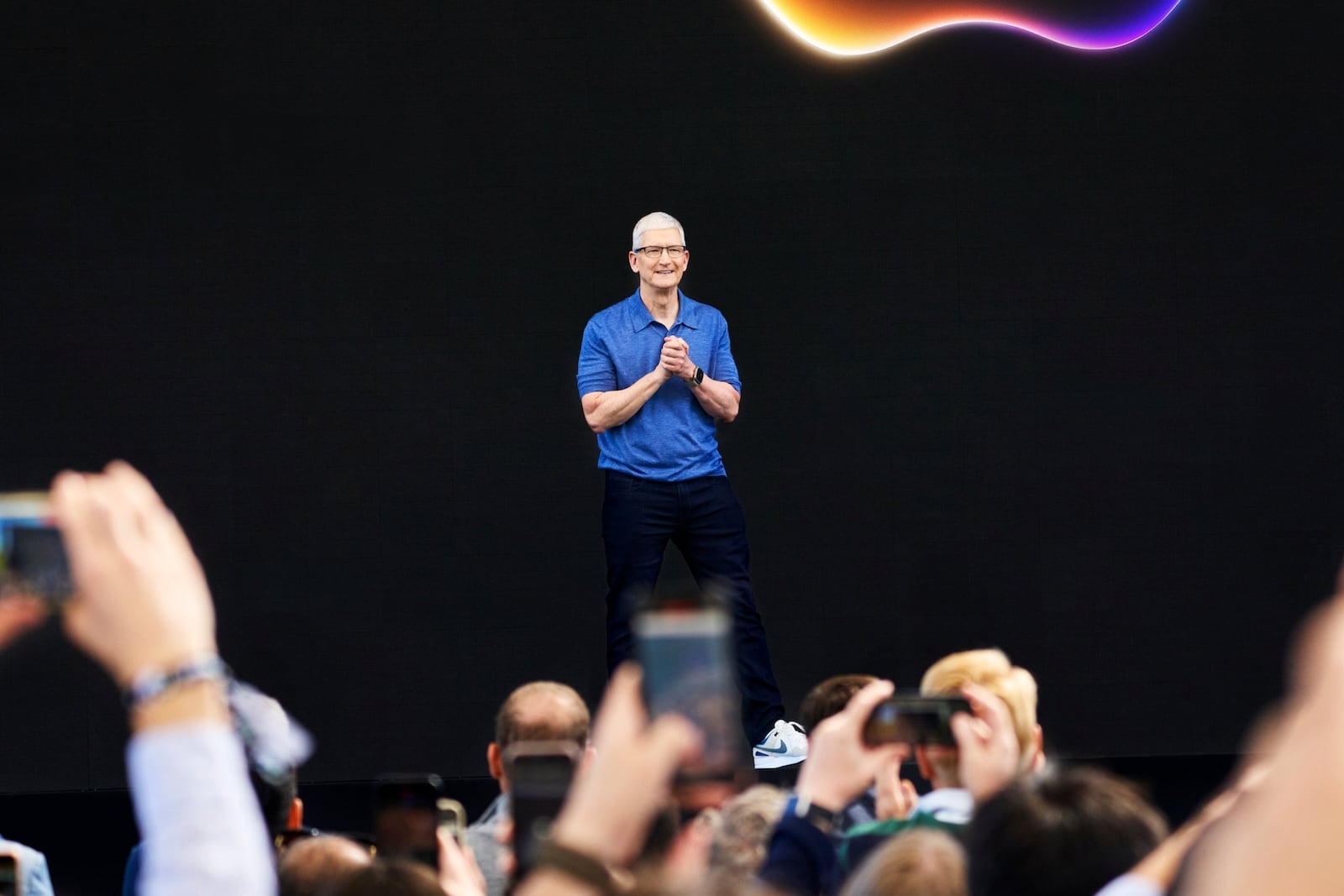
Tim Cook has led Apple since August 2011, transforming it into the world's most valuable company. His transition to Executive Chairman in September 2026 marks the end of an era that has radically changed Apple. This profile traces his career path – from newspaper boy in Alabama to the most powerful CEO in the tech industry.
Tim Cook is a polarizing figure – not through loud pronouncements, but through the opposite. He is the quiet CEO who took over Apple after the death of Steve Jobs and subsequently broke almost every record the tech industry has to offer. The announcement of his transition to Executive Chairman in April 2026 underscores just how profoundly his 15-year tenure has shaped Apple.
To understand Tim Cook, you have to look at his origins—a small town in Alabama, a simple, hardworking childhood, and an academic path that eventually led him to IBM, Compaq, and ultimately Apple. His rise from Senior Vice President of Operations to CEO of the world's most valuable company is one of the most remarkable careers in business history. In this article, we'll examine his entire biography—from his childhood in Robertsdale to the emotional community letter he sent to Apple users at the end of his tenure as CEO.
Childhood in Robertsdale, Alabama
Timothy Donald Cook was born on November 1, 1960, in Mobile, Alabama. He is the second of three sons. His father, Donald, worked as a foreman at the Alabama Dry Dock and Shipbuilding Company, a shipyard in the hard-working industrial belt of the Gulf Coast. His mother, Geraldine, worked in a pharmacy.
When Tim was eleven years old, his family moved to the small town of Robertsdale in Baldwin County in 1971. His parents deliberately chose the town because they wanted their children to attend the same school. Robertsdale was a rural farming community with around 2,300 residents at the time—a place that could hardly have been further away from Silicon Valley.
Cook's childhood was marked by modest circumstances. The family couldn't even afford a typewriter. As a teenager, Cook delivered newspapers early in the morning to save for college and also worked part-time in his mother's pharmacy and a local restaurant. He regularly got up at three in the morning, delivered the Mobile Press Register, and went back to sleep before school.
At Robertsdale High School, he was considered an exceptionally hardworking but popular student. He played trombone in the school band, was active on the yearbook team, and graduated second in his class in 1978. His teachers at the time described him as reliable, conscientious, and someone "who was pleasant to be around."
Education at Auburn University
Cook decided early on to attend Auburn University in Alabama – a wish he had harbored since the seventh grade, according to his mother. He graduated there in 1982 with a bachelor's degree in industrial engineering.
Twelve years at IBM
Immediately after graduating from Auburn in 1982, Cook joined IBM. He worked in North Carolina and gradually rose through the ranks. At the end of his IBM career, he was Director of North American Fulfillment – responsible for the manufacturing and sales of personal computers in North and Latin America.
Even at IBM, Cook displayed the qualities that would later make him one of the best supply chain managers in the world: reliability, punctuality, and the willingness to work through Christmas so that the company could deliver its orders on time.
Alongside his work at IBM, Cook completed an executive MBA at Duke University's prestigious Fuqua School of Business in North Carolina. He graduated in 1988 and was awarded the title of Fuqua Scholar – a distinction reserved for the top 10 percent of graduates. He remained with IBM for a total of twelve years, until 1994.
Intelligent Electronics and Compaq
In 1994, Cook moved to the reseller division of Intelligent Electronics, an electronics wholesaler, as Chief Operating Officer. He remained there for three years before the company was sold to Ingram Micro.
In 1997, he joined Compaq – then the world's largest PC manufacturer – and took on the position of Vice President of Corporate Materials. His task: procurement and management of the company's entire product inventory. But he wouldn't stay there long.
The switch to Apple: March 1998
In March 1998, Steve Jobs personally recruited Tim Cook. Apple was on the verge of bankruptcy at the time – the company had suffered a loss of one billion dollars the previous year. Jobs had only just returned in 1997 as interim CEO and desperately needed someone who could radically restructure the company's operations.
Cook had already turned down Apple's recruiters several times before finally agreeing to a meeting with Jobs. The meeting convinced him—against all rational arguments. "Every purely rational cost-benefit analysis favored Compaq, and the people who knew me best advised me to stay at Compaq," Cook later said in a speech at Auburn University. "One CEO I consulted felt so strongly that he told me I would be a fool to leave Compaq for Apple."
Cook left anyway. He joined as Senior Vice President of Worldwide Operations. His first major achievement: revolutionizing Apple's entire inventory management. Cook closed warehouses and factories, shifted production to contract manufacturers in Asia, and reduced Apple's inventory from months to just a few days. This restructuring was one of the most important prerequisites for Apple's subsequent profitability.
Promotion to COO
Cook's career at Apple was steadily on the rise:
- 2000: Senior Vice President of Worldwide Operations, Sales, Service and Support
- 2002: Executive Vice President of Worldwide Sales and Operations
- 2004: Additionally, Head of the Macintosh Division
- October 2005: Chief Operating Officer (COO) of Apple
- November 2005: Member of the Board of Directors of Nike
As COO, Cook was responsible for all of Apple's global sales and business activities – including end-to-end supply chain management. In parallel, he continued to lead the Macintosh division and played a crucial role in building strategic partnerships with suppliers.
Three times interim CEO, then CEO
Even before his official appointment as CEO, Cook led Apple on a temporary basis several times:
- 2004: While Steve Jobs underwent pancreatic surgery
- January to June 2009: While Jobs received a liver transplant
- From January 17, 2011: After Jobs' renewed leave of absence for health reasons
On August 24, 2011, Steve Jobs stepped down as CEO. On the same day, Tim Cook was officially appointed the new CEO of Apple. Just a few weeks later, on October 5, 2011, Steve Jobs died at the age of 56.
Cook's values: Data Protection, Sustainability, Inclusion
Cook not only transformed Apple technically and economically, but also reshaped its public image. Three core values defined his tenure:
Data privacy became a central brand promise under Cook. Features such as app tracking transparency in iOS 14.5, end-to-end encryption in iMessage, and the introduction of private cloud compute for Apple Intelligence are direct products of Cook's decisions.
Sustainability is another key focus. Under Cook, Apple switched its energy consumption worldwide to 100 percent renewable energy – in all Apple facilities globally since 2018. The company has significantly reduced its carbon footprint compared to 2015 and aims to become completely carbon neutral by 2030.
Inclusion plays a personal role for Cook. On October 30, 2014, he published an essay in Bloomberg Businessweek in which he became the first CEO of a Fortune 500 company to publicly come out as gay. "I am proud to be gay and consider it one of the greatest gifts God has given me," he wrote at the time. He later explained that he had prioritized privacy over his own comfort because he hoped to help others.
Cook as a person: private, disciplined, reserved
Tim Cook is considered an exceptionally private person. Little is known about his private life – a conscious decision he has consistently maintained for years. According to reports, he uses a gym outside the Apple campus to avoid being recognized and very rarely reveals personal details.
His discipline is legendary: For years, Cook has been getting up between 4:00 and 5:00 a.m., reading hundreds of emails from clients and employees before sunrise, and often starting his day at the gym. In the 1990s, he was mistakenly diagnosed with multiple sclerosis – an experience that, according to him, made him "see the world differently" and intensified his dedication to fitness and a healthy lifestyle.
In 2015, Cook announced that he would donate his entire fortune—with the exception of his nephew's college tuition—to charity. Since then, he has donated Apple stock to undisclosed recipients on several occasions, including approximately 50,000 shares worth $6.5 million in 2015. In 2020, he donated another $2 million worth of shares. His involvement with educational institutions, LGBTQ+ organizations, and the Robert F. Kennedy Center for Justice & Human Rights is also publicly known.
Cook's legacy in numbers
Under Cook's leadership, Apple has undergone an economic development that is unparalleled in this form:
- Market capitalization: Increased from approximately $350 billion (2011) to over $4 trillion
- Annual revenue: Growth from $108 billion (FY 2011) to over $416 billion (FY 2025)
- Installed base: Over 2.5 billion active Apple devices worldwide
- Services: Grown into an independent business unit with over $100 billion in annual revenue
Beyond the sheer numbers, Cook introduced entirely new product categories: Apple Watch (2015), AirPods (2016), HomePod (2018), AirTags (2021), and Apple Vision Pro (2024). He also led Apple through the transition to Apple Silicon – one of the biggest technological transformations in computer history.
From CEO to Executive Chairman
Speculation had been rife for months about when and how Cook would step down as CEO. At the end of 2025, the Financial Times first reported that Apple had intensified its succession planning for Cook. In February 2026, Cook addressed his retirement publicly for the first time at an internal employee meeting – albeit indirectly.
On April 20, 2026, Apple made it official: Cook would step down as CEO on September 1, 2026, and become Executive Chairman of the Board. His successor as CEO would be John Ternus, previously Senior Vice President for Hardware Engineering.
In his new role as Executive Chairman, Cook will remain connected to Apple – albeit without operational responsibility. His focus will then be on engaging with political decision-makers worldwide, an area in which he particularly excelled during his years as CEO.
To mark the change in leadership, Cook published a personal community letter to Apple users, underscoring the emotional dimension of this transition. "This is not goodbye," he wrote – a sentence that is programmatic for his upcoming role.
Key points in brief: Tim Cook at a glance
| Category | Details |
|---|---|
| Full name | Timothy Donald "Tim" Cook |
| Born | November 1, 1960 in Mobile, Alabama |
| Raised in | Robertsdale, Alabama |
| Parents | Donald Cook (shipyard foreman), Geraldine Cook (pharmacy clerk) |
| Degrees | Bachelor Industrial Engineering (Auburn University, 1982), MBA (Duke Fuqua School of Business, 1988) |
| Stations before Apple | IBM (1982–1994), Intelligent Electronics (1994–1997), Compaq (1997) |
| Apple entry | March 1998 as Senior Vice President of Worldwide Operations |
| COO of Apple | October 2005 |
| CEO of Apple | August 24, 2011 |
| Executive Chairman | From 1 September 2026 |
| Private | Publicly came out in 2014; has announced plans to donate his fortune; is considered a fitness enthusiast. |
An era that shaped Apple
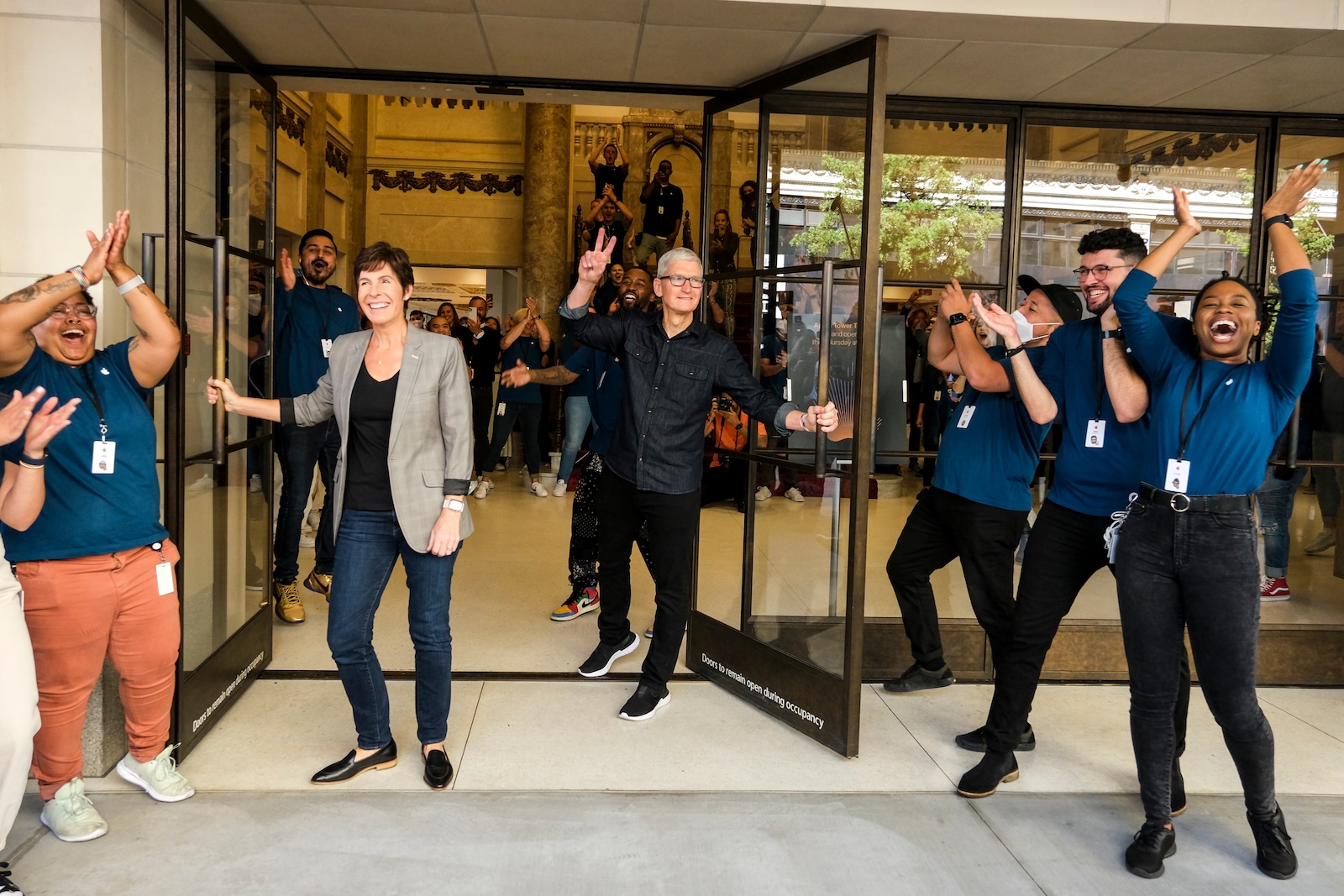
Tim Cook's journey – from newspaper boy in a town of 2,300 inhabitants in Alabama to CEO of the world's most valuable company – is one of the most remarkable careers in business history. His 15 years as Apple CEO not only led the company to economic success but also shaped its identity: data privacy, sustainability, and inclusion became core brand values under his leadership.
With his transition to Executive Chairman in September 2026, the Cook era doesn't end—it transforms. His successor, John Ternus, marks the beginning of a new phase, with a hardware engineer at the helm. However, Cook's influence on Apple will extend far beyond his operational tenure—in a role he himself describes as "not saying goodbye."
- Apple turns 50: Five decades that changed the World
- John Ternus: biography, career & the new Apple CEO
- Johny Srouji: Biography, career path & Apple's new Chief Hardware Officer
The best products for you: Our Amazon Storefront offers a wide selection of accessories, including for HomeKit. (Image: Apple)
- iPhone 18 Pro: All the rumors at a glance
- Apfelpatient Weekly #2
- MacBook Ultra: All the rumors at a glance
- Mac Studio M5: All the Rumors at a glance
- iPad 12th Generation: All the rumors at a glance
- iPad mini 8: All the rumors at a glance
- HomePod 3 & HomePod mini 2: All the rumors at a glance
- Apple HomePad: All the rumors at a glance
- MacBook Ultra: All the rumors at a glance
- AirPods Ultra: All the rumors at a glance
- Apple Watch Ultra 4: All the rumors at a glance
- Apple Watch Series 12: All the rumors at a glance
- iPhone 18 Pro: All the rumors at a glance
- iPhone Ultra (iPhone Fold): All rumors and facts at a glance
- Apfelpatient Weekly #1
- Password Manager Comparison: Apple, 1Password and Bitwarden
- iMac M5: All the Rumors at a glance
- Mac mini M5: All the Rumors at a glance
- Mac Studio M5: All the Rumors at a glance
- The new Apple TV 4K awaits Siri: All the Rumors about the Update
- New AirPods Pro: Camera, Gestures and H3 Chip planned
- Apple in April 2026: These Products and Updates are coming soon
- Siri in iOS 27: Everything we know so far about the AI reboot
- Apple turns 50: Five decades that changed the World