For years, Apple has been selling devices with chips originally intended for other products—chips that failed quality control. A new report reveals the extent of this practice: from the MacBook Neo and iPhone Air to the very first iPad. The savings amount to hundreds of millions of dollars.
The process is called chip binning, and Apple has quietly established it as a cornerstone of its hardware strategy. Instead of discarding partially defective chips, Apple deactivates the non-functional areas and uses the processors in cheaper products or even entirely different devices. A report in the Wall Street Journal now systematically lists, for the first time, how many current Apple products actually run on discarded chips – and cites prominent examples from the recent past. The model used by the MacBook Neo was particularly striking: its attractive entry-level price was largely based on the fact that the notebook contained A18 Pro chips, which weren't good enough for the iPhone 16 Pro. It's now clear that demand for the MacBook Neo completely depleted the stored stock of discarded chips.
This is how chip binning works
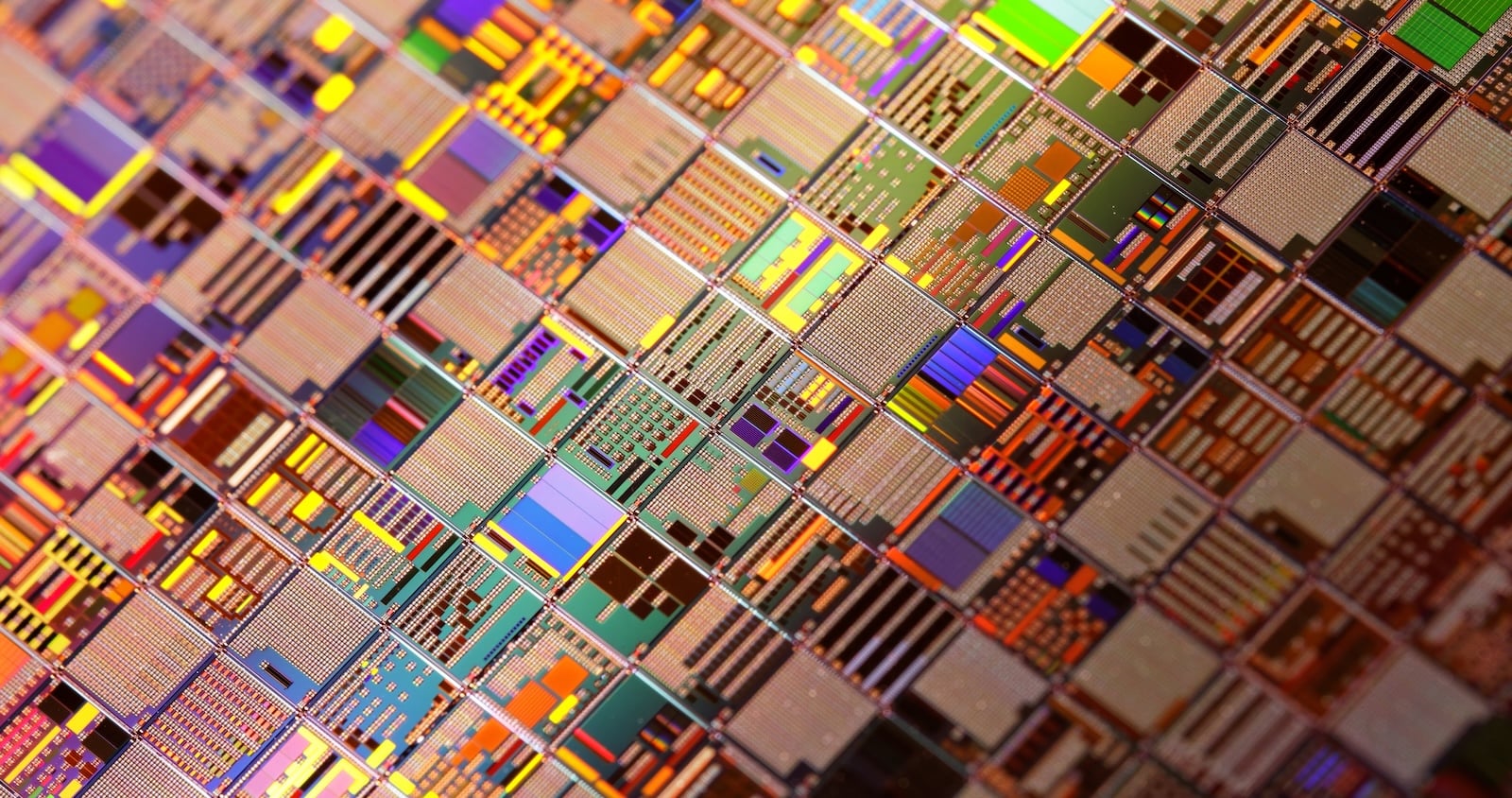
During the manufacturing process of modern Apple silicon chips, it regularly happens that individual areas of a processor do not operate according to specifications. This often affects individual GPU cores, but sometimes also efficiency values or thermal properties. Instead of completely discarding the expensive wafers, Apple deactivates the defective areas via software and sells the chips as a reduced-performance version.
A classic example was the 2020 M1 MacBook Air: the more expensive version had eight GPU cores, the cheaper one only seven. Apple never had TSMC produce dedicated 7-core versions – instead, chips with a malfunctioning GPU core were automatically incorporated into the base model. This increased production yield, lowered the unit price, and ensured that a seemingly inferior chip still became a marketable product.
MacBook Neo: Discarded iPhone chips as a recipe for success
The prime example is the MacBook Neo. Apple uses A18 Pro chips in it, which were originally intended for the iPhone 16 Pro but failed there because only five of the six GPU cores functioned correctly. In the MacBook Neo, the chips are declared as a 5-core GPU variant – and enable precisely the entry-level price with which Apple can aggressively attract new Mac users.
The strategy was so successful that Apple has now completely used up the stockpile of rejected A18 Pro chips that it had built up over months. A new production run is already underway to meet demand. Apple executives have even given the MacBook Neo prominent placement in recent weeks: In a recent interview, Greg Joswiak and John Ternus spoke at length about the MacBook Neo, smart glasses, and Apple's biggest flops.
Five more products with rejected chips
The Wall Street Journal report shows that chip binning is used across Apple's current product line. Specifically, the report cites the following examples:
- A15 Bionic chip in the iPhone SE
- A17 Pro in the iPad mini
- A18 in the iPhone 16e
- A19 in the iPhone 17e
- A19 Pro in the iPhone Air
The list is not exhaustive. The models mentioned are all devices with an attractive entry-level price or specific positioning. By reusing the chips, Apple can either increase its profit margin or lower prices – and makes different strategic decisions depending on the product segment. The close integration between iPhone and Mac production is also evident in the repair segment, where Apple has added new replacement parts for the MacBook Neo and iPhone 17e to its self-service repair store.
The practice is older than Apple Silicon
What sounds like an innovation from the M-chip era was actually something Apple started over 15 years ago. The report refers to the A4 chip from 2010: chips that consumed too much power for a smartphone were repurposed for the original Apple TV – where the higher power consumption was irrelevant because the device was permanently plugged in.
A similar pattern occurred with the second-generation HomePod. The S7 chip used there was originally developed for the Apple Watch. Less efficient versions ended up in the HomePod instead, where power consumption isn't critical. Apple hasn't just been using chip binning since its Silicon Valley era, but has gradually made the process an integral part of its supply chain.
Savings in the hundreds of millions
Over the years, the effects accumulate. The report assumes that Apple has saved hundreds of millions of dollars by recycling discarded chips – and at the same time made product categories economically viable in the first place, categories that would be more difficult to calculate without this cross-subsidization.
For Apple, this results in a twofold logic: Premium models like the iPhone Pro or Apple Watch get the flawless top-of-the-line chips, while the second-tier models are intentionally equipped with more affordable components. Customers benefit in both cases – in the premium segment through full performance, and in the entry-level segment through affordable prices. The only losers in this strategy are competitors who, lacking comparable production scale, can hardly react as flexibly to defective units.
A silent lever for Apple's margins
Chip binning may seem like a detail of manufacturing logistics at first glance. In reality, it's one of the levers Apple uses to defend its margins without openly lowering prices. As long as TSMC continues to operate at the limits of its process sizes and a certain percentage of chips don't meet peak specifications, Apple has a reliable stream of components that can be sold at a reduced price - without needing to develop a separate design variant. With each new chip generation, this mechanism becomes more important because modern manufacturing processes are increasingly complex and therefore more susceptible to partial failures. (Image: Shutterstock / Andrei Armiagov)
- Apple and Epic set a timetable for new commission negotiations
- AirPods Max: Designer Whang reveals details from five years of development
- WhatsApp is now rolling out Liquid Glass more broadly on iOS
- Court draws Federighi into xAI lawsuit – Cook remains uninvolved
- Codex is moving into the ChatGPT mobile app
- iPhone 18: Apple Modem Brings a Hidden Privacy Benefit
- Intel manufactures chips for iPhone, iPad and Mac for the first time – Apple production is underway
- OpenAI is preparing legal action against Apple over its Siri partnership
- Anthropic's Mythos Uncovers New macOS Vulnerabilities – Apple Reviews Report
- Shrinking Season 4: Filming starts next week – premiere possible in early 2027
- iPhone 17 Pro charges faster than 32 other smartphones in the test
- Unlocked iPhones bring thieves up to $800 more
- Apple's F1 plans in Europe: Sky secures key markets early
- Evercore raises Apple price target to $365 – Confidence in Apple Intelligence
- Tim Cook in Beijing: Trump Delegation with Musk and Wall Street Leaders
- Margo's Got Money Troubles: Apple TV orders second season
- Safari 26.5: Security update closes 20 WebKit vulnerabilities
- WhatsApp introduces Incognito Chats with Meta AI