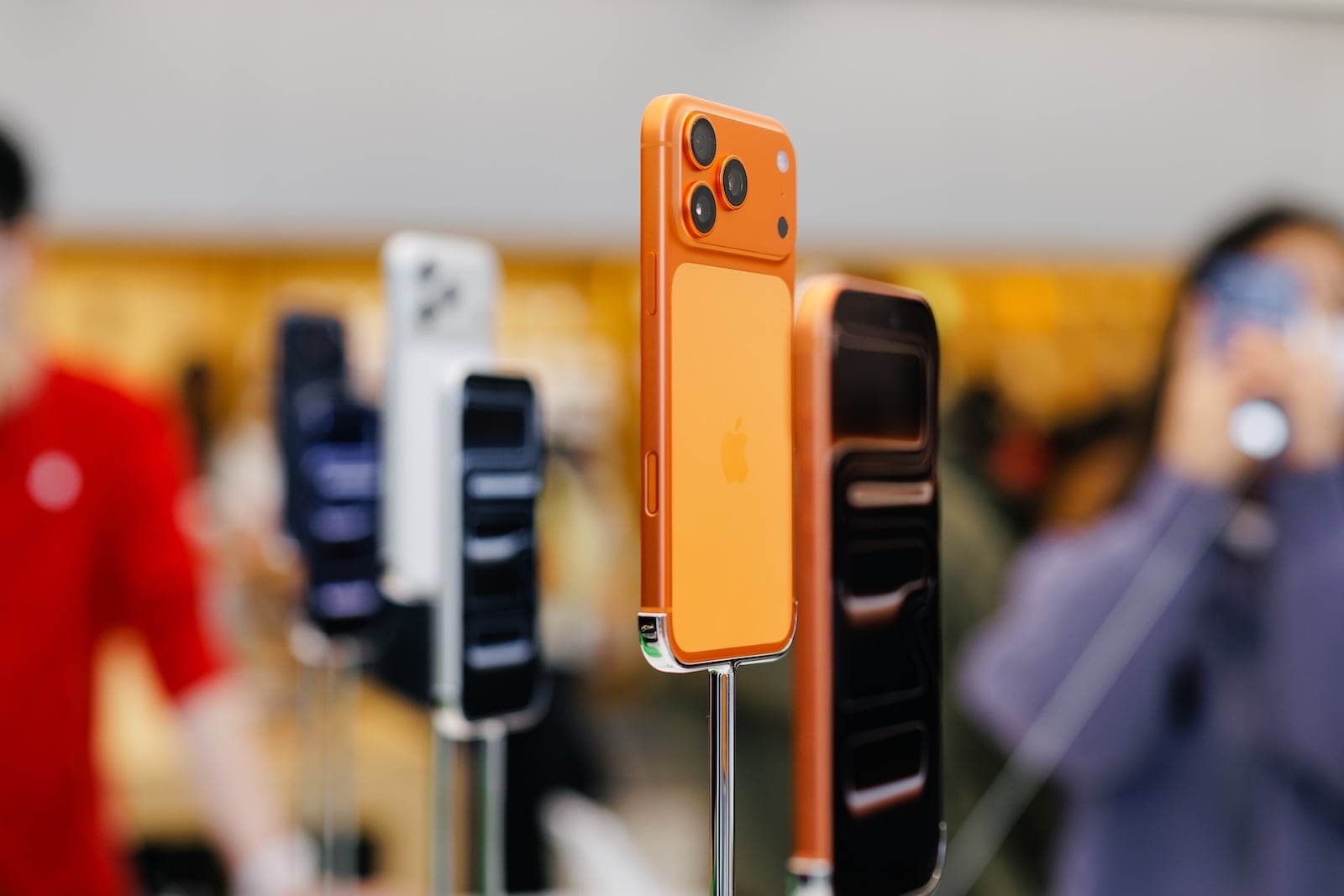
In a recent comparison test of 33 current smartphones, the iPhone 17 Pro took the overall victory in charging. No other model came out on top when considering both wired and wireless charging – and Apple even secured four of the top five spots in wireless charging. This success is likely due to a detail that many overlook.
The test, conducted by CNET Labs, compares Apple's current iPhones with devices from Samsung, Google, Motorola, and OnePlus, as well as international models. The evaluation focused not on the maximum wattage listed on the specifications, but on real-world charging performance under everyday conditions: How much battery capacity does a nearly empty device gain in a 30-minute charge? The results fit into the broader picture of an iPhone year in which Apple became the smartphone market leader in a first quarter for the first time – and also dominated with unusual clarity in specific technical areas.
This is how the lab tested
The test scenario is based on a typical usage situation: The smartphone is discharged to approximately 10 percent battery and then charged for 30 minutes. The percentage points gained are then compared – once via wired charging and once via wireless charging. An average score is calculated from both values, which determines the overall winner.
This approach is more relevant than pure datasheet values. The maximum charging power is only available briefly on most smartphones – the 30-minute test reflects the actual performance under real-world conditions. This is precisely where the iPhone 17 Pro performed best in lab tests.
Wireless Charging: Four iPhones in the Top 5
Apple achieves its most significant lead in wireless charging. The iPhone 17 Pro charges to 55 percent in 30 minutes. The iPhone 17 Pro Max follows in second place with 53 percent, and the iPhone 17 comes in third with 49 percent. The iPhone Air lands in fourth place with 47 percent. The first non-Apple device appears only in fifth place: Samsung's Galaxy S26 Ultra (39 percent).
MagSafe offers a plausible explanation: its magnetic alignment ensures precise positioning over the charging coil, without which a significant portion of the energy is lost during wireless charging. Even though Apple has since opened the standard to third-party manufacturers under the Qi 2.2 brand, Apple clearly retains a precision advantage – presumably because iPhones and MagSafe devices are precisely matched.
Wired charging: Samsung slightly ahead
In wired charging, the hierarchy at the top has changed: Samsung's Galaxy S26 Ultra takes first place with 76 percent in 30 minutes. The iPhone 17 Pro follows with 74 percent, tied with Motorola's Moto G Stylus (2025). The OnePlus 15 comes in fourth with 72 percent, followed by a trio of iPhone 17, iPhone 17 Pro Max, and Samsung Galaxy S25 FE, each with 69 percent.
Remarkably, the peak charging speeds are also closer together when using a wired charger than many data sheets would suggest. While Samsung devices are often advertised with high wattage ratings, the actual difference compared to the iPhone 17 Pro is only two percentage points after 30 minutes.
What users need for maximum charging speed
For the iPhone 17 Pro to actually reach its advertised charging speed, two hardware components are crucial. First, a power adapter with at least 30 watts – with smaller chargers, the iPhone significantly reduces its charging speed. Second, a MagSafe charger with fast-charging support, as not every magnetic charging pad delivers full power. If charging is slow, it's also worth looking at the most common causes of slow charging speeds on the iPhone, which are often related to cables, adapters, or iOS settings.
Anyone still using an older 20-watt power adapter from previous iPhone generations is therefore wasting a significant portion of the performance measured here. This is especially true for the Pro models, which only fully utilize their higher charging capacity from 30 watts upwards.
Where Apple sets itself apart technically
The test reveals an interesting distinction: While other manufacturers keep pace in terms of pure wattage output via cable, Apple pulls ahead when considering the overall mix of wired and wireless charging relevant to everyday use. Wireless charging is becoming increasingly important in practice – on the nightstand, in the car, on the desk – and this is precisely where Apple delivers by far the most efficient solution.
The result is all the more remarkable because Apple has traditionally not been among the leaders in wired charging and has for years set its maximum charging power more conservatively than its Android competitors. That Cupertino ultimately leads the overall ranking is not due to raw wattage, but to a sophisticated combination of hardware, magnetics, and energy management.
Apple's technological dominance has many facets
The CNET test joins a longer series of comparisons in which Apple models have achieved top positions – not only in sales figures, but also in technical disciplines such as smartphone rankings, where the iPhone occupies five of the top 10 spots. For the upcoming iPhone 18 generation, expectations for even faster charging are therefore also taking center stage – although the actual lead in wireless charging shows that Apple has room to maneuver in this area, a gap that the competition has yet to close. (Image: Shutterstock / Parilov)
- Unlocked iPhones bring thieves up to $800 more
- Apple's F1 plans in Europe: Sky secures key markets early
- Evercore raises Apple price target to $365 – Confidence in Apple Intelligence
- Tim Cook in Beijing: Trump Delegation with Musk and Wall Street Leaders
- Margo's Got Money Troubles: Apple TV orders second season
- Safari 26.5: Security update closes 20 WebKit vulnerabilities
- WhatsApp introduces Incognito Chats with Meta AI
- Apple sides with Google in the EU DMA dispute
- "Fútbol is life" becomes reality: Ted Lasso star Cristo Fernández signs professional contract
- Survey: Foldable smartphones and AI offer little incentive to switch
- Foxconn confirms ransomware attack on North American plants
- The iPhone 17 further increases Apple's market share in the US
- Quick Share meets AirDrop: Google opens file sharing to more Android devices
- Apple is using AI-generated presenters in its own app for the first time
- Severance Season 3 is coming much faster than the last one
- Apple acquires Color.io developer Patchflyer for Creator Studio
- Apple Arcade in May and June: Bluey event plus four new titles
- WhatsApp: Beta reveals next Liquid Glass level for chats
- Tim Cook flies to China with Trump
- OpenAI launches Daybreak in response to Anthropic's Glasswing program
- Apple releases recordings from the PPML workshop 2026
- Court approves Apple's Samsung request in DOJ antitrust case