The White House has confirmed that Apple CEO Tim Cook will be part of the US delegation accompanying President Trump on his trip to China this week. Cook is among a list of more than a dozen CEOs who will meet with Xi Jinping in Beijing. For Apple, the meeting is particularly significant at a politically sensitive time.
According to a report in the New York Times, Trump will depart from Washington for China on May 12 and meet with the Chinese president later that week. The White House's official confirmation of the participants comes just weeks after Apple announced a generational change at the top – Cook will hand over the CEO position to John Ternus on September 1 and transition to the role of Executive Chairman. The China trip is thus one of the last major foreign policy events on which Cook will appear as the current CEO.
The official delegation list
The White House-approved list includes 16 CEOs from various industries. Besides Cook, these are:
- Larry Fink (BlackRock)
- Stephen Schwarzman (Blackstone)
- Kelly Ortberg (Boeing)
- Brian Sikes (Cargill)
- Jane Fraser (Citi)
- Jim Anderson (Coherent)
- Larry Culp (GE Aerospace)
- David Solomon (Goldman Sachs)
- Jacob Thaysen (Illumina)
- Michael Miebach (Mastercard)
- Dina Powell McCormick (Meta)
- Sanjay Mehrotra (Micron)
- Cristiano Amon (Qualcomm)
- Elon Musk (Tesla)
- Ryan McInerney (Visa)
Cisco CEO Chuck Robbins was initially scheduled to attend, but the company later withdrew. The mix of tech, finance, industry, and consumer goods representatives underscores the broad scope of the visit – it's clearly not just about symbolism, but about concrete business discussions between the world's two largest economies.
Why Cook's participation is important
The participation takes on added significance due to the history: When Cook skipped Trump's trip to the United Arab Emirates last year, it reportedly angered the president personally. Shortly afterward, Trump floated the idea of a 25 percent tariff on iPhones not manufactured in the US – a move the Times at the time interpreted as a direct response to the cancellation.
With his now-confirmed participation in the China trip, Cook avoids a second public clash in his final months as CEO. At the same time, he is fulfilling the promise Apple officially made during the generational transition: Cook will remain involved in cultivating international government relations as Executive Chairman. This very interface with politics has been one of his core competencies for years and is one of the main reasons Apple is keeping him on board after the change.
China remains strategically central for Apple
For Apple, China is far more than just an important sales market. A significant portion of iPhone production still relies on Chinese manufacturing partners. It is precisely this dependence that will directly affect Cook's successor this fall – Ternus will reportedly have to decide on pricing levels and the pace of increased US manufacturing as one of his first major decisions. Cook's personal visit to Beijing during this transition signals continuity to both Beijing and Washington.
Cook himself has repeatedly emphasized in recent months that the timing of his withdrawal from day-to-day operations was deliberate. The trip to China fits this pattern: using the diplomatic stage one last time before responsibility passes to Ternus.
What the journey means for Apple
It's impossible to reliably predict a concrete outcome before departure. However, it's clear that Cook can accomplish three tasks simultaneously in Beijing: stabilizing the relationship between Apple and the Chinese government, securing the relationship with the White House, and symbolically paving the way for his successor. For Tim Cook's record as CEO, this appearance will thus become another building block in the political dimension of his tenure, which has shaped him more profoundly from the outset than his predecessors.
Cook leaves with political support
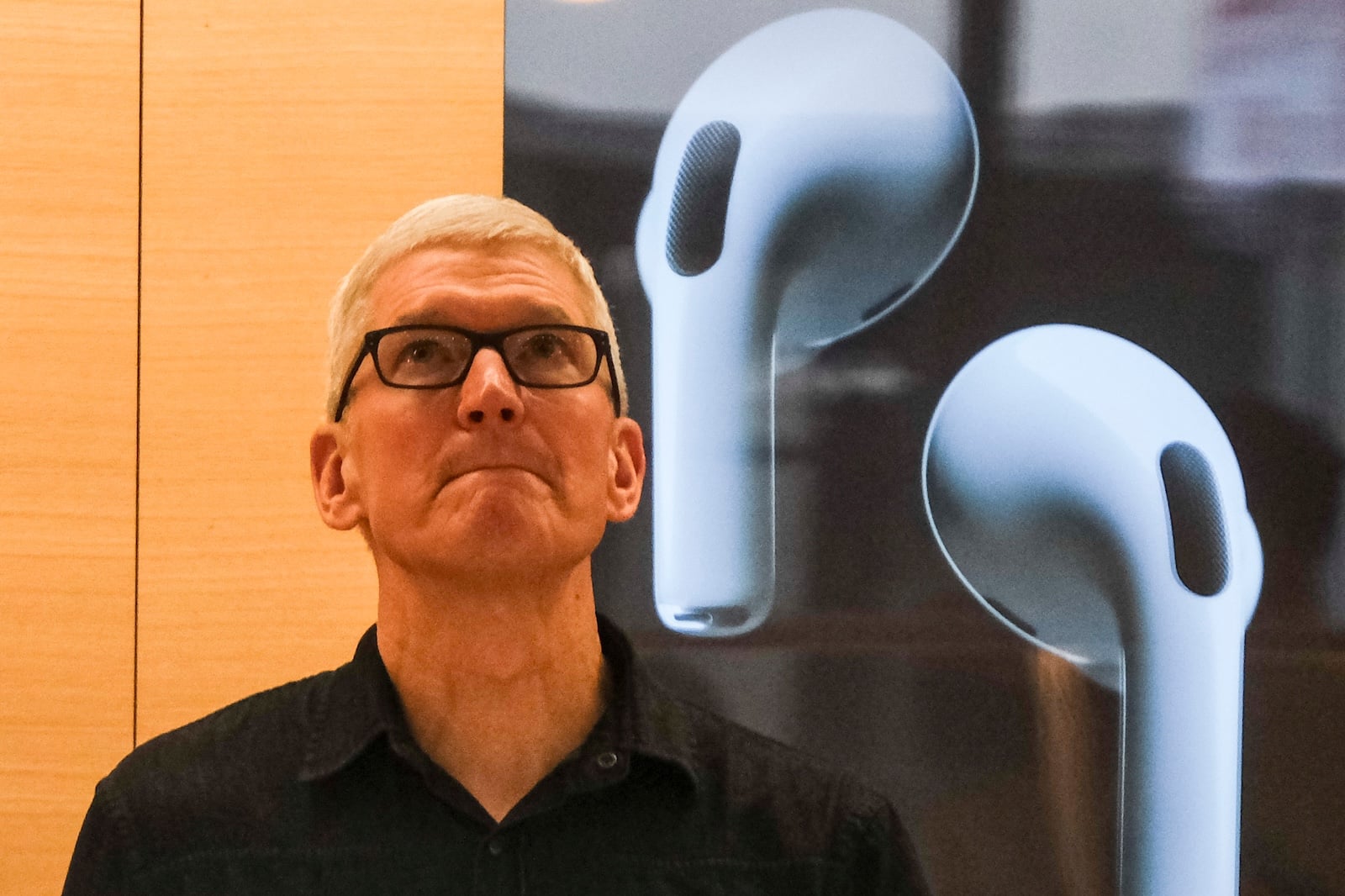
The confirmation of his participation shows how closely Apple is securing the political legitimacy of the leadership transition. Cook is using the final months of his tenure to cultivate relationships that will be directly relevant to Ternus's business starting in September. The trip to China is therefore less a conclusion than a bridge – between the old and new Apple leadership and between two political power centers on which Apple is equally dependent. (Image: Shutterstock / Ringo Chiu)
- OpenAI launches Daybreak in response to Anthropic's Glasswing program
- Apple releases recordings from the PPML workshop 2026
- Court approves Apple's Samsung request in DOJ antitrust case
- iOS 26.5 opens up AirPods functionality to third-party wearables in the EU
- iOS 26.5 closes over 50 security vulnerabilities at once
- RCS messages are encrypted: Apple launches beta in iOS 26.5
- iOS 26.5 is here: An overview of all the new features
- WhatsApp Plus launches on iPhone: What the subscription offers
- The Studio wins BAFTA 2026 and becomes the most awarded series of the year
- Apple TV honors British television with BAFTA TV Brunch in London
- Apple and Intel agree on chip manufacturing deal
- Nintendo raises prices for Switch 2 worldwide
- Wedbush raises Apple price target to $400 – biggest jump in years
- EU debate: VPN services come under scrutiny
- Apple warns of backdoor law in Canada
- Tim Cook on Trump's China trip – how the Apple CEO is using his last months
- Perplexity launches new Mac app with Personal Computer for all Pro users
- Filmed on iPhone: Four Indian short films showcase the potential of the iPhone 17 Pro Max
- Anthropic adds three new features to Claude Managed Agents
- Apple TV announces documentary series about the UConn Huskies
- Apple links its India strategy with climate goals