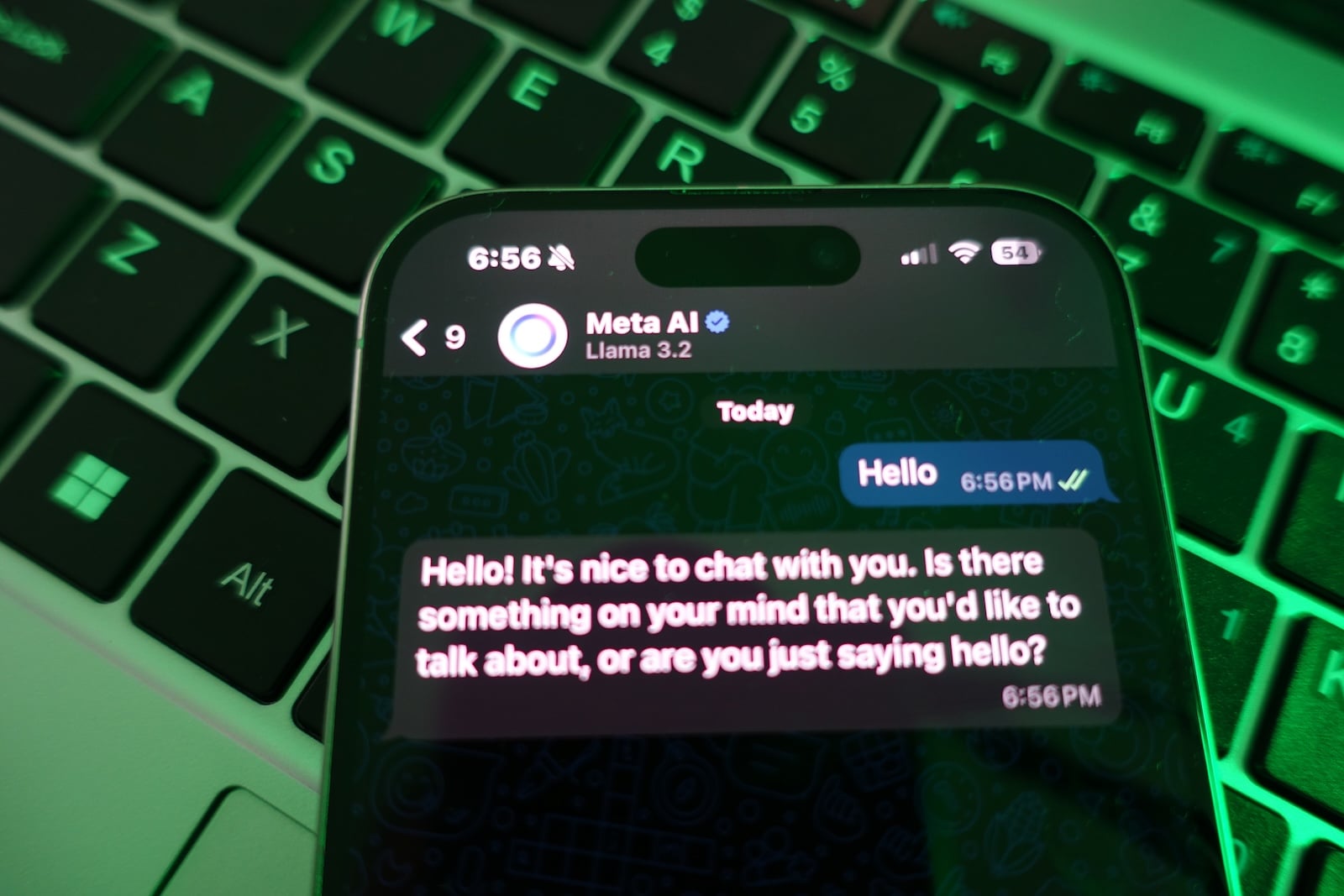
WhatsApp and the Meta AI app are getting a new privacy mode for AI conversations. In Incognito Chat, conversations with Meta AI will neither be stored on servers nor readable by Meta itself – the messages disappear automatically after the session ends. Technically, the concept is strikingly similar to Apple's Private Cloud Compute.
On May 13, 2026, Mark Zuckerberg announced the rollout of the new Incognito Chat feature on Threads. This feature addresses a growing concern among users that sensitive queries to AI chatbots are permanently stored on servers and used for training purposes or other commercial uses. Meta aims to solve this problem on a platform that has been promoting end-to-end encryption for years. For WhatsApp's strategy, this is a logical next step after the introduction of AI summaries for unread chats, which is also based on the private processing architecture.
How the new mode works
Incognito Chat is initiated via a new icon within a Meta AI conversation. Once activated, the conversation takes place in an isolated environment, the so-called Trusted Execution Environment. Within this architecture, the AI model can process the request and respond without the content being accessible to Meta employees, logging systems, or commercial analytics.
As soon as the session ends - for example, by closing the chat, locking the smartphone, or closing the app - the messages disappear. Nothing remains on Meta servers, and the history cannot be accessed later. Meta AI loses all context to the conversation. Therefore, anyone who wants to work on a topic across multiple sessions must continue to use the traditional Meta AI chat.
The rollout starts gradually this week on Android and iOS, with Meta announcing wider availability in the coming months. Currently, Incognito Chat only works in text format; image and voice functions are planned for the future. The app uses Meta's most powerful engine, the Muse Spark, which was released in April.
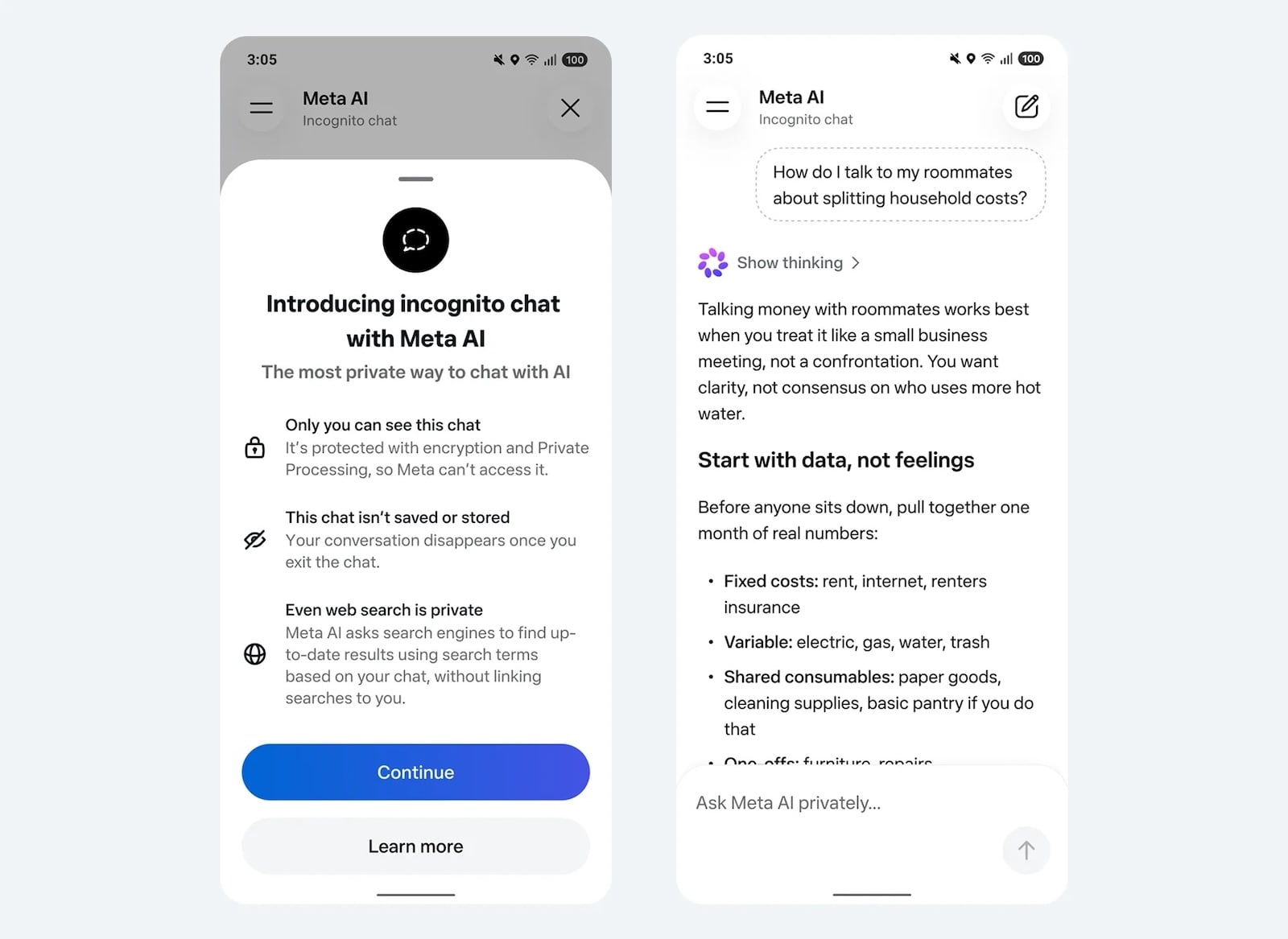
The technical basis: Private Processing
Behind Incognito Chat is Meta's private processing system, which the company first published as a concept in April 2025. The goal: to run AI functions on encrypted data without breaking WhatsApp's end-to-end encryption. Previously, Meta had used this architecture for smaller functions, such as message summaries. With Incognito Chat, a complete, user-visible product is being implemented on this infrastructure for the first time.
Central to this is the so-called Trusted Execution Environment. This is an isolated hardware and software environment on the servers where calculations take place without even the server operator being able to access them. Meta has made the design open for external review. A white paper is intended to make the technical details transparent. However, the architecture has not yet been fully tested – for example, regarding its resistance to court orders or side-channel attacks. Security researchers have successfully attacked similar concepts at Apple, Google, and other providers in the past.
The parallel to Apple Private Cloud Compute
Anyone reading about this concept inevitably thinks of Apple Private Cloud Compute. Apple's architecture for Apple Intelligence works on the same basic principle: AI requests are processed in an isolated server environment where neither Apple nor third parties can view the content. The data is not stored after the request is completed, external researchers can review the code, and cryptographic mechanisms are designed to ensure that even Apple cannot read the requests.
Meta explicitly positions its solution as an answer to an industry weakness. Meta's own communications state that while other providers may offer incognito modes, they still see "questions going in and answers going out." Apple Private Cloud Compute is the only existing architecture that makes a comparable promise. This is precisely why the concept is likely to be closely watched by Apple – not least because Apple has recently had to address its own vulnerabilities in Apple Intelligence.
The privacy policy is becoming an industry issue
With Incognito Chat, Meta is shifting the discussion about AI privacy to a concrete product level. What was previously a flagship project from Apple is now, at least conceptually, available on a platform with billions of users. Whether Meta can technically deliver on its promises and whether independent audits will confirm the architecture's security will become clear in the coming months.
For Apple, the reaction is a double-edged sword. On the one hand, Meta indirectly confirms that Apple's approach to data privacy was groundbreaking. On the other hand, Apple's unique selling point is diminished the moment a direct competitor deploys the same architecture on an even larger platform. Apple Intelligence will now have to measure up not only to OpenAI, Google, and Anthropic, but also to Meta's privacy promises – and all this on a platform that almost every iPhone user already has access to.
A new privacy benchmark for AI chats
The introduction of Incognito Chat is more than just a new WhatsApp feature. It marks the moment when privacy-friendly AI processing goes from being an Apple specialty to an industry-wide expectation. For users, this is a positive development; for Apple, it's a clear wake-up call. (Image: Shutterstock / Bendix M)
- Apple sides with Google in the EU DMA dispute
- "Fútbol is life" becomes reality: Ted Lasso star Cristo Fernández signs professional contract
- Survey: Foldable smartphones and AI offer little incentive to switch
- Foxconn confirms ransomware attack on North American plants
- The iPhone 17 further increases Apple's market share in the US
- Quick Share meets AirDrop: Google opens file sharing to more Android devices
- Apple is using AI-generated presenters in its own app for the first time
- Severance Season 3 is coming much faster than the last one
- Apple acquires Color.io developer Patchflyer for Creator Studio
- Apple Arcade in May and June: Bluey event plus four new titles
- WhatsApp: Beta reveals next Liquid Glass level for chats
- Tim Cook flies to China with Trump
- OpenAI launches Daybreak in response to Anthropic's Glasswing program
- Apple releases recordings from the PPML workshop 2026
- Court approves Apple's Samsung request in DOJ antitrust case
- iOS 26.5 opens up AirPods functionality to third-party wearables in the EU
- iOS 26.5 closes over 50 security vulnerabilities at once
- RCS messages are encrypted: Apple launches beta in iOS 26.5
- iOS 26.5 is here: An overview of all the new features