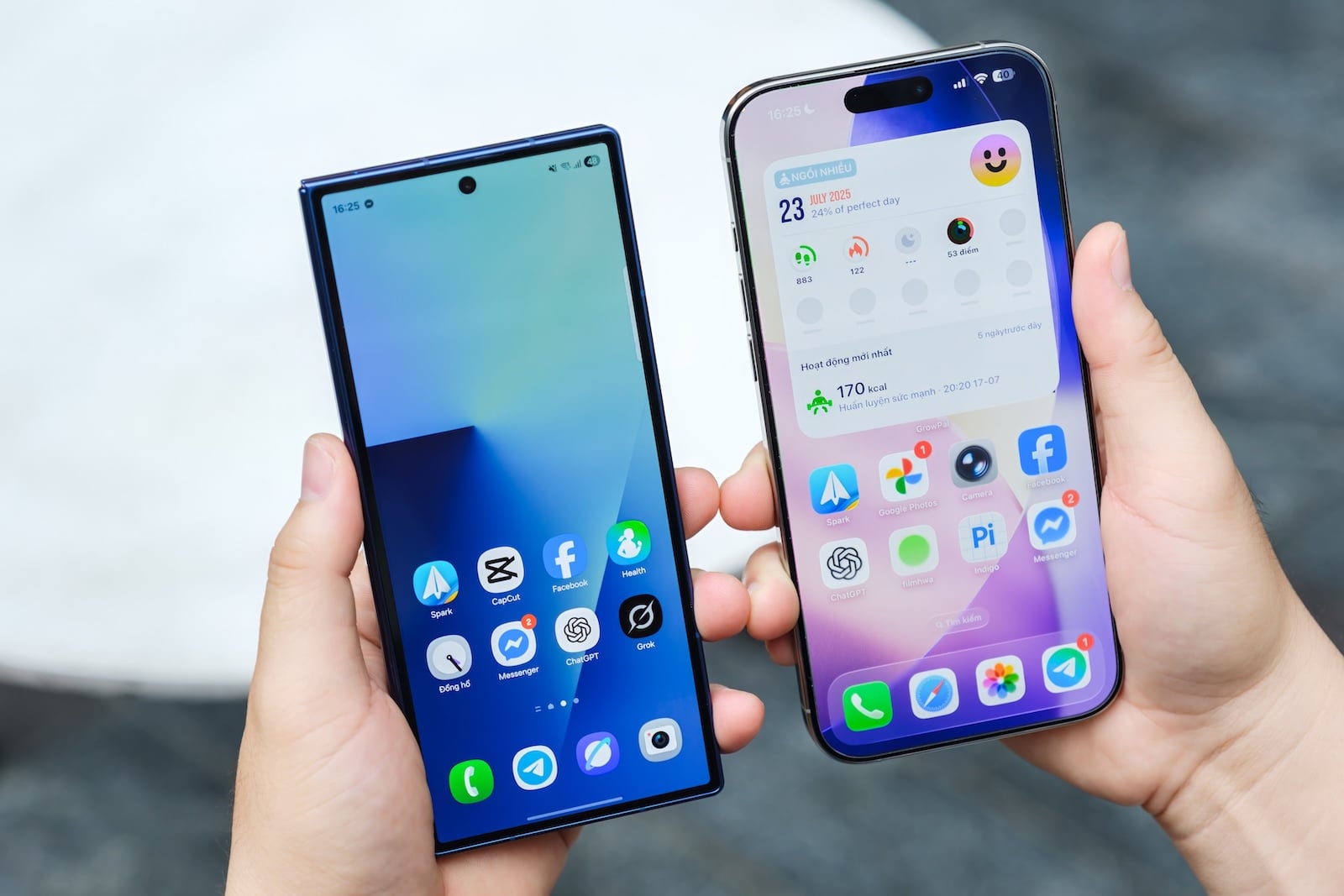
Google is expanding Quick Share AirDrop interoperability to a significantly larger base of Android devices. Samsung, OPPO, OnePlus, Vivo, Xiaomi, and HONOR will receive the feature in 2026. At the same time, a new QR code mode is coming to all other Android devices – and Apple users will be able to switch to Android more easily with a new iPhone-to-Android migration feature.
The announcement comes from a recent Google blog post and seamlessly follows a development that has been underway since November 2025. At that time, Google first introduced a bridge between its QuickShare service and Apple's AirDrop – but only for select Pixel models. QuickShare-AirDrop interoperability in the Android market thus became a reality, but remained severely limited. With the expansion now announced, this changes fundamentally: six of the largest Android manufacturers are expected to join in 2026.
What the expansion specifically means
Previously, the Quick Share AirDrop bridge only worked on certain Pixel devices. Users of Samsung Galaxy, OPPO Find, or Xiaomi smartphones remained reliant on third-party apps or cloud services for cross-platform sharing. According to Google, in 2026, devices from Samsung, OPPO, OnePlus, Vivo, Xiaomi, and HONOR will receive direct AirDrop support. This list now includes virtually all relevant Android manufacturers outside of China.
In parallel, Google is introducing an alternative solution for all other Android devices: a QR code mode. Users of Android smartphones without direct AirDrop compatibility can generate a QR code via Quick Share. When scanned by an iPhone, the content can be shared via the cloud. The rollout of this feature begins worldwide today and should be fully available within the next month. Google also announced plans to integrate Quick Share into apps like WhatsApp in the near future.
Migration in both directions will become easier
In addition to file sharing, the device switching process itself is also getting an update. As part of the Digital Markets Act, Apple and Google have jointly developed new switching features that significantly simplify the complete migration from an iPhone to an Android device and vice versa. Apple has already implemented the iOS component with iOS 26.3.
Google is now following suit: In 2026, Samsung Galaxy and Google Pixel devices are slated to receive the corresponding migration tools. This will transfer eSIM, passwords, photos, messages, apps, contacts, and the home screen layout – all wirelessly from the iPhone to the Android device. Google has already implemented similar tools for the reverse direction, so switching from an Android smartphone to an iPhone will no longer be hindered by data export issues.
Why Google is now forging ahead
This expansion is no coincidence. Apple's position in cross-platform file sharing has been a clear strength for years – AirDrop worked seamlessly between iPhone, iPad, and Mac, a feat no Android provider could match. Quick Share was the answer, but remained limited to the Android ecosystem. Only the integration with AirDrop has visibly diminished Apple's advantage.
By expanding to six additional manufacturers and adding a QR code mode for all other devices, Google is fundamentally strengthening its reach argument. From a buyer's perspective, this means that those who switch between Apple and Android ecosystems – for example, because family, friends, or colleagues use different platforms – are losing one of iOS's historically important lock-in factors.
Apple's role in this opening
It's noteworthy that Apple isn't remaining passive in this process. The migration tools were developed in close collaboration with Google, and Apple itself created the necessary conditions in iOS 26.3 to allow data to flow smoothly from an iPhone to Android. This is due to the Digital Markets Act, which mandates effective data portability between the major platforms.
For Apple, this is a mixed bag overall. On the one hand, iOS is noticeably losing its uniqueness in Europe – precisely what Apple criticized in its DMA statements. On the other hand, the tools now being developed are at least based on a technical foundation that Apple itself helped shape. The alternative would have been a significantly more open, less controlled solution. The fact that the QuickShare bridge still uses Bluetooth for device discovery and Wi-Fi for the actual data transfer – with clear security assurances on both sides – shows that Apple negotiated its security logic into the open version.
The bigger picture: AirDrop is losing its unique selling point
Overall, a picture is emerging that would have seemed unrealistic two years ago. AirDrop is gradually becoming a feature no longer exclusively tied to the Apple ecosystem. Conversely, Quick Share is losing its isolated position within Android. The two long-parallel worlds are beginning to converge on a standard that is mandated by regulations but technically sound.
For Apple, this means that the argument "only with AirDrop can you share really quickly" loses considerable weight. For Android users, it's a noticeable improvement. And for all users who switch between platforms, one of the most common points of friction in everyday digital life shrinks.
When the features become relevant for users
The QR code mode is being phased out globally today and will be available everywhere within a month. Direct AirDrop compatibility for Samsung, OPPO, OnePlus, Vivo, Xiaomi, and HONOR will roll out gradually in 2026 – Google has not yet announced specific dates for each manufacturer. iPhone-to-Android migration on Samsung Galaxy and Pixel devices will also follow in 2026. Those planning to switch or who regularly share files between the two platforms now have a concrete outlook – even though the details of each manufacturer's implementation are still pending. (Image: Shutterstock / tinhkhuong)
- Apple is using AI-generated presenters in its own app for the first time
- Severance Season 3 is coming much faster than the last one
- Apple acquires Color.io developer Patchflyer for Creator Studio
- Apple Arcade in May and June: Bluey event plus four new titles
- WhatsApp: Beta reveals next Liquid Glass level for chats
- Tim Cook flies to China with Trump
- OpenAI launches Daybreak in response to Anthropic's Glasswing program
- Apple releases recordings from the PPML workshop 2026
- Court approves Apple's Samsung request in DOJ antitrust case
- iOS 26.5 opens up AirPods functionality to third-party wearables in the EU
- iOS 26.5 closes over 50 security vulnerabilities at once
- RCS messages are encrypted: Apple launches beta in iOS 26.5
- iOS 26.5 is here: An overview of all the new features
- WhatsApp Plus launches on iPhone: What the subscription offers
- The Studio wins BAFTA 2026 and becomes the most awarded series of the year
- Apple TV honors British television with BAFTA TV Brunch in London
- Apple and Intel agree on chip manufacturing deal
- Nintendo raises prices for Switch 2 worldwide
- Wedbush raises Apple price target to $400 – biggest jump in years
- EU debate: VPN services come under scrutiny
- Apple warns of backdoor law in Canada