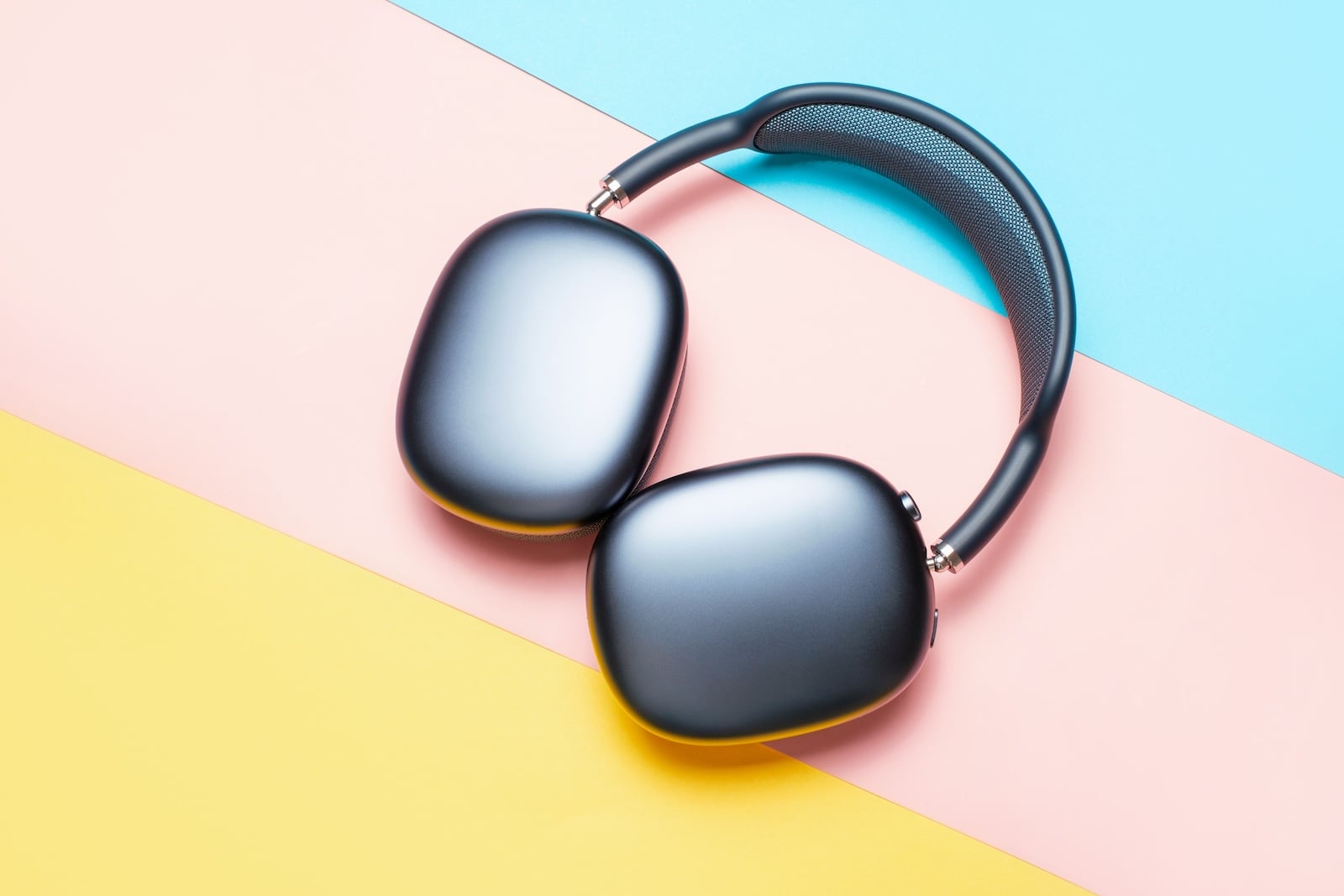
Eugene Whang worked for 22 years on Apple's hardware design team, contributing to products like the iPod Nano, iPhone, and AirPods under Jony Ive. In a recent interview, he speaks for the first time in detail about the development of the original AirPods Max – from the hundreds of ear tip variations tested, to three parallel design focuses, and the conscious decision against including an Apple logo on the top.
The interview, published in Highsnobiety magazine, offers rare insights into a process Apple typically keeps behind closed doors. Whang was part of Jony Ive's design circle and later followed him to LoveFrom. The AirPods Max were one of his last major Apple projects. Since Apple has since introduced the AirPods Max 2, the first comprehensive hardware update since the original launch, Whang's recollections of the first-generation development take on a contemporary relevance: many of the design decisions made back then continue to shape the product today.
Five years, three products in one
Whang describes the development of the AirPods Max as unusually lengthy. The team worked on the over-ear model for five years, essentially creating three products in parallel internally: headband, case, and ear tips. Each of these components had its own requirements, which could only be combined with the others to a limited extent.
According to Whang, the ear cushion was particularly challenging. Since heads and ears come in extremely different shapes and sizes, the team tried out "hundreds and hundreds of variations." The final shape was the result of this iterative process – with the aim of accommodating as many head geometries as possible simultaneously, without compromising the fit or acoustics.
No logo on the head
One detail that rarely goes unnoticed in everyday use is one that Whang specifically highlights in the interview: there is no Apple logo on the outside of the AirPods Max. While almost all other Apple products feature the apple logo visibly somewhere, the team deliberately omitted it from the over-ear headphones. The reason given: they "didn't want to brand the users' heads."
This decision aligns with a design principle that Whang explains in the interview: for Apple's industrial designers, form and materials are the end result of a process, not the beginning. Design proceeds from the inside out, with just as much attention paid to the arrangement of the circuit board and internal components as to the outer casing.
How Whang even came to work at Apple
The designer grew up in Vancouver, was immersed in basketball, DJing, and rave culture from an early age, and discovered his interest in industrial design through films like Blade Runner. In his final year of studies, he specifically sought out an Apple designer as a mentor - not Jony Ive himself, however, as he seemed too busy. Instead, he selected a name from an Apple designer directory "that looked friendly," suggested the email address, and simply called Apple's main number.
What started as a mentorship led to a job. Whang remained with the company for more than two decades. In parallel, he led a second life in the music scene: by day in Cupertino working on tolerances and component arrangements, by night in clubs behind the turntables. In 2010, he founded the music label Public Release, which positioned itself at the intersection of underground and pop culture.
Apple's internal design culture
Whang's descriptions of the design team's working methods are remarkable. He describes them as being characterized less by hierarchies than by strict discipline. They would gather around a table for hours, discussing every idea on an equal footing, "without egos" and with a clear separation between the idea and the person. Criticism was directed at the design, never at the colleague.
This directness is what held the team together for years, precisely because so much weight rested on every decision. Whang speaks of "so many resources, so much money" behind each product – and of how even after successful launches a kind of defensive mode remained: the question of what might have been overlooked.
Reference to the current AirPods Max generation
Whang's descriptions shed light on the decisions that are still visible today. With the transition to the second generation, Apple practically left the external design untouched, as a teardown of the AirPods Max 2 clearly demonstrated. The ear hooks, mesh headband, ear cups, and housing remained almost identical in the successor. The main changes were to the internal components and the software features surrounding the new H2 chip.
Anyone wanting to understand the exact differences between the first and second generations can find them in our detailed comparison of the two models. The fact that the external design has remained so robust through six years on the market indicates just how intensive the initial development phase actually was. Currently, the AirPods Max 2 are available on Amazon for slightly less than the regular MSRP.
Whang's journey from Cupertino to LoveFrom
Whang has since left the company and followed Jony Ive to his new design firm, LoveFrom. In Marin County, he had his home renovated by British architect John Pawson in a minimalist style that reflects his Apple roots. Looking back, he describes the company itself as a "school under Jony Ive," where "beauty in space" and "absence of things" were central values.
What remains of the AirPods Max project
Whang's descriptions place a product that occupies a special position in Apple's history. The AirPods Max are not a mass-market product in the same vein as the AirPods Pro, but rather a niche offering with a dedicated customer base of musicians, tech enthusiasts, and design aficionados. The fact that the external design has remained unchanged across three generations can also be seen as a result of the five-year development phase that Whang describes. What has been achieved through hundreds of variations is apparently not so easily revised – a rarely so clearly articulated testament to the amount of work that goes into something that appears so natural on the shelf. (Image: Shutterstock / TatianaKim)
- WhatsApp is now rolling out Liquid Glass more broadly on iOS
- Court draws Federighi into xAI lawsuit – Cook remains uninvolved
- Codex is moving into the ChatGPT mobile app
- iPhone 18: Apple Modem Brings a Hidden Privacy Benefit
- Intel manufactures chips for iPhone, iPad and Mac for the first time – Apple production is underway
- OpenAI is preparing legal action against Apple over its Siri partnership
- Anthropic's Mythos Uncovers New macOS Vulnerabilities – Apple Reviews Report
- Shrinking Season 4: Filming starts next week – premiere possible in early 2027
- iPhone 17 Pro charges faster than 32 other smartphones in the test
- Unlocked iPhones bring thieves up to $800 more
- Apple's F1 plans in Europe: Sky secures key markets early
- Evercore raises Apple price target to $365 – Confidence in Apple Intelligence
- Tim Cook in Beijing: Trump Delegation with Musk and Wall Street Leaders
- Margo's Got Money Troubles: Apple TV orders second season
- Safari 26.5: Security update closes 20 WebKit vulnerabilities
- WhatsApp introduces Incognito Chats with Meta AI