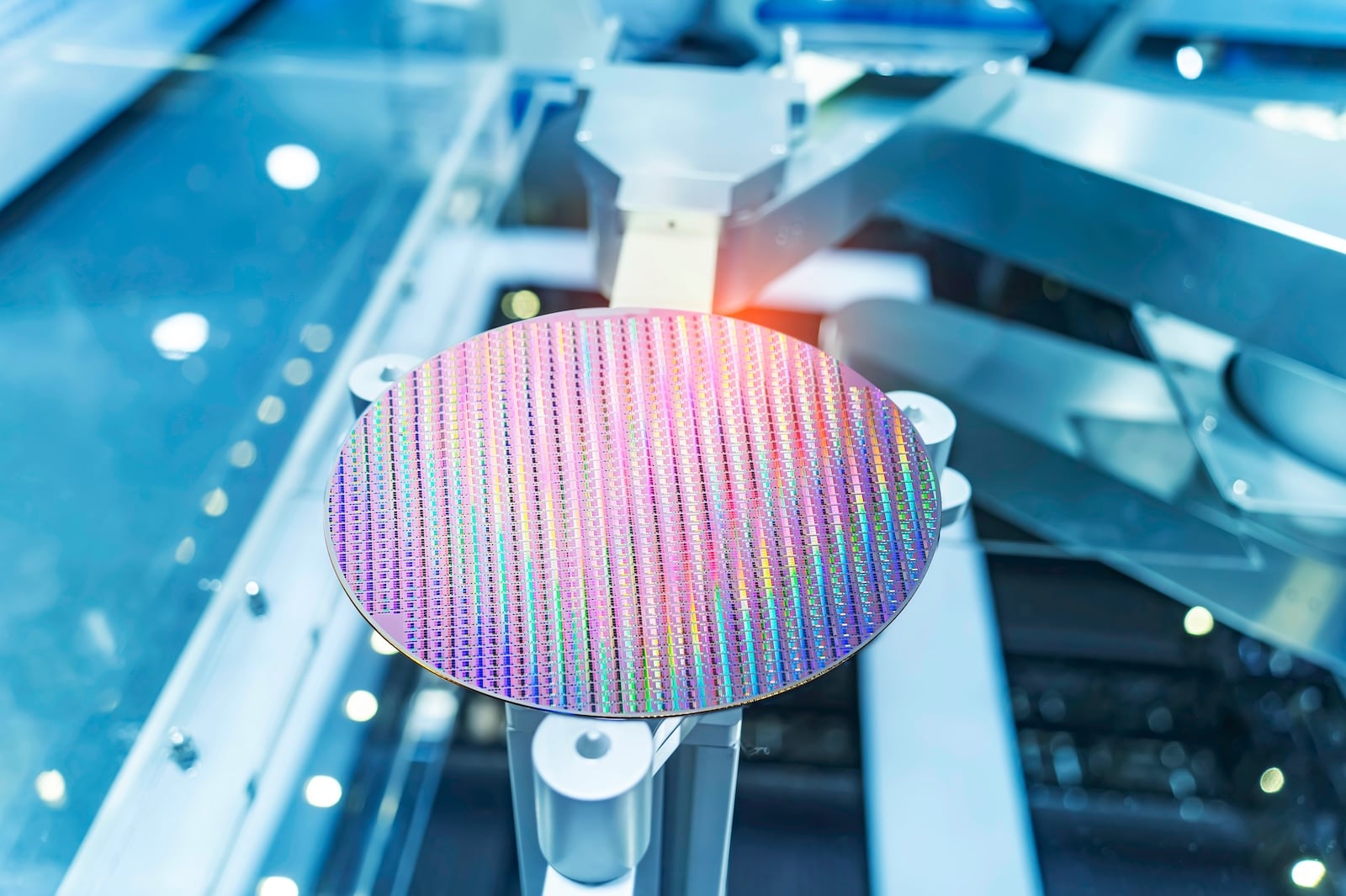
Apple's chip strategy is undergoing a tangible shift: According to a new report by Ming-Chi Kuo, Intel has begun initial production of processors for iPhones, iPads, and Macs. This ends, at least in some areas, the exclusive partnership between Apple and TSMC that has existed since 2016 – the Taiwanese company was the sole manufacturer of Apple's systems-on-a-chip for a decade.
The move had been anticipated for months. As early as fall 2025, analysts reported that Apple was considering Intel as a second manufacturing partner for upcoming chips. Just days before the latest Kuo update, the Wall Street Journal reported a preliminary agreement between Apple and Intel regarding chip production. With the now-confirmed start of initial production, the letter of intent has become a real supply chain event for the first time – one that is part of the broader US chip supply chain, into which Apple has provided unusually deep insights in recent months. However, official confirmation from Apple is still pending – all information originates from analyst and supply chain sources.
What Intel specifically produces for Apple
According to Kuo's analysis on X, Intel is initially producing low-end or legacy chips for iPhone, iPad, and Mac. These chips are manufactured using the 18A-P generation processors with Intel's Foveros packaging technology. Kuo didn't specify which A-series or M-series chips Apple is having Intel produce, but they are likely processors for older iPhone, iPad, and Mac models that are still actively sold, as well as entry-level and non-Pro versions of the respective product lines.
The distribution of orders follows a logical pattern: Approximately 80 percent of Intel wafers for Apple are for iPhone chips. This roughly reflects the product ratio in Apple's portfolio – the iPhone is by far Apple's highest-volume product. The remaining 20 percent are distributed among iPad and Mac processors.
The timeline: Testing, ramping, growth, decline
Kuo outlines a multi-year lifecycle for the Intel 18A-P series at Apple. According to this plan, small-scale testing will begin in 2026. Production is slated to ramp up to higher volumes in 2027. Continued growth is projected through 2028, before a decline begins in 2029. This curve follows the classic production cycle of a single process generation – as soon as newer manufacturing technologies become available, manufacturers reallocate production volumes accordingly.
For Apple, this means that Intel is primarily serving as a risk diversifier in the current window, not as a replacement for TSMC for high-end chips. The premium A-series variants (such as the A19 Pro in the iPhone 17 Pro) and the high-performance M-series chips of the Pro, Max, and Ultra lines will remain with TSMC – manufactured on the 3- and 2-nanometer processes that Apple will be using in the coming years.
However, an additional point from Kuo's note is noteworthy: Apple is apparently also actively examining other advanced manufacturing processes from Intel. This suggests that the current 18A-P partnership is not the end goal, but rather the first step towards broader collaboration – should Intel's future nodes, such as 14A, deliver in practice what the company promises.
What 18A-P and Foveros mean
Intel's 18A-P is a variant of the so-called 18A process, with which Intel is attempting to rejoin the leading manufacturing group. The "A" designation stands for "Angstrom" - the value indicates structures smaller than two nanometers. Intel is promoting 18A primarily with two technical innovations: RibbonFET transistors and the PowerVia architecture for back-side power supply of the chips.
Foveros, in turn, is Intel's 3D packaging technology. It allows multiple smaller chip components (so-called chiplets) to be stacked on top of each other instead of placed side by side. This saves space and enables more efficient connections between the components. Apple could therefore use Foveros to obtain an architecture that integrates well into existing iPhone and iPad designs in terms of form and power consumption.
Why Apple is taking this step now
Three factors make Intel attractive to Apple at this stage. First, politically: Increased manufacturing in the US aligns with the current US administration's "Made in USA" policy and reduces geopolitical risks surrounding Taiwan. Second, strategically: Apple had relied almost entirely on TSMC for years – a second manufacturer increases its negotiating power and reduces the risk of supply bottlenecks. Third, commercially: The situation at TSMC has recently shifted because Apple lost its long-standing leading position as TSMC's most important customer to Nvidia. An alternative source for less advanced processes provides Apple with some relief in this new competitive landscape.
For Intel, this deal is therefore extremely valuable. The company has been fighting for years to return to the manufacturing elite and needs a major customer to fully utilize and validate its 18A production. Apple represents the greatest possible leverage in achieving this.
TSMC remains the main partner – but no longer exclusively
The key takeaway from Kuo's report is not that Apple is leaving TSMC, but rather that the exclusivity agreement in place since 2016 is ending. TSMC will continue to manufacture all high-end chips, all A-series Pro models, and the high-end M-Pro, M-Max, and M-Ultra variants. Intel will take over the area that is essential to Apple's commercial success but less technically demanding: entry-level chips with high volumes and mature manufacturing processes. Even when Intel's production is fully ramped up, Kuo states that TSMC will still cover over 90 percent of Apple's chip volume.
What is changing is the strategic architecture. Apple is demonstrating that diversification in manufacturing is no longer a theoretical goal, but part of operational reality – with all the consequences for negotiating leverage with TSMC and for the resilience of iPhone, iPad, and Mac production.
A new chapter in Apple's chip history
Intel's entry into Apple manufacturing completes a historical arc. Until 2020, Apple relied on Intel as the developer and manufacturer of its Mac processors before Apple Silicon marked the complete transition to its own ARM-based designs. Now Intel returns – but in a purely supportive role: not as the chip architect, but as a contract manufacturer for Apple's own designs. Which specific products will ship with Intel-manufactured Apple chips in 2027 and 2028 should become clearer in the coming quarters – the business has now officially commenced with initial production. (Image: Shutterstock / asharkyu)
- OpenAI is preparing legal action against Apple over its Siri partnership
- Anthropic's Mythos Uncovers New macOS Vulnerabilities – Apple Reviews Report
- Shrinking Season 4: Filming starts next week – premiere possible in early 2027
- iPhone 17 Pro charges faster than 32 other smartphones in the test
- Unlocked iPhones bring thieves up to $800 more
- Apple's F1 plans in Europe: Sky secures key markets early
- Evercore raises Apple price target to $365 – Confidence in Apple Intelligence
- Tim Cook in Beijing: Trump Delegation with Musk and Wall Street Leaders
- Margo's Got Money Troubles: Apple TV orders second season
- Safari 26.5: Security update closes 20 WebKit vulnerabilities
- WhatsApp introduces Incognito Chats with Meta AI
- Apple sides with Google in the EU DMA dispute
- "Fútbol is life" becomes reality: Ted Lasso star Cristo Fernández signs professional contract
- Survey: Foldable smartphones and AI offer little incentive to switch
- Foxconn confirms ransomware attack on North American plants
- The iPhone 17 further increases Apple's market share in the US
- Quick Share meets AirDrop: Google opens file sharing to more Android devices
- Apple is using AI-generated presenters in its own app for the first time
- Severance Season 3 is coming much faster than the last one
- Apple acquires Color.io developer Patchflyer for Creator Studio
- Apple Arcade in May and June: Bluey event plus four new titles
- WhatsApp: Beta reveals next Liquid Glass level for chats
- Tim Cook flies to China with Trump