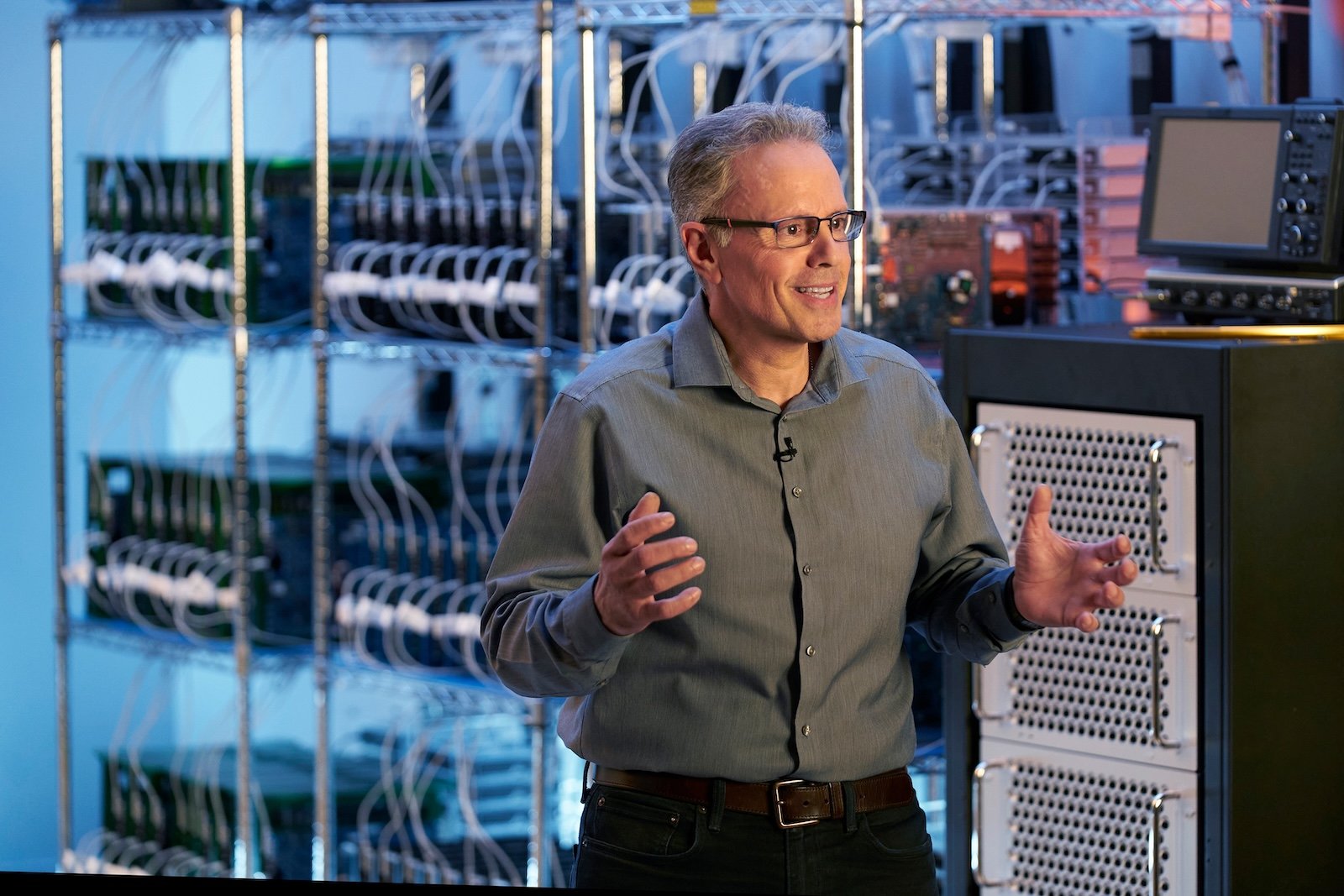
Johny Srouji isn't the most famous Apple executive – but he is one of the most important. As the architect of Apple Silicon, he laid the foundation for the company's transformation over the past 18 years. With his appointment as Chief Hardware Officer on April 20, 2026, his role finally receives the name it deserves.
If there's one Apple executive who shaped the Cook era technologically like no other, it's Johny Srouji. While Tim Cook led Apple to the top financially and John Ternus oversaw the hardware product lines, Srouji was at the heart of Apple's biggest technological transformation: the transition to Apple Silicon. With his appointment as Chief Hardware Officer on April 20, 2026, he will become the second most important operational figure at Apple – reporting directly to the new CEO, John Ternus.
Johny Srouji's biography is unusual for a Silicon Valley manager of his caliber: Born in Haifa in 1964, raised in an Arab Christian family in one of Israel's most ethnically diverse cities, he studied computer science at the Technion, worked for IBM, Intel, and IBM again before joining Apple in 2008 to build something entirely new: the company's first in-house chip architecture. In this article, we examine his career path in detail—from his roots in Haifa to his new role as Chief Hardware Officer, where he unites hardware engineering and hardware technologies under a single leadership.
Childhood in Haifa
Johny Srouji was born in 1964 in the Abbas neighborhood in central Haifa, not far from Wadi Nisnas. His family belongs to one of the oldest Arab Christian communities in the city. Srouji is the third of four children.
Haifa itself is a special city: a port metropolis in northern Israel where Christians, Muslims, Jews, and Baháʼís have traditionally lived together. In a Bloomberg interview, Srouji described his hometown as "one of the best-integrated cities in Israel," saying, "You have Christians, Muslims, Jews, Baháʼís—every religion you can imagine—and they all live together in peaceful harmony. Integration has worked for me."
His father, Farid, was a carpenter and craftsman who ran a small metal mold-making business, producing casting molds according to specifications from, among others, the Israeli Ministry of Defense. According to Bloomberg, from the age of ten, Johny Srouji helped out in his father's business on weekends and during school holidays, working on wooden molds that were later used to cast engine parts, medical devices, and machine components.
School years and studies at the Techion
Srouji and his brother attended the École des Sœurs de Nazareth in Haifa, a prestigious private school in their neighborhood. He achieved outstanding grades in mathematics, physics, chemistry, and science. His first encounter with computers came from a teacher who also taught at the Technion – and his interest was sparked.
After graduating from high school, Srouji enrolled at the Technion – Israel Institute of Technology, one of the world's most prestigious technical universities. There he earned both his bachelor's and master's degrees in computer science – both with distinction (summa cum laude and magna cum laude, respectively). Even during his studies, he attracted the attention of mentors and professors who guided him towards research and innovation.
Srouji speaks four languages fluently: Arabic, Hebrew, English and French.
First career stop: IBM Haifa
After completing his master's degree, Srouji joined IBM's research laboratory in Haifa in 1990 – at the time IBM's largest research center outside the US, which specifically targeted the best graduates from the Technion. There, Srouji conducted research in the field of distributed systems: a then-emerging field in which networked computers collaboratively solve computationally intensive tasks.
His work impressed his superiors from the very beginning. His boss at the time, Oded Cohn, Vice President and Laboratory Director of IBM Haifa Research, later said in a Bloomberg interview: "Sometimes I wondered – when he received an assignment and completed it perfectly within a day – whether he was brilliant or simply hadn’t slept. In some cases, the answer was: both."
Twelve years at Intel
In 1993, Srouji joined Intel's Israel Design Center in Haifa – one of the key development sites for the US corporation's then-booming processors. He worked there for over a decade in various roles in VLSI (Very Large Scale Integration) design and chip verification, rising to the position of Senior Manager. During his time at Intel, he was also briefly seconded to the USA – to Austin, Texas.
For Srouji, Intel was the place where he built his deep understanding of modern processor architectures – exactly the experience that Apple would later desperately seek.
Return to IBM: POWER7
In 2005, Srouji returned to IBM – this time in the USA. He took on the role of CPU Design Manager for the POWER7 series, a line of high-performance server processors. In this position, he led teams working on high-performance processors for enterprise and data center customers.
This position was an important stepping stone for Srouji: He left the consumer chip world and gained leadership experience in a high-end area of chip development where performance and reliability allow no compromises.
Apple's call: March 2008
In March 2008, Bob Mansfield, then Apple's head of hardware design, recruited Srouji for Apple. The reason: Steve Jobs had decided that Apple should develop its own chips instead of continuing to rely on external suppliers. To this end, Apple acquired the startup PA Semi, which specialized in energy-efficient chip designs, that same year. The plan: Srouji was to build a dedicated Apple Silicon division based on this team.
Srouji's first major project at Apple was the A4 chip – Apple's first in-house system-on-a-chip (SoC). The A4 debuted in 2010 in the first iPad and the iPhone 4. It was a modified version of an ARM-based architecture optimized for efficient power consumption and high graphics performance for the then-new Retina display.
Srouji himself described the development as a race: "The plane took off, and I built the runway just in time," he later told Bloomberg.
Structure of the Apple Silicon architecture
The A4 was just the beginning. In the following years, Srouji's team developed an entire generation of Apple chips, each more powerful than the last. A particularly significant milestone was the 2013 A7 chip, the first mobile consumer processor ever to switch to 64-bit architecture, surprising the entire smartphone industry.
Another key phase was in 2015, when Srouji's team performed a crucial rescue: The iPad Pro was behind schedule, and the originally planned A8X chip would have been outdated by the fall launch. Srouji's team developed the A9X in record time – a dedicated tablet chip with significantly higher performance. According to a Bloomberg report, Srouji thus "saved" Apple at least six months of development time.
The rise to Senior Vice President
In December 2015, Srouji was promoted to Senior Vice President of Hardware Technologies and appointed to Apple's executive team. From that point on, he reported directly to CEO Tim Cook. The promotion included stock options worth approximately $10 million – a testament to how highly Apple valued his work.
As SVP of Hardware Technologies, Srouji led significantly more than just chip development from 2015 onwards. His responsibilities included:
- Apple Silicon – the A-chips for iPhone and iPad, and later the M-chips for Mac
- Batteries and energy management
- Cameras and image sensors
- Storage controller for internal storage
- Sensors for health and environmental measurements
- Displays including OLED and later MicroLED research
- Mobile cellular modems – Apple's own C-Series modems, which are increasingly replacing Qualcomm
The transition to Apple Silicon
Perhaps the most important moment in Srouji's career was the announcement of the Mac product line's transition from Intel processors to Apple Silicon at WWDC 2020. In a later interview, he explained that the foundations for the M1 had been laid "over a decade earlier" – through a scalable architecture that Apple could apply from the iPhone chip to the desktop processor.
The M1, unveiled in November 2020, was a 5-nanometer processor with an integrated Neural Engine – and the results impressed the entire industry. The chip delivered twice the performance of conventional processors and achieved the peak performance of comparable Intel processors while using a quarter of the power. For Apple, this was one of the boldest strategic decisions of the Cook era – and it succeeded without major setbacks.
Srouji emphasized in an interview with Ars Technica: "We are a product company, and we have built a beautiful product that embodies the tight integration of software and silicon. It’s not about gigahertz and megahertz, but about what the customer gets out of it."
Apple's development centers in Israel
An often overlooked aspect of Srouji's work is his influence on Apple's presence in Israel. Under his leadership, three major development centers were established in Israel in recent years:
- Herzliya (since 2011) – now in a 32-story tower with 45,000 m²
- Haifa – the expansion was announced in 2023 and doubles the existing area.
- Jerusalem (since 2022) – focused on the next generation of Apple Silicon
According to Bloomberg reports, the three locations employ a total of around 2,500 people – and many of Apple's most successful chips, including parts of the M1 Pro and M1 Max, were developed behind closed doors in Israel. In 2022, Srouji also announced the opening of a smaller Apple development center in Rawabi, Palestine, which now employs dozens of people.
Srouji as a person and leader
Despite his enormous importance to Apple, Srouji deliberately kept a low profile. Bloomberg writers, in their 2016 profile, described him as "the most important Apple executive you've never heard of." Intel colleagues recalled in a Calcalist profile: "After just one week, we were charmed by him. He is an exceptionally humble, quiet, hardworking, and courteous man."
He is considered a "no-nonsense" manager who demands hard truths and focuses on problems and areas for improvement. Personally, he lives a low-key life: According to Ynetnews, he is married to Radha, a woman from Fassuta, a Christian Arab village in Galilee. The couple has three adult children. The family lives in the Almaden neighborhood, not far from Apple Park in Cupertino.
When Srouji was on the shortlist for the CEO position at Intel in 2019, he quickly made it clear internally that he did not want to leave Apple. Rumors of a possible departure surfaced again at the end of 2025 – according to Bloomberg, Tim Cook responded by offering Srouji additional responsibilities and a generous compensation package to retain him. His appointment as Chief Hardware Officer a few months later can be seen in this context.
The appointment as Chief Hardware Officer
On April 20, 2026, Apple officially announced that Srouji would be appointed Chief Hardware Officer with immediate effect – a newly created role that combines two previously separate areas: Hardware Engineering (previously under John Ternus) and Hardware Technologies (Srouji's previous area).
Tim Cook praised Srouji highly in the official Apple press release:
Johny is one of the most talented people I've ever had the privilege of working with. He played a unique role in Apple's silicon strategy, and his influence is deeply felt not only within the company but throughout the entire industry.
The designated new CEO, John Ternus, also had positive things to say:
Johny was an incredible partner on the executive team and will be an exceptional Chief Hardware Officer. I look forward to continuing to work closely with him in our new roles.
In his new role, Srouji will lead both the hardware engineering and hardware technologies organizations – an increase in responsibilities that makes him the second most important operational figure at Apple. The strategic decision behind this is clear: Modern Apple products, such as the upcoming Apple Glasses or new Mac generations, require close integration of chip design, sensors, battery, and enclosure engineering – unified leadership significantly shortens decision-making processes.
The most important points in brief: Johny Srouji at a glance
| Category | Details |
|---|---|
| Full name | Johny Srouji |
| Born | 1964 in Haifa, Israel |
| Origin | Arab Christian family in the Abbas neighborhood, Haifa |
| Languages | Arabic, Hebrew, English, French |
| Training | Bachelor and Master in Computer Science, Technion – Israel Institute of Technology (summa/magna cum laude) |
| Station 1 | IBM Haifa Research (1990–1992) |
| Station 2 | Intel Israel Design Center (1993–2005) |
| Station 3 | IBM USA, POWER7 CPU Design Manager (from 2005) |
| Apple entry | March 2008 |
| Apple's first project | A4 chip (debuted in 2010 in the first iPad and iPhone 4) |
| SVP of Hardware Technologies | December 2015 |
| Chief Hardware Officer | April 20, 2026 |
| Family | Married to Radha, three grown children |
| Place of residence | Almaden, Cupertino, California |
From ten-year-old in Haifa to Chief Hardware Officer
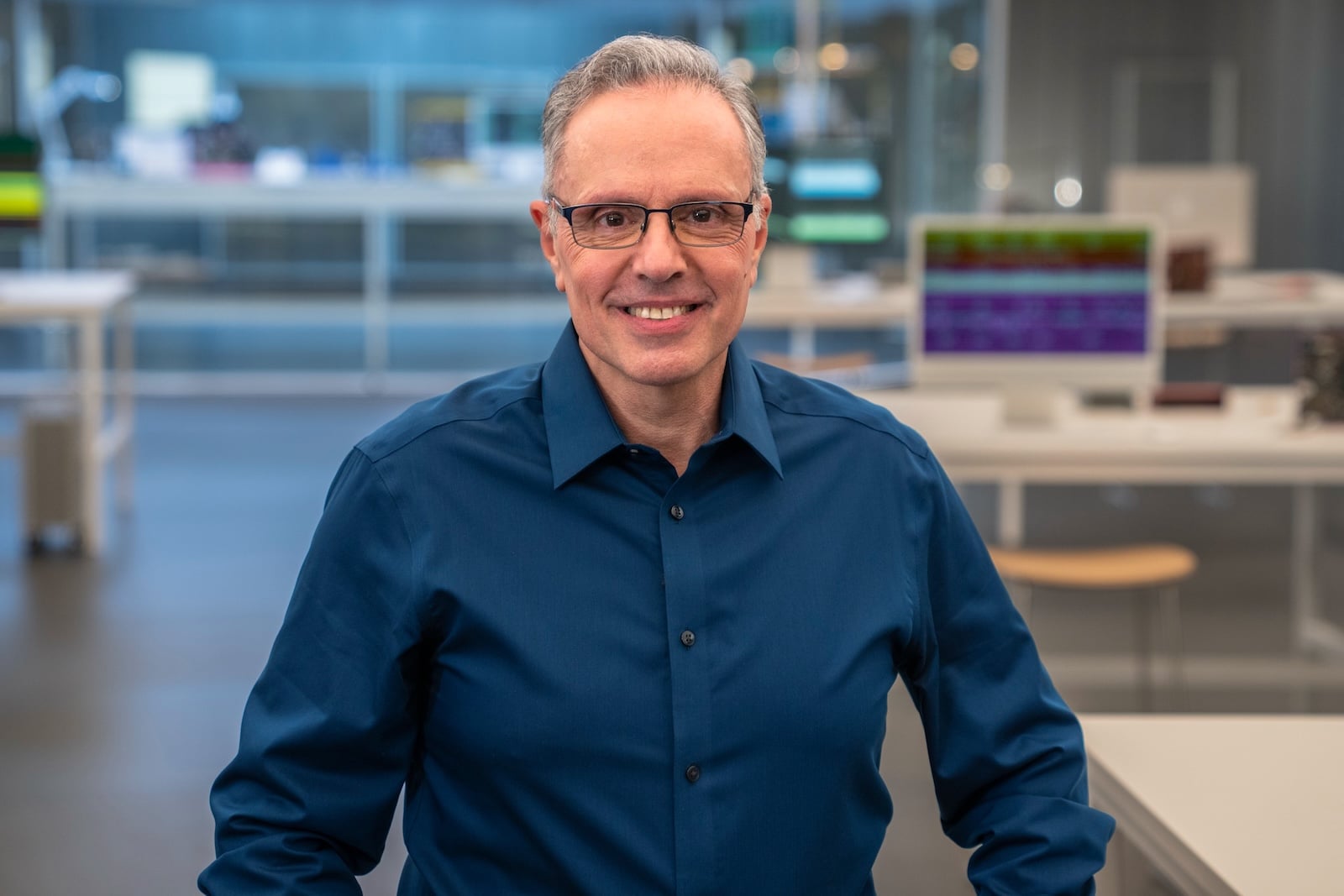
The story of Johny Srouji is one of the most unusual rags-to-riches stories in the tech industry. A boy who helped out in his father's metal pattern-making business from the age of ten became the architect of the chip strategy of the world's most valuable company. His biography embodies what he himself said about his hometown: diversity as a strength, integration as a way of life.
With his appointment as Chief Hardware Officer, Srouji assumes technical leadership at a crucial juncture for a company facing several major transformations: Apple Glasses, the next generation of Mac chips, foldable iPhones, and an increasingly independent modem business. That Srouji – who has shaped the company's technical DNA like few others – will take on these responsibilities alongside the new CEO, John Ternus, sends a strong signal of continuity and technical expertise at the top.
- Apple turns 50: Five decades that changed the World
- John Ternus: biography, career & the new Apple CEO
- Tim Cook: Biography, career & his time as Apple CEO
The best products for you: Our Amazon Storefront offers a wide selection of accessories, including for HomeKit. (Image: Apple)
- John Ternus: biography, career & the new Apple CEO
- Tim Cook: Biography, career & his time as Apple CEO
- iPhone 18 Pro: All the rumors at a glance
- Apfelpatient Weekly #2
- MacBook Ultra: All the rumors at a glance
- Mac Studio M5: All the Rumors at a glance
- iPad 12th Generation: All the rumors at a glance
- iPad mini 8: All the rumors at a glance
- HomePod 3 & HomePod mini 2: All the rumors at a glance
- Apple HomePad: All the rumors at a glance
- MacBook Ultra: All the rumors at a glance
- AirPods Ultra: All the rumors at a glance
- Apple Watch Ultra 4: All the rumors at a glance
- Apple Watch Series 12: All the rumors at a glance
- iPhone 18 Pro: All the rumors at a glance
- iPhone Ultra (iPhone Fold): All rumors and facts at a glance
- Apfelpatient Weekly #1
- Password Manager Comparison: Apple, 1Password and Bitwarden
- iMac M5: All the Rumors at a glance
- Mac mini M5: All the Rumors at a glance
- Mac Studio M5: All the Rumors at a glance
- The new Apple TV 4K awaits Siri: All the Rumors about the Update
- New AirPods Pro: Camera, Gestures and H3 Chip planned