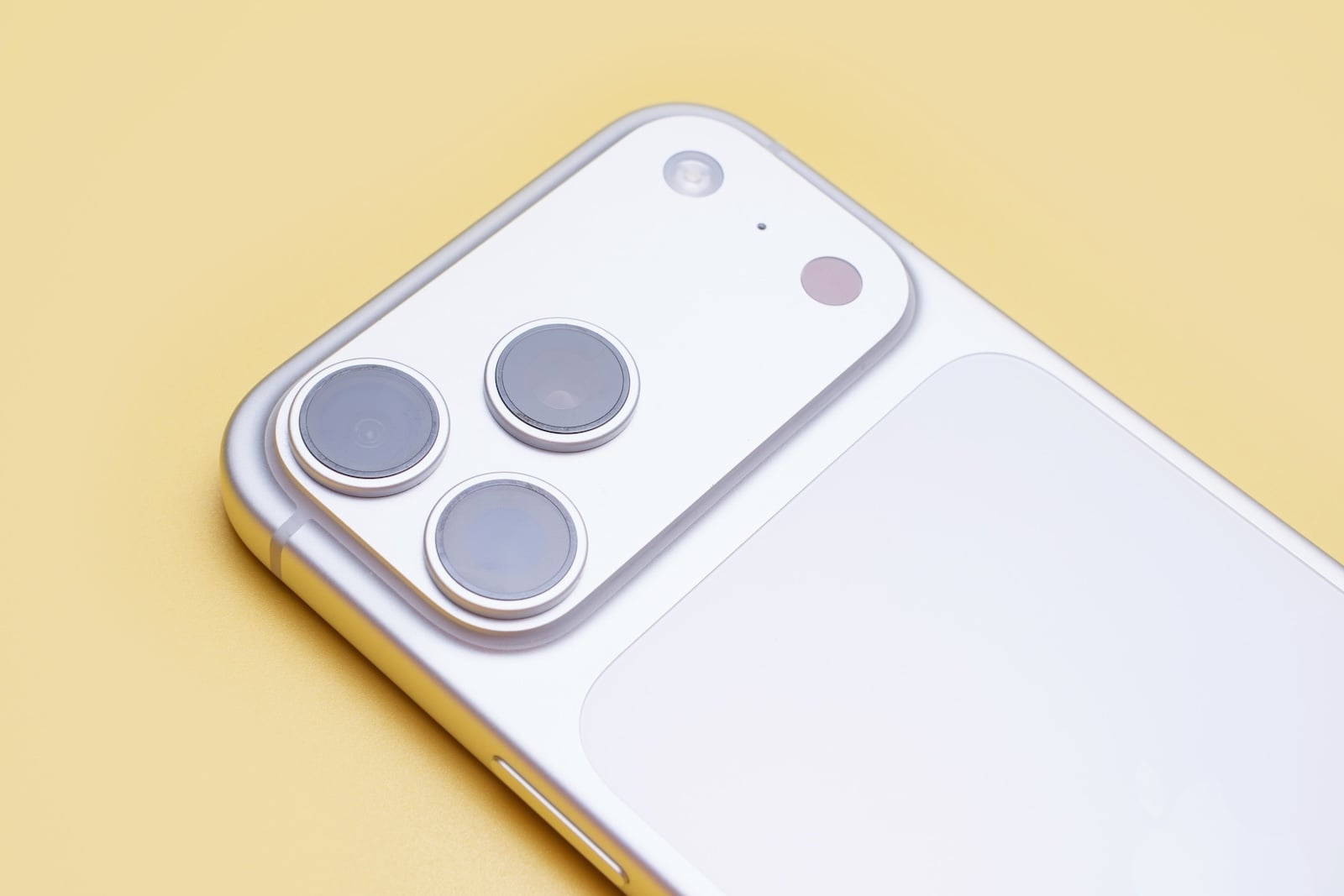
The iPhone 18 Pro and iPhone 18 Pro Max are facing one of the most exciting upgrade cycles in years. Variable aperture, 2nm chip, smaller Dynamic Island, and Apple's own 5G modem – all expected in September 2026. At the same time, Apple is changing its release schedule for the first time: only the Pro models and the iPhone Fold will arrive in the fall, while the base iPhone 18 won't be available until spring 2027.
Apple has released new Pro iPhones every September since 2017. The iPhone 18 Pro continues this tradition – but with one crucial difference: the standard iPhone 18 and iPhone 18e won't be released until spring 2027. Those wanting to upgrade in fall 2026 will have to choose between a Pro model or Apple's first foldable – which might not be called iPhone Fold, but rather iPhone Ultra. Two Chinese leakers (Digital Chat Station and Instant Digital) both report that Apple could position the foldable as a premium flagship model under the Ultra label.
Compared to the current iPhone 17 Pro, which we compared in our iPhone 17 vs. iPhone 17 Pro buying guide, the iPhone 18 Pro brings several genuine hardware innovations. This article summarizes all the current rumors.
iPhone 18 Pro: The most important points in brief
| # | Expectation |
|---|---|
| Release | September 2026 |
| Chip | A20 Pro (2nm process), 12 GB RAM |
| Modem | Apple C2 (codename Ganymede) international; US model likely to continue with Qualcomm for mmWave |
| Connectivity | N2 chip (Wi-Fi 7, Bluetooth 6+) |
| Camera | Variable aperture (48 MP Fusion), 24 MP front camera |
| Display | 6.3″ (Pro) / 6.9″ (Pro Max), smaller Dynamic Island |
| Colors | Dark Cherry, Light Blue, Silver/Grey – three to four shades (no black) |
| Price | Higher prices expected; estimates for the Pro range from ~1,150 to ~1,399 $ (price disputed) |
Design: Familiar shape, new colors
The iPhone 18 Pro will be largely identical in appearance to the iPhone 17 Pro. The display sizes will remain at 6.3 inches (Pro) and 6.9 inches (Pro Max), and the aluminum unibody design and triple-lens platform camera will return.
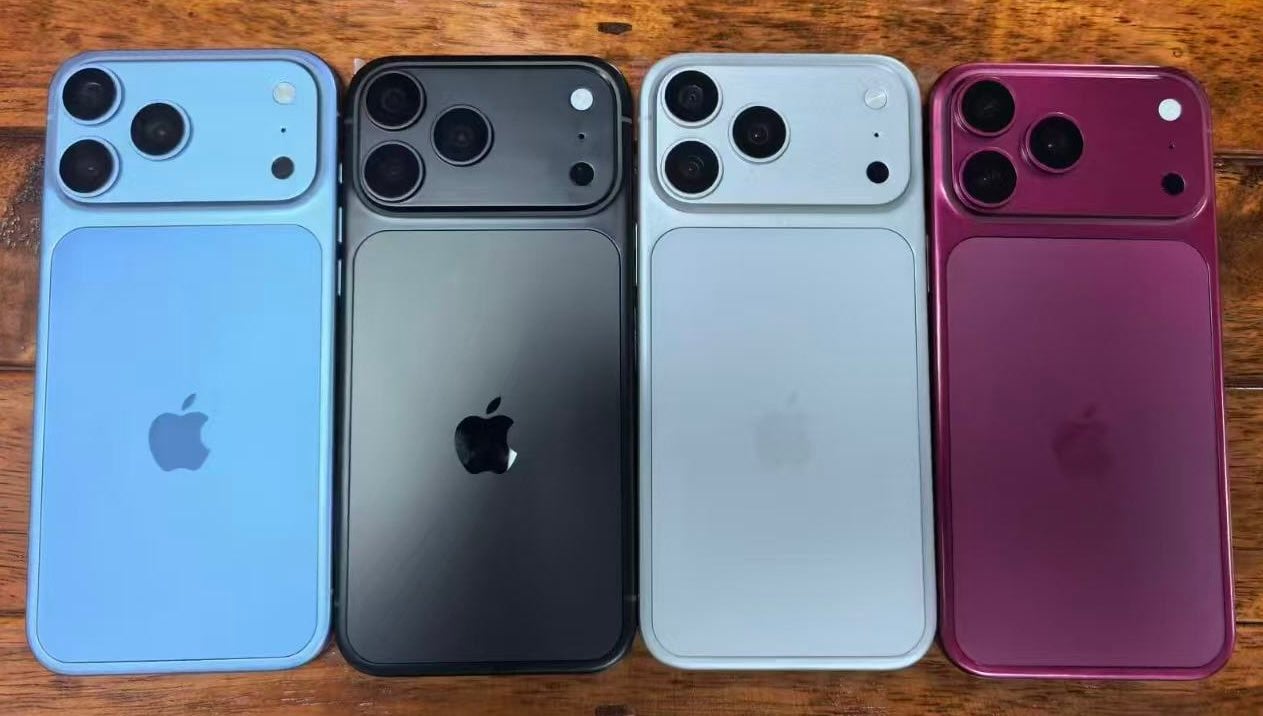
The biggest visual change: Apple is introducing a new signature color, Dark Cherry – which would be the first ever red Pro iPhone. The expected color palette includes Dark Cherry, Light Blue, Dark Gray, and Silver. The two-tone design (glass vs. frame) is said to be less noticeable on the iPhone 18 Pro than on its predecessor.
At the end of May 2026, the first dummy models in all four colors offered a first real glimpse of the palette. Leaker Sonny Dickson's publications confirmed the previously leaked Pantone codes: Light Blue (Pantone 2121), Dark Cherry (Pantone 6076), Dark Gray (Pantone 426C), and Silver (Pantone 427C). A slight ambiguity remains: while the dummy images simply label the fourth variant as black, the Pantone list specifies it as Dark Gray. How Apple ultimately markets the model will likely only be determined at its official launch. Dickson himself highlights the new Dark Cherry as a likely bestseller, especially after the strong success of Cosmic Orange the previous year. In early June, further evidence emerged: leaked case parts revealed three of the four colors —Dark Cherry, Light Blue, and Dark Gray - while Silver, the fourth variant, was missing from the images. The origin of these parts, however, remains unclear.
At the end of June, Ice Universe followed up with a picture of an alleged SIM card slot for the iPhone 18 Pro in the same wine-red "Dark Cherry" color – a shimmering shade that shifts between burgundy, warm brown, and dark purple depending on the light. When asked if there would also be a black version, the leaker simply replied "No": The darkest model, according to him, would be Dark Gray; a true black is not planned for the Pro series.
The final number of colors has become less certain. As of July 1st, Instant Digital listed only three shades for the iPhone 18 Pro: Dark Cherry, Light Blue, and a silver-gray that combines silver and dark gray into a single variant. This would place the Pro model exactly on par with the iPhone 17 Pro, which also launched with only three colors and no dark shade, despite initial speculation of more options. The basic color palette is therefore largely consistent across sources – the main point of contention is the number: three or four. It wouldn't be unprecedented for Apple to drop a color shortly before launch.
Regarding the dimensions, a recent leak contradicts an earlier assumption: The iPhone 18 Pro Max is said to be exactly 8.75 mm thick, just like its predecessor – and not slightly thicker, as previously claimed by the same leaker. Apple would then have to accommodate the larger battery by redesigning the internal components without increasing the overall size of the device. However, it remains possible that the model will exceed 240 grams, making it heavier than the 233-gram iPhone 17 Pro Max.
Another detail: The Ceramic Shield area on the back (where MagSafe is located) is said to have a "slightly transparent" surface. What exactly Apple means by this is still unclear – possibly a frosted or milky glass effect.
In early April 2026, the first dummy models of the iPhone 18 Pro, Pro Max, and iPhone Fold surfaced. They confirm that the design remains almost identical to the iPhone 17 Pro – same button layout, same plateau camera, same proportions. A more recent dummy of the iPhone 18 Pro Max also shows a slightly thicker camera unit.
The question of thickness isn't entirely clear: Another source from the supply chain disagrees, claiming the iPhone 18 Pro will be around two millimeters thicker – with a total height of approximately 9.9 to 10.9 millimeters. This presents two conflicting figures: one showing a virtually unchanged casing, the other a noticeable increase. Both figures come from individual sources with mixed results – a definitive picture will only emerge with near-production dummy models.
More concrete measurements reinforce this picture: A hands-on review by YouTuber Vadir Yuryev using dummy models measured the overall thickness of the iPhone 18 Pro Max, including the camera module, at 13.77 mm, compared to 12.92 mm for the iPhone 17 Pro Max. The increase is almost entirely concentrated in the camera module, while the rest of the body remains virtually unchanged in thickness. Weibo leaker Digital Chat Station cites a particularly large 48 MP sensor with a variable aperture as the reason – larger sensors and lenses simply require more height.
Aluminum finish: Apple sticks with it despite Scratchgate
A key point of discussion surrounding the Pro design remains: the anodized aluminum finish with its known weaknesses around the camera module. According to Weibo leaker Fixed Focus Digital, Apple is adopting the process from the iPhone 17 Pro without any modifications – neither the material nor the coating will be changed. A more recent post from the same leaker also explicitly warns that the new color options could also remain susceptible to wear and tear over time. Apple internally classifies the chipping on the sharp edges of the camera platform as normal wear and tear and therefore does not consider it a warranty case.
Apple's breakdown of the damage into two independent causes is revealing: Some of the marks on display devices in the stores apparently didn't come from scratches, but from worn MagSafe charging stands that transferred material to the back – removable by cleaning. The sensitive edges around the camera platform, on the other hand, are considered typical wear and tear of the material. This exact combination of good overall robustness and localized vulnerability is likely to be repeated in the successor model.
The background: Aluminum is lighter, significantly cheaper to process, and aligns with Apple's carbon neutrality goals. Added to this is a technical advantage, which the latest announcement particularly emphasizes – the alloy's excellent heat dissipation. Especially with the power-hungry A20 Pro, heat can be dissipated more quickly from the inside, thus maintaining stable performance under load for longer. From Apple's perspective, these advantages apparently outweigh the occasional scratching issues. Those who plan to use the iPhone 18 Pro without a case should be prepared for marks to appear more quickly on the edges of the camera module than on the titanium-based predecessors – whether a deeper pigment tone will better conceal minor scratches remains to be seen before the market launch.
Dynamic Island: Smaller, but not gone
A key rumor concerns the Dynamic Island. Several independent sources – including Bloomberg, Instant Digital, and Ross Young – report that Apple will move the Face ID flood illuminator beneath the display. This would shrink the Dynamic Island by approximately 35 percent. Leaker Ice Universe has provided the first concrete measurements: the width is expected to decrease from around 20.7 mm to approximately 13.5 mm.
Face ID isn't completely hidden under the display yet. The front camera, infrared camera, and dot projector remain visible. A completely invisible Face ID isn't expected until the iPhone 20 (2027) at the earliest.
However, there is also a dissenting voice: Leaker Digital Chat Station initially reported that Apple might leave the Dynamic Island display unchanged. In an update from April 9, 2026, he clarified: Apple is currently weighing two options – reusing the existing display shape from the iPhone 17 Pro or implementing the smaller version. A final decision has apparently not yet been made. The rumor situation on this point is therefore not clear – as we have already summarized.
A striking indication of the planned miniaturization comes from the software itself: In iOS 27, Siri AI emerges from the Dynamic Island as an elongated, pill-shaped light source when activated – while Siri appears circular in almost every other location, from the app icon to the display on iPad, Mac, and Apple Vision Pro. X user @MichalLangmajer connected the two points: The oval shape on the iPhone is explained by the current notch width, and on an iPhone 18 with a smaller cutout, this could become a perfect circle. This connection hasn't been confirmed, but it demonstrates how closely Apple links the interface design to the display cutout.
Chip: A20 Pro manufactured using a 2nm process
The A20 Pro will be the first Apple chip manufactured using TSMC's 2nm process. The switch from 3nm to 2nm brings:
- Higher transistor density for more power
- Improved energy efficiency – estimated at 30% compared to the A19 Pro.
- Improved Neural Engine for local AI tasks
In addition, a new packaging technology (WMCM) places RAM directly on the same wafer as the CPU, GPU, and Neural Engine. This reduces latency and further improves efficiency. Furthermore, the RAM is expected to increase to 12 GB – compared to 8 GB in the iPhone 17 Pro. More RAM means better multitasking performance and more headroom for local AI models.
A supposedly photographed iPhone 18 Pro motherboard, circulating via Weibo leakers WHYLAB and Ice Universe, shows what this design might look like. According to the leak, the WMCM approach places the RAM to the side of the processor, instead of stacking it directly on top. This thermally decouples the processing unit and memory, allowing the iPhone 18 Pro to maintain its peak performance under sustained load for longer before throttling. The photo also suggests LPDDR6 memory with a 96-bit bus and a noticeably larger Neural Engine – a clear indication that Apple is specifically targeting AI performance. While the image hasn't been officially confirmed, it fits with the existing picture.
The A20 Pro will also make the iPhone 18 Pro better suited for Apple Intelligence and local AI processing.
Modem: C2 International, Qualcomm will likely remain in the USA
The iPhone 18 Pro is expected to use Apple's own C2 modem – the third generation after the C1 (iPhone 16e) and the C1X (iPhone Air), reportedly codenamed "Ganymede" internally. The C2 is said to be faster and more efficient and will support NR-NTN satellite internet – meaning full internet access via satellite, not just emergency SOS.
The switchover, however, might be incomplete. According to a leak, manufacturing data stolen from Apple supplier Tata Electronics reveals a separate US bill of materials that lists several Qualcomm components instead of the C2 – components related to mmWave 5G. The reason lies in a gap in the C2: the modem reportedly still does not support mmWave. This ultra-high-frequency 5G variant delivers very high download speeds over short distances and is primarily offered in the US (most notably by Verizon). The regional modem split would therefore mean: international models with C2, US devices continuing with Qualcomm. This puts an end to earlier expectations that the C2 would be the first to introduce mmWave and thus completely replace Qualcomm. Observers attribute the split less to technical reasons and more to the interests of US mobile network operators, who have invested heavily in their mmWave networks.
For buyers outside the US, this could even have advantages. Apple's C1 and C1X modems are considered significantly more energy-efficient than comparable Qualcomm chips – a US device with a Qualcomm modem could therefore have a slightly shorter battery life than the same iPhone sold internationally. Intriguingly, according to leaks, the US models are supposed to have the larger battery cell, meaning that an efficiency disadvantage in the modem could partially negate this advantage. There's also a privacy issue: the "Limit Precise Location" setting, which only provides mobile network operators with coarsely resolved location data, is tied to Apple's own modems and would likely be missing from a US model with a Qualcomm chip. Should the split be confirmed, Apple's path to complete modem independence would be shortened to a single region – the US – but not yet complete.
Connectivity: N2 chip for Wi-Fi 7+
In addition to the C2 modem, the iPhone 18 Pro is also expected to feature Apple's new N2 chip for wireless connections. Its predecessor, the N1, was first used in the iPhone 17 and brought Wi-Fi 7, Bluetooth 6, and Thread. What specific improvements the N2 will offer is not yet known – faster wireless connections and better efficiency with AirDrop and Personal Hotspot are expected.
Camera: Variable aperture as a highlight
The biggest camera innovation of the iPhone 18 Pro is the variable aperture in the 48MP Fusion main camera. Previous iPhones used a fixed aperture of f/1.78. A variable aperture allows the amount of light and depth of field to be mechanically controlled – a feature previously reserved for professional cameras.
The variable aperture is not only technically demanding, it also costs Apple significantly more. According to Ming-Chi Kuo, the average selling price of the new lens is around 50 percent higher than that of the iPhone 17 Pro module. This is due to the mechanical complexity: While previous Pro iPhones use a fixed aperture of f/1.78 and seven plastic lenses, the variable aperture requires moving blades within the lens. A substantial price increase was to be expected, but the magnitude of the cost illustrates just how much Apple is willing to invest in the camera alone. A new major player is also involved in the supply chain: Sunny Optical is expected to handle between 40 and 50 percent of the orders for the module – the same manufacturer that already supplies the camera for the MacBook Neo and has thus established itself in the field of compact camera modules for Apple.
Other expected camera improvements:
- New Samsung sensor with three layers (PD TR Logic) for less noise and faster response times – Samsung would be a sensor supplier alongside Sony for the first time.
- Front camera upgrade from 12 MP to 24 MP
- Simplified camera control without a capacitive layer, using only a pressure sensor.
It is not yet certain whether the variable aperture will be included in both Pro models or only in the Pro Max.
iPhone 18 Pro: Display and battery
LTPO+ instead of a large jump in brightness
The iPhone 18 Pro uses an advanced version of the existing LTPO technology: LTPO+. The difference lies in the more precise control of individual OLED pixels, which has a twofold effect – brightness can be adjusted more accurately to the ambient light, and energy consumption is noticeably reduced. Combined with the slightly larger battery, this allows for longer battery life in everyday use. Higher peak values are expected on paper compared to the current 1,600 nits HDR and 3,000 nits peak brightness – Apple reportedly places "unprecedentedly high demands" on the panels.
The iPhone 18 Pro doesn't deliver the big leap in brightness expected in real-world sunlight. According to Instant Digital, the model won't feature dual-layer OLED – the technology that would represent the next significant increase in brightness for an iPhone. This means the familiar thermal throttling behavior remains: current Pro models achieve their peak brightness on paper, but reduce it within minutes under direct sunlight to prevent the display temperature from escalating. Apple's solution to this problem is a simplified tandem OLED design with a doubled blue subpixel layer – realistically, this won't appear in an iPhone until a Pro generation after 2028 at the earliest.
Apple is awarding its LTPO+ contracts exclusively to Samsung Display and LG Display. The Chinese manufacturer BOE, which was able to handle some of the orders for the iPhone 17 Pro, is completely excluded from the premium segment this time around – according to South Korean reports, BOE does not meet the quality and yield requirements for LTPO+. This effectively cements Apple's short-term dependence on the two Korean display giants, as simply no other source can deliver the same specifications in the necessary quantities.
In parallel, Apple plans to use Samsung's under-screen infrared technology – a key component for allowing parts of the Face ID system to disappear behind the display. This component is directly related to the discussed reduction in size of the Dynamic Island: without it, the reduction from 20.7 mm to 13.5 mm in width would not be technically possible.
Larger battery in the Pro Max
China's 3C certification database now provides concrete figures: For the iPhone 18 Pro Max, it lists 5,391 mAh (models with a SIM slot, such as those in Germany and China) and 5,567 mAh (eSIM variant, including the USA). The capacities that have appeared in the official approval documents are thus even higher than the previously reported figures of around 5,235 to 5,425 mAh. The difference between the regions is not due to a technical reason, but rather to the casing: Without a physical SIM slot, the US version has slightly more space for a larger cell.
| Model variant | iPhone 17 Pro Max | iPhone 18 Pro Max (Leak) | Difference |
|---|---|---|---|
| eSIM-only (including USA) | 5,088 mAh | 5,567 mAh | +479 mAh (+9.4 %) |
| With physical SIM (including Germany, Europe) | 4,823 mAh | 5,391 mAh | +568 mAh (+11.8 %) |
It's noteworthy that the SIM-only version, which is relevant in Germany, shows a relatively larger increase in battery capacity – around 570 mAh more than its direct predecessor, while the eSIM version grows by almost 480 mAh. Combined with the more efficient 2nm chip and LTPO+ display technology, the iPhone 18 Pro Max could thus offer the best battery life of any iPhone to date. Unlike earlier, barely verifiable figures, these values come from an official certification database and align with a report from the same leaker in June – an unusually solid foundation for a rumor. One caveat remains: the devices aren't explicitly identified as iPhone 18 Pro Max in the entries, but given the specifications and the timing, this classification is considered highly likely.
Slight battery improvement for the iPhone 18 Pro
The battery increase in the regular iPhone 18 Pro, however, is surprisingly small. The same certification database lists two capacities here as well – depending on whether the device still has a SIM card slot. The version with a physical SIM, sold in Germany, Europe, and China, among other countries, is listed with 4,056 mAh; the eSIM-only version for the US and some other markets has the slightly larger 4,288 mAh battery. The reason is the same as with the Pro Max: Removing the SIM card slot allows for a slightly larger battery cell.
| Model variant | iPhone 17 Pro | iPhone 18 Pro (Leak) | Difference |
|---|---|---|---|
| With physical SIM (including Germany, Europe, China) | 3,988 mAh | 4,056 mAh | +68 mAh (+1.7 %) |
| eSIM-only (USA etc.) | 4,252 mAh | 4,288 mAh | +36 mAh (+0.8 %) |
That would represent a significant shift compared to last year: The iPhone 17 Pro saw a roughly 19 percent increase over the iPhone 16 Pro, while this time the increase remains at just a few dozen milliampere-hours. Ultimately, however, capacity isn't the only deciding factor: The A20 Pro, manufactured using a 2nm process, is noticeably more efficient, meaning that even a barely increased battery capacity could last longer in real-world use. This can only be definitively confirmed after actual battery tests. The capacities themselves are now considered relatively certain – they were already mentioned in a report from June and are now reiterated in the certification.
Release and new strategy
Apple is changing its iPhone release schedule for the first time in 2026:
- September 2026: iPhone 18 Pro, iPhone 18 Pro Max, iPhone Ultra
- Spring 2027: iPhone 18, iPhone 18e, possibly iPhone Air 2
Anyone wanting a new iPhone this fall will have to opt for the Pro model or the Fold. The cheaper models won't be available until months later.
Price: Surcharge likely, amount disputed
The pricing landscape has recently undergone a fundamental shift. It had long been expected that Apple would maintain the entry-level prices of its Pro models despite the global memory chip shortage: Both Ming-Chi Kuo and Jeff Pu had spoken of an "aggressive pricing strategy" with which Apple would defend the base prices of $1,099 (Pro) and $1,199 (Pro Max) and instead offset the additional costs through higher storage capacities and savings on the display and cameras.
Apple itself has overturned this assumption. CEO Tim Cook confirmed to the Wall Street Journal that Apple will raise the prices of several products due to unprecedentedly high costs for RAM and flash memory. He did not specify which devices would be affected or by how much – the final figures are traditionally announced at the September event.
This gap is filled by an estimate from the Wall Street Journal, which calculates the price premium for the iPhone 18 Pro. Based on internal analyses and pricing data from the research firm TechInsights, the model is expected to start at a minimum of $1,299, with $1,399 or more considered more likely – a premium of roughly $200 to $300 compared to the iPhone 17 Pro. Background: The gross margin for the iPhone 17 Pro was around 47 percent; to maintain this margin despite the higher costs, Apple would theoretically have to charge approximately $1,371. Since the company tends to use rounded price points, a starting price of $1,299 is considered plausible, which would reduce the margin to around 44 percent.
The new camera system isn't included in the price yet: According to Ming-Chi Kuo, it costs Apple around 50 percent more than its predecessor. This alone could push the starting price to $1,399 or more. As usual, the iPhone 18 Pro Max is expected to be around $100 more expensive than the Pro, with higher storage options costing even more.
| Model | Expected entry price (estimate) |
|---|---|
| iPhone 18 Pro | approximately $1,150–1,399 (depending on the source) |
| iPhone 18 Pro Max | approximately $100 more than the Pro |
For German buyers, this means that the recently rumored prices of €1,299 (Pro) and €1,449 (Pro Max) would be more of a lower limit than a stable entry point. How much Apple will ultimately add – and how much of that the company will absorb through its own margin – will only be decided at the official launch in September.
Fresh information from the supply chain supports the price increase theory, but the figures vary. Apple only raised prices for Macs, iPads, and the Vision Pro this week, initially exempting iPhones, AirPods, and Apple Watches – but several Chinese leakers expect the September generation to follow suit. Fixed Focus Digital considers an increase for the iPhone 18 Pro a done deal, while Digital Chat Station sees a jump in the Chinese starting price from 8,999 to 9,999 yuan as possible. Extrapolating the expected 11 percent increase in China to the US starting price, the iPhone 18 Pro would cost around $1,220; Instant Digital even places the 256GB Pro Max between $1,300 and $1,400.
However, a recent assessment argues against a dire scenario: JP Morgan anticipates only a moderate price increase of around $50 to $100, and in an optimistic scenario, even just $50. Apple could partially offset the pressure on storage costs by switching to its own modem, which is cheaper than purchased wireless chips. Ming-Chi Kuo also recently assumed that the base price would remain stable and that price increases would primarily affect higher storage tiers. Some therefore interpret Cook's unusually open warning as a form of expectation management – preparing customers for the worst can ultimately lead to a positive surprise with a small increase.
A concrete look at component costs is provided by an estimate from market research firm Counterpoint, which compares the manufacturing costs of the 1TB iPhone 18 Pro Max with those of its predecessor. According to their analysis, manufacturing alone could be around $300 more expensive – the main driver being memory. Due to the ongoing component shortage, NAND flash and DRAM costs are expected to rise so sharply that these two items together almost equal the total material costs of the current model. Added to this is the more complex 2nm manufacturing process, while the display and some other components are becoming cheaper. Experience shows that this pressure isn't passed entirely on to the customer: the analysis anticipates an average sales price increase of around $200 – and yet still with narrower margins than with this year's models. For the German-speaking market, the direction is more important than the US figure, as Apple has already passed on the cost pressures of the memory shortage in Germany with recent price increases for Macs, iPads, and the Vision Pro.
One side effect concerns the top-of-the-line model: The expected price of around $2,000 for the iPhone Ultra seems less exorbitant when the regular Pro model is already approaching the $1,300 to $1,400 mark. The higher the starting price of the Pro model, the more normal a foldable phone for $2,000 appears – the increased component costs provide the explanation.
iPhone 18 Pro: Who should buy it now
The iPhone 18 Pro brings genuine hardware innovations with its variable aperture, 2nm chip, and proprietary C2 modem – not just the usual percentage improvements. The variable aperture is a real upgrade, especially for users who value photography.
Those who already own an iPhone 17 Pro will hardly notice the difference in everyday use – the design and display remain virtually identical. The iPhone 18 Pro is primarily worthwhile for users of older models (iPhone 15 Pro or earlier) who want to skip several generations in one go.
Our recommendation: If you're planning on getting a new iPhone anyway, you should wait until September. The iPhone 18 Pro could be one of the more interesting upgrades in recent years – though probably at a higher price – even if the exact amount of the price increase is still disputed among sources. If, on the other hand, you're leaning more towards the standard model, the more affordable e model, or the slim premium model, you should take a look at our overviews of the iPhone 18, the iPhone 18e, and the iPhone Air 2 – all three won't be released until spring 2027.
The best products for you: Our Amazon storefront offers a wide selection of accessories, including those for HomeKit. (Image: Shutterstock / TatianaKim)
- CarPlay in iOS 27: All new features at a glance
- Why the iPhone will not be affected by the EU's 2027 replaceable battery requirement
- Apple Ring: All the rumors at a glance
- iPhone Air 2: All the rumors at a glance
- iPhone Ultra (iPhone Fold): All rumors and facts at a glance
- Apfelpatient Weekly #13
- Apple Watch Series 12: All the rumors at a glance
- AirPods Ultra: All the rumors at a glance
- Apple Maps in iOS 27: An overview of all new features
- Apple TV in July 2026: All the highlights at a glance
- iPhone 18e: All the rumors at a glance