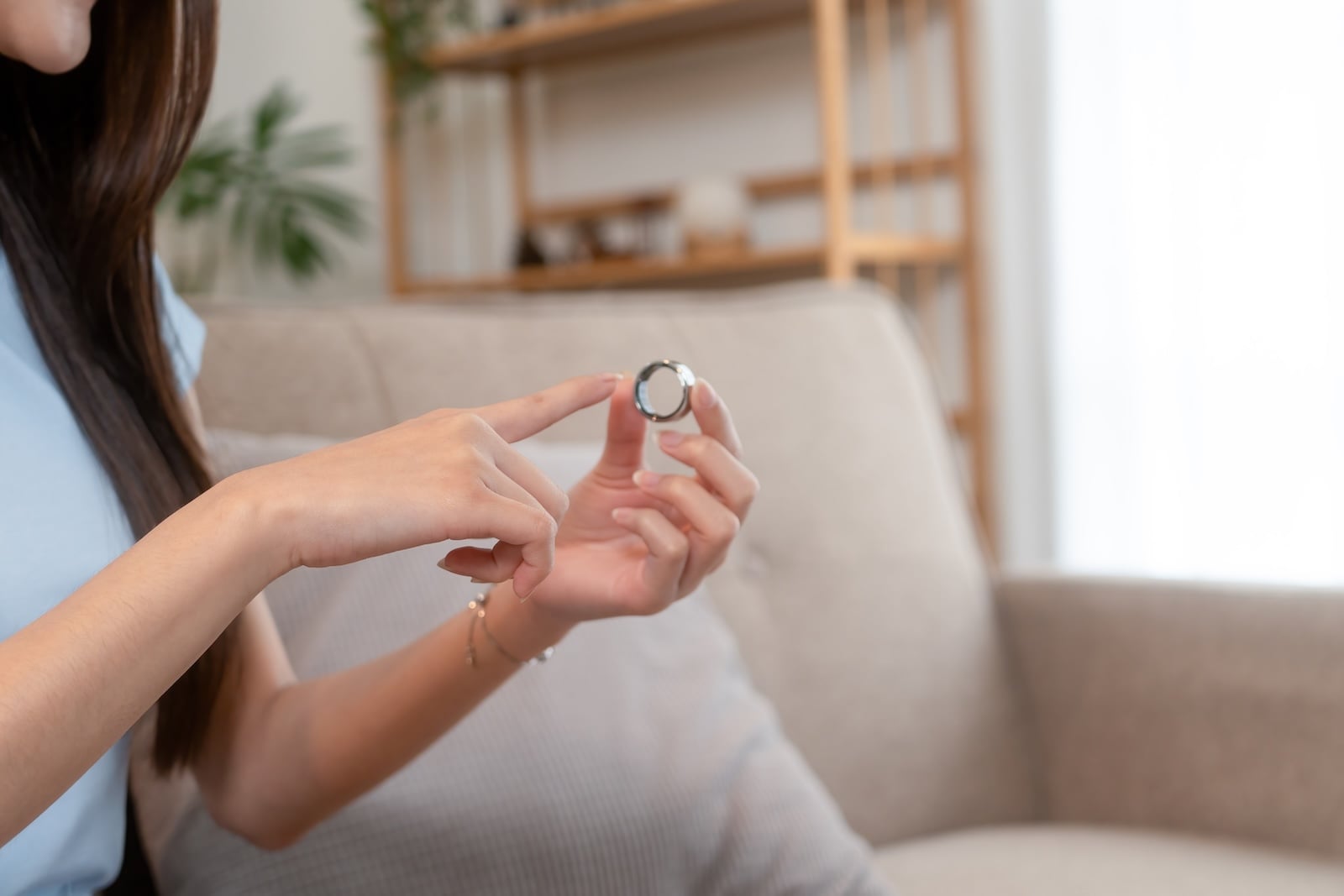
For years, there was little news about Apple's potential smart ring – now a single leak has brought the topic back with full force. Allegedly, Apple is working on a smart ring intended to compete with the Oura Ring and Samsung's Galaxy Ring. The intriguing aspect: the same idea was considered dead about two years ago, and reports remain contradictory to this day.
A ring on the finger instead of a watch on the wrist: Apple has been pursuing this idea for years through patents and occasional reports. Things had quieted down for a while, but a new rumor has brought the potential wearable back into focus – fueled by the continued success of the Oura Ring. The fact that Apple might even be considering such a device aligns with the company's recently expanded health ambitions, evident, for example, in the enhanced features of the Health app in iOS 27. However, there are currently no concrete technical details or even a timeline.
Key Facts at a Glance
| Detail | Expectation |
|---|---|
| Product name | "iRing" is only circulating unofficially – there is no confirmed name. |
| Current status | Allegedly "in development" according to a leaker (June 2026) |
| Timeline | Unforeseeable – the leak does not specify a timeframe |
| Possible function | Health tracking via finger, gesture control also conceivable |
| Direct competition | Oura Ring 5, Samsung Galaxy Ring |
| Price | Unknown; the Oura Ring 5 from 429 euros (plus subscription) serves as a rough guide. |
The trigger: a single post
The renewed suspicion stems from a brief post by leaker and prototype collector Kosutami on June 24, 2026. The wording was deliberately terse: an "iRing" was in development. In response to a follow-up question, Kosutami confirmed that such a device was intended to compete with the Oura Ring and the Samsung Galaxy Ring, without revealing any details – when asked how far along the project was, he merely stated that it was "in development".
The choice of words is noteworthy. Unlike previous reports, which only indicated that Apple was considering the category, "in development" suggests actual work on hardware – from an early prototype to a near-final version, however, anything is conceivable. Specifications, a price, or a release date were not mentioned. The report gains particular weight from Kosutami's solid track record with Apple hardware; however, a single post does not constitute definitive confirmation.
Why the rumor is returning now of all times
The timeline explains a lot. With the Oura Ring 5, launched in May 2026 as the smallest smart ring to date, the Finnish pioneer further solidified its leading position. Starting at €429, the device measures blood pressure trends, analyzes nighttime breathing, and assists with tracking GLP-1 medications – health features that are increasingly encroaching on Apple's traditional territory. However, full data analysis requires a subscription costing €5.99 per month. The original Oura Ring was released back in 2015; the category has clearly matured.
The competitive landscape is also exceptionally open right now. Samsung launched the Galaxy Ring in July 2024 for €449 with no subscription fee, but its successor, the Galaxy Ring 2, was postponed to early 2027 due to weak demand and an ongoing patent dispute with Oura before the US Federal Trade Commission. This leaves the premium segment currently lacking a strong second option. Meanwhile, manufacturers like Amazfit, RingConn, and Ultrahuman have demonstrated that genuine demand exists. Market researchers estimate the market volume for smart rings at around $519 million in 2026, with a projected increase to $3.77 billion by 2034 – a figure that Apple rarely ignores.
In addition, there has been an internal shift. With the departure of Chief Operating Officer Jeff Williams at the end of 2025, Apple's health division was integrated into the Services division; Eddy Cue has officially been responsible for Services and Health ever since. Whether this leadership change has reassessed the Ring question within the company is unclear – however, the timing of the rumor seems remarkably opportune.
The dissenting voice: What previous reports said
This is precisely the crux of the matter, as the facts are contradictory. In October 2024, Bloomberg journalist Mark Gurman reported that Apple had no plans for a smart ring – out of concern that a tracker on the finger could cannibalize Apple Watch sales. Oura CEO Tom Hale expressed a similar view at the time. Just one day later, an analyst from CSS Insight contradicted this, suggesting a 2026 market launch was possible, partly as a component of CEO Tim Cook's healthcare legacy. Yet another leaker reported that Apple was still researching the form factor.
The result is an unusually clear stalemate: one trusted source says it's happening, another says it isn't. Kosutami's comment doesn't simply overturn this earlier reporting - it merely reopens the question. A healthy dose of skepticism remains warranted, especially since Apple is known for its cautious approach to new product categories.
What an Apple Ring could do
A look at Apple's patent portfolio reveals two possible directions. One revolves around health: numerous applications describe sensors that capture biometric data directly on the finger – heart rate, sleep, recovery, and similar metrics. Sleep and regeneration data, in particular, are among the key strengths of such rings, a field in which the Apple Watch is also increasingly providing insights. The second direction focuses on control: a patent described by Patently Apple outlines a ring that would allow users to control content on future smart glasses or a headset with finger gestures. Some applications even extend beyond the finger, describing wearables for the ankle or as pendants – the final form factor is by no means fixed.
Which of these approaches an actual device would pursue - pure health tracking, gesture control, or a combination - remains entirely open. Apple's real advantage would lie less in the sensors themselves than in the ecosystem: A ring that seamlessly integrates with Health, Fitness, and potentially the gesture control of Apple glasses would be harder to copy than any single technical specification. That Apple is broadening its health hardware offerings is already evident elsewhere - for example, in the AirPods Pro 3 with their heart rate sensor, while the Apple Watch has long recorded blood oxygen levels, ECG, and skin temperature.
Relationship to the Apple Watch: Complement or competitor?
The cannibalization issue, once Apple's main argument against a ring, appears less dramatic upon closer inspection. A ring, presumably costing several hundred euros, is unlikely to displace the purchase of an Apple Watch Ultra, which, at around 900 euros (MSRP), is in a completely different price bracket – the two devices serve different needs. A more noticeable risk would exist at the lower end, where a ring would compete with buyers who have primarily purchased a watch for health tracking purposes.
A ring makes more sense as a supplement: a second, more discreet access point to the same health data, for moments when a screen on the wrist is bothersome. This fits with Apple's pattern of letting a category mature before the company itself enters the market. However, a ring couldn't replace the Watch: it doesn't offer notifications, smart home control, phone calls, or messages on the wrist.
When an Apple Ring might appear
The most honest answer here is also the most unsatisfying: It's unknown. The description "in development" covers every stage of development, and Apple has been researching the category for years without ever shipping a product – given this, there's little to suggest a rapid market launch. Even those who grant the rumor some credence hardly expect a market-ready device in the short term, and by then, Oura and Samsung will likely have further solidified their positions. The scenario that the project never leaves Apple's labs remains just as realistic.
Who is an Apple Ring intended for?
A necessary caveat beforehand: Nothing is confirmed yet; any assessment is still speculative. Should Apple actually release a ring, it would most likely be aimed at those who want to track their health and sleep data around the clock without wearing a smartwatch. If you prefer classic watches or are looking for a discreet device that stays on your body all day, a ring would be the obvious choice – especially since it would integrate seamlessly with Apple's health and fitness features.
It would be less suitable for those who value notifications, phone calls, or smart home control on their wrist: these tasks remain the domain of the Apple Watch. If you're completely satisfied with your Apple Watch, a ring would primarily offer a more discreet form factor, but hardly any fundamentally new functions. Until concrete details emerge, the Apple Ring remains exactly what it has been for years: a persistent rumor with a long history.
The best products for you: Our Amazon storefront offers a wide selection of accessories, including those for HomeKit. (Image: Shutterstock / PIC SNIPE)
- iPhone Air 2: All the rumors at a glance
- iPhone Ultra (iPhone Fold): All rumors and facts at a glance
- iPhone 18 Pro: All the rumors at a glance
- Apfelpatient Weekly #13
- Apple Watch Series 12: All the rumors at a glance
- AirPods Ultra: All the rumors at a glance
- Apple Maps in iOS 27: An overview of all new features
- Apple TV in July 2026: All the highlights at a glance
- iPhone 18e: All the rumors at a glance
- Apfelpatient Weekly #12
- iPhone 18: All the rumors at a glance
- Mac Studio M5: All the Rumors at a glance
- MacBook Ultra: All the rumors at a glance
- iPad mini 8: All the rumors at a glance
- The Home app in iOS 27: All new features at a glance
- iOS 27: These AirPods features are new
- iOS 27: Seven new features for the Wallet app
- iOS 27: What's new in the Weather app
- HomePod 3 & HomePod mini 2: All the rumors at a glance
- New Apple TV 4K: All the rumors about the update with Siri AI
- Apple Watch Ultra 4: All the rumors at a glance