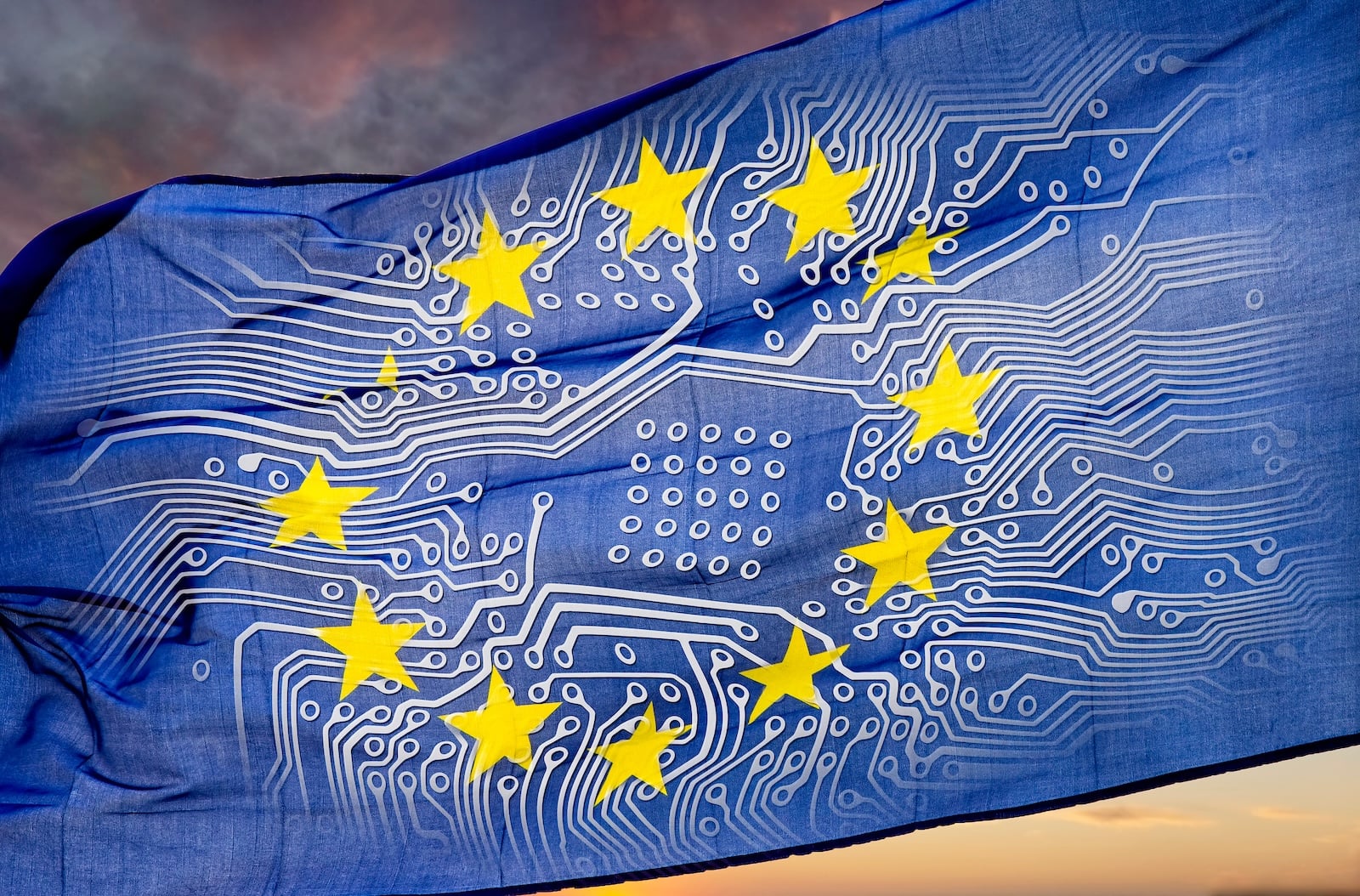
For weeks, Cupertino and Brussels had been trading blame in the Siri AI standoff – this week Tim Cook stepped in personally, and the tone has suddenly changed. Around it: one of the busiest weeks for iPhone leaks all year, a record order for the foldable iPhone, and a privacy feature that breaks the very promise it makes. The entire Apple week in review.
It was a week defined by a single person: Tim Cook. First he weighed in on the global memory shortage, then he stepped in personally to break the deadlocked dispute over Siri AI in Europe – and that at the very moment when he hands over day-to-day leadership to his successor in September. In parallel, the carousel of iPhone leaks spun faster than almost ever: new colors, a leaked A20 chip, battery and modem details, plus a sweeping rundown of the entire 2027 iPhone lineup. And while Apple was fighting on four legal fronts at once, it was a privacy feature of all things that put the company on the defensive.
🔥 Story of the Week: Tim Cook Seeks a Path Forward with the EU on Siri AI
When Apple unveiled Siri AI at WWDC 2026, disappointment followed for the EU: on iPhone and iPad, the new generation of the assistant won't launch here for the time being – citing the Digital Markets Act. After weeks of public finger-pointing, things started moving this week. Tim Cook exchanged views directly with the responsible EU commissioner in a virtual meeting; afterward, both sides spoke of a constructive conversation, without naming any concrete results.
At the heart of the conflict: Apple sees itself forced by the required interoperability to grant any AI system far-reaching access to messages, purchases, and cross-app actions, and points to security and privacy risks. As a way out, the company had proposed a mediation body called the Trusted System Agent along with an 18-month transition period – both of which the Commission rejected, according to Apple's account. Brussels, in turn, stresses that nothing in the DMA prevents Apple from launching; the restraint is Apple's decision alone.
That Cook is negotiating himself is no coincidence: his direct line to regulators is seen as one of his core strengths – and it is precisely this task he is set to keep when he moves into the role of Executive Chairman in September. A resolution is pressing for Apple, because Siri AI is the foundation of the entire AI narrative for the years ahead. A permanent exclusion of its most loyal iPhone and iPad users in one of its most important markets would be a painful rupture – yet there is still no date for it.
📰 What Else Mattered
iOS 26.6 draws closer – With Beta 3, Apple is nearing the finish line, and the release window is set as well: the update is expected to arrive in late July. It brings no major new features, but rather the final polish ahead of the iOS 27 fall season.
Security took center stage – Several reports at once: Apple brought security updates forward due to an acute AI-driven threat, rolled out iOS, iPadOS, and macOS 26.5.2, and closed three newly discovered AirDrop vulnerabilities.
Apple is building out software and tools – The company is acquiring the award-winning design tool Play and giving Creator Studio a major AI update.
MacBooks werden teurer – Ausgerechnet in einen einbrechenden Laptop-Markt hinein hebt Apple die MacBook-Preise an – eine Folge der anhaltenden Speicherknappheit.
Legal and regulatory battles on four fronts – Apple wants to put the Epic case on hold pending a Supreme Court ruling, the UK wants to open up the App Store along EU lines, in the Indian antitrust case Apple accuses the authority of copying, and Apple is responding to an AI lawsuit from YouTube with the DMCA.
iOS 27 shows first details – Two preview morsels from the beta: a new paste function for the keyboard and Trust Insights, an app fraud detection.
The date is set – Apple has scheduled its Q3 earnings for July 30 – likely Tim Cook's final earnings report as CEO.
💡 Rumor of the Week: Six New iPhones in a Single Year
A new leak sketches out Apple's complete iPhone lineup for 2027 – and it would be the largest in history: no fewer than six new models in two waves. In spring, the iPhone Air 2, iPhone 18, and iPhone 18e are set to launch, while September is expected to bring the redesigned Pro models marking the iPhone's 20th anniversary along with the foldable iPhone Ultra 2. The pileup becomes possible because the regular iPhone 18 and the iPhone Air 2 slip to spring 2027 – leaving fall 2026 likely reserved for the three top models alone: the iPhone 18 Pro, 18 Pro Max, and the first iPhone Ultra. One drawback for budget-conscious buyers: the iPhone 18e is again said to stay at 60 hertz, so still without the smoother ProMotion display.
📊 Number of the Week: 10 Million
That's how many foldable iPhones Apple is said to have ordered from its suppliers for this year – roughly a third more than the seven to eight million previously reported. According to a report by Nikkei Asia, the order is part of a total volume of around 220 million iPhones for 2026. For an entirely new, technically demanding form-factor debut at an expected price of around 2,500 US dollars, a double-digit million figure in the first year is remarkably confident – and a clear signal that Apple isn't treating its foldable as a cautious experiment.
👎 Flop of the Week: A Privacy Feature Exposes Real Addresses
Of all things, the "Hide My Email" feature, which is meant to protect the real address behind an alias, does the opposite: a vulnerability exposes the real address behind the alias – and Apple has left the problem unresolved for over a year. In tests, every alias address examined proved vulnerable. The flaw was reported back in June 2025; a fix that was reported fixed in the meantime didn't hold. For a company that has made privacy a central selling point for years, this is a particularly awkward liability – a security update is now finally set to close the gap.
🔭 What's Coming Next Week
The iPhone 18 leaks are likely to keep trickling in on a weekly basis – with so many open details on colors, chip, battery, and modem, a pause seems unlikely. At the same time, the final polish of iOS 26.6 is heading toward its release in late July. And traditionally, Apple kicks off the public betas for iOS, iPadOS, macOS, and watchOS in July – anyone not opting for the developer preview builds could get a first safe look at the new generation in the coming weeks.
💬 My Take
Tim Cook picking up the phone himself is more than a symbolic gesture. For weeks, Apple's position read like sheer defiance – the pointed newsroom statement, the open blame aimed at Brussels. The fact that the CEO is now talking directly to the commissioner in charge shows just how badly Apple wants this resolved. Siri AI matters far too much to write off an entire continent.
But here's the catch: for iPhone and iPad users in Europe, a "constructive conversation" changes nothing yet. No date, no commitment, no concrete roadmap – just the promise that both sides will keep talking. Movement, yes. Results, no. Until Cupertino and Brussels can agree on how to read the DMA, the new generation of the assistant stays, on the two Apple devices people actually use most, exactly what it's been since WWDC: a promise that stops at the EU border. Then again – the fact that they're talking at all is, after the past few weeks, already a step forward.
📚 From Our Archive
- Siri in iOS 27: Everything Known So Far About the AI Reboot – What Brussels is actually wrestling over becomes clear in this overview of the overhauled voice control, including all features confirmed to date.
- iPhone 18: All the Rumors at a Glance – With so many individual leaks, this overview bundles the sorted state of play on Apple's next iPhone generation.
A week in which Apple was fighting on many fronts at once – against regulators, against leaky suppliers, and against its own security promises – and in which, of all things, a single conversation delivered the quietest but perhaps most important turning point.
Until next Sunday, Apfelpatient wishes you a relaxed read and a good start to the week. (Image: Shutterstock / gopixa)