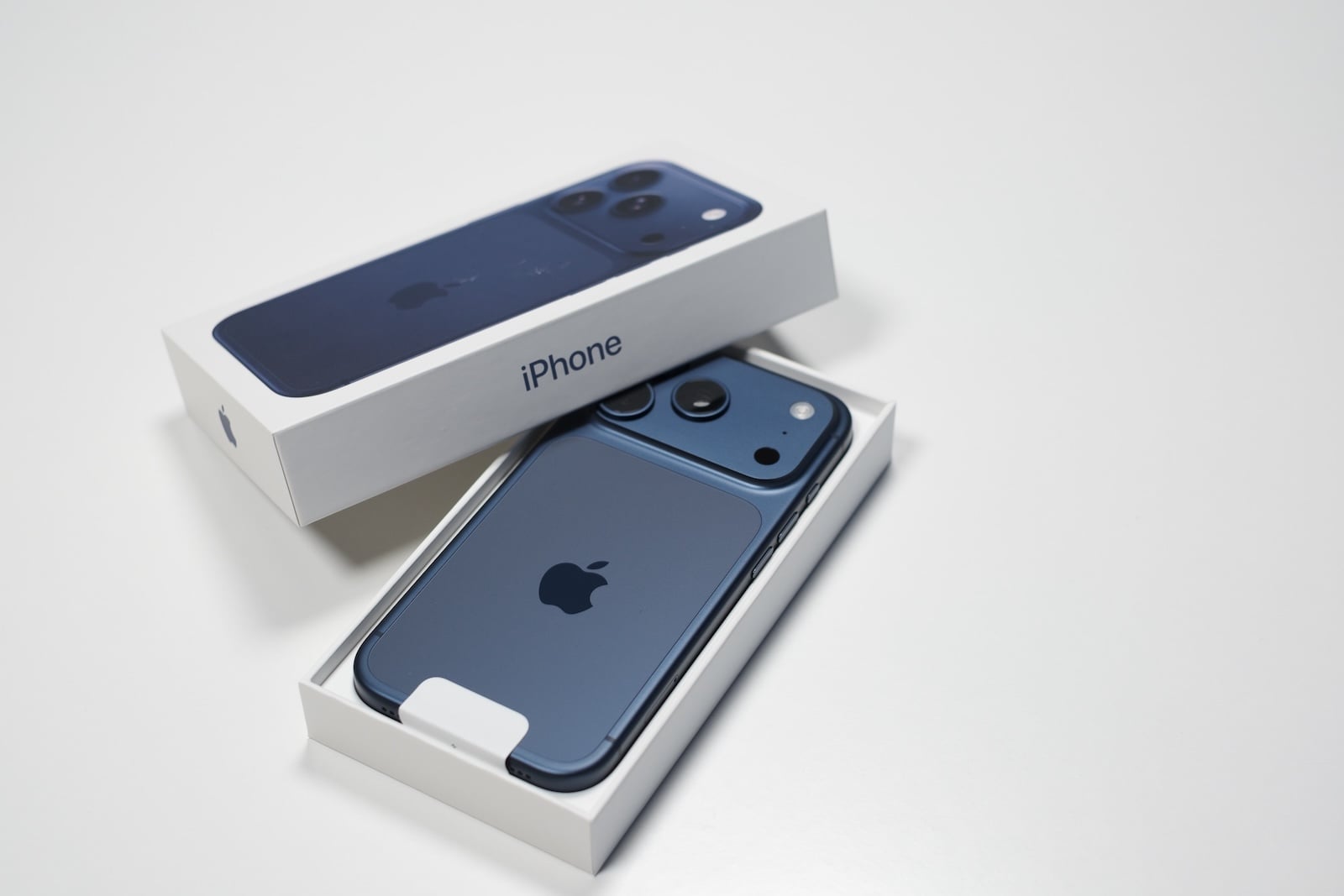
A new estimate of the material costs for the iPhone 18 Pro Max suggests that Apple's next flagship model could be significantly more expensive to manufacture than the current one. The main drivers are believed to be the sharply increased prices for flash memory and RAM due to the ongoing storage shortage – a cost pressure that will likely ultimately be reflected in the retail price.
Market research firm Counterpoint Research has published an estimate of the component costs for the iPhone 18 Pro Max, comparing the expected component prices of the 1TB variant to those of the current iPhone 17 Pro Max. The result: According to the analysis, manufacturing alone could be almost $300 more expensive than its predecessor. These figures fit into the existing picture of the iPhone 18 Pro Max and the other fall models, which is otherwise primarily characterized by rumors about design and camera specifications. As an estimate from an analysis firm, this calculation should be treated with the usual caution – however, the order of magnitude aligns remarkably well with the current market situation.
Where the cost increase is supposed to come from
According to the analysis, by far the largest share of the cost is attributable to storage. Both the costs for NAND flash memory and DRAM are expected to rise significantly – a direct consequence of the component shortage that has gripped the market since late last year. The magnitude of this expense is illustrated by a particularly striking point in the estimate: the expenditure on NAND and DRAM alone for the iPhone 18 Pro Max is projected to reach almost the entire estimated material cost of the current model – that is, the sum of the storage, processor, camera, display, and all other components combined.
Counterpoint cites the expected 2nm chip and the more complex housing technology required for it as another cost driver. However, not all components will become more expensive: the analysis anticipates lower costs for the display and some other components. The camera, on the other hand, is expected to increase slightly – due to new technology, specifically the variable aperture of the main camera expected in the iPhone 18 Pro.
What this could mean for the selling price
Experience shows that rising manufacturing costs are not passed on to the customer in full – but they are unlikely to leave any trace either. Counterpoint assumes that Apple will implement price increases differently depending on the storage capacity, in order to avoid jeopardizing the gross profit on the more expensive models with larger storage capacities. On average, the analysis anticipates a sales price increase of around $200 – and yet with narrower margins than on this year's models.
For the German-speaking market, the direction of price increases is more important than the US figures. Official European prices for the iPhone 18 Pro Max, expected this fall, are not yet available. However, it's clear that Apple has already passed on the effects of the storage shortage in Germany: In the summer, the company raised prices for Macs, iPads, HomePods, Apple TV, and Vision Pro, while the iPhone, Apple Watch, and AirPods initially remained unaffected – though they were considered the next targets. Should Counterpoint's cost calculations prove accurate, a new generation of expensive Pro models would be a logical next step.
What the estimate is worth – and what it isn't
Despite its plausibility, this remains an external estimate. A material cost calculation only reflects the pure component costs and disregards development, manufacturing, logistics, marketing, and margins – the actual retail price cannot be directly derived from it. Furthermore, the figures do not originate from Apple, but from an analysis firm that works with expected, unconfirmed component prices. What makes the calculation meaningful, however, is its integration into a real market situation: The memory shortage is documented, Apple has already openly passed on the cost pressures elsewhere, and the switch to 2nm manufacturing is well-documented. The price pressure that reached the Mac and iPad lines in 2026 is thus noticeably approaching Apple's most important product – the iPhone. (Image: Shutterstock / Karlis Dambrans)
- More affordable Vision Pro: Display project apparently on the verge of collapse
- iPhone Ultra: Mass production underway, no delays expected
- The iPhone 18 Pro could be noticeably thicker
- iPhone Air 2: First hint of a larger battery
- iPhone 18 Pro: Regulatory leak reveals battery capacities
- iPhone Ultra: Why sales might start later than the launch
- MacBook Pro: Entry-level models will get the redesign as early as 2027
- Apple Watch Series 12: New health sensor possibly only in the wristband
- Camera-enabled AirPods Pro: Leaker reports development halt
- Apple Wallet: Volkswagen is set to receive digital car keys soon
- iPhone 18 Pro: Leak suggests modem split by region
- iPhone 18 Pro Max: Leak reveals specific battery capacity
- Apple has apparently ordered 10 million iPhone Ultras for this year
- Apple is testing four new iPad Pro models and a new entry-level MacBook Pro for 2027
- SpaceX is developing an AI device that is supposed to be slimmer than an iPhone
- iPhone 17: Apple is reportedly slowing down production
- iPhone 18 Pro: New leak mentions only three colors
- Apple Watch: A major redesign is expected in 2027
- New leaked image shows iPhone 18 Pro in Dark Cherry
- iPhone 2027: Six new models in one year