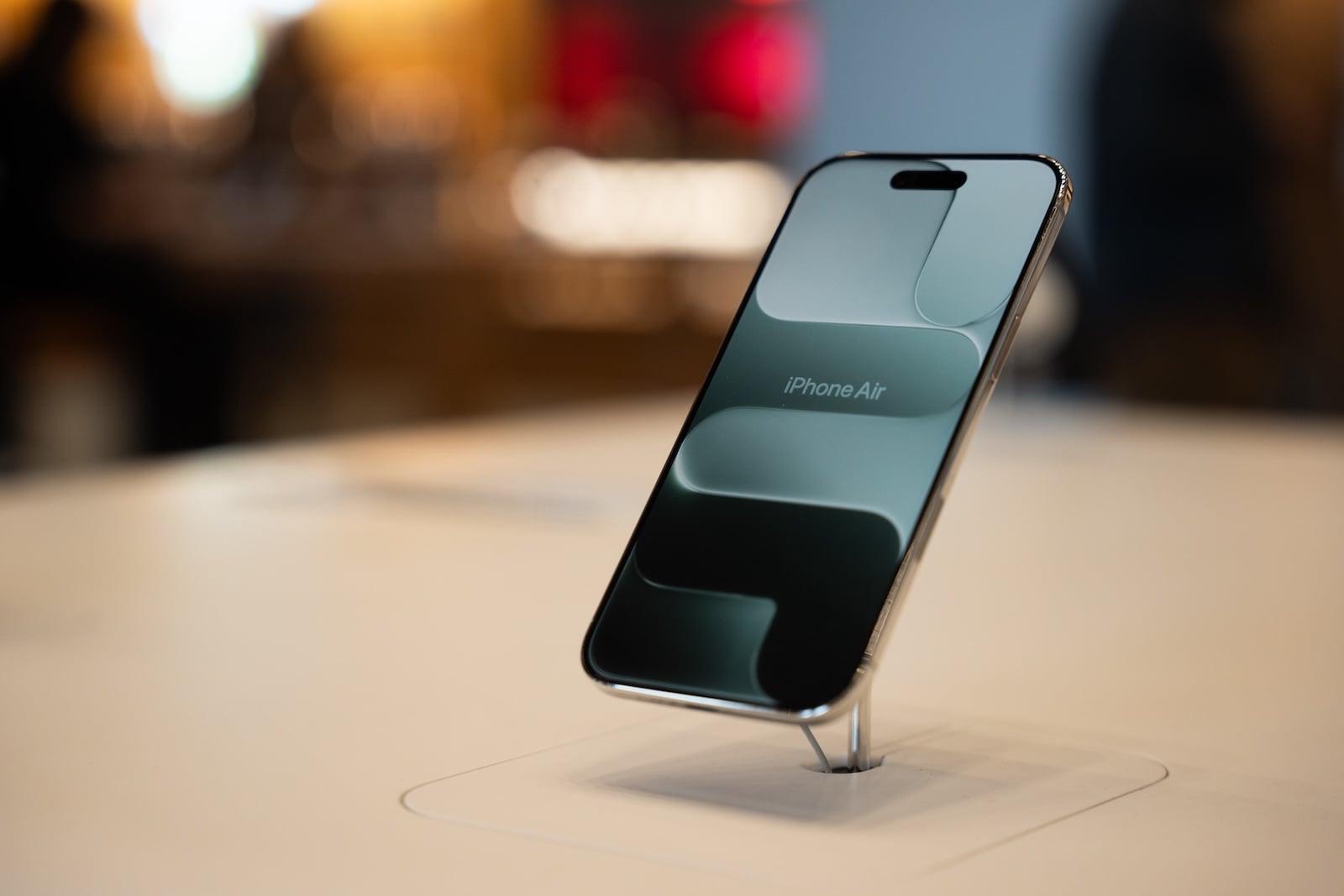
The short battery life was arguably the biggest criticism of the first iPhone Air. Now, the first hints are circulating about how much capacity the successor might offer – and the number tells a more nuanced story than a simple increase would suggest.
The fact that concrete specifications for the iPhone Air 2 have surfaced at all is remarkable: as recently as autumn 2025, reports described the model as having been temporarily shelved, before the situation shifted back towards a market launch in the first half of 2027. A first leak regarding battery capacity fits this picture of a project that, after a prolonged period of uncertainty, is regaining momentum – even if it comes from a single source and should therefore be interpreted with caution.
3,500 mAh is being discussed
Digital Chat Station, a leaker known for supply chain forecasts, reported on the Weibo platform that the iPhone Air 2 would have a battery capacity of 3,500 mAh. Compared to the current iPhone Air's 3,149 mAh, this would represent an increase of approximately 11 percent. This is the first reported figure based on a single source – such a detail will only become reliable if further reports point in the same direction.
Higher capacity doesn't automatically mean a larger casing. A denser cell or a more efficient internal layout that creates more battery space within the same form factor would also be conceivable. However, for a device whose entire appeal lies in its extreme slimness of 5.6 millimeters, every additional milliampere-hour remains a delicate balancing act.
Why the number is more relative than it sounds
Eleven percent sounds like a noticeable jump, but compared to the rest of the iPhone family, this figure quickly becomes less significant. Even with a 3,500 mAh battery, the iPhone Air 2 would still fall short of what even today's standard iPhone offers.
| iPhone model | Battery capacity |
|---|---|
| iPhone Air (current) | 3,149 mAh |
| iPhone Air 2 (rumor) | 3,500 mAh |
| iPhone 17 | 3,692 mAh |
| iPhone 17 Pro | 3,988 mAh |
Efficiency is likely to be more crucial than raw capacity. The iPhone Air 2 is expected to use the upcoming A20 chip, which is manufactured using a 2-nanometer process and could therefore be more energy-efficient. According to a separate report, a Samsung-developed OLED technology called CoE (Color Filter on Encapsulation) could also make the display thinner, thus creating space for a slightly larger cell. If both of these factors are true, the increase in battery life would come less from the additional milliampere-hours and more from the combination of a more efficient chip and a thinner panel.
The battery was the weak point of the first Air
Why battery capacity receives so much attention becomes clear when looking back: In tests of the first iPhone Air, battery life was consistently the most frequently cited weakness. The 3,149 mAh battery is roughly equivalent to that of an iPhone 15 Pro and left many heavy users in the red zone by evening. As a solution, Apple offered a specially shaped MagSafe battery – which, however, costs €115 in Germany and makes the already slim device quite bulky when attached. A later battery replacement costs €135 in Germany.
Besides battery life, the single rear camera was considered the second major point of criticism. Several reports suggest that Apple might equip the iPhone Air 2 with a second sensor in the form of an ultra-wide-angle lens. Taken together, the circulating rumors thus target precisely the two areas where the first model received the most significant criticism.
More capacity, but the form factor remains the bottleneck
Should the information be confirmed, the larger battery would be a sensible but manageable step – one that doesn't resolve the fundamental balancing act between slimness and battery life, but merely eases the pressure. The iPhone Air 2 is expected in the first half of 2027, alongside the regular iPhone 18 and the more affordable iPhone 18e. By then, it should become clear whether the 3,500 mAh capacity is more than just a supply chain indicator – and whether Apple can achieve better battery life through efficiency rather than simply increasing the cell size. (Image: Shutterstock / Anonymous Photographer)
- iPhone 18 Pro: Regulatory leak reveals battery capacities
- iPhone Ultra: Why sales might start later than the launch
- MacBook Pro: Entry-level models will get the redesign as early as 2027
- Apple Watch Series 12: New health sensor possibly only in the wristband
- Camera-enabled AirPods Pro: Leaker reports development halt
- Apple Wallet: Volkswagen is set to receive digital car keys soon
- iPhone 18 Pro: Leak suggests modem split by region
- iPhone 18 Pro Max: Leak reveals specific battery capacity
- Apple has apparently ordered 10 million iPhone Ultras for this year
- Apple is testing four new iPad Pro models and a new entry-level MacBook Pro for 2027
- SpaceX is developing an AI device that is supposed to be slimmer than an iPhone
- iPhone 17: Apple is reportedly slowing down production
- iPhone 18 Pro: New leak mentions only three colors
- Apple Watch: A major redesign is expected in 2027
- New leaked image shows iPhone 18 Pro in Dark Cherry
- iPhone 2027: Six new models in one year
- Apple plans a wider color gamut for future Macs and iPads
- A20 Pro: Leaked image suggests performance boost for the iPhone 18 Pro
- iPhone 18e: ProMotion is reportedly left out, according to leak