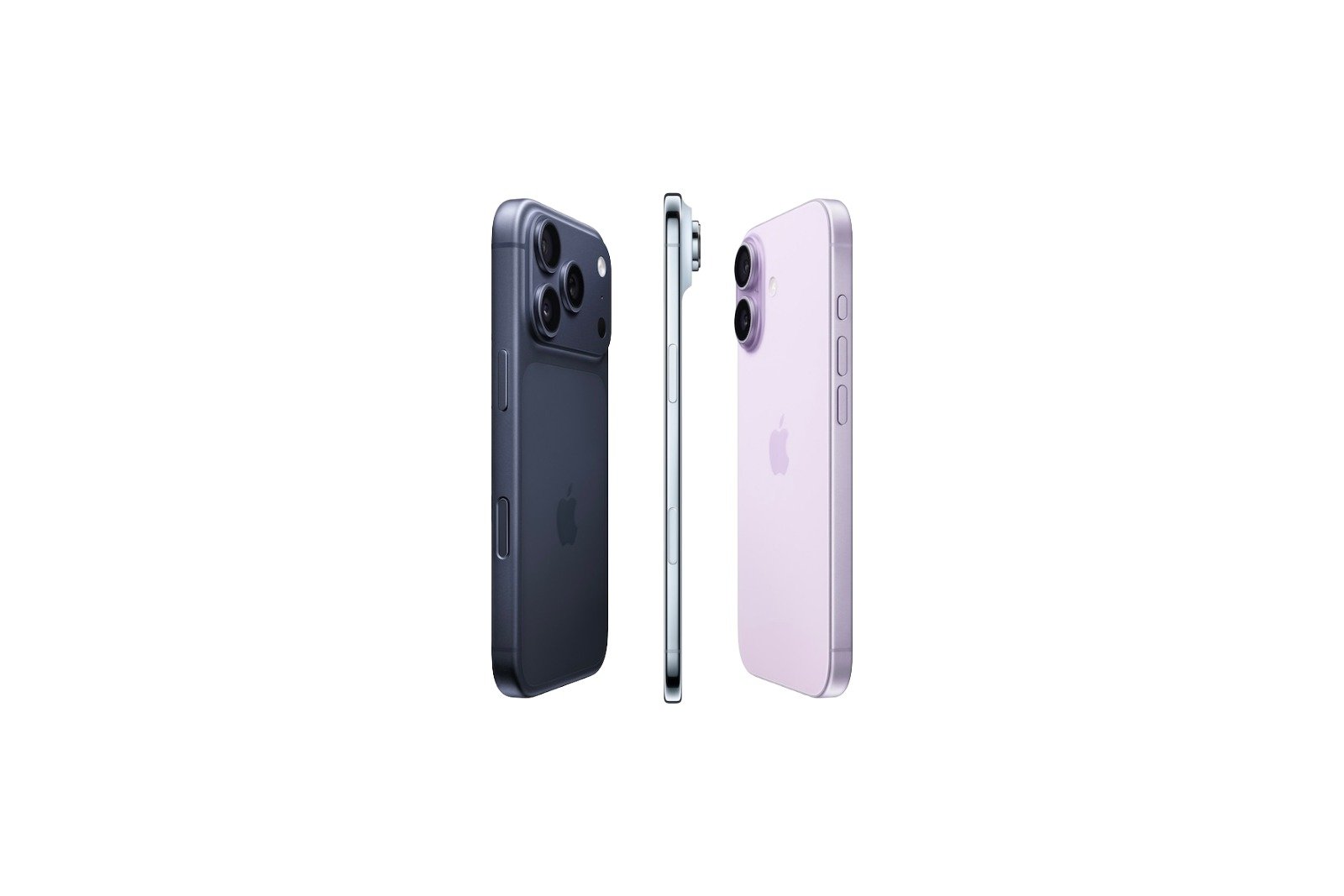
Following one of the strongest sales runs in iPhone history, Apple is reportedly planning a significant reduction in production of the iPhone 17 series. A leak suggests a 15 percent decrease – but upon closer inspection, the news appears less dramatic than it initially sounds.
The iPhone 17 generation has brought Apple record after record for months, becoming the most successful lineup in Apple's history. Now, a new supply chain report suggests this exceptional period is coming to an end: Apple is said to have reduced its production plans for the iPhone 17 models by around 15 percent. The information comes from Weibo -based leaker Fixed Focus Digital, who cites reliable sources within the supply chain. Whether this is a warning sign or simply the normal course of events is worth a closer look.
15 percent less – what the leak says
According to the leaker, the current surge in iPhone 17 sales is not expected to last much longer. In two consecutive posts, he wrote that major smartphone manufacturers – including Apple – have already revised their sales forecasts downwards. Specifically, this means a production plan for the iPhone 17 has been reduced by approximately 15 percent.
The article does not provide reliable evidence for the exact figure; it is based on information from the supply chain, which is difficult to verify externally. However, as a snapshot, it fits into a picture recently painted by several market observers.
The competition is also scaling down
It's noteworthy that Apple wouldn't be alone in making such a correction. In his second post, the leaker placed the report in a broader industry context: Xiaomi is said to have lowered its sales targets by around 20 to 30 percent, while OPPO, vivo, and Honor have also reduced their plans by approximately 15 to 30 percent.
This puts Apple's alleged budget cut in line with a broader slowdown. The global smartphone market has shrunk noticeably recently, driven primarily by the ongoing shortage of memory chips and the resulting increase in component costs. That several manufacturers are planning more cautiously in this environment is hardly surprising – and puts Apple's figure into perspective.
The more likely reason: the product cycle
There's a much simpler explanation for the declining demand for the iPhone 17 than a sudden market downturn: the natural product cycle. The iPhone 18 Pro and iPhone 18 Pro Max are expected in September, along with the first foldable iPhone. Anyone who was planning to buy the iPhone 17 in recent months has most likely already done so, given its near-record sales performance since its September 2025 launch.
Slowing down production lines shortly before a new generation of devices is standard practice for Apple. Therefore, throttling production nine months after launch and roughly two months before the release of its successors is more routine than a cause for alarm.
A record-breaking run that is second to none
The data reveals just how exceptional Apple's performance has been so far. In June, market research firm TrendForce reported that iPhone production in the first quarter of 2026 increased by 19.7 percent year-over-year – even though the global smartphone market shrank by 1.7 percent during the same period. The launch of the iPhone 17e and the continued ramp-up of production for the other iPhone 17 models were considered the driving forces behind this growth. Apple was described as being better positioned than most of its competitors to absorb rising storage costs without sacrificing profitability.
Beyond production figures, the iPhone 17 dominated the market. According to research by Counterpoint Research, it was the world's best-selling smartphone in the first quarter of 2026, accounting for six percent of all devices sold; the iPhone 17 Pro Max and iPhone 17 Pro followed in second and third place. A separate analysis showed that this marked Apple's first-ever first-quarter lead in the global smartphone market, with a 21 percent share – a milestone the company had missed for decades. Several iPhone models had previously been among the world's best-selling devices.
The surge in demand began at launch. Shortly after its release in September 2025, Apple instructed two suppliers to increase daily iPhone 17 production by at least 30 percent following an exceptionally strong pre-order weekend. In the first ten days, the new series outsold the iPhone 16 models by 14 percent in the US and China, according to Counterpoint. And in January, Tim Cook told CNBC that demand in the holiday quarter was simply overwhelming, exceeding expectations – iPhone sales reached an all-time high of $85.3 billion that quarter.
The expected end of an exceptional generation
Against this backdrop, a production cut doesn't seem like a break, but rather the logical conclusion of an extraordinary cycle. After nine months at the top and with a new generation just around the corner, it was ultimately inevitable that the remarkably strong run of the iPhone 17 series would eventually come to an end. Should the 15 percent figure be confirmed, it would therefore be less a sign of waning strength than a transition to what will follow in the fall. (Image: Apple)
- iPhone 18 Pro: New leak mentions only three colors
- Apple Watch: A major redesign is expected in 2027
- New leaked image shows iPhone 18 Pro in Dark Cherry
- iPhone 2027: Six new models in one year
- Apple plans a wider color gamut for future Macs and iPads
- A20 Pro: Leaked image suggests performance boost for the iPhone 18 Pro
- iPhone 18e: ProMotion is reportedly left out, according to leak
- Apple is lobbying for Chinese storage: The supply gap is the real reason
- Mac Studio: M5 Ultra this year, M7 Ultra not until 2028
- iPhone 18 Pro: Up to $200 price increase expected
- iPhone 18 and 18e: 9 GB RAM and A20 chip expected
- MacBook Ultra: Apple surprisingly opts for M5 Pro and M5 Max
- Apple iRing? The rumor about the smart ring is back
- iPhone 18 Pro and foldable iPhone: Prices expected to rise
- Storage crisis: Apple is also said to be partly responsible
- Apple is heading towards record market shares in 2026
- Apple hints at further price increases
- Apple is raising prices: Macs, iPads and more are getting more expensive
- Siri AI should clearly reject URL summaries
- Stolen iPhone: Apple tightens its recommendations