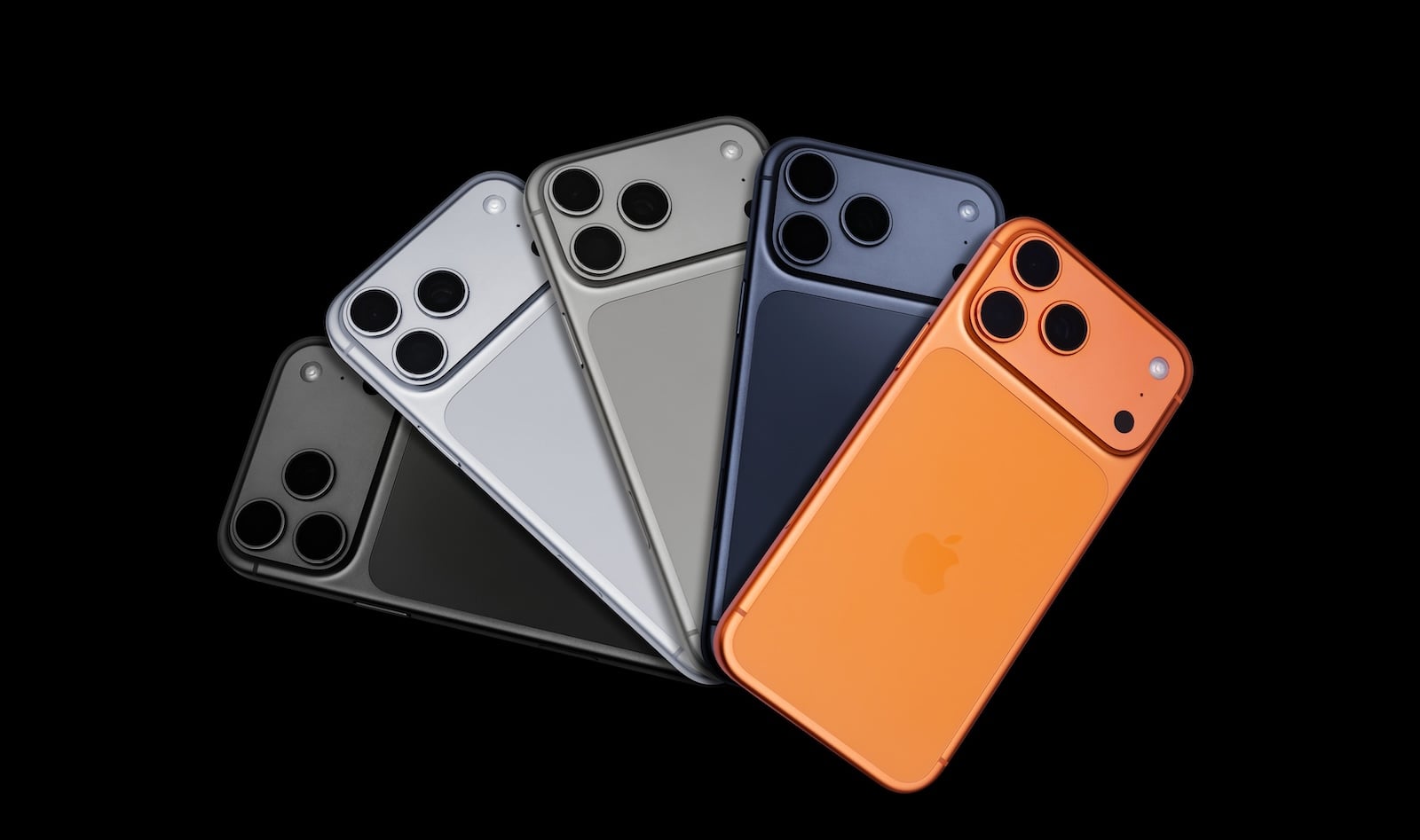
The long-awaited variable aperture is coming with the next Pro models – and it comes at a price. According to a supply chain analyst, Apple is paying roughly 50 percent more for the new lens than for the previous camera unit. This is due to a supplier that is currently experiencing a remarkably rapid rise in Apple's hierarchy.
With each new generation of iPhone Pro, the camera is a major focus, and this year the variable aperture is the flagship feature. It has long been one of the most persistent camera rumors and fits perfectly into the overall picture of expectations for the iPhone 18 Pro. Now, a new figure reveals just how much this development actually demands of Apple – and what role a previously lesser-known supplier plays in it.
What the variable aperture offers technically
Until now, every iPhone Pro model, from the 14 Pro to the 17 Pro, has used a fixed aperture of f/1.78. A variable aperture, on the other hand, mechanically changes the size of the aperture, thus controlling how much light reaches the sensor. This allows for more precise exposure and greater flexibility with depth of field – for example, to deliberately blur the background or to allow more light to reach the sensor in low light.
The feature has been circulating in the rumor mill for quite some time. Analyst Ming-Chi Kuo first mentioned it at the end of 2024, and since then, several reports have supported the plan. Production is said to have started at the beginning of this year. This makes the variable aperture one of the biggest camera upgrades Apple is planning for the Pro line.
Approximately 50 percent more expensive than the current lens
Kuo quantifies the price increase quite precisely: The average selling price of the new component is around 50 percent higher than that of the lens Apple currently uses in the main camera of the iPhone 17 Pro. That lens uses seven plastic elements – a tried and tested, and comparatively inexpensive, design.
A variable aperture is mechanically much more complex, as internal blades have to move. It's therefore not surprising that such a module costs more. However, the stated cost clearly demonstrates how much Apple is willing to invest in the camera alone – an indication of the importance of photography to purchasing decisions in this price range.
Sunny Optical supplies a large portion of the modules
Besides the price, the report also mentions a name from the supply chain: Sunny Optical is said to be handling between 40 and 50 percent of the orders for the new camera module. For Apple, the company is a relatively new partner in the field of compact camera modules. Their first collaboration was with the camera in the MacBook Neo.
Things are clearly going better than expected for the supplier: MacBook Neo shipments are significantly exceeding expectations, which is why Kuo has doubled his 2026 forecast from five to ten million units. The entry-level Mac is thus becoming an unexpected success – and Apple has recently ramped up MacBook Neo production considerably to reflect this.
Sunny Optical isn't limited to Apple, either. According to Kuo, the company has also secured component contracts for two OpenAI devices – a smartphone and a smaller pocket or mobile device. OpenAI is already working on its own AI smartphone, the launch of which is expected to be brought forward.
What could change by 2028
Beyond the iPhone 18 Pro, attention is already turning to 2028. For the iPhone expected then, the ultra-wide-angle module is slated to switch from the current flip-chip design to an improved COB (chip-on-board) technology. Sunny Optical is considered well-positioned to enter this market as a supplier.
The advantage of a COB module lies in its form factor: it could be thinner or smaller, thus freeing up space for other components – or, at the same size, simply deliver better image quality. Both would give Apple additional freedom in the internal design of future iPhones.
Higher costs, a clear selling point
The iPhone 18 Pro and iPhone 18 Pro Max will be unveiled this fall, along with Apple's first foldable iPhone. Until then, the mentioned costs remain an analyst estimate – Kuo's predictions are often accurate, but not set in stone.
The direction is clear, however: Apple is investing significantly in the camera, because a genuine upgrade is immediately noticeable, especially in photography. Whether the higher component costs will ultimately be reflected in the sales price or whether Apple will absorb them itself will likely be one of the most intriguing questions surrounding the next Pro generation. (Image: Shutterstock / Jess Rodriguez)
- iPhone 18 Pro: Four colors shown for the first time on a dummy
- Apple and Google: New details about the AI technology behind Siri
- iOS 27: Leak reveals the new Siri and a redesigned camera app
- Black Vision Pro components reappear online
- Android manufacturers want to copy Apple's split launch
- Apple Watch: Glucose project gets a new project leader
- iOS 27: The WWDC logo reveals the final Siri colors
- Titanium returns to the iPhone Pro? A second leaker dampens expectations
- iPhone Ultra: New production problems in pre-production
- watchOS 27 improves heart rate measurement – AI health coach delayed
- iOS 27 raises Genmoji and Image Playground to a new level of quality
- iOS 27 opens up to Google Cast and other streaming protocols
- iOS 27 cleans up the AirPods menu in Settings
- iPhone 18 Pro: Clear case fix and possible new colors
- iPhone 2027: Prototype with fully curved display undergoing testing
- MacBook Ultra: OLED production reaches "Golden Yield"
- Srouji is restructuring Apple's product development