Apple's non-invasive blood glucose monitoring system has been in development for over 15 years – and is still not ready for market. Now, project responsibility is being transferred internally to an engineer with a reputation in the supply chain for seeing things through to completion. Nevertheless, market readiness remains several years away.
Few Apple features have been as eagerly anticipated as non-invasive blood glucose monitoring with the Apple Watch. For over a decade, Cupertino has been researching the possibility of determining glucose levels without a needle prick or sensor under the skin – but as current progress shows, blood glucose monitoring with the Apple Watch is only advancing in very small steps. Mark Gurman now reports in the Power-On newsletter that Apple has internally redistributed responsibility for the project – sending a clear signal to its own organization.
The personnel changes in detail
Tim Millet has been removed from oversight of the glucose initiative. Millet, as Platform Architecture Chief, was previously responsible for the project. His successor is Zongjian Chen, a senior engineer in advanced technologies within Apple.
Gurman views the change positively. In his report, Chen is described as someone who actually delivers on projects. Some observers interpret the move as an indication that the work may now be entering a phase where a consumer-ready product is no longer just a theoretical possibility. There has been no official statement from Apple regarding the personnel change.
How the technical concept works
Behind the project is an approach that Apple has been refining for years. As early as 2023, it was reported that the Apple Watch's blood glucose measurement had reached the proof-of-concept stage. At that time, the sensor's functionality was explained: A silicon photonics chip emits laser light at specific wavelengths through the skin. The light reaches an underlying layer of interstitial fluid – a substance that leaks from the capillaries and contains glucose.
Glucose absorbs some of the light. What is reflected back to the sensor can be analyzed and provides an indication of the glucose concentration in the body. An algorithm then calculates the actual blood sugar level from this data. In a later step, the system could even provide indications of prediabetes – that is, the phase in which diabetes is developing but has not yet manifested.
Over 15 years of development – and no date
The project has been underway for over 15 years. Apple began work on it after acquiring the startup RareLight in 2010, while Steve Jobs was still at the helm. The research was later transferred to the Exploratory Design Group, Apple's most secretive development unit, comparable to Google's X Labs. Hundreds of engineers work on the project there, and hundreds of millions of dollars are said to have been invested in its development over the years.
Despite all the investment, a market launch remains a distant prospect. It will likely be several years before the technology reaches a consumer-ready level – if ever. Gurman explicitly states this caveat in the current report. The accuracy requirements for a medically usable device are enormous, while at the same time the solution must function without needle pricks or sensors under the skin. Combining both in a smartwatch is a technical challenge that no company worldwide has yet fully solved.
Few opportunities for the next generation
There is still no concrete evidence of a short-term rollout. Current reports unanimously suggest that the Apple Watch Series 12 will not receive non-invasive glucose monitoring. The feature also plays no role in the rumors surrounding the Apple Watch Ultra 4, which is expected to be released at the same time.
What makes the recent change at the top of the project remarkable, however, is the signal it sends within Apple. Handing over a project of this magnitude to an engineer known internally for his strong execution skills creates clear expectations. Whether these expectations will ultimately result in a finished product – or just another attempt that will take years – remains to be seen.
What the goal means in the long term
Should Apple achieve this breakthrough, the impact would be enormous. According to the International Diabetes Federation alone, over ten percent of the world's adult population lives with diabetes. For this group, non-invasive wrist-based measurement would represent a significantly more comfortable alternative to daily finger pricks or the continuous glucose monitoring system worn around the clock.
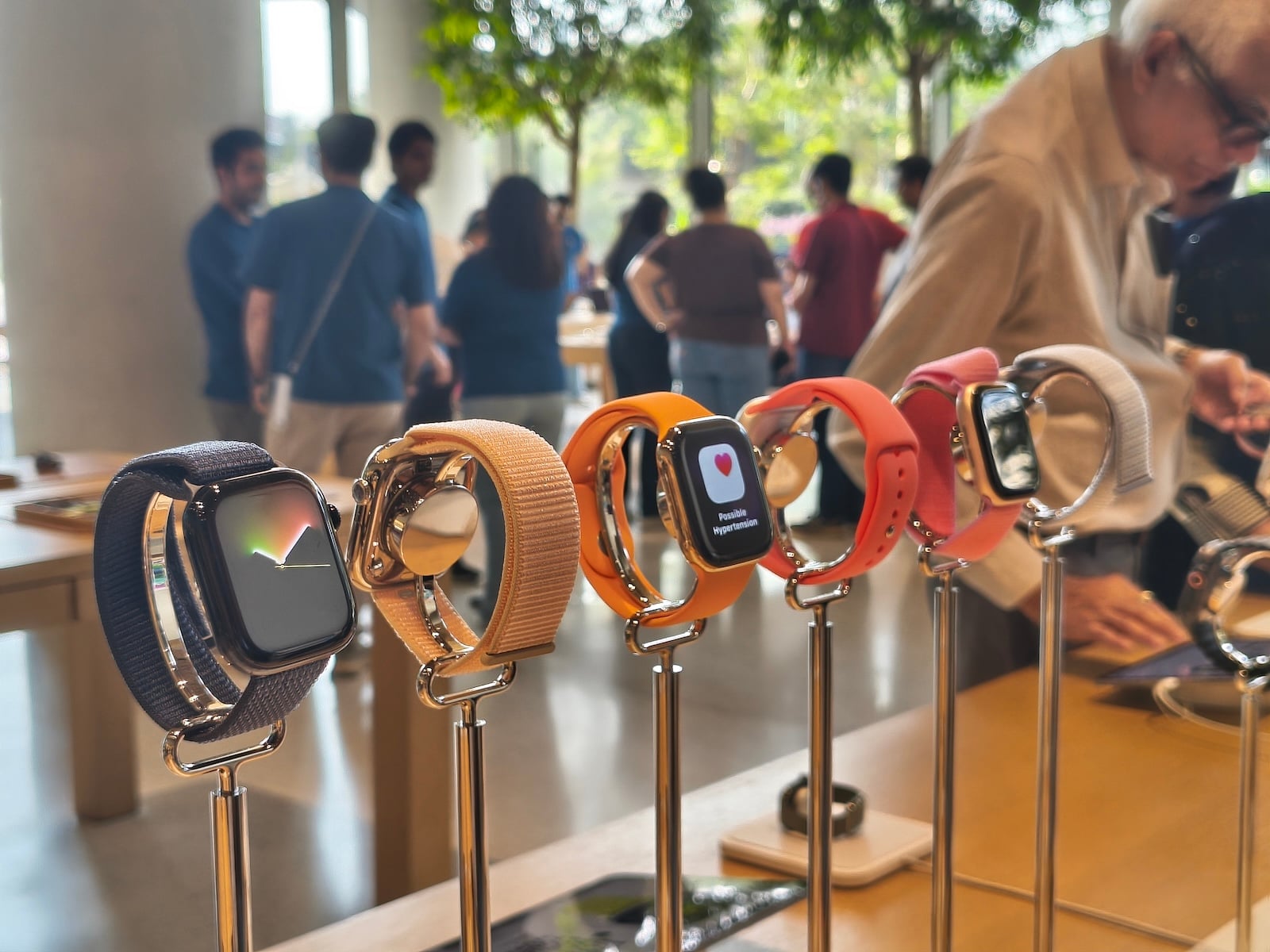
The Apple Watch would thus take the step from a general health tracker to a serious medical device – including the regulatory complexities that would entail. Until then, the project remains one of Apple's most ambitious endeavors. The change at the top is an indication that it continues to be a priority. For now, that's all it is. (Image: Shutterstock / Sreeyash Lohiya)
- iOS 27: The WWDC logo reveals the final Siri colors
- Titanium returns to the iPhone Pro? A second leaker dampens expectations
- iPhone Ultra: New production problems in pre-production
- watchOS 27 improves heart rate measurement – AI health coach delayed
- iOS 27 raises Genmoji and Image Playground to a new level of quality
- iOS 27 opens up to Google Cast and other streaming protocols
- iOS 27 cleans up the AirPods menu in Settings
- iPhone 18 Pro: Clear case fix and possible new colors
- iPhone 2027: Prototype with fully curved display undergoing testing
- MacBook Ultra: OLED production reaches "Golden Yield"
- Srouji is restructuring Apple's product development
- iPad Fold is expected to inherit the hinge design from the iPhone Ultra
- iOS 27: Grammar check, voice shortcuts and new wallpaper options
- Titanium comeback in the iPhone: Apple is apparently researching an improved alloy
- Apple Watch Ultra 4: Complete redesign and major sensor leap expected
- Apple Watch: New high blood pressure feature is currently under review by the FDA
- iPhone Ultra: Hinge problem slows down trial production
- Apple Watch Series 12 is likely to be just a minor update