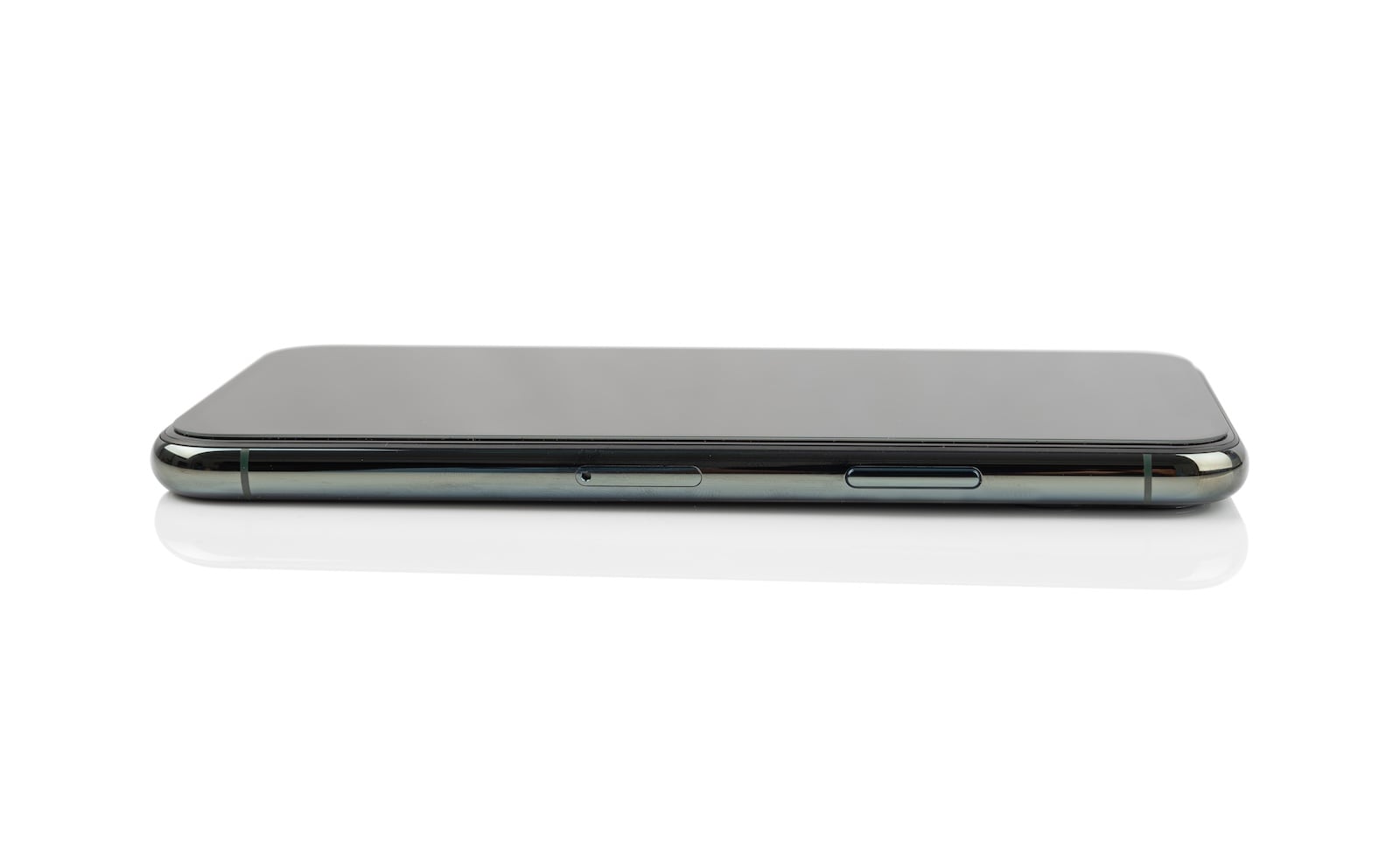
Apple is apparently testing a 2027 iPhone with a display that curves on all four edges. A well-connected leaker from China describes a prototype with an unusual front: The front camera is still housed in a hole in the panel, while Face ID is completely hidden beneath the display.
The year 2027 holds a special significance for Apple: the iPhone will turn 20. For months, reports have been circulating about an edge-to-edge, curved display – the vision of an iPhone that appears to be made almost entirely of glass. A new clue from the supply chain now suggests that this design leap is taking concrete form. This aligns with Apple's existing roadmap for its anniversary model, but raises new questions about differentiation – and ultimately, what the device will be called.
What the original post actually says
The description comes from the Weibo account Digital Chat Station, an account with over three million followers and a history of accurate Apple leaks in recent years. The original post is remarkably brief: According to supply chain rumors, the iPhone will get a quasi-four-sided curved display design in 2027. The leaker doesn't mention a specific model name – neither "Pro" nor a number.
Internationally, this has resulted in a colorful array of names: some media outlets refer to it as the "iPhone 19 Pro," others as the "iPhone 20," assuming that Apple is skipping the number 19 for the 20th anniversary – similar to what happened when it went from the iPhone 8 to the iPhone X. Both are interpretations, not official statements.
The front of the prototype in detail
The device described features a display that is curved on all four edges – meaning it not only curves on the sides, but also at the top and bottom, seamlessly blending into the frame. This design differs significantly from the classic flat iPhone displays of recent years.
The panel itself has a hole for the front camera. Face ID, on the other hand, is located entirely beneath the display, invisible to the user. This would be the first step towards dissolving the Dynamic Island into a virtually seamless screen experience – but only a half step, because the selfie camera would still remain visible.
The open question of differentiation
Several earlier reports had described Apple's intention for the anniversary model as having a completely smooth front without any cutouts – neither a notch, nor a Dynamic Island, nor a hole-punch. If regular models of the 2027 generation also receive a quad-curved display, the visual difference to the anniversary iPhone will decrease significantly.
The latest leak already hints at a possible differentiation: Apple could leave the regular models with a hole-punch cutout and reserve the completely uninterrupted front exclusively for the anniversary model. This would mean that the fully curved display would no longer be the unique selling point, but rather the question of where the front camera is located under the panel.
The camera as a technical bottleneck
This is precisely where the real problem lies. Apple is reportedly working on concealing both Face ID and the front-facing camera beneath the display. With the right sensor arrangement, the Face ID system can apparently already be neatly integrated under the panel – the selfie camera is a much tougher nut to crack.
With a camera under the display, light must pass through the OLED layer to reach the sensor without visibly degrading image quality. Previous attempts by Android manufacturers have shown that image quality measurably suffers at this point – a compromise that Apple, based on everything we know, will not accept. Should existing technologies not allow for this approach, Apple is likely to abandon or postpone the concept.
Three possible scenarios for 2027
Based on the current information, three paths can be derived for how Apple could organize its 2027 lineup.
Option one: Anniversary model as a separate class
Apple is positioning the 20th Anniversary iPhone as an additional premium tier above the existing Pro models – with a completely unobstructed front, a fully concealed front camera, and a corresponding price premium. This variant would fit with the Ultra branding that Apple has now established for the Apple Watch and MacBook.
Option two: Anniversary model replaces the Pro Max
The anniversary model replaces the Pro Max and becomes the top-of-the-line model in the premium line. The Pro and anniversary models share the quad-curved display; the anniversary model distinguishes itself only through its completely concealed front camera and exclusive materials. Reports suggest that the anniversary design could replace the standalone model and be integrated into the Pro line.
Option three: Camera hurdle delays the concept
Apple is unable to integrate the selfie camera with the desired quality under the display and is postponing the concept of a completely bezel-less iPhone by one or two generations. The 2027 models would then appear with a quad-curved display and hole-punch camera, while the anniversary model would either have the same front layout or not be released as a separate line at all.
What still needs to happen by 2027
There are still around 17 months until the market launch. During this time, Apple must overcome three technical hurdles: the mass production of quad-curved OLED panels of the necessary quality, the stable concealment of the Face ID system under the display, and – if the concept is to succeed – a selfie camera under the panel that matches the image quality of today's front cameras.
The current prototype indicates that Apple has made significant progress on the first point. Point two seems within reach. Point three remains open – and will determine how radically the anniversary model can differentiate itself from the models running concurrently.
The long road to the bezel-less iPhone
The quad-curved display marks the biggest design leap for the iPhone since the removal of the home button in 2017. Should Apple pursue this vision, it would be the first iPhone whose front is almost entirely dominated by the display – without visible edges, a notch, or a dynamic island. The current prototype shows that this path is becoming a reality. Exactly when it will end and how many stages Apple will need to achieve it ultimately depends on a single, very small component behind the display. (Image: Shutterstock / Issarawat Tattong)
- MacBook Ultra: OLED production reaches "Golden Yield"
- Srouji is restructuring Apple's product development
- iPad Fold is expected to inherit the hinge design from the iPhone Ultra
- iOS 27: Grammar check, voice shortcuts and new wallpaper options
- Titanium comeback in the iPhone: Apple is apparently researching an improved alloy
- Apple Watch Ultra 4: Complete redesign and major sensor leap expected
- Apple Watch: New high blood pressure feature is currently under review by the FDA
- iPhone Ultra: Hinge problem slows down trial production
- Apple Watch Series 12 is likely to be just a minor update
- Genmoji in iOS 27 are supposed to suggest themselves
- New Siri app launches with beta label and auto-deleting chats
- iPhone 20: Report warns of possible image distortion in the first edge-to-edge Display
- Apple promotes Siri integration – developers have a specific concern
- Apple plans to open the App Store to AI agents
- iOS 27: Completely new Siri with its own app and system-wide search gesture
- iOS 27: Apple refines Liquid Glass and makes the camera app freely customizable
- iPhone 18 Pro: Significantly brighter display remains a thing of the future
- iPhone 18 Pro: Aggressive pricing strategy despite storage cost pressure
- visionOS 27: What Apple Vision Pro 2026 can really expect
- Apple Watch without Touch ID: Leaker dampens expectations for 2026
- Apple Vision Pro: Development continues – despite restructuring
- Safari 27: Tabs should group themselves using AI