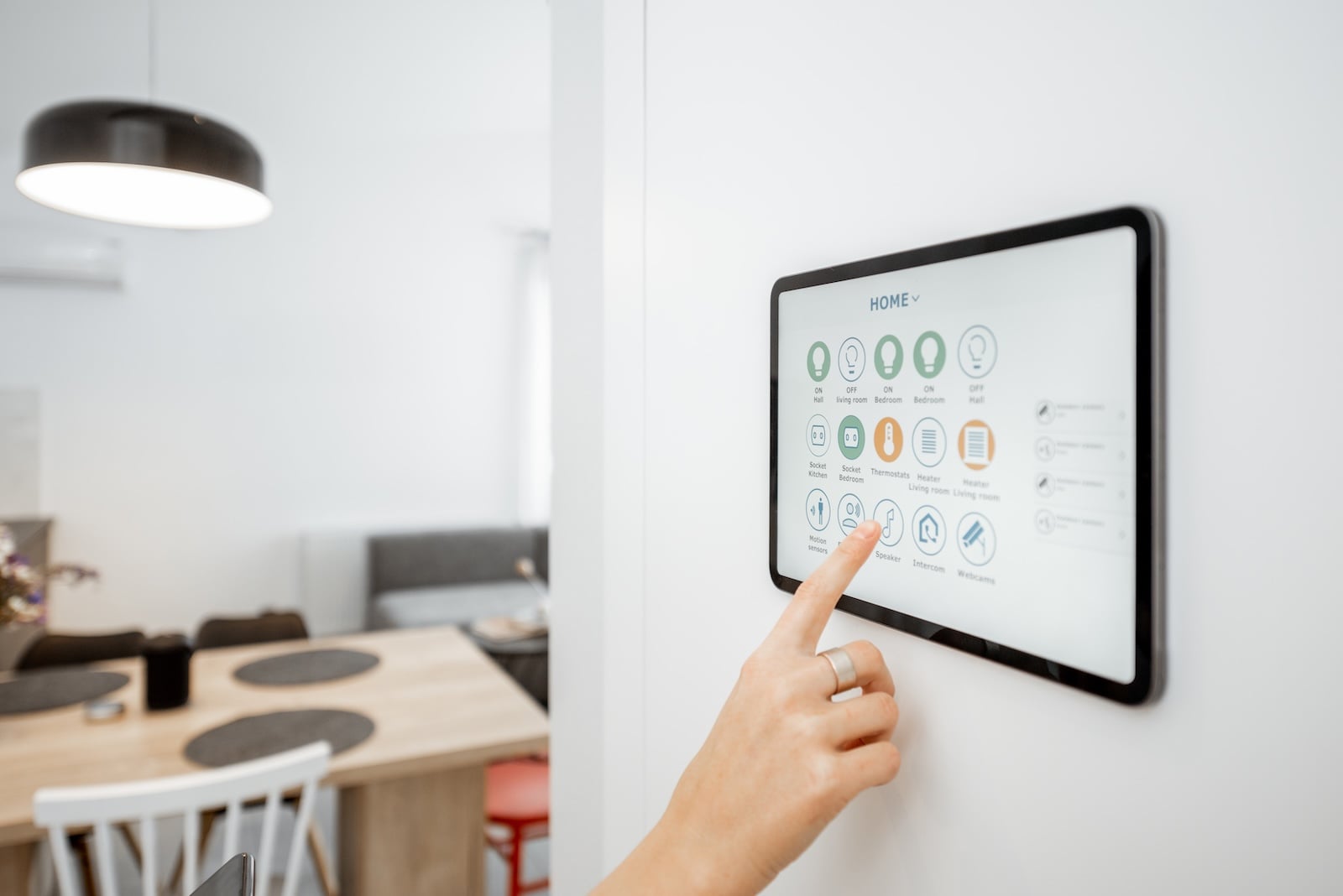
Apple has been working on a smart home hub with a display for years – and it's finally expected to launch in 2026. Internally codenamed HomePad, the device combines a HomePod speaker with an iPad-like touchscreen, thus competing with Amazon's Echo Show and Google's Nest Hub. The key difference: deep integration with HomeKit, Matter, and Apple Intelligence.
Apple has long been a spectator in the smart home market, while Amazon and Google set the pace with displays, cameras, and hub devices. Apple's own home ecosystem has thus far been limited to the HomePod, HomePod mini, and Apple TV as control centers. This changes with the HomePad. Internally developed under the codename J490, the device has reportedly been ready and in storage for months, according to several sources – its launch was only delayed by the wait for the completely revamped, AI-powered Siri experience. This very component is part of a broader smart home offensive, the roadmap for which extends to 2028 and includes, in addition to the HomePad, a new Apple TV, updated HomePods, and a future robotic arm.
Key Facts at a Glance
| Detail | Expectation |
|---|---|
| Product | Smart home hub with 7-inch display |
| Code name | J490 |
| Chip | A18 (Apple Intelligence-enabled) |
| Display | 7-inch, square, Touchscreen |
| Camera | Ultra-wide angle camera with Face ID for multi-user recognition |
| Design | Table model with speaker base and wall mounting |
| Software | custom homeOS variant based on tvOS |
| Market launch | Autumn 2026, more likely as part of an October event |
| Price | estimated at around 350 US dollars |
Two designs: table and wall
Apple is developing the HomePad in two versions. The tabletop model sits on a speaker base that visually resembles the HomePod mini – intended for the kitchen, bedroom, or desk, anywhere quick access to information and music control is needed. The wall-mounted model uses a MagSafe-like magnetic mount and becomes the central smart home panel on the wall; leaker Kosutami reported on a prototype with quick-mounting and integrated doorbell. The display measures around seven inches in a square format – roughly the size of two iPhones side by side – and uses proximity sensors to react to approaching people by adjusting the displayed content.
Chip and software
According to leaked Apple code, the HomePad will be powered by the A18 chip – the same processor as in the iPhone 16. This would make the device powerful enough for Apple's intelligence features, most notably Siri AI with natural conversational capabilities. It will reportedly run a custom operating system based on tvOS and enhanced with iOS-like features – often referred to as homeOS. References to the ChatKit framework in the code suggest that the HomePad could support iMessage and text messaging, features currently missing from Apple TV and HomePod. The user interface is expected to combine elements of the Apple Watch and iPhone sleep mode: clean, widget-based, and with contextual displays that change depending on the user and time of day.
Camera and Face ID
The built-in front camera goes beyond simple video calls. Center Stage and 1080p video are supported for FaceTime. More exciting is Face ID with multi-user recognition: The HomePad is designed to recognize who is standing in front of it and automatically switch between profiles – with personalized music, a personal calendar, and individual reminders. Furthermore, facial recognition could trigger automations, for example, starting appropriate HomeKit scenes when you arrive home, from lighting and music to the security system. The fact that Apple has developed an internal app to measure recognition accuracy underscores the importance of this feature.
The HomePad as the central hub for the smart home
The HomePad is positioned as the central hub for the entire Apple Home ecosystem. HomeKit and Matter devices can be controlled directly via its display, Thread support enables direct communication with compatible devices without an additional hub, and Siri, at its core, handles voice control for lights, thermostats, locks, and cameras – noticeably more powerful than before. The HomePad is designed to work closely with the planned Apple Security Camera and be part of a larger smart home push that also includes the new HomePods. The fact that the software foundation for this is in place was demonstrated at WWDC: Apple expanded the Home app there, adding, among other things, smarter notifications for security camera alerts.
What the HomePad can – and can't – do
In addition to smart home control, the HomePad is designed to play music and podcasts, make FaceTime video calls, display weather, calendar and reminders, show photos as a digital picture frame, manage notes and timers, and send and receive iMessages. What's deliberately missing: a full-fledged App Store. Apple is focusing on curated features rather than an open platform, clearly concentrating the device on smart home functionality, communication, and quick access to information.
When the HomePad is expected to be released
Originally planned for early 2025, the HomePad was then pushed back to spring 2026 and finally to fall 2026 – each time due to delays surrounding the AI-powered Siri experience. The hardware has been considered ready for months; leaker Kosutami hinted at a fall launch as early as March and shortly thereafter spoke of the device's release. With the unveiling of Siri AI at WWDC, the last remaining uncertainty has been eliminated: iOS 27 and Siri AI were showcased, and the widespread rollout will follow in the fall. The event is now expected to take place not at the already packed September keynote surrounding the iPhone 18 Pro, but rather at an October event primarily focused on the Mac – possibly alongside the MacBook Ultra.
How much the HomePad will cost
Initial estimates suggest a price of around $350, which would be approximately €399. This would be significantly cheaper than an iPad and positions the HomePad as a standalone smart home device rather than a tablet replacement. While Apple's price would be higher than comparable smart displays from Amazon and Google, which are generally considerably cheaper, Apple offers deep integration into its own ecosystem.
Outlook: the robot hub for 2027 or 2028
In addition to the HomePad, Apple is reportedly working on a more ambitious variant: a display mounted on a movable robotic arm that can follow the user around the room. This device, reminiscent of an animated desk lamp, is internally codenamed J595 and may be combined with an upgraded, more AI-powered version of the tablet. However, recent reports place its launch only in 2027 or even 2028 – the concept is considered risky and is said to still be in an early testing phase. The movable arm thus joins the various stands that can be used with the Home Display, but represents the most spectacular and furthest-moving part of the strategy.
Who is the HomePad intended for?
The HomePad is aimed at anyone who wants to control their home centrally without constantly having to reach for their iPhone or iPad. It doesn't replace either device, but rather expands the ecosystem with a fixed hub in the home. It's particularly interesting for households with multiple Apple users: Face ID profiles allow each family member to receive personalized content. If you want to keep your smart home entirely within the Apple ecosystem, the HomePad, along with the new HomePods and the Security Camera, could become the heart of a fully connected home.
The best products for you: Our Amazon storefront offers a wide selection of accessories, including those for HomeKit. (Image: Shutterstock / RossHelen)
- New Apple TV 4K: All the rumors about the update with Siri AI
- MacBook Ultra: All the rumors at a glance
- iPhone 18 Pro: All the rumors at a glance
- Siri AI in iOS 27: All the Features at a Glance
- iPhone 18: All the rumors at a glance
- Apfelpatient Weekly #10
- These Apple Features Aren't Available in the EU
- Safari in iOS 27: All the New AI Features
- iOS 27 Expands Health and Fitness – From Nutrition to Menopause
- iPhone Ultra (iPhone Fold): All rumors and facts at a glance
- Apple's third-generation Foundation Models: How the new AI architecture works
- What's New in the iOS 27 Photos App
- Siri AI is based on Gemini – but is not Gemini
- WWDC 2026: Apple's keynote breaks with an old tradition
- Why the DMA Stops Siri AI on iPhone and iPad
- Apfelpatient Weekly #9
- WWDC 2026: All expectations, rumors and hardware hopes at a glance
- Apple TV in June 2026: All the highlights at a glance
- Apfelpatient Weekly #8
- New Apple TV 4K: All the rumors about the update
- HomePod 3 & HomePod mini 2: All the rumors at a glance
- Apple Glasses: All the rumors at a glance