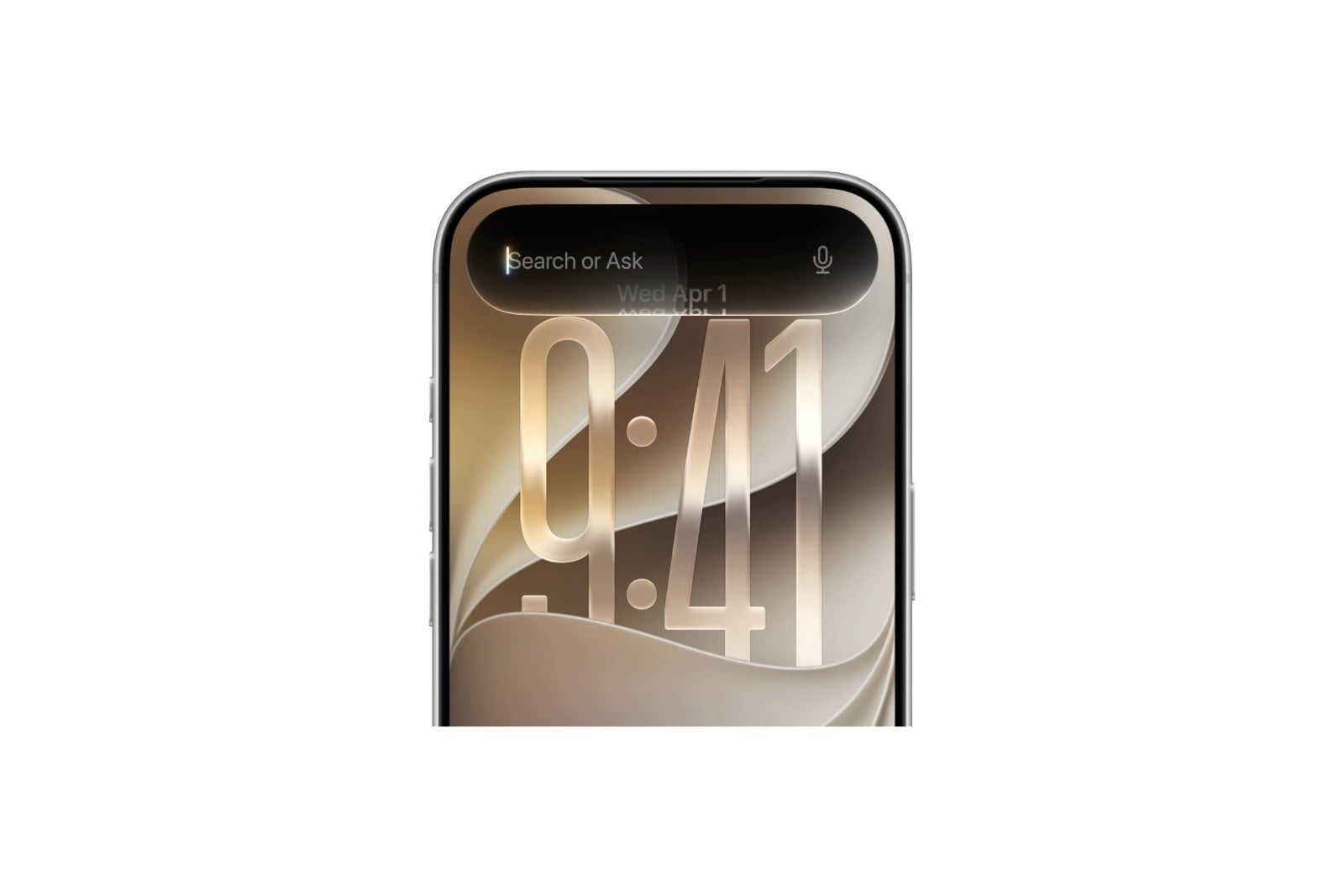
Apple has marketed privacy for years as the thing that sets its own platform apart from all others – and of all things, the privacy-marketed AI highlight of the year is missing in the EU on iPhone and iPad. On Mac and Apple Vision Pro, the new Siri is available, but not on the two most-used devices – and the Apple Watch falls along with them, because it draws Siri AI through the paired iPhone. This gap has a clear mechanism, and it has more to do with the reach of the DMA than with a whim in Cupertino.
In the German-speaking Apple community, noticeable frustration has built up after the keynote: another grand stage, more polished slides – and for EU users, once again a waiting room when it comes to the most important feature. The fact that the new Siri is not launching on iPhone and iPad in the EU for now, even though Mac and Apple Vision Pro are getting it, initially sounds like a contradiction in itself. In reality, it is the opposite of a coincidence. The dividing line runs precisely – only not between iPhone and Mac, but between the platforms covered by the Digital Markets Act and those it does not cover. This turns a regional availability detail into a fundamental question – and it strikes precisely what Apple has been advertising for itself for years: control over your own data.
What EU Users Don't Get on iPhone and iPad
With the next system generation, Apple is completely rebuilding the assistant. The new Siri is the most visible piece of the revamped Apple Intelligence: it is designed to hold conversations in context, understand what is visible on screen, and trigger actions within apps. In the EU, none of this remains on iPhone and iPad at launch. Specifically, what is missing is the new standalone app in which previous conversations can be recalled, the expanded Visual Intelligence, the integrated writing tools, the Siri mode in the Camera app, as well as all other Siri AI features presented at WWDC.
Apple is phrasing the rejection unusually openly. Craig Federighi, responsible for software development at Apple, said he was "deeply disappointed" that EU users would not get Siri AI on iPhone and iPad at the launch of the new software; the company hopes to bring the assistant to the EU later after all, but currently has no timetable for it. This lack of perspective is the real sting: it is not about a few weeks of delay, but about an open-ended outcome.
It is not only consumers who are affected. Developers based in the EU also cannot test or integrate the new Siri AI features into their iPhone, iPad, and Apple Watch apps for the time being – a restriction that over time can translate into a noticeable lag in the local app landscape. And the EU is not alone in this: Siri AI is initially not launching in China either, though there for different, separate regulatory reasons.
The Dividing Line Isn't iPhone vs. Mac, but Regulated vs. Unregulated
What's striking about the block is its precision. In the same region, using the same Apple AI, the new Siri is missing on precisely the two systems detected by the DMA – and on a third system connected to them. If you look for a cause, only one variable remains that explains the pattern, and it's not called "Apple's whim," but rather the DMA designation.
The EU Commission designated iOS as a core platform service in September 2023, with iPadOS following on April 29, 2024 – in the iPad's case even though it did not meet the law's quantitative thresholds, requiring the Commission to justify the classification specifically through qualitative criteria. macOS, watchOS, visionOS, and tvOS do not carry this designation. This is precisely the line Apple is now retracing: on Mac and Apple Vision Pro – both outside the DMA's reach – the new Siri runs, while on iPhone and iPad it stays off. The Apple Watch completes the picture in an uncomfortable way: watchOS is likewise not designated, but because the assistant runs there via the paired iPhone, the watch inherits the block. The DMA formally affects two platforms – in practice, it costs Europe's users the new Siri across three device categories.
A concrete obligation comes attached to the designation. For iOS and iPadOS, the DMA stipulates that Apple must grant third parties free and effective interoperability with the functions controlled by the operating system. Applied to the assistant, this means, in Apple's reading: the deep system access that the new Siri would have – to app actions, personal data, screen context – Apple would have to open up in the same form to any third-party AI. On the Mac, this obligation does not apply, so the question does not arise there. This resolves the apparent inconsistency without having to prove a contradiction on Apple's part: it is not a question of convenience, but of regulatory exposure.
Apple's Concerns and the Rejected Compromise
Apple frames the matter as a question of protection – and gets specific about it. From the company's perspective, the interoperability demanded by the DMA would mean that any arbitrary assistant would gain the same far-reaching access to the device as the new Siri: reading and sending messages, making purchases, accessing files, independently carrying out actions across third-party apps – and all of this without users being able to continuously review and control it. Apple points out that security researchers have already demonstrated how such AI systems can be hijacked to grab passwords or photos. The fact that it did not stop at an outright refusal is part of the story: according to Apple, the company offered a "Trusted System Agent" as a secure intermediary instance and a plan to launch Siri AI in the EU and roll out this solution over 18 months. The Commission declined and accepted none of the proposals.
The other side reads the same rules differently. In the Commission's view, the DMA requires Apple to grant competing AI systems the same access as its own assistant – not to let data flow away, but to keep the market open and contestable. That it isn't only Apple in the crosshairs is shown by a parallel case: just in January 2026, the Commission opened a comparable proceeding against Google to secure third parties the same access to those Android functions that Google's own AI services like Gemini use. Where Apple sees a security boundary, the regulator sees a competition mechanism. Both sides claim the user's interest for themselves, and it's at exactly this point that the two logics of protection collide.
On top of that comes a point that tends to get oversimplified in the debate. The new Siri relies on Gemini technology from Google's orbit for its larger models, and the most compute-intensive requests will indeed be processed by Apple via Private Cloud Compute on Google Cloud going forward. But it does not follow that every request ends up at Google the way it would with an ordinary Google service: by its own account, Apple retains control over the PCC software – devices only trust code signed by Apple – sticks to stateless processing with no data retention, and opens the systems up to independent security researchers for inspection. The accusation that a "privacy company" is here simply handing its users over to Google therefore only half hits the mark – even if proof that the guarantees hold on someone else's hardware is still pending.
In the End, the European User Loses
Here it is worth taking a step back. Apple's model relies on tight, controlled integration: as much as possible on the device, the rest shielded off, access deliberately kept narrow – protection through closedness. The DMA pursues the opposite goal: opening up, interoperability, breaking up gatekeeper power. This is not a dispute between two equivalent protection concepts, because only one side promises data privacy at all. And it is the same Apple AI that ships worldwide and in the EU on Mac and Apple Vision Pro – it disappears precisely where the DMA's access requirement strikes it, and drags the iPhone-bound Apple Watch along with it.
That's the real punchline – and it has a bitter note. Privacy and control over your own data are no sideshow for Apple, but its central brand promise and, for a relevant share of buyers, a genuine argument at which the competition has been falling short for years. Of all places, in the region with the strictest privacy tradition, a different set of rules now ensures that the privacy-marketed feature is missing on the two most important platforms. Anyone who chose their iPhone partly because of exactly this promise is, in the EU, left without the feature for the time being.
That the interoperability obligations hang on iOS and iPadOS alone is a fact – and Apple's proposed solution was on the table before the Commission rejected it, without accepting a single one of the proposals. Whether every one of Apple's protection concerns is compelling can't be conclusively judged from the outside; but if an agreement at the negotiating table was possible, it certainly didn't fail for lack of proposals from Cupertino.
What remains is an uncomfortable reckoning. Apple Intelligence already arrived in Europe only in March 2025 after the same DMA limbo back in 2024; now the pattern repeats, this time without even a timeline. A set of rules that promises freedom of choice and open markets takes the software highlight of the year away from the European user of all people – and does so later than everywhere else. Who ends up being legally right changes little about that: the bill for the dispute between Cupertino and the European Commission is paid first by whoever has an iPhone in their pocket here.
The best products for you: Our Amazon Storefront offers a wide selection of accessories, including for HomeKit. (Image: Apple)
- Apfelpatient Weekly #9
- iPhone 18 Pro: All the rumors at a glance
- iPhone Ultra (iPhone Fold): All rumors and facts at a glance
- WWDC 2026: All expectations, rumors and hardware hopes at a glance
- Apple TV in June 2026: All the highlights at a glance
- Apfelpatient Weekly #8
- New Apple TV 4K: All the rumors about the update
- HomePod 3 & HomePod mini 2: All the rumors at a glance
- Apple Glasses: All the rumors at a glance
- Apfelpatient Weekly #7
- iPhone 2027: All the rumors about the anniversary model
- MacBook Ultra: All the rumors at a glance
- Apple Watch Ultra 4: All the rumors at a glance
- Apfelpatient Weekly #6
- Apple Watch Series 12: All the rumors at a glance
- Apfelpatient Weekly #5
- AirPods Ultra: All the rumors at a glance
- Apple TV in summer 2026: The strongest lineup yet
- Siri strategy: Why AI choice is Apple's most important step in years
- Mac Studio M5: All the Rumors at a glance
- iPhone 18: All the rumors at a glance