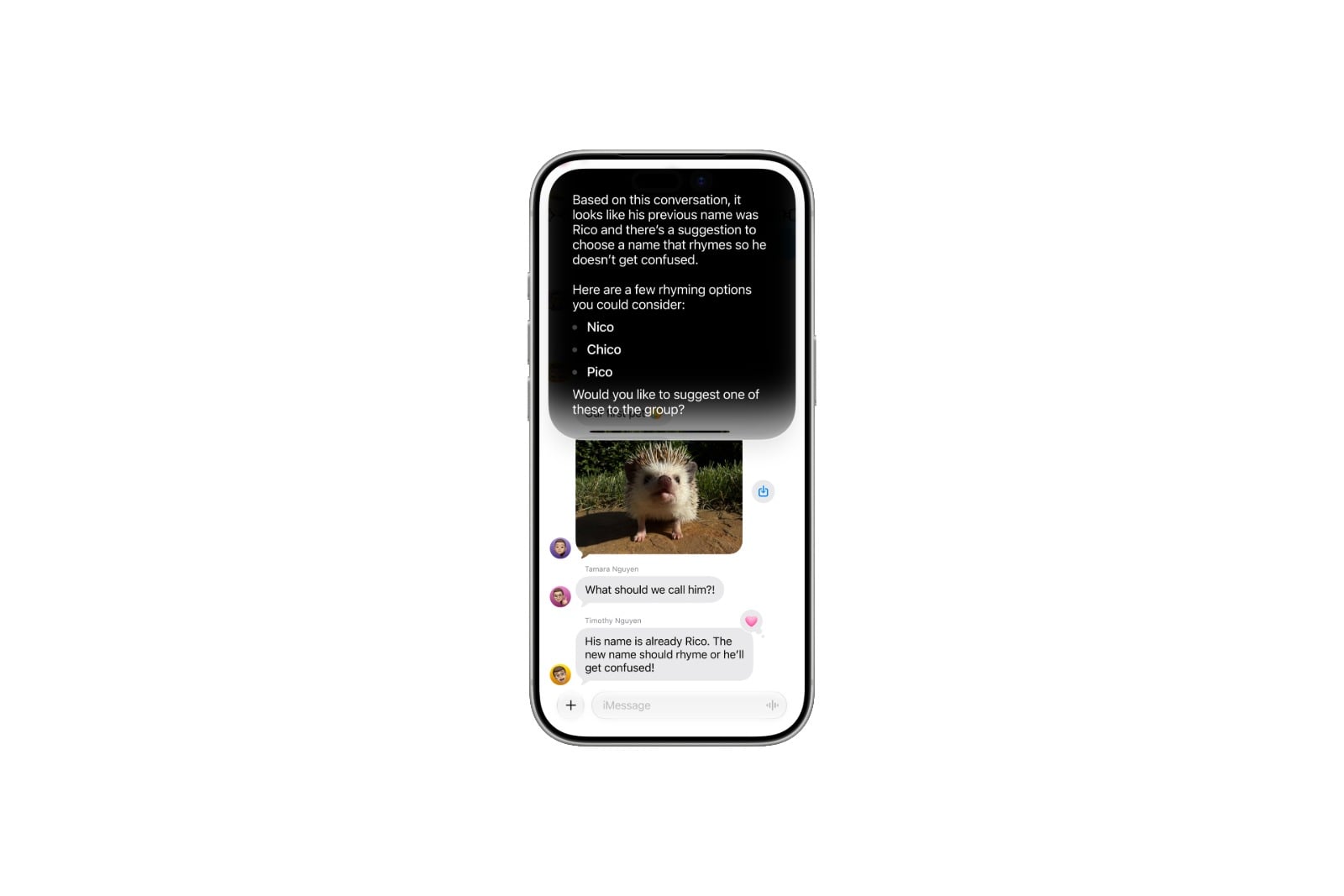
It's the downside of the big WWDC appearance: Apple has confirmed that the new Siri AI will not be launched on iPhones and iPads in the European Union for the time being. The reason given is the Digital Markets Act – there is no timetable for a later rollout. Macs and Apple Vision Pro are exempt – the Apple Watch, however, is also affected, as its Siri AI requires an iPhone with the new assistant installed.
No sooner had Apple unveiled its revamped Siri than users in Germany and the rest of the EU were met with disappointment: Siri AI will not be available on iPhones and iPads in these countries with the launch of iOS 27 and iPadOS 27. Apple cites the Digital Markets Act (DMA) as the reason, explaining that EU regulators have not accepted any of the proposed solutions over the past few months. This move is part of a long-simmering conflict in which Apple recently even sided with Google in the EU DMA dispute. Software chief Craig Federighi expressed deep disappointment that EU users will be missing Siri AI on their iPhones and iPads, emphasizing that while they hope for a later rollout, they currently have no timeframe for this.
What iPhone and iPad users in the EU are missing
When iOS 27 and iPadOS 27 are released later this year, users in the EU will not have access to Siri AI and its enhanced capabilities on these two platforms. This includes the standalone Continue Conversations app, the improved Visual Intelligence, the integrated writing tools, Siri Mode in the iOS Camera app, and the other Siri AI features presented at WWDC. Developers based in the EU will also be unable to test or use the new Siri AI features for their own apps on iOS, iPadOS, and watchOS.
The situation is different on other platforms: macOS 27 and visionOS 27 will also receive Siri AI in the EU, provided a supported language is selected. The Apple Watch, however, misses out, even though watchOS itself isn't subject to the DMA – the assistant runs on the watch via the paired iPhone, and without authorization on the iPhone, the watch automatically inherits the restriction. This limitation therefore affects the iPhone, iPad, and consequently the Apple Watch – the devices that shape the daily lives of most people using Apple products.
Apple's reasoning: Data protection and security
Apple presents the decision as a consequence of its own security philosophy. Siri AI is designed from the ground up to be privacy-friendly and is deeply integrated into the platforms via on-device processing and private cloud computing. According to Apple, however, the regulators' – from the company's perspective – extreme interpretation of the Data Access Directive (DMA) would require any virtual assistant to have direct access to private user data and control over other installed apps as soon as Siri AI is available in the EU, without the safeguards that Apple considers necessary.
Specifically, Apple describes the requirement as follows: The DMA forces every AI system to be granted virtually unlimited access to the device, including the ability to act independently without users being able to continuously monitor and control it. This includes reading and sending messages, making purchases, accessing files, and performing actions across any app. Apple points out that security researchers have already demonstrated how AI systems can be hijacked to steal personal data such as passwords and photos, or to permanently modify files and account settings without consent.
The rejected compromise
As a solution, Apple designed what it called a Trusted System Agent – an intermediary that would allow virtual assistants in the EU secure access to the same functions as Siri AI. The company also presented a plan to launch Siri AI in the EU and roll out this new solution gradually over an 18-month period. The European Commission rejected this and, according to Apple, did not approve any of the proposals. Therefore, there is no timetable for the introduction of Siri AI on iOS and iPadOS in the EU; Apple states that it will continue working on the most secure solution possible.
What the DMA dispute is essentially about
Behind the conflict lies the interoperability obligation of the Digital Markets Act. This obliges companies classified as gatekeepers to grant third-party providers the same effective access to system and hardware functions used by their own services. Applied to AI assistants, this means, from the Commission's perspective, that competing assistants should, in principle, have the same capabilities as Siri – so that users have a genuine choice and the market for AI assistants remains open. As recently as January 2026, the Commission initiated similar proceedings against Google to ensure that third-party providers have equivalent access to the same Android functions used by Google's own AI services, such as Gemini.
This is precisely where opinions diverge: What regulators see as a fair competitive condition, Apple considers a loophole that cannot be securely closed. This tension between open platform and controlled system runs through almost all AI debates in Europe and also shapes Apple's considerations regarding future freedom of choice in AI assistants.
An open ending, as predicted
For Apple, the decision is a double-edged sword: On the one hand, the company is once again portraying itself as a champion of privacy, while on the other hand, its most loyal iPhone and iPad users in one of its most important markets will have to do without the year's key software highlight. The fact that the Mac and Apple Vision Pro remain unaffected in the EU also demonstrates that the blockage hinges on the regulatory classification of the iPhone and iPad as core platforms – and the case of the Apple Watch illustrates how far this classification extends into the rest of the ecosystem. (Image: Apple)
- Apple Intelligence: The next generation is here
- Siri AI: Apple introduces the completely redesigned assistant
- Tim Cook gets in the mood for WWDC with a "Good Morning" video.
- Gemini could become the upper limit for Apple's AI ambitions
- UK is demanding that Apple implement a feature that already exists
- UK threatens tech executives with jail if children can see nude images
- Epic Games counters Apple's move before the Supreme Court
- Apple Arcade: Nine new games in June and July
- App Store: Ecosystem reaches $1.4 trillion
- Apple TV shows the trailer for "Lucky" starring Anya Taylor-Joy
- Apple opens Europe's first Developer Center in Berlin
- Apple discloses revenue figures in India antitrust dispute
- Microsoft is ending Office support for older Macs and iPhones
- Musk must hand over Tesla and SpaceX emails in accordance with Apple's procedure
- Vision Pro Stylus: Apple patent aims to make virtual textures tangible
- MacBook Neo is selling better than the new MacBook Air and Pro
- Apple Design Awards 2026: The twelve winners have been chosen
- Anthropic expands Glasswing and plans Mythos launch for all
- Silo Season 3: Trailer reveals the origin story
- Apple TV wins Gotham Award for Pluribus