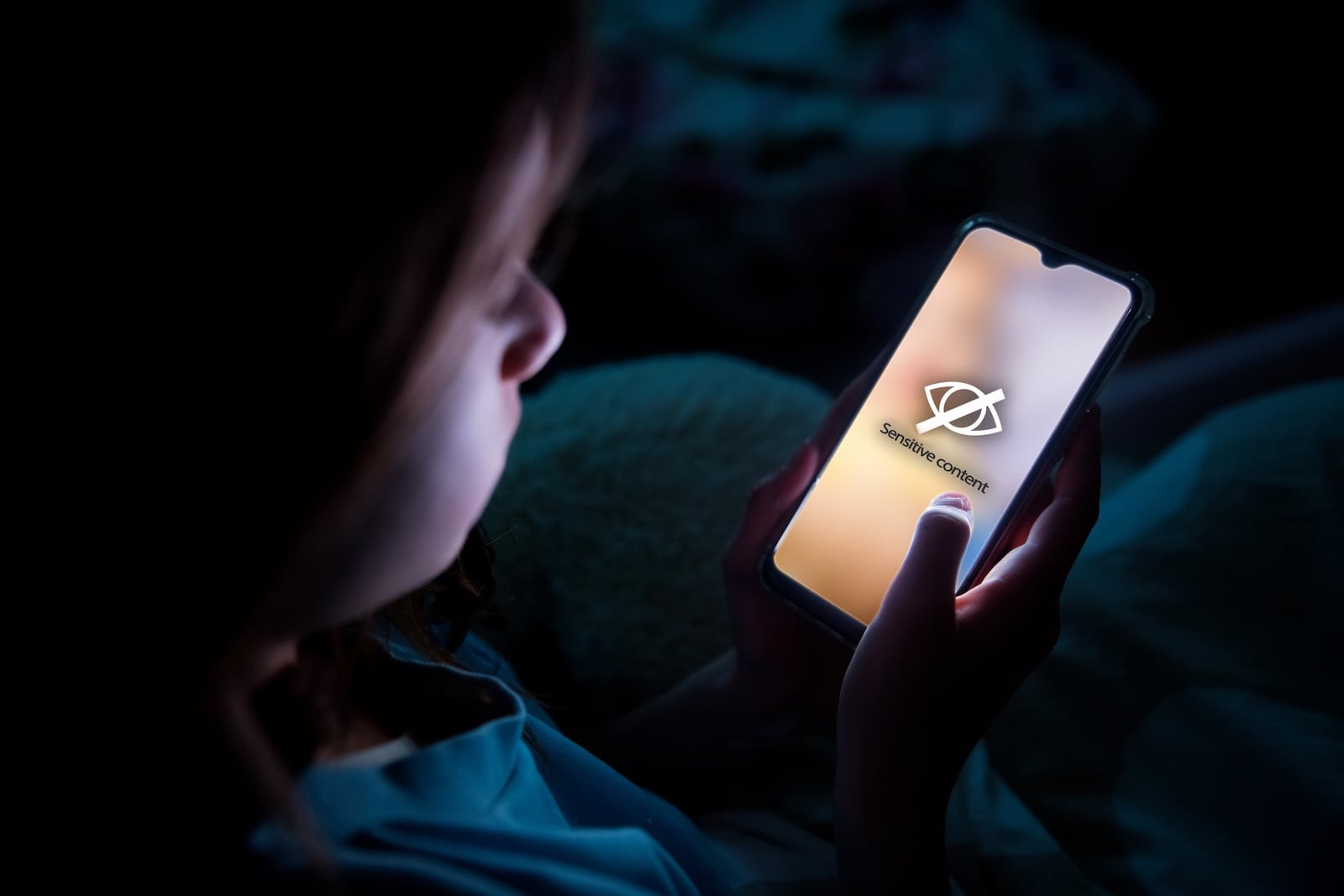
Britain wants to go further than any other country so far in child protection: Tech companies like Apple and Google will be required to make it impossible for children to see nude images – otherwise, their CEOs will face personal imprisonment. For Apple, this threat comes at an ironic time, just as it's entering the first months of a leadership change.
The need for platform operators to better protect minors from inappropriate content is already a reality. Apple has already implemented system-wide age verification in the App Store due to the UK's Online Safety Act and individual laws at the US state level. However, according to a report in the British newspaper The Times, the government in London now wants to go significantly further – with a requirement that, for the first time, would be backed by prison sentences for individual managers if it fails.
What Britain is planning
British ministers are reportedly planning to introduce proposals that would require technology companies like Apple and Google to make all forms of nudity inaccessible to children. This includes not only social media, but also explicitly sex scenes in films and television series.
The decisive break with previous policy lies in the sanction: For the first time, a law is to give the state the authority to imprison those responsible at the affected companies if they fail to comply with the regulations. The potential prison sentence is to be up to five years. This is an escalation that had previously been discussed and then rejected within the government – out of concern about damaging relations with the technology companies.
Why the threat will affect Apple's future CEO
Since the threatened prison sentence is directed against the company's management, in Apple's case it falls on the current CEO. Currently, that's Tim Cook – but he announced in April that he would be stepping down from operational leadership. On September 1, 2026, John Ternus will take over as Apple's new CEO, while Cook will move into the role of Executive Chairman. A British law that would only come into effect in the months following Cook's departure would then fall under Ternus's responsibility, not Cook's.
A resignation in protest
How seriously the government apparatus debated the issue is demonstrated by a personnel matter: Jess Phillips, the former Secretary of State for Security Affairs at the Home Office, resigned in May 2026 – precisely because the government had only been prepared to "encourage" companies to cooperate.
In her resignation letter to Prime Minister Keir Starmer, Phillips stated that it had taken her a year to even persuade him to threaten legislation in this area - not to enact it, but merely to threaten it. The announcement had originally been scheduled for March, then postponed until June; she no longer believed it would happen. Her bitter question: How many children had been left without a safety net during this period of hesitation, while the sensitivities of tech executives were being prioritized?.
Between child protection and surveillance
While neither Apple nor Google have publicly commented on the report, civil rights organizations are speaking out. Silkie Carlo, director of Big Brother Watch, warns that such a law, despite good intentions, would inevitably lead to the end of privacy: Ultimately, it would result in widespread identity checks simply to be able to use a smartphone, tablet, or laptop. Instead of sensible technical solutions and parental responsibility, the state is relying on a demonstrative, authoritarian control that children could easily circumvent anyway - for example, by using devices registered to adults. In her view, planned interventions in messaging, streaming, and browsing also carry the risk of creating a kind of spyware in people's pockets that could sooner or later be misused for other purposes.
However, support comes from child protection advocates. Rani Govender, a representative of the British child protection organization NSPCC, stated that it was time for tech executives to do everything in their power to protect young people online – and to use existing protective technology on children's devices to block nude images.
What Apple has already implemented
Govender's reference to existing technology points to the fact that both Apple and Google have already implemented child protection features. In February 2025, Apple began rolling out a comprehensive set of measures that, for example, prevent children from seeing age-inappropriate content in the App Store. The communication security feature also specifically targets the requested nudity detection, recognizing nudity directly on the device and automatically pausing the image in FaceTime calls, for instance - it is enabled by default for accounts belonging to minors. Apple had previously announced measures against depictions of child sexual abuse (CSAM) but dropped them following criticism from civil rights groups.
Open questions
Until the UK publishes the specific text of the legislation, it's impossible to assess whether Apple already adequately meets the requirements. It's also unclear what happens if children actively circumvent the age restrictions. The effectiveness of location-based blocks in practice was demonstrated last year: after the UK blocked access to adult websites in 2025, the use of VPN services skyrocketed. The provider Proton VPN recorded a 1,400 percent increase in its subscriptions at the start of the block. (Image: Shutterstock / Aleksandra Suzi)
- Epic Games counters Apple's move before the Supreme Court
- Apple Arcade: Nine new games in June and July
- App Store: Ecosystem reaches $1.4 trillion
- Apple TV shows the trailer for "Lucky" starring Anya Taylor-Joy
- Apple opens Europe's first Developer Center in Berlin
- Apple discloses revenue figures in India antitrust dispute
- Microsoft is ending Office support for older Macs and iPhones
- Musk must hand over Tesla and SpaceX emails in accordance with Apple's procedure
- Vision Pro Stylus: Apple patent aims to make virtual textures tangible
- MacBook Neo is selling better than the new MacBook Air and Pro
- Apple Design Awards 2026: The twelve winners have been chosen
- Anthropic expands Glasswing and plans Mythos launch for all
- Silo Season 3: Trailer reveals the origin story
- Apple TV wins Gotham Award for Pluribus
- iPhone shipments in Latin America increase by 8 percent
- WhatsApp is working on Liquid Glass for the Mac app
- Singapore rejects xAI's document requests in Apple lawsuit
- Apple TV beats Netflix in new quality ranking
- iOS 26.5.1 and macOS Tahoe 26.5.1 fix two bugs
- All systems glow: Apple's WWDC teaser hints at the new Siri
- Nvidia RTX Spark and Dell XPS 13 challenge Apple