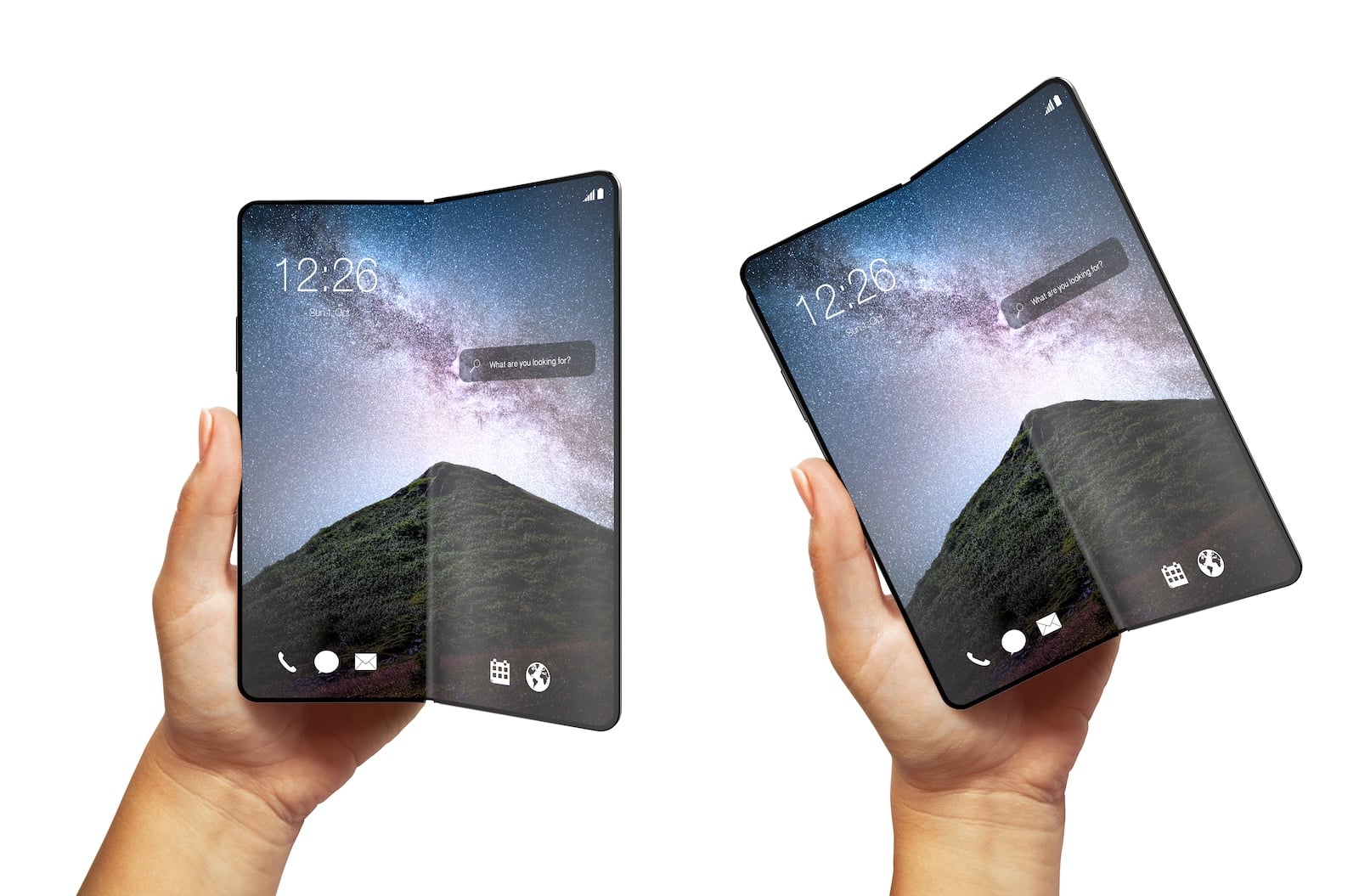
Apple hasn't even unveiled a foldable iPhone yet – and is still expected to capture a quarter of the market right out of the gate. A new market forecast places Apple in second place, just ahead of Huawei. However, a closer look reveals little about the German market.
Market research firm Counterpoint Research predicts that global sales of foldable smartphones will increase by 21 percent in 2026 compared to the previous year – driven primarily by Apple's market entry. Apple itself is expected to capture a 25 percent market share right from the start. The device behind this forecast has not yet been officially confirmed in detail, but is considered a sure thing for September. It would be the first foldable form factor in Apple's iPhone lineup.
How the market should be restructured
According to the forecast, Samsung will remain in the lead, but will lose significant ground: from 40 percent last year to 32 percent. Apple will come in right behind, while Huawei will slip to third place.
| Manufacturer | Share 2025 | Forecast 2026 |
|---|---|---|
| Samsung | 40 % | 32 % |
| Apple | – | 25 % |
| Huawei | 30 % | 24 % |
| Motorola | 12 % | 8 % |
| HONOR | 7 % | 3 % |
| rest | 11 % | 8 % |
It's striking that all established providers are relinquishing market share. While the market is growing, Apple's quarter is being entirely filled with the inventory of its competitors – HONOR is hit hardest in percentage terms, with its share halved.
Why the number says little about the German market
The global share masks a massive regional imbalance. Over 81 percent of all foldable smartphones are sold in the Asia-Pacific region, and Huawei's lead stems almost entirely from its Chinese home market: there, the company accounted for around 72 percent of foldable sales in 2025, while Samsung was at about four percent.
For Germany, Austria, and Switzerland, the picture is reversed. Since the discontinuation of Google services, Huawei has barely sold any smartphones here and plays virtually no role in the foldable segment. The growth in Western Europe, according to the surveys, is attributable to Samsung and Motorola. The competition that an iPhone Ultra actually faces in these countries therefore consists essentially of two providers – the 24 percent that Huawei holds in the global rankings is purely a statistical figure for the German market.
What the forecast reveals about market size
More interesting than the share itself is the underlying benchmark. Recently, it was reported that Apple had ordered around ten million units for this year. If both figures are accurate, the total foldable market would reach approximately 40 million devices in 2026.
Other surveys are significantly lower: In the second quarter of 2026, around 3.4 million foldable smartphones were shipped worldwide, a decrease of two percent compared to the previous year. Extrapolated to a full year, this is a figure far from 40 million. Either the order volume therefore includes a considerable buffer, or the forecast assumes that Apple's entry into the market will inflate it many times over in just a few months. Both would be remarkable – but neither is currently substantiated.
There is no consensus among the analysts anyway. One competing forecast sees Apple as the market leader in the foldable segment as early as 2027, while Samsung is expected to recapture global leadership as early as the third quarter of 2026.
Samsung changes the shape and denies the occasion
One day before the forecast, Samsung unveiled its new generation of foldable phones, spearheaded by the Galaxy Z Fold8 in a shorter, wider format. This design perfectly matches what has been rumored for months about Apple's foldable iPhone.
Samsung's mobile product chief denies any connection and justifies the shape with the larger screen area for videos. Counterpoint, however, argues along the same lines as the rumors: a wider book format will only become relevant when AI functions go beyond simple chat input and take over tasks such as summarizing documents, editing content, or moving information between apps. This requires space and a more flexible layout.
The foldable market is facing its test
Foldable smartphones have remained a niche product after seven years on the market – a quarterly volume of 3.4 million devices worldwide is far below what individual flagship series sell in the same period. Nevertheless, suppliers are already focusing on Apple, as the market for foldable displays has shown for months. Whether this niche will change depends less on Apple's market share than on whether the form factor will find buyers outside of China at all. The forecast doesn't answer this question – it assumes it will. (Image: Shutterstock / guteksk7)
- Apple TV: The Morning Show ends with season 5
- Apple Maps will be permanently installed in Ford electric cars by 2027
- EU imposes €890 million fine on Google
- Apple is preparing an AI shopping assistant for the Apple Store app
- WhatsApp: New features for CarPlay, iPad and Apple Music
- Claude Code now tests iOS apps directly in the simulator
- Masimo: Apple fails in its appeal against the 634 million dollar ruling
- iOS 27: Code reveals locking mechanism for leased iPhones
- Hide email address: Apple closes the security gap
- Apple patent: Future iMac could get a carrying handle and dock