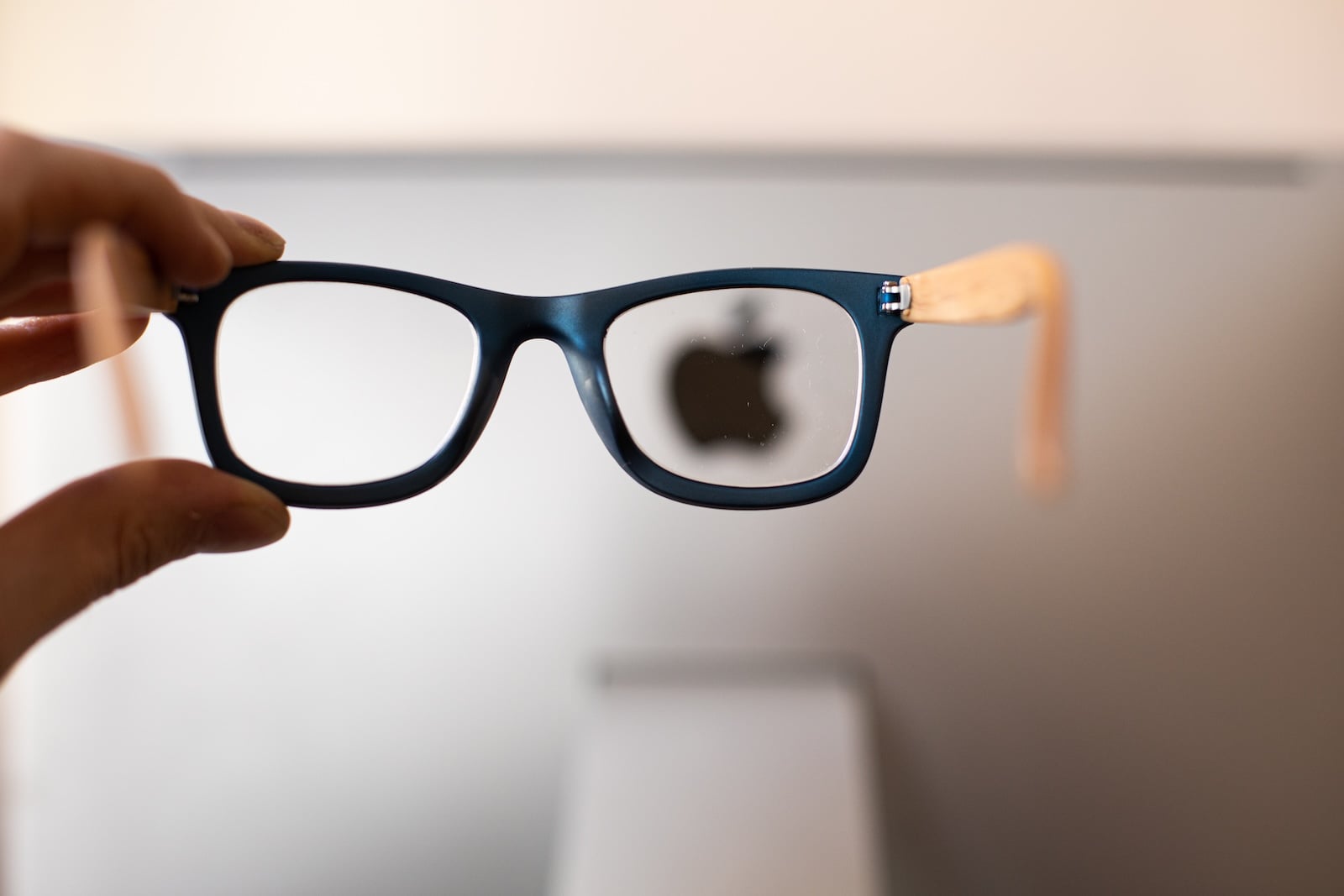
Apple's first smart glasses are taking longer than expected: According to Bloomberg, the market launch is now expected at the end of 2027 – about a year later than previously anticipated. Four designs, two cameras with gesture control, an N401 chip, and a revamped Siri – all the latest rumors at a glance.
With Apple Glasses, Apple is entering a completely new product category. The glasses won't be an AR headset like the Vision Pro, but rather lightweight, everyday smart glasses with cameras, microphones, and Siri integration – comparable to the Ray-Ban Meta. According to Bloomberg's Mark Gurman, Apple is currently testing four frame designs; however, the market launch is now expected only at the end of 2027.
While Meta has long since established its own smart glasses category with Ray-Ban glasses, and Google will follow suit in 2026 with Android XR, Apple is deliberately starting later – but with a clear focus on design, materials, and Siri integration. The goal is to create glasses that are instantly recognizable as an Apple product, similar to AirPods or Apple Watch.
Rumors about Apple Glasses have been circulating for years. After several delays and a strategic shift away from complex AR glasses, the focus is now on a practical product: no displays, no AR in the first generation – but cameras, spatial audio, AI-powered visual intelligence, gesture control, and deep iPhone integration.
Key Facts at a Glance
| Detail | Expectation |
|---|---|
| Release | End of 2027 |
| Chip | N401 (based on Apple Watch S series) |
| Cameras | Two (photo/video + gesture recognition) |
| Steering | Language, gestures, buttons on the headband |
| Display | Not in the first generation |
| Frame material | Acetate |
| Designs | Four are being tested |
| Colors | Black, Ocean Blue, Light Brown (previously) |
| iPhone addiction | Yes, primarily via Bluetooth |
Four frame designs under testing
According to Mark Gurman of Bloomberg, Apple is currently testing four different frame designs. The plan is to launch several of them simultaneously – similar to the wide range of options at the Apple Watch debut in 2015. The four designs are:
- A large rectangular frame in the style of Ray-Ban Wayfarer sunglasses
- A slimmer rectangular frame, similar to Tim Cook's glasses.
- A larger oval or round frame
- A smaller, more delicate oval frame
Apple is also testing various colors: Black, Ocean Blue, and Light Brown have been confirmed, with more to follow. Acetate is used as the frame material – according to Gurman, a "more durable and luxurious" material than the plastic used by Meta. This lightweight, plant-based material also appears more flexible and refined than conventional plastic. The variety of designs underscores that Apple wants to position the smart glasses not as a tech gadget, but as a fashion accessory.
Distinctive camera design
According to Gurman, the front cameras will be arranged in a vertical oval shape and surrounded by indicator LEDs. This arrangement differs significantly from the horizontal layout of the Meta Glasses and is part of Apple's strategy to make the Glasses instantly recognizable as an Apple product.
The LEDs signal when a recording is in progress – a step that responds to privacy concerns that regularly arise with hidden cameras in glasses.
N401: A chip based on the Apple Watch
Inside the glasses is a custom-designed chip codenamed N401. According to Bloomberg, this chip is based on the Apple Watch's S-series and has been optimized for extreme energy efficiency. The reason: Smart glasses must deliver all-day battery life with minimal weight and passive cooling – a challenge that the Apple Watch architecture has already proven itself to meet.
The N401 handles on-device AI inference for visual intelligence and basic functions. Computationally intensive tasks are offloaded to the paired iPhone.
Two cameras with clearly separated tasks
According to a report by MacRumors, the Apple Glasses will feature two cameras, each with a very clearly defined task.
The first camera is a high-resolution main camera. It's designed for classic use cases: taking photos and videos from the wearer's perspective, which can be shared directly or used just like iPhone photos. This is precisely the feature that makes Ray-Ban Meta Smart Glasses stand out today – and Apple clearly wants to catch up.
The second camera is a low-resolution wide-angle lens with a completely different task: it's designed to recognize hand gestures and transmit visual information to Siri. This makes gesture control a central input method for the glasses – a concept Apple has already established with the Vision Pro, but implemented here in a significantly simplified form.
Gesture control as a common thread in Apple's wearable strategy
The gesture concept is a consistent thread running through Apple's entire wearable strategy. Apple uses hand gestures as the primary input method in Vision Pro. Furthermore, reports have been circulating for some time that the next generation of AirPods could also feature low-resolution cameras and gesture support.
The logic behind this is understandable. If a device doesn't have a display, or if the display isn't directly touchable, users need an intuitive input method. Voice alone is often insufficient – some actions can be performed faster and more naturally with a gesture. With glasses, there's the added factor that any touch of the frame is unpleasant and disrupts the wearing comfort.
Apple is pursuing a consistent concept, making gesture control the standard input method for all new wearable categories. Anyone who has experienced the technology with AirPods would immediately feel at home when switching to glasses – a typical Apple advantage within the ecosystem.
First generation comes without a display
An important point to clarify right away: The first generation of Apple Glass will not have a display. Apple is deliberately foregoing integrated screens, LiDAR sensors, or 3D cameras. The reason is not a lack of technology – but rather energy consumption. Such components would drastically reduce battery life and make the device heavier.
Apple faces a key dilemma here: the glasses must be light and slim, otherwise no one will wear them willingly. At the same time, they need enough battery life to last the day. This forces the design team to significantly reduce the range of functions compared to what would be technically possible.
Augmented reality features are expected to follow in later generations – when battery technology and components are small and efficient enough. The first generation of Apple Glasses is therefore clearly positioned as AI and voice glasses, not AR glasses.
Apple Glasses: Siri as the central interface
According to reports, the entire operation of the Apple Glasses is primarily handled by the revamped, LLM-based Siri. This is expected to be significantly more powerful from iOS 27 onwards, capable of understanding complex contexts, analyzing visual information, and enabling hands-free interactions.
Typical applications:
- Display notifications from iPhone
- Making phone calls, sending messages
- Taking photos and videos
- Control music, podcasts and navigation with voice commands
- Real-time translations
- Object recognition and visual intelligence for landmarks, plants, and products
Users will also be able to ask Siri directly through the glasses what is in front of them. This feature is reminiscent of Visual Intelligence on the iPhone, which Apple also plans to integrate into the new Siri mode of the camera app in iOS 27. The glasses would thus be a logical extension of this approach – except that users wouldn't even have to take their iPhone out of their pocket. Without a reliable new Siri and, above all, a sophisticated visual AI, the glasses would face significant challenges – and this, according to reports, is precisely the reason why the market launch has been delayed.
The Vision Pro shadow over the project
Recently, evidence has mounted suggesting that Apple may have put the Vision Pro development on hold. The pivot away from expensive VR headsets and towards lighter, more practical wearables is also clearly evident in the Apple Glasses.
Apple must learn from the lessons of the Vision Pro. Too heavy, too expensive, too few compelling use cases – these three weaknesses must not be repeated with the smart glasses. The limitation to a reduced feature set, the omission of a display and LiDAR, and the focus on the glasses design are clear indications of this strategic lesson.
The question remains whether Apple can manage the balancing act of building glasses that offer enough to convince buyers, but not so much that they fail at the same hurdles as the Vision Pro.
Release: Not until the end of 2027
The timeline for Apple Glasses has recently shifted significantly. Instead of a 2026 launch, Apple is now aiming for a market launch at the end of 2027 – about a year later than previously planned. Internally, the project is codenamed N50. According to reports, the main reason for the delay lies in the software: While the revamped Siri is still on track for a release this year, Apple's visual AI technology is considered the bigger challenge and might simply not reach the necessary level by the end of 2026. Apple is clearly determined to avoid an unfinished product.
This doesn't change the competitive landscape – quite the opposite. Meta has established the category in the mainstream with its Ray-Ban smart glasses (now in their third generation), and Google will follow suit in 2026 with Android XR glasses. The growing pressure is likely to raise expectations for Apple's entry even further. The fact that Apple is nevertheless investing additional time rather than risking a weak launch thus seems less like a setback and more like a deliberate decision.
Apple's ambitions extend far beyond a simple camera frame. According to the report, the glasses could evolve into a health device in the long term, later integrating augmented reality features that could even improve the wearer's vision. This represents a massive market: billions of people who already rely on corrective lenses, wear sunglasses, or use glasses as a fashion accessory. Given this context, it's understandable that Apple is taking more time for fine-tuning.
The first major hardware decisions regarding Apple Glasses thus clearly fall within the period when John Ternus takes over as the new Apple CEO. The glasses strategy therefore simultaneously becomes an early test for the new Apple leadership.
Price: No official information yet
There is currently no confirmed pricing information. For comparison, the Meta Ray-Ban Smart Glasses start at around $300, with premium versions ranging from $380 to $500. Apple is likely to position itself in the premium segment – estimates from secondary sources suggest a starting price of around $499, but there is no official information.
Part of a larger AI wearables strategy
According to Gurman, the Apple Glasses are part of a broader AI wearables strategy. This also includes:
- AirPods with integrated cameras for visual intelligence
- A wearable pendant with a camera that collects contextual data for Apple Intelligence
- A slimmer, lighter Vision Air as the successor to the Vision Pro
- A classic AR glasses with a display as a second phase, timeframe 2028 or later
The strategy: Apple is simultaneously testing various ways users want to interact with AI in everyday life. Those who don't want to wear glasses could opt for camera-integrated AirPods. Those who don't want cameras on their heads could choose a head-mounted device. The smart glasses are one component of a broader strategy, not the only one in the mix.
The Vision Air, in particular, was considered scrapped at one point – in favor of those smart glasses. However, Apple is now reportedly investing resources in the device again; fittingly, work on the Vision series continues despite the restructuring. The Vision Air is intended to succeed the $3,499 Vision Pro, but a market launch is not expected before the end of 2028 or 2029. Before that, Apple must resolve the design and pricing issues that made the first Vision Pro a flop – until then, the entire category is largely on hold. Nothing new beyond the current Vision Pro with the M5 chip is therefore not in sight for the time being.
Who are the Apple Glasses intended for?
Apple Glasses are aimed at iPhone users who want a convenient extension to their Apple ecosystem – without the hassle and weight of a headset like the Vision Pro. For those already using AirPods and an Apple Watch, the Glasses provide a third option for hands-free interaction with the iPhone.
Anyone expecting true AR glasses with a display and spatial content will have to wait: these are planned for 2028 at the earliest and will be significantly more expensive. The first generation of Apple Glasses is deliberately positioned as an everyday entry-level device – more like a Meta Ray-Ban than a Vision Pro.
The best products for you: Our Amazon storefront offers a wide selection of accessories, including those for HomeKit. (Image: Shutterstock / Girts Ragelis)
- WWDC 2026: All expectations, rumors and hardware hopes at a glance
- iPhone 18 Pro: All the rumors at a glance
- Apfelpatient Weekly #7
- WWDC 2026: All expectations, rumors and hardware hopes at a glance
- iPhone 2027: All the rumors about the anniversary model
- MacBook Ultra: All the rumors at a glance
- Apple Watch Ultra 4: All the rumors at a glance
- Apfelpatient Weekly #6
- Apple Watch Series 12: All the rumors at a glance
- Apfelpatient Weekly #5
- AirPods Ultra: All the rumors at a glance
- Apple TV in summer 2026: The strongest lineup yet
- Siri strategy: Why AI choice is Apple's most important step in years
- iPhone Ultra (iPhone Fold): All rumors and facts at a glance
- Mac Studio M5: All the Rumors at a glance
- iPhone 18: All the rumors at a glance
- Apfelpatient Weekly #4
- Apple in May 2026: What to expect – and what not to expect
- Mac mini M5: All the Rumors at a glance
- iPad 12th Generation: All the rumors at a glance
- Apple TV in May 2026: All the highlights at a glance
- iPhone Air 2: All the rumors at a glance
- iPhone 18e: All the rumors at a glance