
A week in which Wall Street raised the bar. Wedbush has lifted its Apple price target to the highest active value on Wall Street, Apple is opening iOS 27 to third-party AI, and the iPhone 17 dominates Q1 2026 in two ways at once – in unit sales and in revenue.
Four weeks before WWDC, this week sees almost everything currently shaping the Apple debate come together at once. Wall Street is calling out the highest current price target for Apple, Cupertino is officially opening Apple Intelligence to third-party AI models like Claude and Gemini for the first time, and the iPhone 17 is setting two records simultaneously in the global smartphone market. On top of that, there are two Release Candidates for iOS 26.5 within four days, a Pendant update from Mark Gurman, and a political double package out of Ottawa and Brussels. An overview of the Apple week from May 4 to May 10, 2026.
🔥 Story of the week: Wedbush announces $400 price target
Wedbush is raising its Apple price target from $350 to $400 – a $50 jump in a single step and the largest single increase by the firm on Apple in at least five years. It is at the same time the highest current price target on Wall Street for Apple. At the center of the reasoning is Apple Intelligence: Wedbush expects Apple to present AI features at WWDC 2026 that could reach roughly a fifth of the world's population over the coming years – simply because Apple holds the largest installed premium hardware base. The full Wedbush analysis with all the background on the Alibaba partnership and China comeback is available as a standalone article.
The direction is what stands out. Wedbush argues that Apple will monetize Apple Intelligence over the coming years – including the China partnership with Alibaba, the annual AI business could generate an estimated $15 billion. On top of that comes a second driver: Apple is opening iOS 27 to third-party AI models for the first time. Through the new "Extensions" system, users can set Claude, Gemini, or other providers as their default for Siri, Writing Tools, and Image Playground. Wedbush sees this as the strategic lever that turns Apple into the "consumer hub for AI" – regardless of which model is doing the work underneath.
For some context on the move: in April 2025, Wedbush had lowered its Apple price target to $250 in the wake of the Trump tariffs. In December 2025, it raised the target to $350, citing a newly aligned AI strategy. With the current jump to $400, the firm has effectively raised its own Apple valuation by 60 percent within a year – and at the same time has set the bar for the WWDC keynote on June 8 so high that Apple genuinely has to deliver.
📰 What Else Mattered
iOS 26.5 reaches two Release Candidates in a row. Apple released the Release Candidate of iOS 26.5 on May 4, with RC 2 surprisingly following on May 8. The second version (build 23F77) replaces the first RC (23F75) and primarily fixes an Apple Watch notification bug that only surfaced during the RC testing phase. The actual feature set remains unchanged: end-to-end encryption for RCS messages, Suggested Places in Apple Maps, the new Pride Luminance wallpaper, and sideloading preparation for Brazil. The final release is expected during the week of May 12 to 16 – right on time before WWDC.
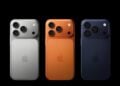
iPhone 17 dominates Q1 2026 worldwide. Counterpoint reports two records at once: for the first time, Apple leads the global smartphone market in a first quarter – and at the same time, Apple is taking 48 percent of total global smartphone revenue. Nearly every second dollar in the market is therefore landing in Cupertino. The average selling price per iPhone climbs to a Q1 record of $908.
Apple's Pendant continues to live on. Mark Gurman confirmed in his latest Power On newsletter that development on the AirTag-sized AI wearable is still progressing – launch in 2027 at the earliest. In parallel, the AirPods Ultra with cameras are in an advanced testing stage, and work on the Apple Glasses is also continuing. Apple's wearables roadmap is therefore taking on a concrete shape.
Apple and Intel agree on a chip manufacturing deal. What was still communicated as exploratory talks with Intel and Samsung in early May has consolidated into a concrete agreement this week. According to the Wall Street Journal, Apple and Intel have reached a preliminary agreement on chip manufacturing – with political backing from the White House. US President Donald Trump personally lobbied for Intel as Apple's partner. The first Mac and iPad chips could come from Intel starting in 2027, and an iPhone involvement is considered possible from 2028. This effectively ends Apple's monogamous TSMC era.
Supreme Court rejects Apple's emergency motion. In the dispute with Epic Games, the case is heading back to the lower court. Apple has to accept the court-ordered App Store rule changes for now, but is still planning to take the case to the highest US court.
Tim Cook on Trump's China list. The US administration is planning a trip to China and has placed Cook on the invitation list alongside other prominent US CEOs. For Cook, it is a politically delicate decision just before his transition to Executive Chairman on September 1.
Mac Studio M3 Ultra: last RAM option dropped. The memory crisis continues to take its toll. Following the Mac mini entry-level cut from the previous week, the last configurable RAM option of the Mac Studio M3 Ultra has now been dropped as well.
💡 Rumor of the Week: Pendant, AirPods Ultra with cameras, and Apple Glasses in parallel development
Mark Gurman's latest Power On update can be summarized with a single observation: Apple is pursuing its three major wearable bets in parallel rather than sequentially. The AirPods Ultra with cameras are considered the furthest along – prototypes are said to be at a stage that is close to the final design. The Apple Glasses are expected to launch in late 2026 or early 2027. And the Pendant – an AirTag-sized wearable with a camera and microphone, without its own display – remains on the roadmap, with the earliest launch in 2027.
What is strategically interesting is that Apple is apparently not betting on a single AI hardware category, but is preparing three different form factors in parallel: a wearable in the ears, one in front of the eyes, one on the body. Apple is letting the market decide which form factor will prevail. At the same time, this strategy shows how much energy Cupertino is putting into the AI hardware question – without committing to a single answer. The complete AirPods Ultra overview is live as a topic page.
📊 Number of the week: 48 percent
48 percent of global smartphone revenue went to Apple in the first quarter of 2026. In the same quarter last year, the figure was still at 43 percent. The number is remarkable because it shows just how much unit sales and value creation are decoupling in the smartphone market. In pure unit terms, Apple holds a 21 percent market share – tied with Samsung. In revenue terms, it is 48 percent. Samsung follows as a distant second with 18 percent. Per device sold, significantly more money therefore stays with Apple than with any competitor, and the average selling price per iPhone, at $908, is higher than ever before in a first quarter.
👎 Flop of the Week: Apple's Mac supply shortages are intensifying
What Tim Cook still described as a growth problem in the previous week's earnings call has clearly intensified this week. After the 256 GB variant of the Mac mini was dropped on May 1, Apple has now also had to cut the last configurable RAM option on the Mac Studio M3 Ultra. The background is the global DRAM and NAND crisis, which according to Counterpoint's forecast could continue until the end of 2027. For Apple, this means the Mac upswing of the past few quarters is hitting a hard physical limit, and individual configurations will continue to disappear from the stores before new models arrive. This is not a balance sheet problem – Apple is, after all, still selling at higher prices and with better margins – but it is a strategic problem for a product category that should currently be picking up speed as an AI and agent platform.
🔭 What's Coming Next Week
The coming week will be all about the final iOS 26.5 release. Following RC 2 from May 8, the public version is expected between May 11 and 13 – bringing RCS encryption, Suggested Places in Apple Maps, and the new Pride Luminance wallpaper. At the same time, WWDC is drawing closer: exactly four weeks before the keynote on June 8, the stream of speculation around the revamped Siri and the Extensions system is likely to intensify further. Our WWDC 2026 preview will be continuously updated in the coming weeks.
💬 My Take: Wedbush sets the bar – now Apple has to clear it
When an investment firm raises its Apple price target from $250 to $400 within a year – that's 60 percent – it's more than a model update. It's a bet. Wedbush isn't just saying that Apple Intelligence will work – Wedbush is saying that Apple Intelligence will work so well that it triggers its own platform economy. $15 billion in additional annual AI revenue would not be a footnote within the services business. It would be a standalone new pillar – comparable in scale to what Apple currently generates each year with Apple Music.
That is precisely why the price target feels doubly risky. Wedbush has long been known as a bullish Apple observer – but anyone calling out $400 is also writing a script for WWDC that Apple now has to deliver on. A restrained Siri demo, a cautious roadmap, a delayed Apple Intelligence feature: all of that would not only torpedo Wedbush's model, but pull the rug out from under the entire narrative built up over the past few weeks. Apple is opening iOS 27 to third-party AI, Cook is talking about "strong double-digit growth in Greater China," and Ternus hinted in the earnings call at a roadmap he describes as "the most exciting of his career" – these are all building blocks of a narrative that has to come together on the WWDC stage in four weeks.
I believe Apple will deliver. But expectations have been ratcheted up this week to a level not seen since the iPhone X launch in 2017. A WWDC that is merely "solid" won't be enough anymore. It has to be a WWDC that justifies the term "inflection point" – a phrase Wedbush used exactly once in its investor note, but in a very prominent spot.
📚 From Our Archive
- iPhone storage full? Here's how to free up space immediately – while Apple is fighting the global memory crisis, this guide helps with the small memory crisis on your iPhone
- Apple TV in summer 2026: The strongest lineup yet – aligning with the quieter hardware phase, the streaming business is moving into the spotlight
A week in which the AI bet on Apple was publicly recalibrated – and in which expectations for WWDC reached a new level. Until next Sunday, Apfelpatient wishes you a relaxing read and a good start to the week. (Image: Apfelpatient)