
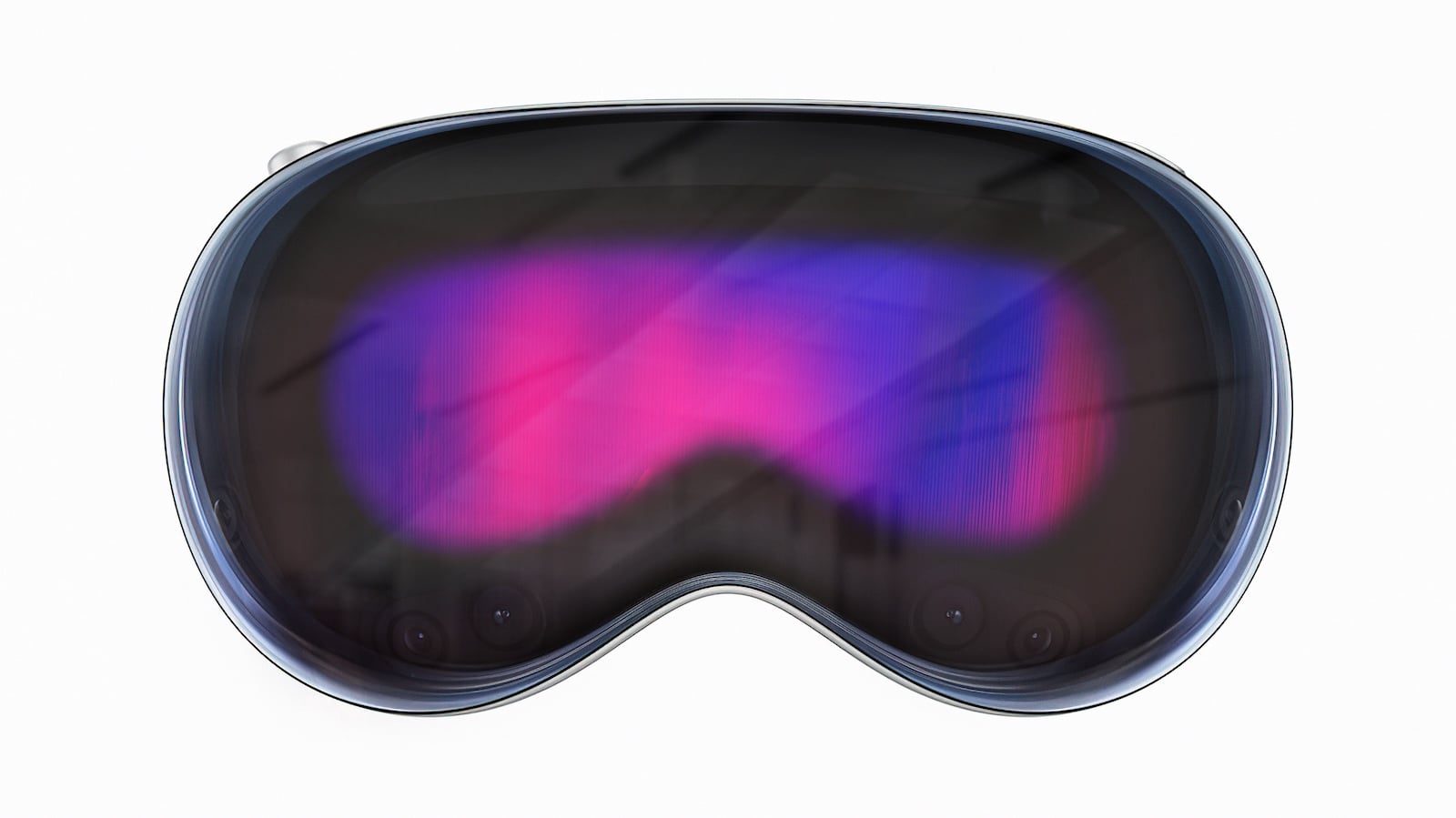
Following the weak sales launch of the M5 refresh, Apple could take action – according to a report, development of the Vision Pro has been largely paused.
Apple's most expensive hardware experiment in recent years may be facing an extended hiatus. MacRumors, citing its own insider sources, reports that Apple has largely scaled back work on the Vision Pro. The M5 model, unveiled in October 2025, apparently failed to halt the downward trend. While there has been no official confirmation from Apple, the indications are remarkably concrete.
Vision Pro: What exactly is being reported
MacRumors' insider sources paint a clear picture: Apple has reportedly scaled back development on Vision Pro. The Vision Pro team has been reassigned to other areas within the company, and some employees are already working on Siri. This would be consistent with the fact that former Vision Pro head Mike Rockwell has been leading the Siri team since March 2025.
The Vision Pro isn't disappearing from the market entirely. Apple continues to sell the M5 model but currently has no plans for a successor. However, should Apple succeed in developing a significantly lighter and cheaper VR headset in the future, the Vision Pro line could be revived. According to reports, though, there are no concrete plans for this.
Also unusual: According to sources, the return rate for the Vision Pro is far higher than what Apple typically sees with modern products. For a premium device, this is an unmistakable signal.
The M5 refresh has changed too little
In October 2025, Apple gave the Vision Pro an update that sounded solid on paper: a faster M5 chip, a 120Hz refresh rate, ten percent more rendered pixels, and about 30 minutes of additional battery life. The new Dual Knit Band was also supposed to distribute weight better and improve wearing comfort.
But that was precisely the crux of the matter, even back then. At over 600 grams, the Vision Pro still weighs so much that wearing it for extended periods remains cumbersome for many users. Added to this is the price of $3,499, which has remained unchanged since its market launch. A slightly faster chip and a new band simply aren't enough to overcome these two hurdles.
Apple has reportedly sold only around 600,000 Vision Pro units to date. For a device that Tim Cook touted as the next computing platform at its launch, that's a sobering figure.
From VR headset to smart glasses
Instead of continuing to invest in virtual reality, Apple is shifting its focus. The attention of the key figures in wearable computing is now on a completely different product category: smart glasses. The first model will initially not offer integrated displays, but will instead be similar to the Ray-Ban Meta Smart Glasses – with AI functions as its central selling point.
Augmented reality features are expected to follow in later generations. Apple is thus taking the opposite approach to what industry observers had long anticipated: not from high-end VR to mass-market AR, but first lightweight, everyday devices and then a gradual expansion to include display functions.
One interesting technical hurdle is that the technology from the Vision Pro cannot simply be transferred to glasses. It simply consumes too much power for a small, lightweight device. Apple therefore has to largely start from scratch with its smart glasses.
Anyone who wants to learn more about the planned Apple glasses project can find a concise summary in our overview of all Apple Glasses rumors.
What the reports reveal about Apple's strategy, should they be true
Tim Cook had positioned the headset as a next-generation computing platform at its launch. If the current reports are accurate, this very narrative has been quietly shelved.
The timing is also noteworthy. A potential pause for the Vision Pro project would come right in the middle of a period in which Apple is already facing many strategic decisions. The leadership transition to John Ternus is imminent, the storage crisis is forcing cost-cutting measures, and the Ultra strategy is being revised. In this context, concentrating Vision Pro resources on other areas would be a logical consequence.
For early Vision Pro owners, this would be sobering news. While software updates are likely to continue, a new hardware successor is not currently in sight. It's important to note that Apple has not officially confirmed the reports. It's also possible that this is a temporary strategic realignment – not the end of the product line.
What Vision Pro users should know now
For current Vision Pro users, little will change in the short term. Apple will continue to sell the device, and visionOS will continue to receive updates – the beta of visionOS 26.5 is currently running alongside watchOS and tvOS. However, should the reports prove true, the ecosystem could lose momentum in the medium term. If Apple itself doesn't announce new hardware, many third-party developers lack the incentive to create exclusive apps.
Anyone currently considering buying a Vision Pro should keep this in mind. The device remains technically impressive, but the platform's future is uncertain. For adventurous early adopters, it remains a fascinating piece of hardware – whether there will be a direct successor now depends on Apple's next steps.
Apple's wearable strategy could be reorganized
Should the current reports prove true, the Vision Pro would mark a turning point in Apple's wearable strategy. Instead of forcing a new platform with expensive VR headsets, Cupertino would be pursuing a more gradual, everyday-use approach. Smart glasses would then be the new hope – and they would have crucial advantages over the Vision Pro: less weight, lower prices, and a more clearly defined target audience.
Apple has repeatedly demonstrated throughout its history that even expensive products with weak demand can lead to important learning experiences. The Vision Pro was bold, ambitious, and technically impressive in many areas. However, the market apparently didn't want the product at that price and weight in the hoped-for numbers. How exactly Apple will react to this should become clear in the coming months – with or without an official statement. (Image: Shutterstock / Diego Thomazini)
- iPad Ultra: Apple is said to have abandoned the plans
- iPhone 18 Pro: Biggest camera upgrades ever
- iOS 27: Camera app gets its own Siri mode
- Apple is reportedly discussing the future of MagSafe internally
- iOS 27: Photos app to get three new AI features
- Liquid Glass iPhone: This is what Apple's anniversary model could look like
- Apple is planning two new Ultra products: iPhone Ultra and MacBook Ultra
- Ming-Chi Kuo: OpenAI is building an AI agent smartphone with Luxshare and MediaTek
- Apple's AI strategy brings three new Hardware categories
- Giant iPad Fold: Will it even be released?
- According to a leak, the iPhone 18 will get an important Pro feature
- Anniversary iPhone 2027: Samsung delivers micro-curved OLED Display
- Apple is working on six completely new product categories
- iPhone 18 Pro Max: Dummy shows thicker camera unit
- iPhone Ultra Dummy: How it compares to the iPad mini and iPhone 17 Pro Max
- iPhone 18: Display and chip reportedly receive downgrades according to leak
- iPhone 18 Pro launches Apple's four-stage plan for camera upgrades
- iPhone 18 Pro: Leaker confirms Dark Cherry as a key color
- Siri CEO Rockwell is reportedly considering stepping down
- A 200-megapixel telephoto camera for the iPhone is only realistic from 2028 onwards
- Apple Glasses: Launch planned for late 2026 – pressure from Meta is growing
- iPhone 18: Apple lowers specifications to reduce costs
- iPhone Ultra: Apple relies on Camera Control and does away with SIM card