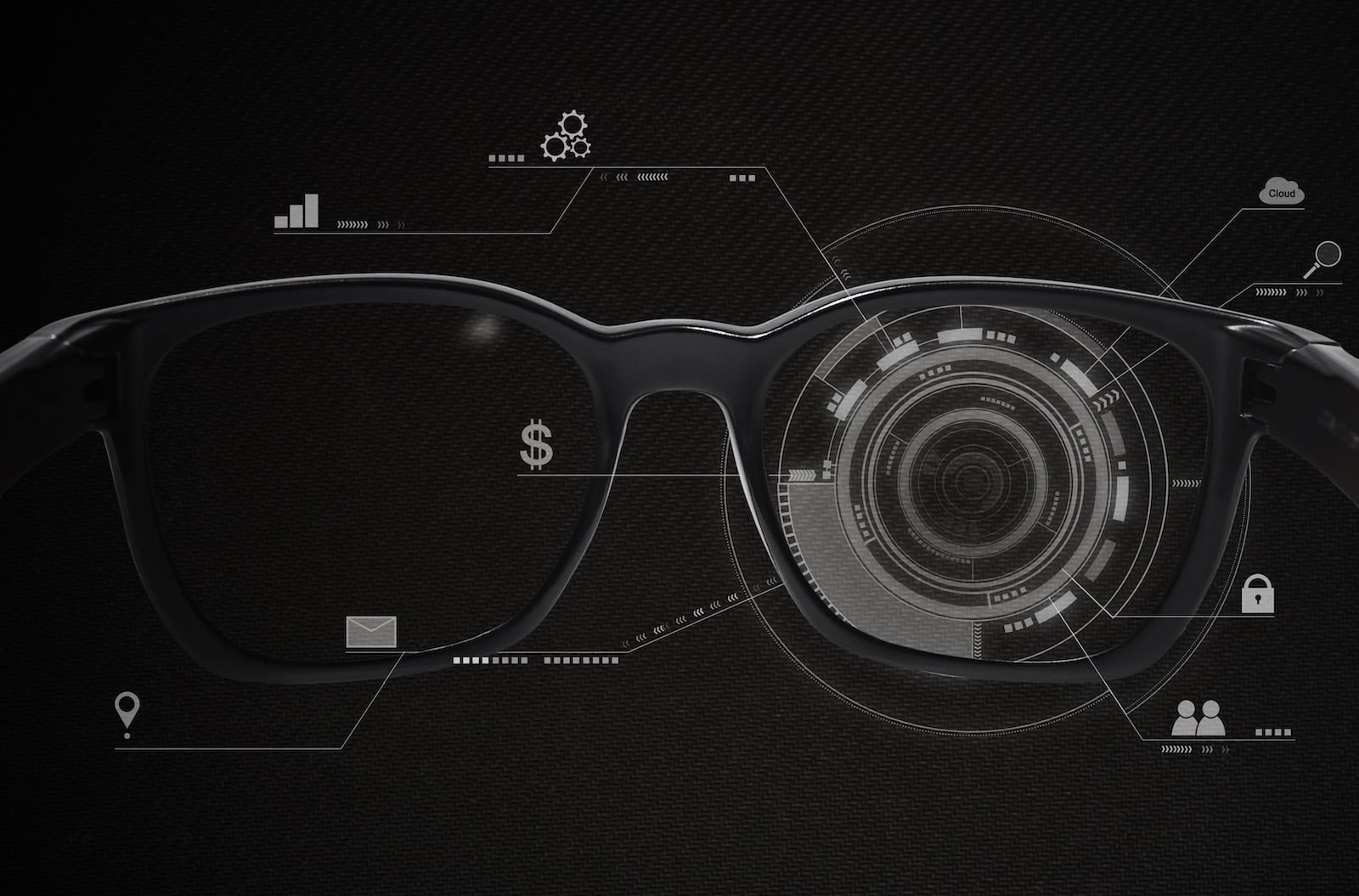
According to Mark Gurman, Apple's first smart glasses are expected to be released before Christmas 2026. The company is foregoing a display in the first generation, focusing instead on cameras, audio, and Siri – in an attempt to overtake Meta in the booming market.
The race for smart glasses supremacy is heating up. Meta's partnership with Ray-Ban has proven that there's a market for this product category – and Apple isn't content to sit back any longer. According to Bloomberg's Mark Gurman, Apple is now aiming for a launch during the 2026 holiday season. The strategic decision: initially, sleek hardware without an AR display, but with a strong focus on cameras, audio, and Siri.
The direction of Apple's smart glasses project has changed significantly in recent years. Earlier reports spoke of fully-fledged AR glasses with an integrated display – a concept that ultimately failed due to the practical limitations of current technology. Displays mean more weight, higher costs, and shorter battery life. Apple is instead pursuing a pragmatic approach: a wearable device that primarily enhances existing Apple services, rather than establishing a completely new computing paradigm.
A conscious decision against the display
The decision to forgo a display in the first generation speaks volumes about the state of the art. No company has yet found a convincing compromise between AR functionality, weight, and everyday usability. Apple's four tested design variants therefore rely on classic eyeglass shapes with acetate frames, cameras for photos and videos, microphones, and tight integration with the iPhone and Siri.
The approach is reminiscent of previous Apple strategies. The Apple Watch wasn't an essential device at launch, and the AirPods were initially introduced as a practical accessory. Both products matured over the years into central building blocks of the Apple ecosystem. Apple is likely to follow the same pattern with the smart glasses: start small, build the ecosystem, then expand (via Tom's Guide).
Meta has the lead – but not the authority to interpret the narrative
Meta's Ray-Ban smart glasses have established the category in the mainstream. The design is familiar, the features work, and sales figures are solid. Nevertheless, the question of whether smart glasses will become an indispensable everyday device remains open.
Most of the features of current smart glasses – photos, videos, audio, voice assistant – are already available on iPhones and AirPods. Meta's product has shown that people are buying smart glasses. Whether they truly need them is another question. Apple now has the opportunity to shape the category on its own terms, instead of reactively responding to Meta's product.
Siri as a decisive factor
Hardware alone won't be enough to make the product a success. According to reports, Apple's smart glasses will rely heavily on voice interaction and contextual awareness – the onboard cameras will be used for navigation, reminders, and contextual information. This means the success of the smart glasses depends directly on the revamped Siri, which Apple plans to unveil at WWDC in June.
If the new Siri delivers on Apple's promises – continuous dialogues, contextual awareness, and the ability to process personal information – then the smart glasses, as a lightweight, hands-free extension of the iPhone, will suddenly make perfect sense. If they don't, the glasses will seem like a collection of features Apple already offers elsewhere, lacking a compelling unique selling point.
Apple focuses on multiple device categories
Apple's strategy reveals that the company isn't putting all its eggs in one basket. Alongside smart glasses, Apple is developing AirPods with integrated cameras and a wearable pendant-like device designed to collect contextual data for Apple Intelligence. The strategy: Apple is testing different ways users want to interact with AI in everyday life – instead of prescribing a single answer.
Different products appeal to different user preferences. Those who don't want to wear glasses could opt for camera-integrated AirPods. Those who don't want cameras on their heads could choose head-mounted smart glasses. Smart glasses are one component of a broader strategy, not the only option.
Apple: Focus on market entry rather than market leadership
Apple's immediate goal is clear: to gain a foothold, tightly integrate the product with the iPhone, and give the software time to catch up. While Meta has the head start, the category is still loosely defined enough for Apple to enter and shape it on its own terms. The 2026 Christmas launch would be a prime opportunity to generate maximum attention and sales.
For Apple users, this means that the first generation of Apple Glasses will probably not be the revolutionary AR glasses some had hoped for. But it will be a solidly built device, integrated into the Apple ecosystem, that aims to show Meta what smart glasses in the premium segment can look like. (Image: Shutterstock / Sasin Paraksa)
- iPhone 18: Apple lowers specifications to reduce costs
- iPhone Ultra: Apple relies on Camera Control and does away with SIM card
- iOS 27: Four iPhone models lose update support
- iPhone 18 Pro: New image shows the four expected colors
- iOS 27: Home screen gets undo and redo function
- Siri in iOS 27: Apple has already hidden the new Design in the WWDC invitation
- New Mac Studio may not arrive until October
- MacBook Ultra: Launch slightly delayed due to storage shortage
- iPhone 18 Pro: Four colors leaked – including the new Dark Cherry
- iOS 27: Leak reveals four new features, including a Wallet upgrade
- Apple Stores will soon be able to restore Apple Watch software on-site
- Apple sends Siri engineers to AI coding boot camp
- iPad Air will get an OLED Display in 2027
- iPhone Ultra: Mass production delayed until August
- MacBook Neo 2: A19 Pro chip brings 12 GB of RAM and more GPU performance
- iPhone 18 Pro: New leak supports rumor of Deep Red color option
- iPhone Ultra: High-tech adhesive aims to make the Display crease invisible
- Apple Glasses: Four Designs in the Testing Phase
- iPhone 18 Pro: Design not yet finalized
- iPhone Ultra: Price expected to be over $2,000
- iPhone Air 2 is coming despite weak sales figures
- iPhone Fold: Samsung exclusively supplies the foldable Display
- iPhone Fold: Gurman contradicts delay Report
- iPhone Fold and iPhone 18 Pro Max compared in a video