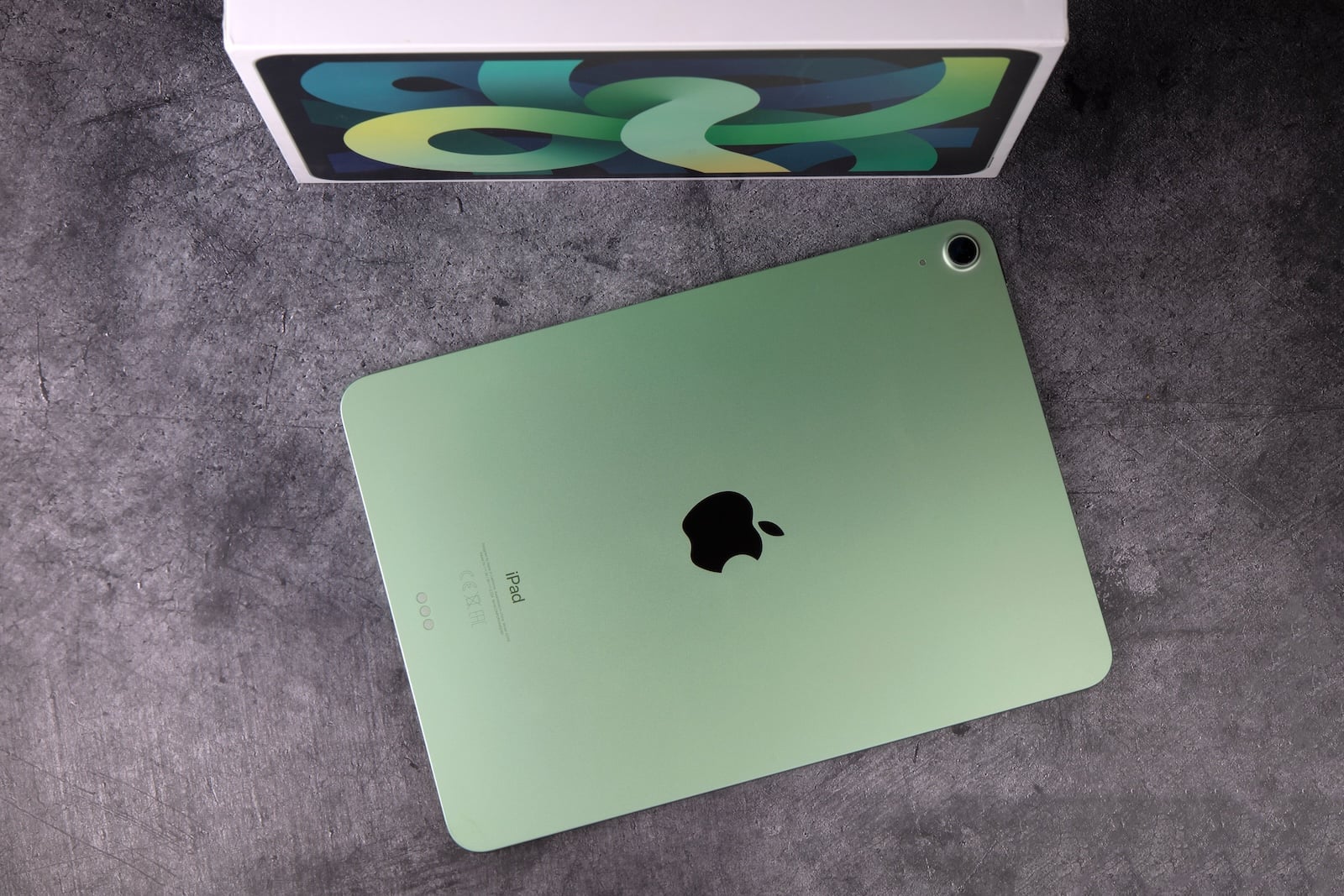
According to a Korean industry report, Apple will equip the iPad Air with an OLED display next year. Samsung Display is expected to supply the panels – albeit in a more affordable version than the one used for the iPad Pro.
The iPad Air is currently the only mid-range iPad still using an LCD display. While the iPad Pro has been using OLED since 2024, and the iPad mini is also expected to make the switch this year, the Air has so far stuck with Apple's Liquid Retina technology. According to a report by the Korean publication ET News, this will change next year: Samsung Display is expected to begin mass production of OLED panels for the next iPad Air in late 2026 or early 2027.
Apple last updated the iPad Air in March 2026 with the M4 chip, but left the display untouched. The current Liquid Retina display offers neither the deep blacks of OLED nor the 120Hz ProMotion technology of the iPad Pro – it's limited to 60Hz. Switching to OLED would eliminate one of the last major differences between the iPad Air and the more expensive Pro model.
iPad Air: OLED yes, but not the Pro version
However, Apple is not expected to use the same OLED panel in the iPad Air as in the iPad Pro. The Pro uses so-called two-stack LTPO (low-temperature polycrystalline oxide) OLED panels with a tandem structure – the brightest and most durable OLED displays that Apple currently uses.
The iPad Air is expected to receive single-stack LTPS (low-temperature polycrystalline silicon) OLED panels instead. These are cheaper to produce, but offer lower maximum brightness and will likely still lack ProMotion. In practice, this means the Air will get the advantages of OLED displays, such as deeper blacks, better contrast, faster response times, and more accurate colors – but not the full image quality of the iPad Pro.
The same panel concept is also expected for the iPad mini 8, which is expected to make the OLED switch in 2026.
What this means for the iPad line
Once the iPad Air and iPad mini have switched to OLED, the entry-level iPad will be the only model in Apple's tablet lineup with an LCD display. Apple is thus creating a clearer hierarchy: LCD for the entry-level model, single-stack OLED for the mid-range, and two-stack OLED with ProMotion for the Pro line.
Potential buyers are faced with the question of whether it's worth waiting for the OLED iPad Air. Those who already own the current M4 model likely see no urgent reason to upgrade – the M4 chip is powerful enough for the coming years. However, those still using an older iPad Air with an M1 or M2 chip could benefit from switching to the 2027 OLED model. (Image: Shutterstock / Margirita_Puma)
- iPhone Ultra: Mass production delayed until August
- MacBook Neo 2: A19 Pro chip brings 12 GB of RAM and more GPU performance
- iPhone 18 Pro: New leak supports rumor of Deep Red color option
- iPhone Ultra: High-tech adhesive aims to make the Display crease invisible
- Apple Glasses: Four Designs in the Testing Phase
- iPhone 18 Pro: Design not yet finalized
- iPhone Ultra: Price expected to be over $2,000
- iPhone Air 2 is coming despite weak sales figures
- iPhone Fold: Samsung exclusively supplies the foldable Display
- iPhone Fold: Gurman contradicts delay Report
- iPhone Fold and iPhone 18 Pro Max compared in a video
- iPhone Ultra instead of iPhone Fold? Leaker reveals new name
- iPhone Fold: Dummy photos reveal dimensions
- iPhone Fold encounters Problems during Testing
- iPhone 18 and iPhone Air 2: New Leaks about Design and Release
- iPhone Fold reaches Test Production at Foxconn
- iPhone 18: New colors expected instead of a major redesign
- iPhone 18 Pro: No Black, but Deep Red
- iPhone Fold: Three design features never before seen from Apple
- iOS 27 improves Siri with true multitasking
- iPhone 20: Design revolution with minor hurdles
- iPhone 18 Pro: Leak reveals smaller Dynamic Island
- watchOS 27: Apple focuses on AI and improved Performance