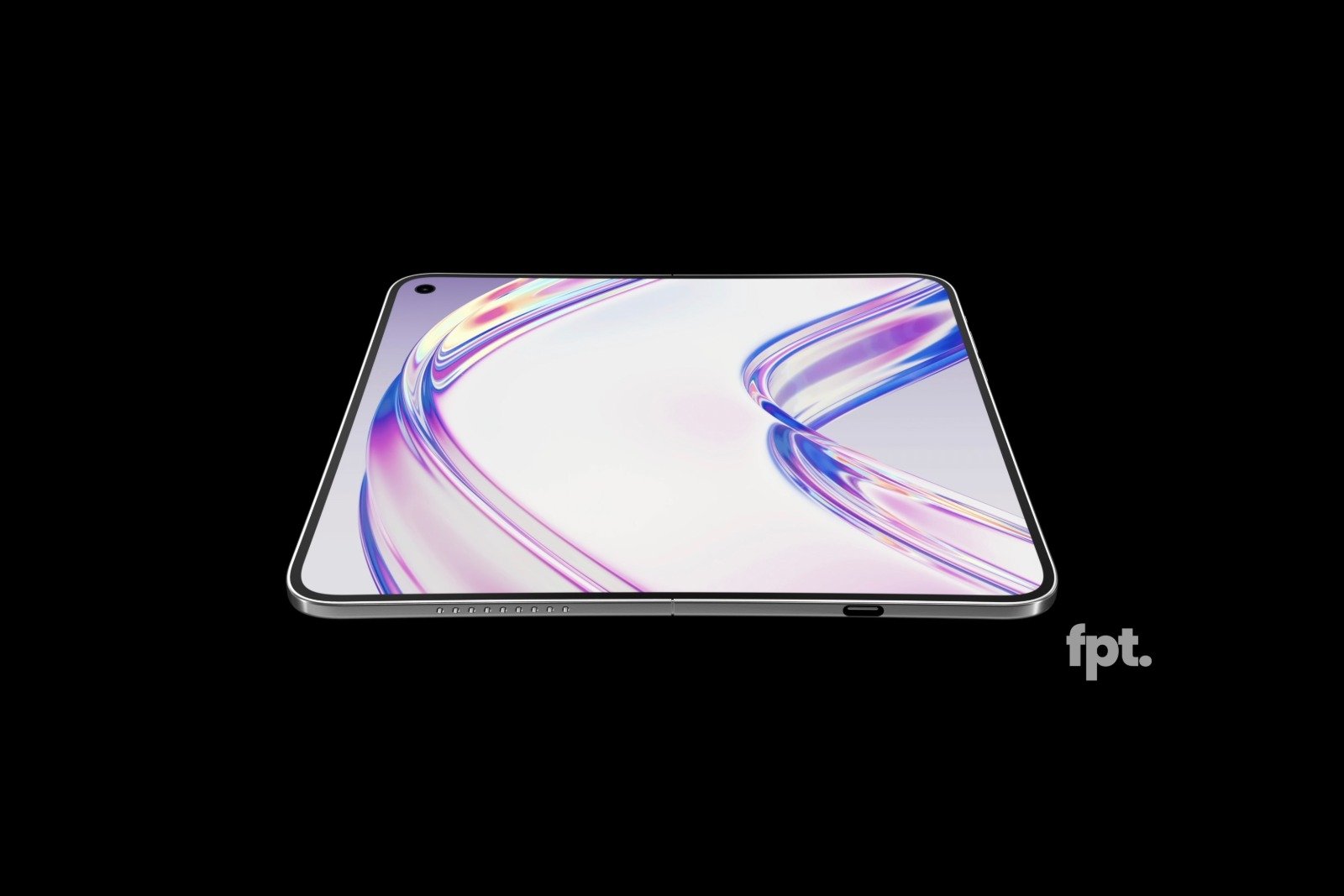
Apple's first foldable iPhone breaks with the design conventions of previous models in several ways – from the front camera to the display format to the button layout.
The iPhone Fold is taking increasingly concrete shape. While previous reports have focused primarily on the hinge, the display fold, and materials, three design features are now coming into focus that are unprecedented in any previous iPhone. They demonstrate just how far Apple has to deviate from the familiar iPhone concept to bring a truly compelling foldable device to market. For those seeking a comprehensive overview of all the leaks to date, we offer a summary of all the rumors and facts surrounding the iPhone Fold.
Punch Hole instead of Dynamic Island
Since the iPhone 14 Pro, the Dynamic Island has been an integral part of the iPhone design. The pill-shaped notch at the top of the screen houses the front camera and Face ID sensors and was simultaneously established by Apple as an interactive control element. While the Dynamic Island is expected to shrink further on the iPhone 18 Pro, its basic design remains.
The iPhone Fold takes a completely different approach. Instead of a Dynamic Island, the outer display will only have a single punch-hole camera in the upper center – a design that has long been standard on many Android smartphones, but which Apple has never used before.
The reason for this change lies in the omission of Face ID. Since the foldable's slim casing doesn't offer enough space for two complete Face ID sensor units, Apple has opted for Touch ID integrated into the side button on the iPhone Fold – a solution already familiar from the iPad Air and iPad mini. Without the additional Face ID sensors, a compact cutout for the front camera is perfectly sufficient.
A display format without precedent
Over the years, Apple has introduced various iPhone display sizes, from 3.5 inches for the original to 6.9 inches for the iPhone 17 Pro Max. However, the iPhone Fold breaks with all previous models not only in size but also in aspect ratio.
The outer display is expected to measure around 5.5 inches and be significantly wider than that of a conventional iPhone. When unfolded, a 7.8-inch inner display unfolds, which, according to leaked CAD files, is rather short and wide. The result is less reminiscent of a smartphone and more like a small notebook. The closest point of comparison would be the iPad mini, but even its proportions don't exactly match the iPhone Fold's format. Apple is venturing into uncharted design territory here – both when folded and unfolded.
The left side without buttons
Since the very first iPhone, the volume buttons and the mute switch (or, since the iPhone 15 Pro, the action button) have been located on the left side of the device. The iPhone Fold breaks with this tradition of over 19 years: The left side is to be completely button-free.
The primary reason for this is the hinge, which runs along this side and leaves no room for physical buttons. However, according to the Chinese leaker Instant Digital, there's another, technical reason: The iPhone Fold's mainboard is located on the right side of the casing. To avoid having to run cables across the flexible screen to the left side, all the buttons were moved to the right. The space freed up on the left is then used entirely for the display structure and battery.
The volume control will be located in the top right corner of the device, similar to the iPad mini, while the power button and camera controls will remain on the right side. This change will likely feel unusual to long-time iPhone users – but given the fundamentally new form factor, it's just one of many adjustments.
Apple's boldest form factor since 2007
The three design features make it clear that the iPhone Fold won't be a hinged iPhone, but a fundamentally different device within the iPhone family. A punch-hole camera, a completely new display format, and a button-free side panel - each of these details is a first for Apple. Taken together, they underscore how radically different the iPhone Fold is from anything Apple has built in the smartphone sector before. The market launch is still expected in fall 2026. The best products for you: Our Amazon storefront offers a wide selection of accessories, including those compatible with HomeKit. (Image: FrontPageTech x Asherdipps)
- iOS 27 improves Siri with true multitasking
- iPhone 20: Design revolution with minor hurdles
- iPhone 18 Pro: Leak reveals smaller Dynamic Island
- watchOS 27: Apple focuses on AI and improved Performance
- Apple is working on an OLED iMac: All the details at a glance
- Apple Anniversary: Grand Finale Planned at Apple Park
- Apple is about to undergo the biggest iPhone overhaul in its history
- iOS 27: Apple plans major AI offensive with Siri App
- iPhone 18: Smaller Dynamic Island for all models?
- Apple is trying to stop departures with lucrative bonuses
- Apple Watch 2026: No major redesign planned
- iPhone Fold: Market launch follows the iPhone 18 Pro
- iOS 27: Apple opens Siri to Claude and other AI tools
- Apple is pushing ahead with the development of an all-screen iPhone
- Apple is testing a new 200-megapixel iPhone camera
- Apple and Google: New details on the AI deal
- Apple plans new Siri app for iOS 27 and macOS 27
- Apple continues to struggle with the full-screen iPhone
- Apple is pushing ahead with OLED expansion for new generation of devices
- Report: John Ternus spearheaded key iPad innovation
- Apple Maps is changing: Advertising is coming soon
- Apple is working on a sensor for security and automation
- Apple planned HomePod with camera much earlier than expected