
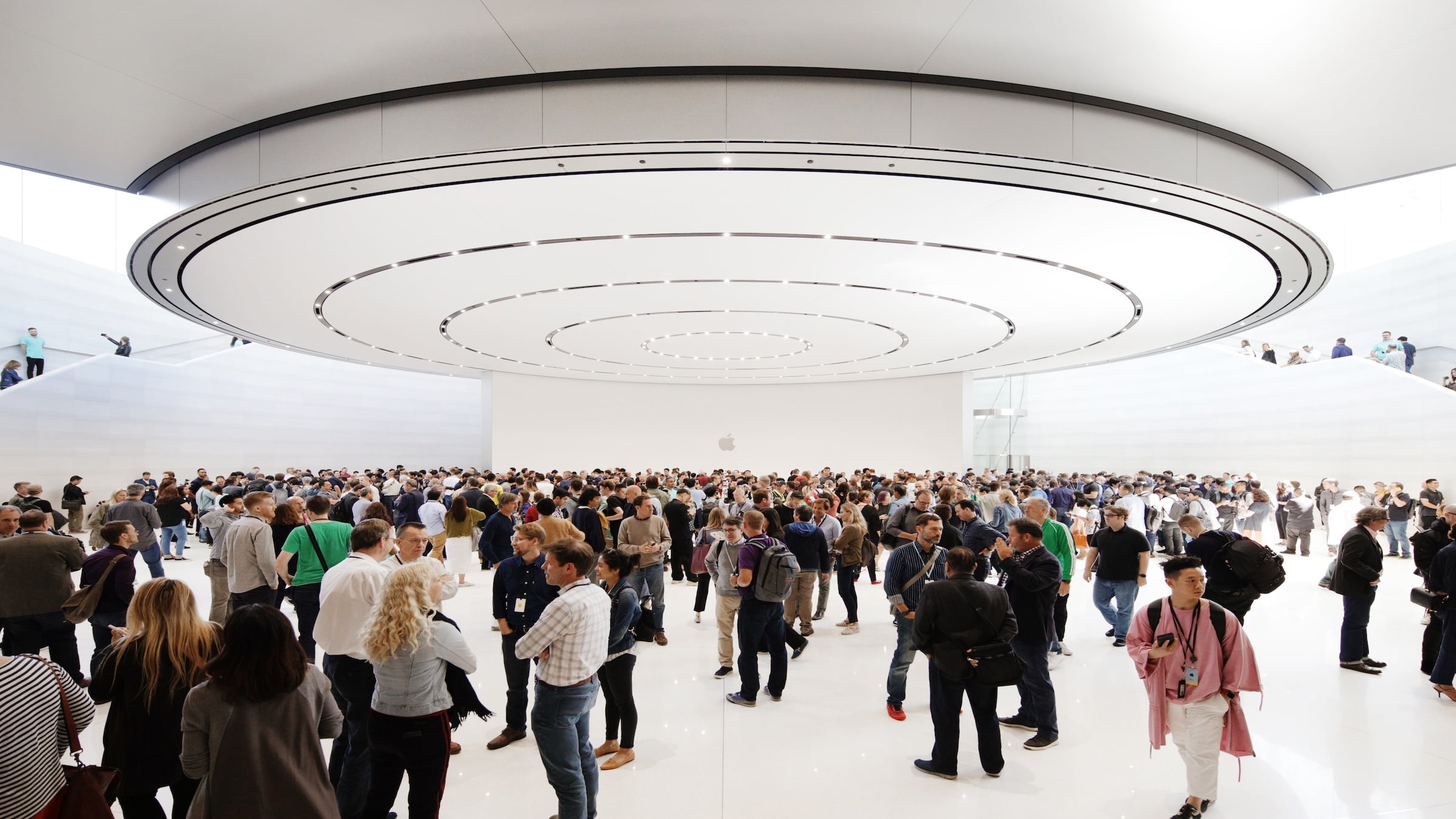
In just a few weeks, Apple's most important keynote of the year is upon us – and this time it's about more than just a new iPhone generation. Apple will unveil a foldable iPhone for the first time, is expected to raise prices significantly, and will not be including the year's key software update in the EU for the time being. This means that buyers in Germany, Austria, and Switzerland will face a different price point than those in the US.
An official date has not yet been set, but preparations are clearly underway: Apple has internally launched a lottery for store employees to participate, with the application deadline on August 8th – details can be found in our report on how Apple is preparing for the September event. Based on the timeline and historical patterns, the date can be narrowed down quite precisely.
What follows on stage has been compiled over months through leaks, supplier reports, and code discoveries. This overview summarizes the current status of all expected products, refers to the individual overviews for details, and answers the questions that matter to potential buyers in this country: When will the keynote take place here, what is the pre-order schedule, and which features are missing in the EU.
Key Facts at a Glance
- The most likely date is Tuesday, September 8th, or Wednesday, September 9th – Labor Day falls on September 7th this year.
- At least five new devices are expected: iPhone 18 Pro, iPhone 18 Pro Max, the foldable iPhone Ultra, Apple Watch Series 12 and Apple Watch Ultra 4.
- A second AirPods Pro variant is rumored, but reports contradict each other on a crucial point.
- A regular iPhone 18 will not be released in September – the more affordable models will be released in spring 2027.
- A few days after the keynote, iOS 27, iPadOS 27, macOS 27 Golden Gate, watchOS 27, tvOS 27 and visionOS 27 will be released.
- Siri AI does not launch on iPhones and iPads in the EU; Switzerland is not part of the EU and is not affected by the block.
- Price forecasts vary widely and are all in US dollars – there is currently no reliable basis for euro prices.
What's on stage – and how safe it is
The following list summarizes what to expect at the keynote. The column on the right is our own assessment of the available sources, not an Apple statement – it weights how many independent reports support a product and how far along manufacturing is according to supplier reports.
| Product | What is expected | How safe |
|---|---|---|
| iPhone 18 Pro | smaller Dynamic Island, variable aperture, A20 Pro | Very safe |
| iPhone 18 Pro Max | Like the Pro, thicker casing for a larger battery | Very safe |
| iPhone Ultra | foldable, 5.5 and 7.8 inches, Touch ID | Presentation confirmed, sales start date open |
| Apple Watch Series 12 | Faster S-chip, no redesign | secure |
| Apple Watch Ultra 4 | The same chip replacement, possibly thinner. | Sure, details open |
| iOS 27 and the other systems | Release a few days after the keynote | Very safe |
| New AirPods Pro | second variant above the current model | Possible, but the sources are contradictory. |
| Smart home devices | Hub, Apple TV, HomePod, camera | More like a second event in autumn |
| New Macs and iPads | Several models are in the pipeline | unlikely to attend this keynote. |
The likely date – and when the keynote will take place in this country
Apple traditionally holds its fall keynotes in the second week of September, preferably on a Tuesday. This year, September 7th is Labor Day, a US holiday on which Apple prefers not to allow journalists to travel. This leaves September 8th and 9th as the two most plausible options.
For viewers in Germany, Austria, and Switzerland (DACH region), the broadcast will begin at 7:00 PM CEST, as usual. The subsequent schedule has remained consistent for years: pre-orders open on the Friday of the same week, with sales starting a week later. If the keynote address is held on September 8th or 9th, this would mean pre-orders would begin on September 11th and the product would launch on September 18th.
| Step | Expected date | Time CEST |
|---|---|---|
| Keynote | September 8th or 9th | 10:00 AM PDT / 1:00 PM ET |
| Pre-orders | September 11 | 2:00 PM |
| Market launch | September 18 | Store opening |
All three details follow the pattern of previous years and are unconfirmed. Apple typically sends out invitations about two weeks before the event.
iPhone 18 Pro and Pro Max: Refinements instead of a new beginning
Visually, the iPhone 18 Pro is expected to see little change. Reports indicate that the casing will remain close to its predecessor, while the Dynamic Island will be smaller. The most noticeable technical leap lies in the camera: The main camera is said to have a variable aperture, allowing for direct control of exposure and background blur within the lens itself, rather than solely in image processing.
In addition, it will feature an A20 Pro chip, a redesigned LTPO+ OLED panel, and possibly Apple's own C2 modem along with an N2 network chip. "Dark Cherry" is rumored to be the special color of the year. The Pro Max is expected to receive the same updates and, due to a larger battery, will be slightly thicker than both the Pro and the iPhone 17 Pro Max.
The complete list with all individual reports can be found in our overview of the iPhone 18 Pro.
iPhone Ultra: The first foldable iPhone
The foldable model is the real reason why this event is different. It's expected to be book-sized with approximately 5.5 inches on the outer display and around 7.8 inches on the inner display, with an aspect ratio of 4:3 – when unfolded, the screen area is roughly equivalent to an iPad mini.
Technically, Apple has reportedly largely eliminated the visible crease in the display material. According to reports, the device is powered by a 2-nanometer A20 chip with two separate batteries inside the casing. The compromises lie elsewhere: only two rear cameras and Touch ID instead of Face ID, because the device isn't deep enough for the TrueDepth system. The price is rumored to be between $2,000 and $2,500.
The sales launch date remains uncertain. There are reports of manufacturing problems and the possibility that Apple will unveil the device in September and only ship it later – similar to the iPhone X in 2017. This contradicts the latest report that the production line is complete and the delay is no longer an issue. Both sources of information originate from the supplier network and are contradictory; the conflict remains unresolved. For the complete status, see our overview of the iPhone Ultra.
Apple Watch Series 12 and Ultra 4: The quietest part of the evening
There are few indications of a major leap forward for the watch. The Apple Watch Series 12 is not expected to feature a redesign, but rather a faster S-series chip, improvements to individual health and fitness features, and possibly a larger battery.
The Apple Watch Ultra 4 is expected to receive the same chip upgrade. A report from the supply chain also mentions a thinner case and enhanced sensors – however, this source is regularly wrong about Apple product predictions, and there is no second confirmation. According to multiple reports, a new Apple Watch SE is not expected this year.
New AirPods Pro: A second variant is rumored
AirPods are traditionally a September product – the first AirPods, the AirPods Pro 2 with USB-C, the AirPods 4, and the AirPods Pro 3 were all unveiled at the fall keynote. This year, a second, higher-end version is rumored to be coming alongside the existing model.
The situation is inconsistent, however, and this comes from two different sources. At the beginning of July, a leaker reported that Apple had stopped work on camera-based AirPods – you can read about this in our report on the reported development halt. At the beginning of August, Gurman painted a different picture in the Power-On newsletter: there were two designs, one of which was more advanced, appeared in the iOS 27 code, and was still on the roadmap for this year. The second design was said to have been pushed back to 2027. Details can be found in our report stating that a second version is expected this year.
The central question remains unanswered: Some reports interpret the more advanced design as the model with infrared cameras, while others see it as the camera-free intermediate stage, with the cameras not expected until 2027. Both interpretations are based on the same newsletter. Anyone claiming either source is reliable is overstepping the bounds of the available information. The complete information, including price rumors, can be found in our overview of the AirPods Ultra.
What won't be on stage in September
The product strategy is shifting significantly this year. A regular iPhone 18 is not expected in September – the fall lineup will focus on the more expensive devices. The more affordable models are not expected until spring 2027.
| Model | Expected time | Overview |
|---|---|---|
| iPhone 18 | Spring 2027 | to overview |
| iPhone 18e | Spring 2027 | to overview |
| iPhone Air 2 | Spring 2027 | to overview |
Anyone waiting for an iPhone below the Pro class will have to plan for half a year longer than in previous years – or opt for the current model.
The crucial question: What euro amounts are used as the basis for calculations?
All current price forecasts are in US dollars. One widely circulated estimate suggests a price increase of $100 to $200 compared to the iPhone 17 Pro and Pro Max. Another analysis, which we reported on at the end of July, anticipates an increase of up to $300. A third line of reasoning cites increased component costs, particularly for memory.
For the purposes of this calculation, however, the starting point is what counts, and that is fixed. These are the prices Apple is currently charging in the German store:
| Model | 256 GB | 512 GB | 1 TB | 2 TB |
|---|---|---|---|---|
| iPhone 17 Pro | 1.299 € | 1.549 € | 1.799 € | – |
| iPhone 17 Pro Max | 1.449 € | 1.699 € | 1.949 € | 2.449 € |
The dollar forecasts cannot be directly applied to this table. Apple sets prices per market, taking into account sales tax, exchange rates, and the competitive landscape – we explained how this mechanism works when Apple decided on its latest price increase. The price hikes for Macs and iPads in June varied by market and were often higher than what the dollar-based surcharge would have suggested.
Our expectation, explicitly stated as an assessment and not a report: A price increase of 100 to 200 euros on the entry-level configurations seems realistic. This would put the iPhone 18 Pro at around 1,400 to 1,500 euros, and the Pro Max at around 1,550 to 1,650 euros. Arguments against a larger increase include Apple's keeping Pro prices stable in Europe for several generations and the fact that the June price hike already generated discontent. Arguments in favor include cost considerations. A reliable price only exists once Apple announces it.
There's a second factor to consider: Apple has announced significantly larger supply shortages for the current quarter. Anyone wanting a specific model in a particular configuration should take the pre-order deadline seriously.
iOS 27 and the rest of the generation
The hardware is only half the story. A few days after the event, Apple traditionally releases the new operating systems to everyone – iOS 27, iPadOS 27, macOS 27 Golden Gate, watchOS 27, tvOS 27, and visionOS 27. Last year, there was almost a week between the keynote and the release.
The biggest change in years is coming to the Mac: With the successor to Golden Gate, support for Rosetta 2, the translation layer for Intel software, will end. The features included in macOS 27 Golden Gate have been known since WWDC. On the Apple Watch, five older models will lose support with watchOS 27 – relevant for anyone who wanted to keep their watch longer.
To find out if your device will even receive the new generation, check out our list of compatible devices for iOS 27, iPadOS 27, and macOS Golden Gate. Not everything announced in June has appeared in the beta yet: five expected features are still missing and might only be added in a later update.
Siri AI is missing in the EU – but not in Switzerland
The biggest software innovation of the year won't be available on iPhones in Germany initially. Apple announced back in June that Siri AI wouldn't launch with iOS 27 and iPadOS 27 in the EU due to the DMA issue – and without specifying a timeline. Therefore, the new iPhones in Germany and Austria will ship with the existing assistant, while the same hardware in the US will receive the updated version.
Switzerland is not part of the EU or the EEA and therefore not subject to the DMA. These restrictions do not apply to Swiss buyers. Our background article explains the technical reasons for the block, specifically why the DMA stops Siri AI on iPhones and iPads; our continuously updated list of Apple features unavailable in the EU details which other functions are affected.
This is more significant for the expected smart home devices than for the iPhone. A voice-controlled display without the new assistant loses a considerable part of its purpose.
What could come next – and why a second event is likely
Apple has a whole host of other devices in the pipeline for this year that would hardly fit into a September launch. A separate event in October or November is therefore considered likely, with smart home technology as the obvious focus.
| Device | Expectation | Time frame | Overview |
|---|---|---|---|
| Apple TV 4K | new chip, more RAM, new network chip | Autumn, set | to overview |
| HomePod mini 2 | faster chip, new colors | Autumn, set | to overview |
| Smart home hub | Square display, full Siri AI integration | October to early 2027 | to overview |
| Surveillance camera | first own model, for indoor use | without a time frame, last group | to overview |
On the Mac and iPad side, an iPad mini with an OLED display, a refreshed 14-inch MacBook Pro, a new iMac, and updated models of the Mac mini and Mac Studio are expected. The Mac roadmap, which lists eleven models through 2028, shows how these will be distributed over the coming quarters. None of these devices are expected to be unveiled at the September keynote.
Why this event carries more weight than the last ones
Three developments converge in September, each of which would be a story in itself: Apple enters a new product category with its foldable model, raises prices during a period of rising component costs, and two weeks prior, the leadership changes from Tim Cook to John Ternus. The first major event under the new leadership is also the riskiest in years.
This creates an unusual situation for buyers in Germany, Austria, and Switzerland (DACH region). The hardware arrives in full, but the software does not – and this is precisely the feature Apple has been advertising all year. Those who were planning to replace their iPhone anyway will lose little, as their existing assistant will continue to work. However, those who wanted to upgrade specifically for the new assistant are currently buying a promise without a release date in Germany and Austria. This issue does not arise in Switzerland.
The second practical point concerns timing: If the cheaper models only follow in spring 2027 and the supply bottlenecks turn out as announced, the pre-order day in September is the only realistic opportunity for many to get a specific model before the Christmas season.
The weeks leading up to the keynote
The official invitation shouldn't be long in coming. In the two previous years, the announcement was made on August 26th: in 2024, Apple hosted the Glowtime event, and in 2025, the Awe-Dropping keynote, both times with about two weeks' notice leading up to a date on September 9th.
Our expectation, explicitly stated as an assessment and not a report: The invitation will arrive in the last week of August, most likely around August 25th. This is supported by the identical pattern for the past two years and the suitable interval from a date on September 8th or 9th. However, one could argue that Apple might extend the lead time for a new product category like the foldable model.
Experience shows that during this phase, leaks regarding colors, storage sizes and prices become more frequent, and the final supplier reports before the production ramp-up become public.
Those who want to try out the new software in advance can do so now – our guide to installing the iOS Public Beta explains how and what to watch out for. The final update was released last year a few days before the new iPhones went on sale, when iOS 26 launched on September 15th. (Image: Apple)
- AppleCare One in Germany: What's really covered
- Apple's leadership team is undergoing a transformation: Who's leaving and who's taking their place?