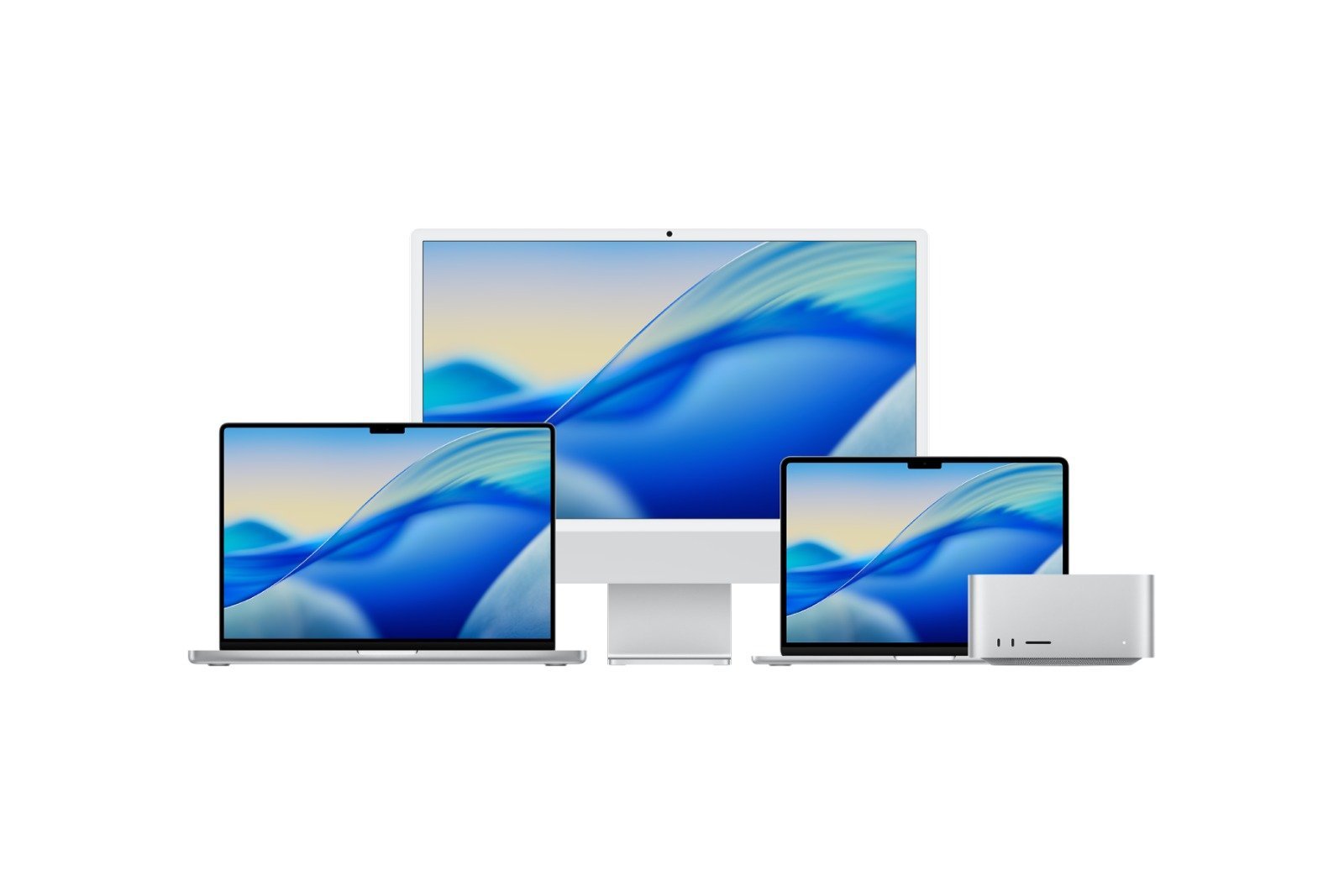
When buying a new Mac, hardly any question matters as much for price and longevity as memory. Since Apple Silicon fuses the memory directly with the chip, RAM can no longer be upgraded after the fact – the choice made at purchase applies for the entire lifespan of the device. To make matters trickier, Apple has since raised the entry-level size because of Apple Intelligence and is currently scaling back the top tiers again due to rising memory prices.
With the introduction of Apple Silicon in 2020, Apple fundamentally changed the conventional concept of memory. While traditional computers use separate memory pools for the processor and graphics unit, the Unified Memory Architecture lets everything access the same memory – this saves detours, increases efficiency, and lowers power consumption. The practical upshot: a given amount of RAM accomplishes noticeably more on an Apple Silicon Mac than the same amount in an older Intel system. But it is precisely this circumstance that also makes the buying decision confusing, because the familiar rules of thumb from the Windows world no longer apply. Because the memory shares its bandwidth with the graphics, the usable performance also depends directly on the chip – much like the question of how many external displays a Mac can drive depending on the chip. This guide breaks down the individual memory tiers and shows which configuration is really worth it for which use.
Why the entry-level size has shifted
For years, Apple sold its entry-level devices with 8GB and defended this aggressively: 8GB on an Apple Silicon Mac was, thanks to the efficient architecture, roughly comparable to 16GB in a conventional system. Then, in October 2024, Apple made a surprising about-face and raised the base across the entire Mac range to 16GB – even on the older MacBook Air models with the M2 and M3 chip.
The trigger was Apple Intelligence. The AI features require at least 8GB of memory – the same reason the iPhone 15 Pro supports Apple Intelligence while the regular iPhone 15 does not. The fact that Apple nonetheless doubled the Mac base straight to 16GB instead of staying at 8GB suggests that future AI features will need more headroom. An early harbinger already showed up with predictive code completion in Xcode 16: this feature explicitly requires a Mac with Apple Silicon and 16GB of Unified Memory.
With the next generation of Apple Intelligence, Apple is now even drawing a second line within the AI features themselves. The most powerful model, running entirely on the device, requires at least 12GB of Unified Memory and powers two features: more expressive voices for the new Siri as well as noticeably more accurate system-wide dictation. On the Mac, these two features remain reserved for devices with an M3 chip or newer and at least 12GB of RAM – so an M4 Mac with just 16GB meets the requirement, while an older model with limited memory does not. It is the first time that Apple distinguishes by memory size within Apple Intelligence. On the classic Mac lines, the entry point today starts at 16GB anyway – only the particularly affordable MacBook Neo stays at 8GB. For most buyers, the question is therefore no longer "8 or 16," but "16 or more."
The memory tiers at a glance
8GB: In the existing lineup, used – and in the MacBook Neo
On the classic Mac lines, Apple no longer offers 8GB, yet millions of devices with this configuration are still in circulation and regularly turn up both used and refurbished. For pure web browsing, streaming, mail, and classic office work, 8GB is still enough for everyday use. The limitation lies in future-proofing: as soon as several demanding programs run at the same time or AI features come into play, the system increasingly offloads to the SSD, which noticeably costs speed. Constant offloading does also write to the SSD and theoretically eats into its write cycles, but under normal use very few devices reach that limit before they are replaced anyway – the practical drawback is speed, not wear.
The current lineup makes one exception, of all places with the most affordable model: the MacBook Neo is the only new Mac that starts with 8GB – and cannot be configured any higher. The reason is its A18 Pro chip, which comes from iPhone development and exists in only a single memory size. For its target audience of beginners and casual users, that is enough for everyday tasks, but the lack of an upgrade option stays with the device throughout its entire lifespan. Anyone who foreseeably wants to run several demanding programs in parallel is far better served by a 16GB Mac. Those buying used today should likewise opt for 8GB only on a tight budget and for a clearly limited purpose.
16GB: The new base for most users
16GB is the current entry-level size and the right choice for the majority of users. Browsing with many tabs, office work, streaming, photo management, and occasional multitasking all run smoothly with it, and the Apple Intelligence features have the headroom they need. For students and professionals with mostly productivity software, too, this configuration is the cost-effective recommendation that at the same time brings enough reserve for the years ahead.
24GB: For regular multitasking and creative concurrency
Anyone who, in addition to standard applications, regularly edits photos, works with graphics programs, or codes will find things noticeably more relaxed with 24GB. This tier offers a buffer to keep several demanding programs open in parallel without the system resorting to offloading. For occasional video editing or switching between many open apps, it is the sensible middle ground between the base and pro configurations.
32 or 36GB: For pros with creative workflows
Anyone who regularly uses memory-intensive programs like the Adobe Creative Cloud, Xcode, or virtual machines should opt for 32GB – on the M4 Max, the entry-level tier starts at 36GB. This size is suited to editing 4K video, multi-track music production, or more complex software development. Offloading to the SSD is largely avoided as a result, which keeps performance consistently high.
48 to 64GB: For high-resolution media and heavy multitasking
Power users who work with high-resolution material and run many programs at once benefit from 48 or 64GB. These tiers are designed for 3D modeling, 8K video editing, and demanding simulations. Anyone handling large project files and complex workflows gets the necessary reserve here so that performance stays stable even under sustained load.
96GB and more: For specialized professionals
Beyond 64GB begins the territory for clearly defined professional scenarios: 96GB and the tiers above it are aimed at high-end users with particularly large datasets, for example for extensive 3D rendering, film editing, or compute-intensive data analysis. These configurations are reserved for the Max and Ultra chips and only make sense when the workload actually maxes out the memory – for the majority of users, this capacity would be wasted money.
How much RAM do the current chips offer?
The selectable amount of memory depends directly on the chip tier. The base chips cover everyday and more elevated demands, while the largest memory pools remain reserved for the Max and Ultra variants. The M5 generation so far is only found in the current MacBook Pro, while the Mac mini, iMac, and Mac Studio continue to run on M4 or M3 Ultra silicon.
| Chip Class | Typical RAM Options |
|---|---|
| M4 (MacBook Air, Mac mini, iMac) | 16, 24 or 32GB |
| M5 (MacBook Pro) | 16, 24 or 32GB |
| M4 Pro (Mac mini) | 24, 48 or 64GB |
| M5 Pro (MacBook Pro) | 24, 48 or 64GB |
| M4 Max (Mac Studio) | 36, 48, 64 or 128GB |
| M5 Max (MacBook Pro) | 36, 48 or 128GB |
| M3 Ultra (Mac Studio) | 96 or 256GB |
The specific tiers can vary depending on the device and chip configuration; what is always decisive is the configurator in the Apple Store for the respective model. Especially striking is the upper end of the scale, which has recently been in flux.
Why the upper limit is currently dropping
For a long time, the rule was: anyone who wanted the absolute maximum got it in the Mac Studio. At its introduction in March 2025, the Mac Studio with M3 Ultra was the only Apple device that could be equipped with up to 512GB of Unified Memory – according to Apple, the largest amount of memory ever built into a personal computer, intended for running large AI language models with over 600 billion parameters locally.
This peak figure is now history. In March 2026, Apple cut the 512GB option for the M3 Ultra and at the same time significantly raised the price of the 256GB tier; as a consequence, the 128GB option of the M4 Max and further upper tiers were dropped as well. The background is the sharply risen memory prices, triggered by the enormous DRAM demand for AI servers worldwide. As a result, the Mac Studio can currently only be configured with considerably less maximum memory than the year before – a rare case in which Apple takes back a configuration option it had already introduced. For the vast majority of buyers, this is irrelevant, since these magnitudes are aimed at only a very small circle anyway. But anyone who has seriously toyed with the idea of an extreme memory configuration should check the current availability closely before the next round of price increases takes hold.
Choosing the right RAM for your Mac
Because memory on Apple Silicon cannot be upgraded after the fact, the decision at purchase is all that counts – and it should take into account not only today's but also the foreseeable future workload. For most users, today's 16GB base is a solid, long-lasting choice that carries the majority of the Apple Intelligence features – only the most demanding AI features additionally require a chip from the M3 generation onward. Anyone who regularly does creative or data-intensive work is, depending on the discipline, far more future-proof with 24 to 64GB, while the tiers beyond that remain reserved for clearly defined professional scenarios. Since the upper configurations have recently become more expensive and in some cases been cut entirely, it is worth taking a closer look at current availability for high-end needs. Anyone who honestly assesses their own requirements and plans in a bit of reserve makes the investment that will carry the Mac for years.
The best products for you: Our Amazon Storefront offers a wide selection of accessories, including for HomeKit. (Image: Apple)
- How many external displays does your Mac support?
- iOS 27: Finally Set Alarm and Notification Volumes Separately
- Create a Pass in iOS 27: Create Your Own Wallet Passes
- iOS 27, iPadOS 27 and macOS Golden Gate: These Apple devices are compatible
- How to install the iOS 27 Developer Beta: guide, risks and troubleshooting
- Setting Up Apple Family Sharing Securely: What Parents Need to Know
- iCloud Private Relay vs. VPN: What Actually Protects You?
- How to protect Apple devices from malware
- Configuration Profiles on the iPhone: When They Help, When They Become Dangerous
- HomePod Plays Music on Its Own: How to Stop Ghost Touches
- Selling Your iPhone Safely: How to Prepare Your Device the Right Way
- Using Apple Pay Safely: How the iPhone Protects Your Payments
- Data Leak Check on iPhone: How to Find Compromised Passwords
- Spotting a Hacked iPhone: Real Warning Signs, Common False Alarms and the Right Steps
- Advanced Data Protection for iCloud: How to Use Apple's Strongest Encryption Tier
- NameDrop on iPhone and Apple Watch: How to Use It Right
- Two-Factor Authentication for the Apple Account: Setup Guide, Options and Security Levels
- Using Passkeys on Apple Devices: How Passwordless Sign-In Works
- Activate and properly use Stolen Device Protection on iPhone
- Pegasus and Commercial Spyware on iPhone: What Users Really Need to Know
- Secure email usage on the iPhone
- AI makes your iPhone more secure – what that really means for you
Frequently Asked Questions: Apple Silicon RAM
For browsing, streaming, office work, and occasional multitasking, today's 16GB base configuration is more than enough. Thanks to the Unified Memory Architecture, Apple Silicon uses memory more efficiently than traditional systems, which is why 16GB accomplishes more here than the same amount in an older Intel Mac.
For narrowly limited tasks like browsing and office work, yes – but on the classic Mac lines, Apple no longer offers new devices with 8GB. As soon as several demanding programs or AI features come into play, the system offloads to the SSD and slows down. For a used purchase, 8GB is only advisable on a tight budget and for a clear purpose.
The Neo uses the A18 Pro chip from Apple's iPhone development, and this chip exists in only a single memory size of 8GB. Unlike all other current Macs, the memory therefore cannot be expanded either at purchase or later. For beginners and everyday tasks this is sufficient, but for demanding multitasking a 16GB Mac is the better choice.
Because of Apple Intelligence. The AI features require at least 8GB, and Apple raised the entire Mac base straight to 16GB in October 2024 – an indication that future AI features will demand more memory. Early harbingers such as predictive code completion in Xcode 16 already require 16GB.
With the latest generation, Apple distinguishes by memory size for the first time: the two most demanding features – more expressive Siri voices and the improved dictation – only run on Macs with an M3 chip or newer and at least 12GB of RAM. Older or sparsely equipped devices get the remaining Apple Intelligence features, but not these two.
No. On Apple Silicon, the memory is integrated directly into the chip and cannot be expanded after the fact. That is why the RAM choice at purchase should take into account not only the current but also the foreseeable future workload.
Apple had initially offered the Mac Studio with M3 Ultra with up to 512GB, but cut this option in March 2026 and raised the prices of the remaining upper tiers. The reason is the sharply risen memory prices due to the worldwide DRAM demand for AI servers. Anyone planning an extreme memory configuration should check current availability.