Just in time for Global Accessibility Awareness Day, Apple announces the biggest expansion of its accessibility features in years. VoiceOver, Magnifier, voice control, and Accessibility Reader will have Apple Intelligence built right in – along with automatic captions, wheelchair control with Vision Pro, and adaptive MagSafe accessories for the iPhone.
Apple today unveiled a comprehensive suite of new accessibility features, marking the traditional start of its accessibility rollout ahead of Global Accessibility Awareness Day. The key is Apple Intelligence: features used by millions of people daily are now enhanced with new depth. VoiceOver and Magnifier can describe image content in detail, Voice Control understands natural language for the first time, the Accessibility Reader summarizes complex documents, and automatically generated subtitles will appear on every unlabeled video. Apple itself states availability will be "later this year." In practice, this means the features will be rolled out this fall with iOS 27, iPadOS 27, macOS 27, watchOS 27, tvOS 27, and visionOS 27. Apple traditionally announces new accessibility features before Global Accessibility Awareness Day and then delivers them bundled with the next operating system generation, which will be unveiled at WWDC 2026.
Apple Intelligence as the foundation of the new tools
Apple CEO Tim Cook, in a statement, categorizes the announcement as progress with a clear baseline: more powerful features combined with a privacy-by-design architecture. Sarah Herrlinger, Apple's senior director of global accessibility policy and initiatives, adds that the new options are intuitive for input, exploration, and personalization – and designed to protect privacy at every step.
The privacy notice is more than just marketing fluff. Many of the new accessibility features analyze image content, spoken language, and documents - data that can be sensitive. Apple processes this data primarily directly on the device, which aligns with the company's overall strategy for positioning Apple Intelligence.
VoiceOver and Magnifying Glass explore the environment and screen more deeply
For people who are blind or have a visual impairment, VoiceOver and Magnifier describe content on the display and in the real-world environment. Apple Intelligence now adds two noticeable improvements.
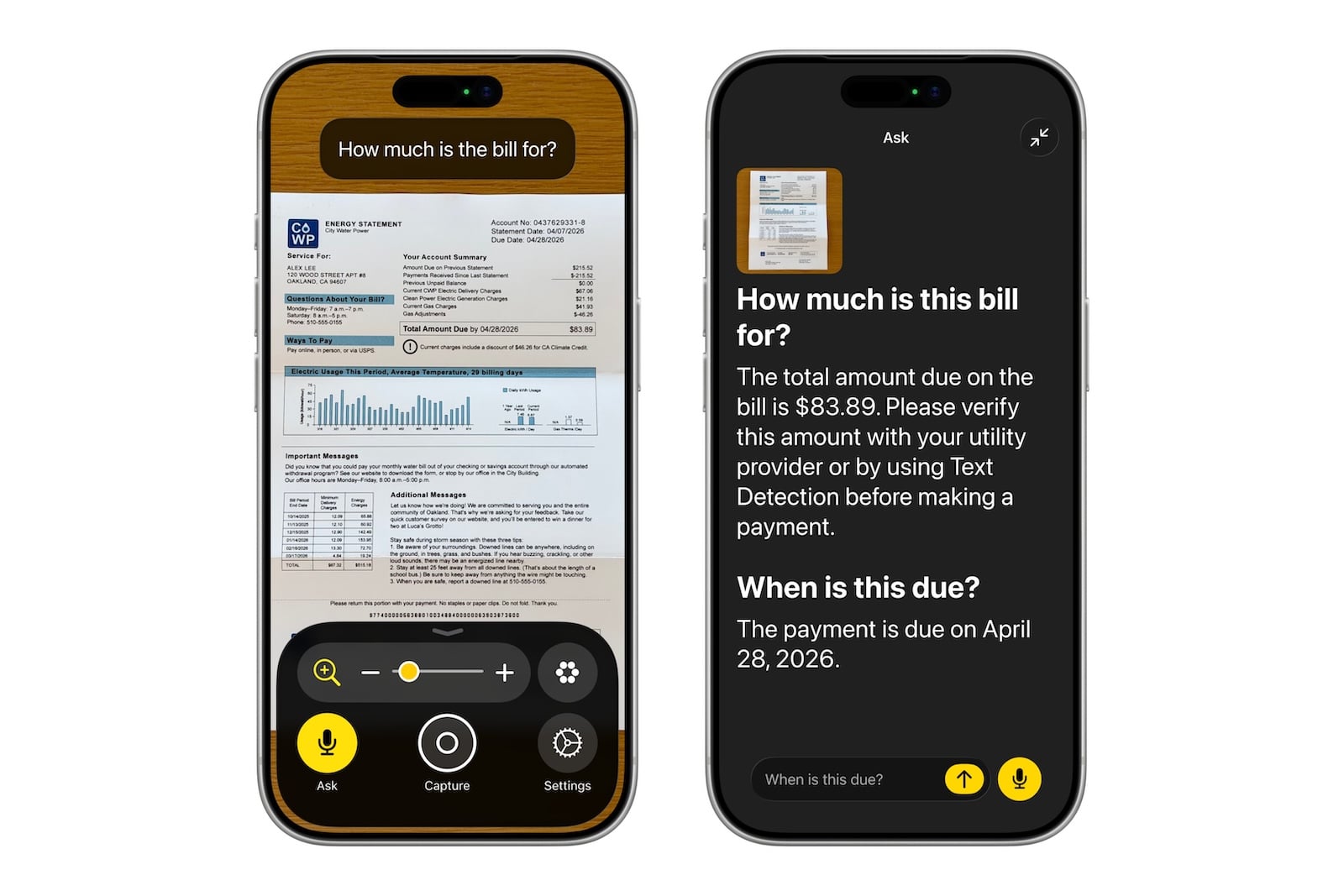
The new Image Explorer in VoiceOver provides more detailed image descriptions system-wide. This applies to photos as well as scanned invoices, personal documents, and other visual content. With the Live Recognition feature, you can press the Action button on your iPhone to ask a question directly about the current camera image – with a detailed answer. Follow-up questions in free speech are possible, allowing you to explore images step by step.
The magnifying glass applies the same principle to a high-contrast interface optimized for users with visual impairments. Here, too, the action button serves as a quick trigger for questions. The app itself can be controlled by voice, for example with commands like "Zoom in" or "Turn on the flashlight."
Voice control understands natural language
Voice control is the bridge for people with physical limitations who want to operate their iPhone or iPad entirely by voice. Previously, controls had to be precisely named or numbered – a hurdle that Apple Intelligence has now significantly lowered.
With the new flexible input, a conversational description is sufficient. Examples from Apple's demo: "Tap the guide to the best restaurants" or "Tap the purple folder." This also works when apps haven't clearly marked elements for accessibility - a common problem in third-party software. This is particularly relevant in visually structured apps like Apple Maps or Files, where traditional voice commands have previously reached their limits.
Accessibility reader cracks complex documents
The accessibility reader displays text in an adapted format – important for people with dyslexia, visual impairments, and many other needs. With Apple Intelligence, the reader will soon be able to handle more complex source structures: scientific articles with multiple columns, images, and tables will be converted into a consistently readable format.
Two further points are worth mentioning. The reader can generate a summary on demand, allowing users to contextualize a long text before reading it. And a built-in translation displays content in the user's native language without losing font, size, or color scheme. With this, Apple addresses a weakness of many existing reader solutions, which lose their individual formatting profile after translation.
Automatic subtitles across the entire Apple ecosystem
Subtitles are now standard practice for professional content. However, private videos, clips shared by friends and family, or content spontaneously discovered online often remain untitled – a practical problem for people who are deaf or hard of hearing.
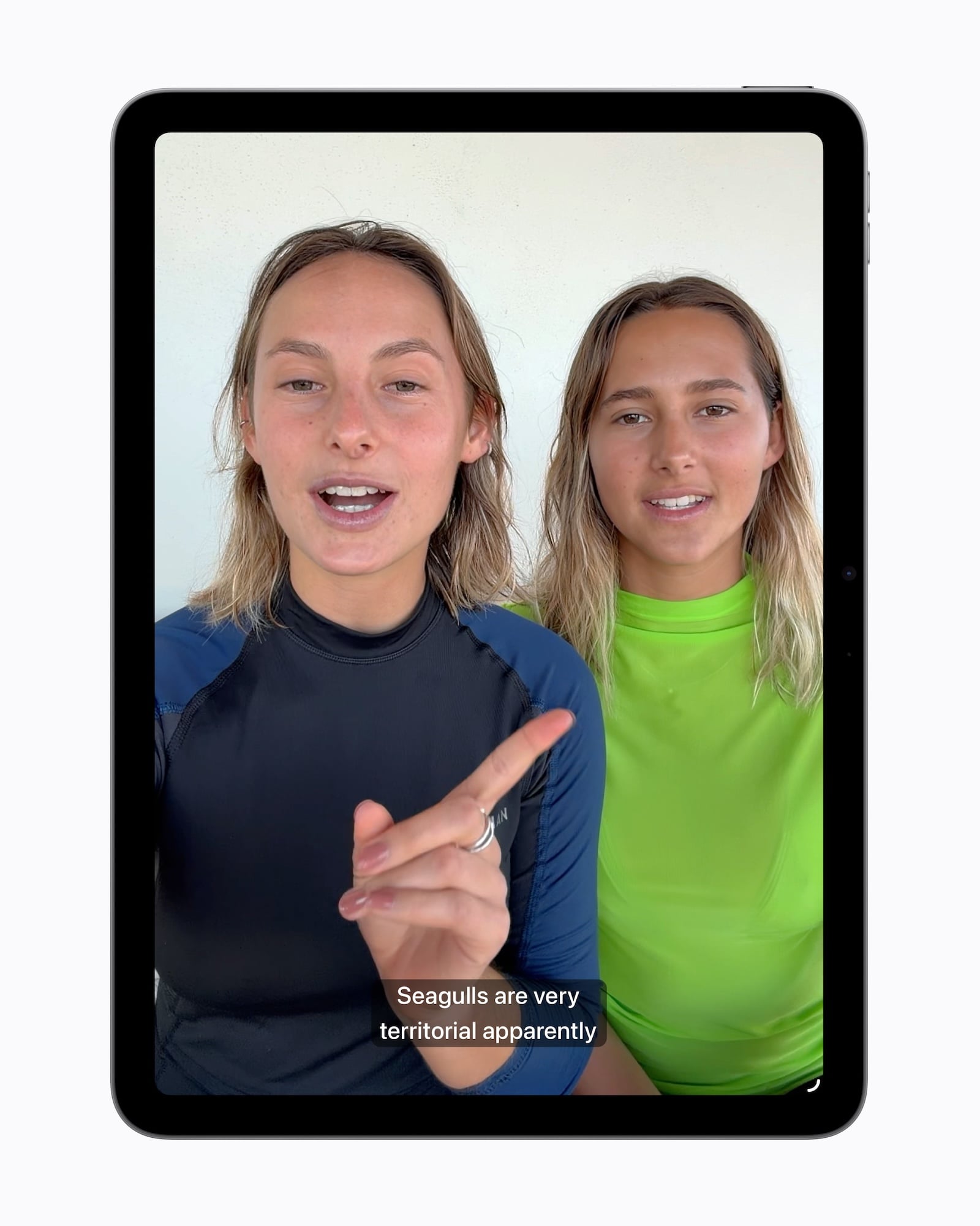
The newly generated subtitles close this gap. Whenever a video lacks its own subtitles, the system automatically transcribes the spoken language and displays the subtitles. Speech recognition runs directly on the device, making the feature possible without cloud processing. It will be available on iPhone, iPad, Mac, Apple TV, and Apple Vision Pro. The subtitle display can be adjusted via the playback menu or in the settings.
Vision Pro controls electric wheelchairs via eye tracking
One of the most spectacular innovations concerns the Apple Vision Pro. For people who cannot operate an electric wheelchair with a joystick, the headset offers an alternative input method: precise eye tracking becomes the control unit for compatible wheelchair drive systems.
Apple highlights two practical advantages. The Vision Pro's eye tracking doesn't require constant recalibration and works reliably in varying lighting conditions – both crucial for the everyday lives of mobile users. At launch, the feature is compatible with Tolt and LUCI drive systems in the US and supports both Bluetooth and wired connections. Apple plans to work with developers to support additional systems.
Pat Dolan, founder of GeoALS and an ALS patient for ten years, describes the feature as "gold" - the ability to control the wheelchair independently is a life-improving step. Blair Casey, CEO of Team Gleason, speaks of a major advancement for eye-controlled wheelchair systems overall. Apple's continued expansion of such features aligns with the company's strategy of consistently developing its Vision Pro line.
Hikawa Grip & Stand: Adaptive MagSafe accessories now available worldwide
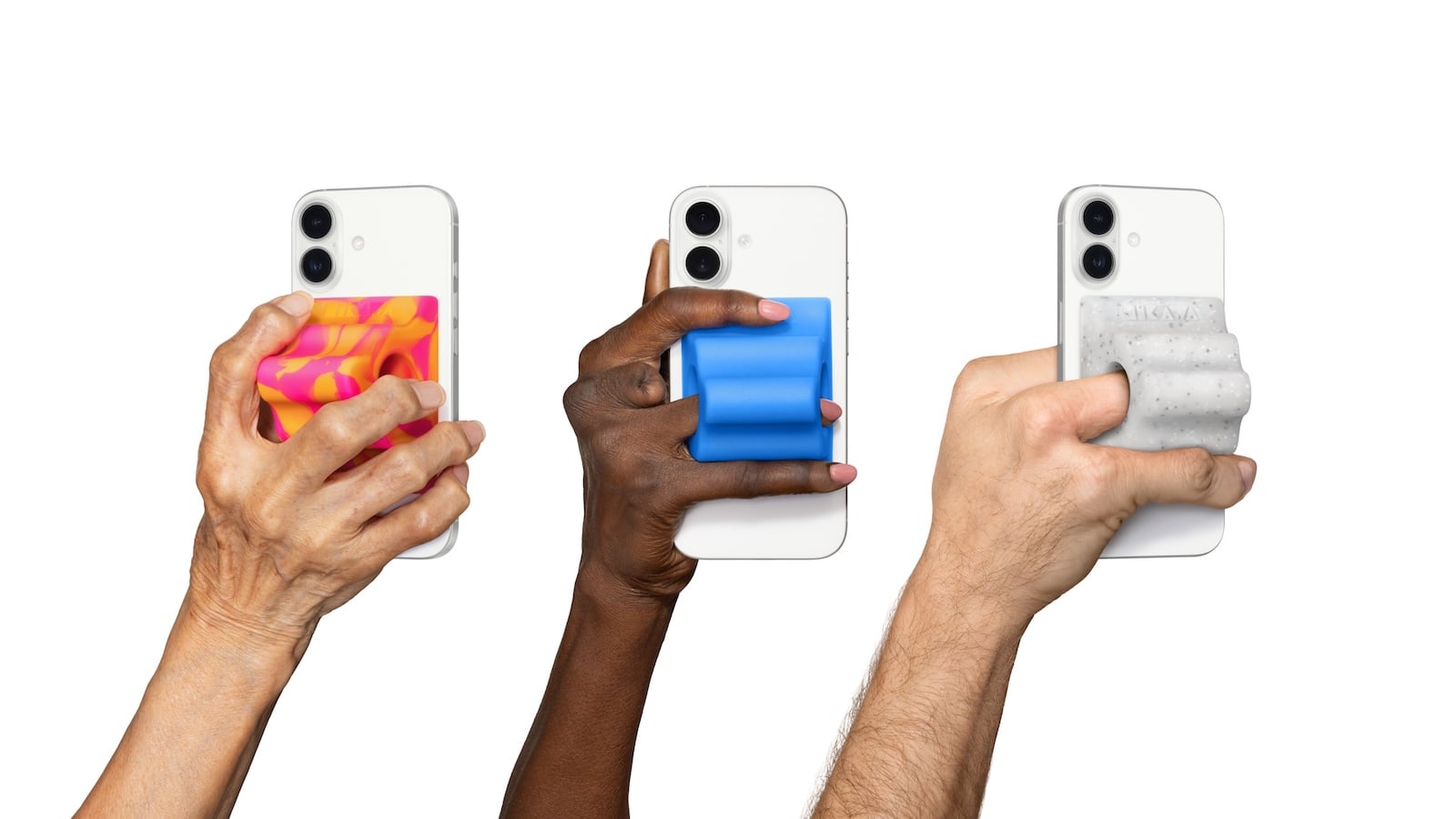
Alongside the software announcement, a hardware product is launching: The Hikawa Grip & Stand for iPhone is now available in three new colors in the Apple Online Store. This adaptive MagSafe accessory was developed by Los Angeles-based designer Bailey Hikawa in collaboration with people with various disabilities affecting gripping, strength, or movement.

The collaboration with PopSockets makes the accessory available worldwide for the first time. The product helps users hold their iPhone in a position that suits them individually – whether as a grip in their hand or as a stand. A Today at Apple session in Los Angeles on May 20 with Bailey Hikawa, author Shane Burcaw, and actor Alex Barone will accompany the global premiere and highlight the iPhone as a key assistive technology.
Further improvements across the operating system portfolio
In addition to the major pillars, there are numerous smaller updates that address individual needs.
- Vehicle Motion Cues are coming to visionOS and help reduce motion sickness when using the Vision Pro as a passenger in a vehicle. Additionally, the headset supports facial gestures for tap actions and system functions, as well as a new way to select items via eye dwell.
- Touch Accommodations offers a new personalization option in iOS and iPadOS.
- Made for iPhone hearing aids pair and switch more reliably between Apple devices and receive an improved setup flow in iOS, iPadOS, macOS and visionOS – an area that builds on current research from Apple's Hearing Study.
- Larger text is coming to tvOS for the first time, significantly improving the readability of menus and lists on the television.
Apple Intelligence reaches those who truly matter
The announcement is more than just an annual obligatory update before Global Accessibility Awareness Day. It demonstrates for the first time how Apple Intelligence is arriving not in a showcase AI feature, but in decades-old, everyday functions. VoiceOver, Magnifier, and Voice Control are not pilot projects - they are tools without which many users wouldn't even turn on their iPhones.
Apple's decision to enhance these functions with AI while simultaneously emphasizing that the processing largely takes place on the device sends a twofold message: The AI strategy delivers concrete, practical improvements, and it does so without the privacy breaches that many other providers accept with comparable features. For the already widely discussed new AI paths in the upcoming operating system generation - keyword: the selection of external AI models for system functions - Apple is thus setting an important counterpoint: The most important AI building blocks remain firmly in Apple's hands.
Accessibility 2026 – the big picture
This package is one of the most substantial expansions of Apple's accessibility features in recent years. It combines three elements: existing tools become smarter with Apple Intelligence, new features like generated captions and wheelchair controls close gaps in everyday life, and an adaptive hardware product will be available worldwide in Apple Stores. Apple itself specifies a launch window of "later this year" - meaning that the software features will be included in iOS 27, iPadOS 27, macOS 27, watchOS 27, tvOS 27, and visionOS 27. The next generation will be unveiled at WWDC in June and typically released in September. The scope of features is thus precisely defined, and the wait time is manageable. (Image: Apple)
- macOS 27: Four Intel Macs fall behind
- WWDC 2026: Apple confirms date, program and streaming details
- Indian antitrust case: Apple gets a two-month extension – but must deliver
- Apple's secret business: How defective chips become a multi-million dollar cost-saving model
- Apple and Epic set a timetable for new commission negotiations
- AirPods Max: Designer Whang reveals details from five years of development
- WhatsApp is now rolling out Liquid Glass more broadly on iOS
- Court draws Federighi into xAI lawsuit – Cook remains uninvolved
- Codex is moving into the ChatGPT mobile app
- iPhone 18: Apple Modem Brings a Hidden Privacy Benefit
- Intel manufactures chips for iPhone, iPad and Mac for the first time – Apple production is underway
- OpenAI is preparing legal action against Apple over its Siri partnership
- Anthropic's Mythos Uncovers New macOS Vulnerabilities – Apple Reviews Report
- Shrinking Season 4: Filming starts next week – premiere possible in early 2027
- iPhone 17 Pro charges faster than 32 other smartphones in the test
- Unlocked iPhones bring thieves up to $800 more
- Apple's F1 plans in Europe: Sky secures key markets early
- Evercore raises Apple price target to $365 – Confidence in Apple Intelligence
- Tim Cook in Beijing: Trump Delegation with Musk and Wall Street Leaders
- Margo's Got Money Troubles: Apple TV orders second season