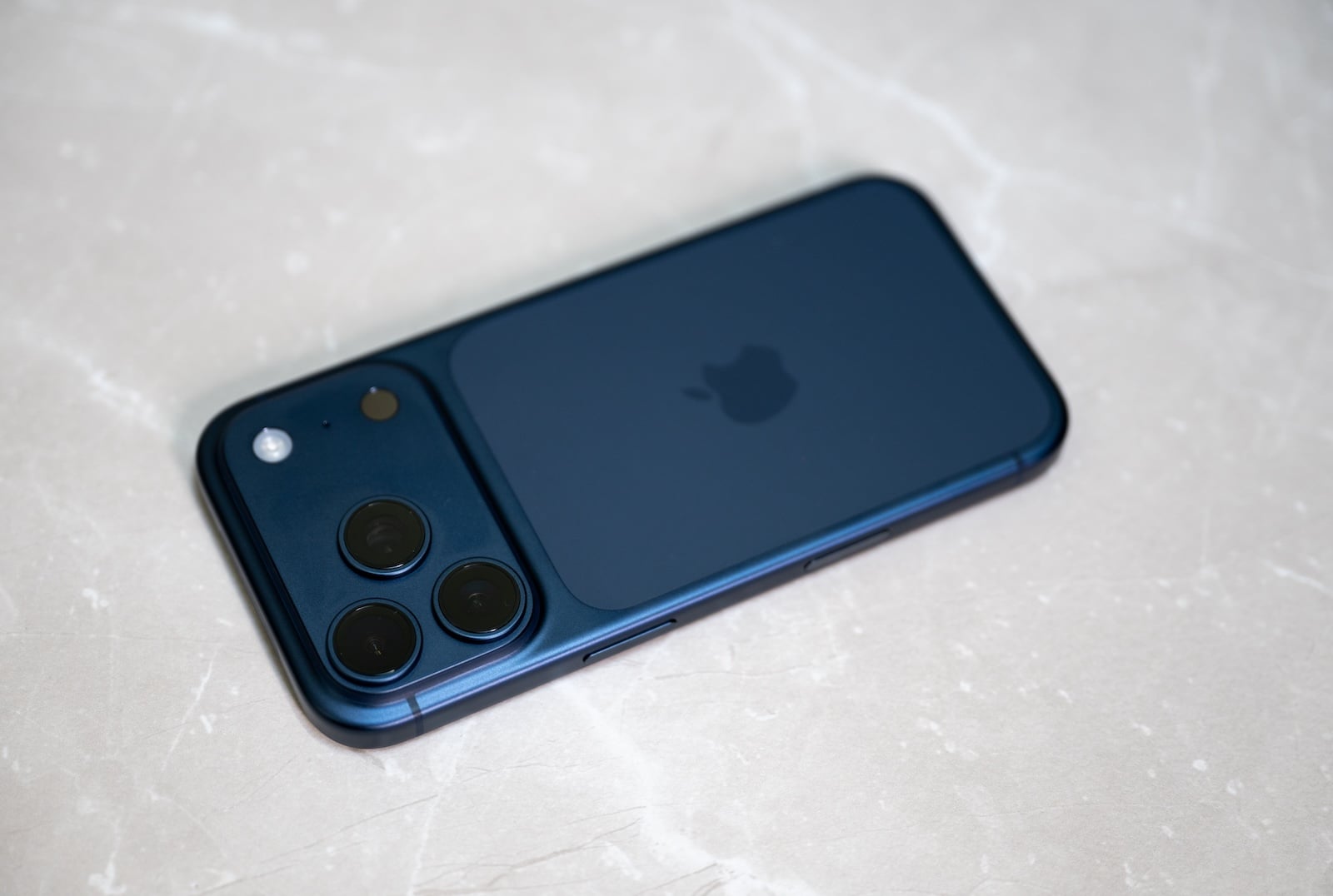
While global smartphone production shrank slightly in the first quarter, Apple increased its iPhone production by almost a fifth. A new market report shows how strongly the company is decoupling itself from the rest of the industry – and why rising storage costs are affecting it less than its competitors.
The fact that the iPhone 17 series is exceeding both Apple's own expectations and the overall market has been a recurring theme in quarterly figures and independent industry analyses for months – the current iPhone lineup is now considered the world's best-selling smartphone. A new report from market research firm TrendForce adds another metric to this picture: Apple increased its iPhone production by 19.7 percent in the first quarter of 2026 compared to the previous year, while global smartphone production declined by 1.7 percent during the same period. The company is thus clearly bucking the general trend.
Apple is decoupling itself from the overall market
According to TrendForce, around 284 million smartphones were manufactured worldwide in the first quarter – a decrease of 1.7 percent year-on-year. Amid this decline, Apple's double-digit growth stands out. However, Samsung remained at the top: The Korean manufacturer continued to produce the most devices with around 62.6 million units, an increase of 7.6 percent compared to the previous quarter and 2.3 percent compared to the previous year, driven by inventory build-up for the new Galaxy S models.
Apple follows in second place with approximately 60.2 million units produced – and is thus only about two million devices behind Samsung, with a significantly higher growth rate.
| Manufacturer | Production Q1 2026 | Change from the previous year |
|---|---|---|
| Samsung | approximately 62.6 million units | +2,3 % |
| Apple | approximately 60.2 million units | +19,7 % |
| Total market | approximately 284 million units | -1.7 % |
The iPhone 17e as an additional driver
TrendForce attributes the strong growth to two factors. Firstly, production of the new iPhone models continues to ramp up, and secondly, the market launch of the iPhone 17e provided an additional boost. This more affordable entry-level model expands the product line downwards, opening up customer groups that the lineup hadn't previously served in this way. Combined with the continued high demand for the more expensive models, this results in a production increase of 19.7 percent.
Rising storage costs will hit Apple less hard
A major burden for the entire industry has been the sharp rise in storage prices since the second half of 2025. In the first quarter, their effect on production remained limited because manufacturers were able to draw on existing stocks of cheaper storage components. Furthermore, many buyers anticipated further price increases and brought forward purchases, which supported short-term demand.
Apple is in a better position in this environment than many competitors who have already entered a phase of pure margin protection. The company is one of the few smartphone manufacturers that have not raised their prices since the start of the storage shortage – but does not rule out future increases if the situation does not ease. The precariousness of this calculation is evident in the considerations surrounding the pricing strategy for upcoming models under the pressure of storage costs.
Bleak outlook for the overall market
The forecast for the full year is significantly more pessimistic than the Q1 figures would suggest. TrendForce expects global smartphone production to decline by approximately 16.2 percent to 1.051 billion units in 2026. In a less favorable scenario, the decline could be even steeper if memory prices remain high and brands are forced to repeatedly raise their prices.
The turning point becomes apparent as early as the second quarter: once the cheap storage reserves are depleted and the continuing price increases reduce profits, most manufacturers begin to scale back their production.
Winners and losers are drifting apart
How well individual manufacturers navigate this phase depends heavily on their positioning. Brands with strong pricing power in the premium segment and broad financial backing at the corporate level are likely to maintain or even increase their market share. Chinese manufacturers focusing on the mid-range and entry-level segments, on the other hand, are pursuing more cautious production plans, as they are simultaneously suffering from rising costs and growing competition from Huawei.
Samsung sees TrendForce as relatively robust thanks to the overall group's financial strength and a large premium portfolio, but points to the significant dependence on lower-priced models as a risk factor – especially given the deteriorating consumer sentiment. The report names Samsung, Apple, and Huawei as manufacturers likely to buck the general downward trend.
Why Apple is better positioned to weather the downturn
Apple's increased production is more than just a favorable snapshot. It demonstrates that the company possesses two levers in a shrinking market that most of its competitors lack: a product range spanning from the iPhone 17e to the most expensive Pro models, and sufficient margins to avoid passing on rising costs to customers for the time being. Apple's recently achieved share of around 48 percent of global smartphone sales underscores how financially this position translates into significant gains. However, should the storage situation become critical, it will become clear how long Apple, too, can maintain stable prices. (Image: Shutterstock / Anna Hoychuk)
- Apple tightens App Store rules for low-quality apps
- iOS 27: The Passwords app automatically replaces insecure passwords
- Call Context in iOS 27: When the iPhone prepares the call for you
- With Claude Fable 5, Anthropic is introducing a Mythos model for everyone for the first time
- visionOS 27: What's new for the Apple Vision Pro
- macOS 27 Golden Gate: These are all the new features
- Why Apple is now building a Siri app with iOS 27
- iOS 27: Apple Music, Lock Screen Widget and Find My
- Dispute over Siri AI: The EU Commission contradicts Apple
- Apple is expanding its services: Here's what's coming this fall
- watchOS 27: App grid, new gesture and smarter fitness
- CarPlay gets video apps and the new Siri with iOS 27
- Private Cloud Compute: Apple's AI now performs calculations at Google
- Siri AI is free – iCloud+ raises AI daily limits
- iOS 27 and more: The new features beyond the WWDC stage
- iOS 27 cleans up the AirPods settings
- iOS 27: Evidence of the foldable iPhone is mounting
- Xcode 27 and new AI frameworks for developers
- tvOS 27: These are the new features for Apple TV