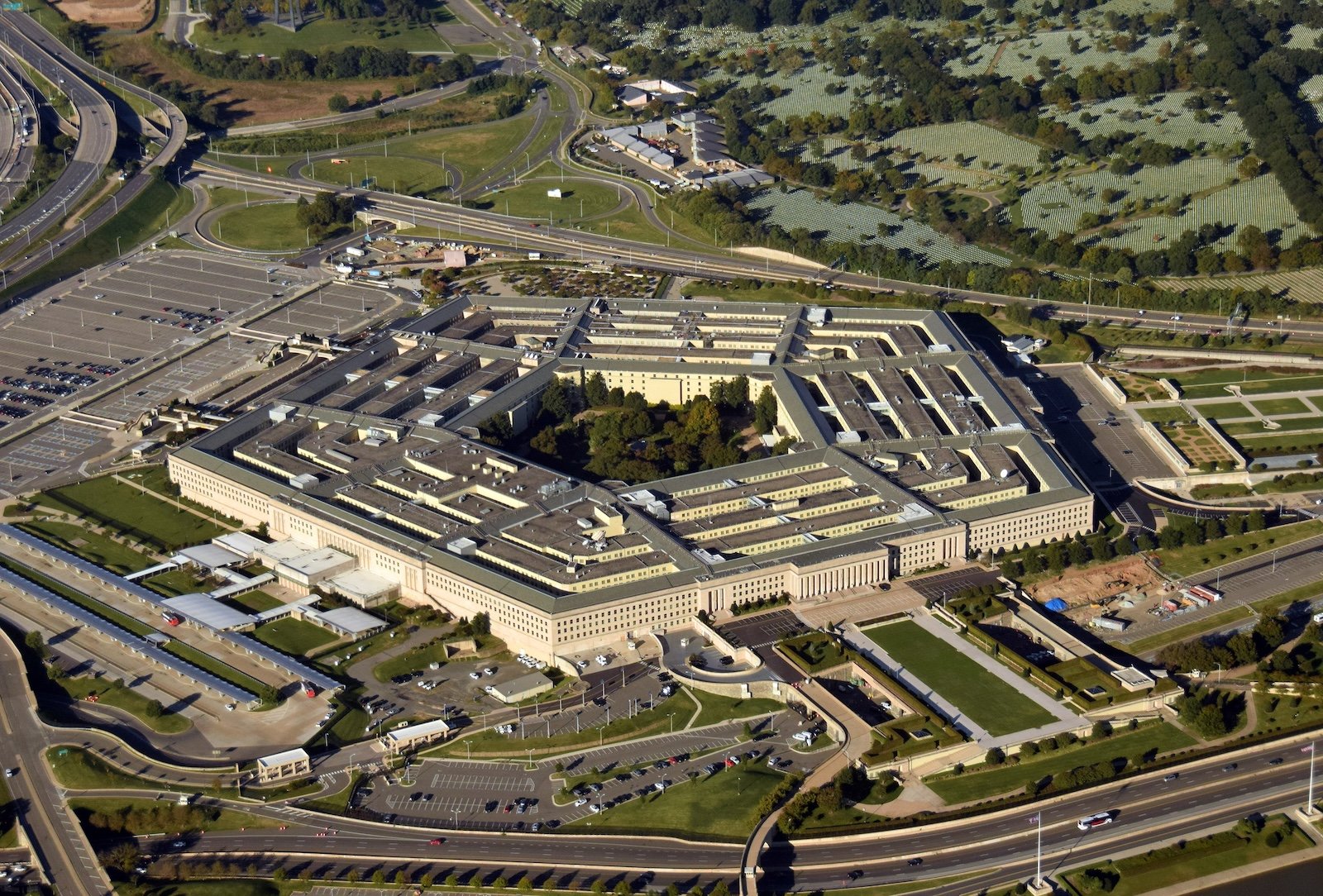
The technology company Apple is at the center of a new industrial policy debate in the US. An industry association, of which Apple is a member, has sent a letter to the US Department of Defense expressing concerns about a planned classification of an AI company as a "national security risk in the supply chain".
The trigger is a conflict between the Pentagon and the AI company Anthropic. The Defense Department's decision could have far-reaching consequences for technology companies and government procurement processes. There is growing concern within the industry that such a move could set a precedent.
The relationship between the US government and large technology companies has been strained for some time. Particularly in the areas of artificial intelligence and military applications, conflicts repeatedly arise between political requirements, ethical questions, and economic interests.
Since the beginning of President Donald Trump's second term, many technology executives have been trying to maintain a good relationship with the administration. This is due to the possibility of political retaliation, which can often take the form of tariffs or regulatory threats.
Against this political backdrop, the Pentagon's recent decision is causing additional unrest in the industry.
The Pentagon classifies Anthropic as a national security risk
Last Friday, US Defense Secretary Pete Hegseth published a post on the X platform. In it, he stated that he had instructed his department to classify Anthropic as a supply chain risk to national security. This classification has far-reaching consequences. Should it be fully implemented, the following rule applies:
No contractor, supplier or partner doing business with the US military may conduct commercial activities with Anthropic.
It is particularly noteworthy that this measure has never before been applied against a domestic company.
Dispute over a $200 million contract
The background to the decision lies in a long-standing procurement dispute between the Pentagon and Anthropic.
The focus was on a planned $200 million contract. This contract contained two clauses that Anthropic refused to accept. These clauses concerned:
- the use of technology for domestic surveillance
- the use of technology for autonomous weapons
Anthropic rejected these conditions. Negotiations dragged on for several weeks before the situation finally escalated.
The Pentagon's decision to classify the company as a national security risk took the conflict to a new level.
Shockwaves in the technology industry
The classification caused considerable unease in the technology sector. Many companies see it as a sign that other firms could face similar measures in the future.
The concern is that companies could come under pressure to accept government requirements. Otherwise, they could face economic disadvantages.
This uncertainty particularly affects companies that develop technologies with both civilian and military applications.
Industry association with Apple responds with letter
The Information Technology Industry Council (ITI) responded to the situation with an official letter to the Pentagon. Members of the industry association include, among others:
- Apple
- Nvidia
- Amazon
According to Reuters, the letter was sent to Defense Minister Hegeseth on Wednesday.
Interestingly, Anthropic is not explicitly mentioned in the letter. Instead, the letter focuses on the potential classification as a supply chain risk and the resulting consequences.
The letter states that they are concerned about reports that the Ministry of Defence is considering this classification in response to a procurement dispute.
Warning about consequences for government procurement
The industry association argues that such a measure could also have negative consequences for the US government itself.
The letter points out that being classified as a supply chain risk could jeopardize the government's access to the best products and services from American companies.
Many technology companies provide solutions to various government agencies and departments. If companies are excluded for political reasons, this could significantly limit the range of technologies and services available.
Criticism of unusual application of the classification
Jason Oxman, CEO of the Information Technology Industry Council, also addressed the situation in the letter. He explained that classifications such as "supply chain national security risk" are intended for genuine emergencies. Typically, such measures are used against companies classified as foreign adversaries.
Oxman also argued that disputes over government procurement contracts should normally be resolved through other means. These include, for example:
- established government procurement procedures
- Negotiations on contract terms
- the selection of alternative providers
Classifying a case as a security risk is not the usual procedure in such cases.
Defense Ministry response
The US Department of Defense responded only briefly to the industry association's letter. A spokesperson stated that the department would follow its usual practice and respond directly to the authors if necessary.
There have been no further public comments regarding the concerns of the technology industry.
The conflict between the Pentagon and Anthropic and its consequences for the tech industry
The dispute between the Pentagon and Anthropic shows how complex the relationship between technology companies and government institutions has become.
The potential classification of a US company as a national security risk is causing considerable uncertainty within the industry. Companies like Apple are closely monitoring developments, as such decisions could have long-term repercussions for collaborations, supply chains, and government procurement processes.
How the conflict will develop remains to be seen. However, it is clear that issues surrounding artificial intelligence, military applications, and government regulation will play an even greater role in the technology sector in the future. (Image: Shutterstock / Ivan Cholakov)
- macOS informs about USB-C limit on the MacBook Neo
- MacBook Neo: Why Apple chose this name
- New MacBook models will ship in Europe without a power adapter
- Apple Music introduces transparency tags for AI content
- Apple TV series "Stick" gets prominent reinforcements
- Apple's new Studio Displays use different chips
- Subscription apps: Why only a few apps are growing strongly
- iOS 26.3.1 & Co.: Apple releases new updates
- Apple expands its portfolio with seven new devices
- MacBook Neo: 8 GB RAM as the biggest compromise
- MacBook Neo: Why the Mac only supports one monitor
- MacBook Neo: More recycled materials than ever before
- MacBook Neo: Two USB-C ports with important differences
- MacBook Neo: Touch ID is only available at an extra cost
- MacBook Neo: Apple's new entry into the Mac world
- iPhone Security: Dangerous exploit toolkit in circulation
- M4 iPad Air: First Geekbench results have surfaced
- Studio Display XDR supports DICOM medical images
- Apple is promoting Mac gaming at GDC 2026
- Studio Display XDR: 120 Hz only with certain Macs
- Studio Display & Studio Display XDR without Intel support
- OpenAI: GPT-5.3 enables better dialogue
- Meta Ray-Ban: Data privacy nightmare revealed