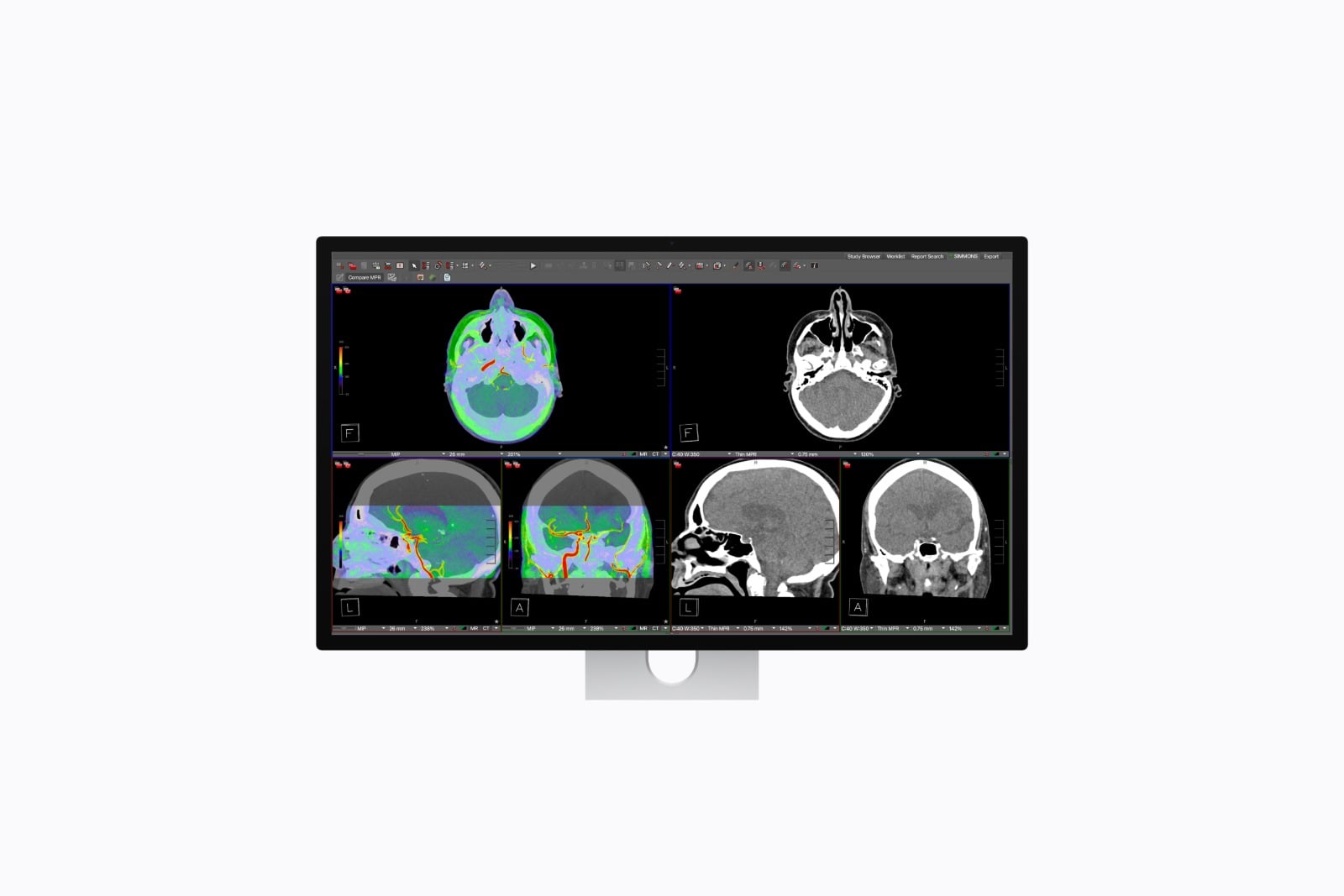
The Studio Display XDR expands Apple's display portfolio with a feature particularly relevant in the medical field: support for DICOM medical images in diagnostic radiology. This positions the display not only for creative professionals but also for professional use in healthcare. In addition to its technical specifications, Apple has focused on medical imaging standards and regulatory readiness for clinical use with the Studio Display XDR.
Radiology places high demands on monitors. Contrast, brightness, color accuracy, and standardized display are crucial for the reliable evaluation of diagnostic images. Specialized medical imaging monitors, which are appropriately certified and calibrated, are typically used for this purpose.
With the Studio Display XDR, Apple aims to combine professional display technology with medical imaging. According to Apple, this new feature will further improve technology in healthcare and optimize patient care.
DICOM support for medical imaging
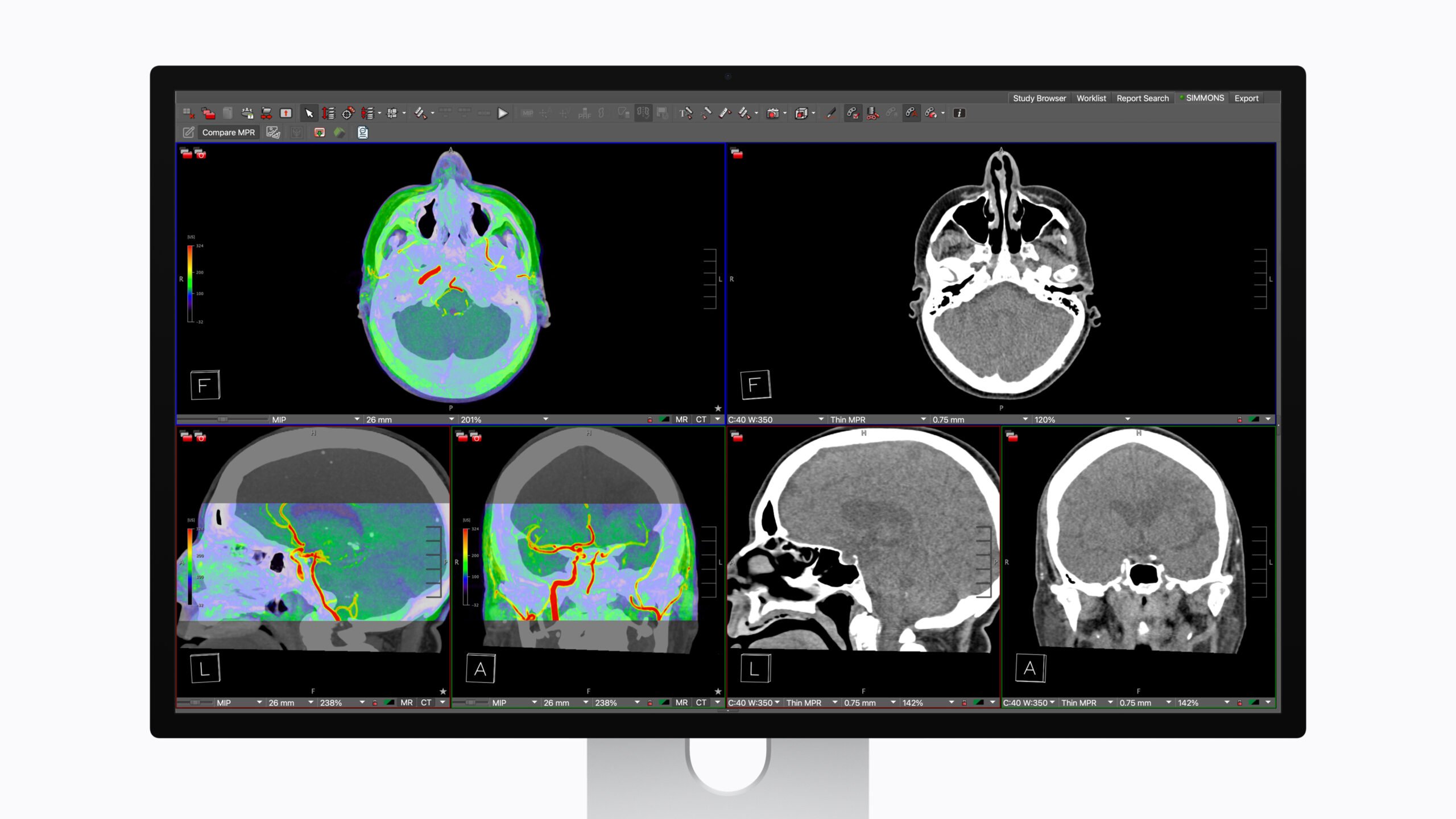
A key feature of the Studio Display XDR is its support for DICOM presets. DICOM is the established standard for medical image data, especially in diagnostic radiology.
Thanks to the integrated DICOM presets, radiological images can be displayed directly on the Studio Display XDR. An additional monitor specifically designed for medical imaging is therefore not strictly necessary.
The display also offers a switching option for the display mode. Users can choose between the standard display mode and a radiological display mode. This allows the same device to be used for both general professional tasks and radiological diagnostics.
Medical Imaging Calibrator and FDA Approval
A dedicated Medical Imaging Calibrator was developed for medical imaging. This calibrator is specifically designed to meet the requirements of diagnostic radiology.
Apple states that the Medical Imaging Calibrator is currently undergoing the approval process with the U.S. Food and Drug Administration (FDA). Approval is still pending. Once the process is complete, the calibrator is expected to be available in the United States.
Regulatory preparation is crucial, as displays used in medical diagnostics are subject to certain legal requirements.
Technical specifications of the Studio Display XDR
In addition to its medical function, the Studio Display XDR offers a range of technical features designed for professional applications:
- Mini LED backlight
- 2,304 local dimming zones
- HDR peak brightness of 2,000 nits
- Contrast ratio of 1,000,000:1
- 120 Hz refresh rate
- Improved color accuracy
Mini-LED technology with 2,304 local dimming zones enables precise control of brightness and contrast. A peak HDR brightness of 2,000 nits ensures very bright image areas, while a contrast ratio of 1,000,000:1 renders dark image details with nuance.
The 120 Hz refresh rate supports smooth display, for example when scrolling through extensive image sequences. The improved color accuracy is relevant for both creative applications and precise image analysis.
Price and market position
The starting price for the Studio Display XDR is €3,499. This places the display below many specialized medical imaging monitors, which often have significantly higher purchase costs.
The combination of professional display features and medical imaging support positions the Studio Display XDR as a potential alternative to classic radiology monitors.
Pre-order and sales launch
Pre-orders for the Studio Display XDR will be available from March 4th. The official sales launch is planned for March 11th.
This allows Apple to bring the display to market promptly, targeting both professional creative users and medical institutions.
Studio Display XDR as a solution for radiology and professional applications
The Studio Display XDR combines high-resolution display technology with DICOM support for diagnostic radiology. With its specially developed Medical Imaging Calibrator and pending FDA approval, Apple is preparing the device specifically for medical applications.
At the same time, the Studio Display XDR remains a versatile professional display. Its technical features, the ability to switch between standard and radiology modes, and its comparatively lower entry price compared to specialized medical monitors make it a technically and economically relevant option in the healthcare sector. The best products for you: Our Amazon storefront offers a wide selection of accessories, including those compatible with HomeKit. (Image: Apple)
- Apple is promoting Mac gaming at GDC 2026
- Studio Display XDR: 120 Hz only with certain Macs
- Studio Display & Studio Display XDR without Intel support
- OpenAI: GPT-5.3 enables better dialogue
- Meta Ray-Ban: Data privacy nightmare revealed
- The Pro Display XDR is being discontinued
- MacBook Air M5: What the new generation brings
- MacBook Pro with M5 Pro & M5 Max officially unveiled
- Apple M5 Pro and M5 Max: More power for professionals
- Apple presents Studio Display & Studio Display XDR
- Apple TV: No third season for Palm Royale
- Anthropic simplifies AI migration with import tool
- Where is the file located? Offline Files knows the answer instantly
- iOS 26.4 Beta 3 is here: Next step towards release
- Paramount plans mega streaming service with HBO
- Apple unveils new accessories for spring 2026
- Will an iPhone 16e case also fit the iPhone 17e?
- iPad Air with M4 is here: Here's what the update offers
- The iPhone 17e is here: Here's what's inside the new model
- Apple TV impresses at international award ceremonies
- Anthropic: Claude climbs to number 1 in the App Store
- Apple Stores in the UAE temporarily closed