
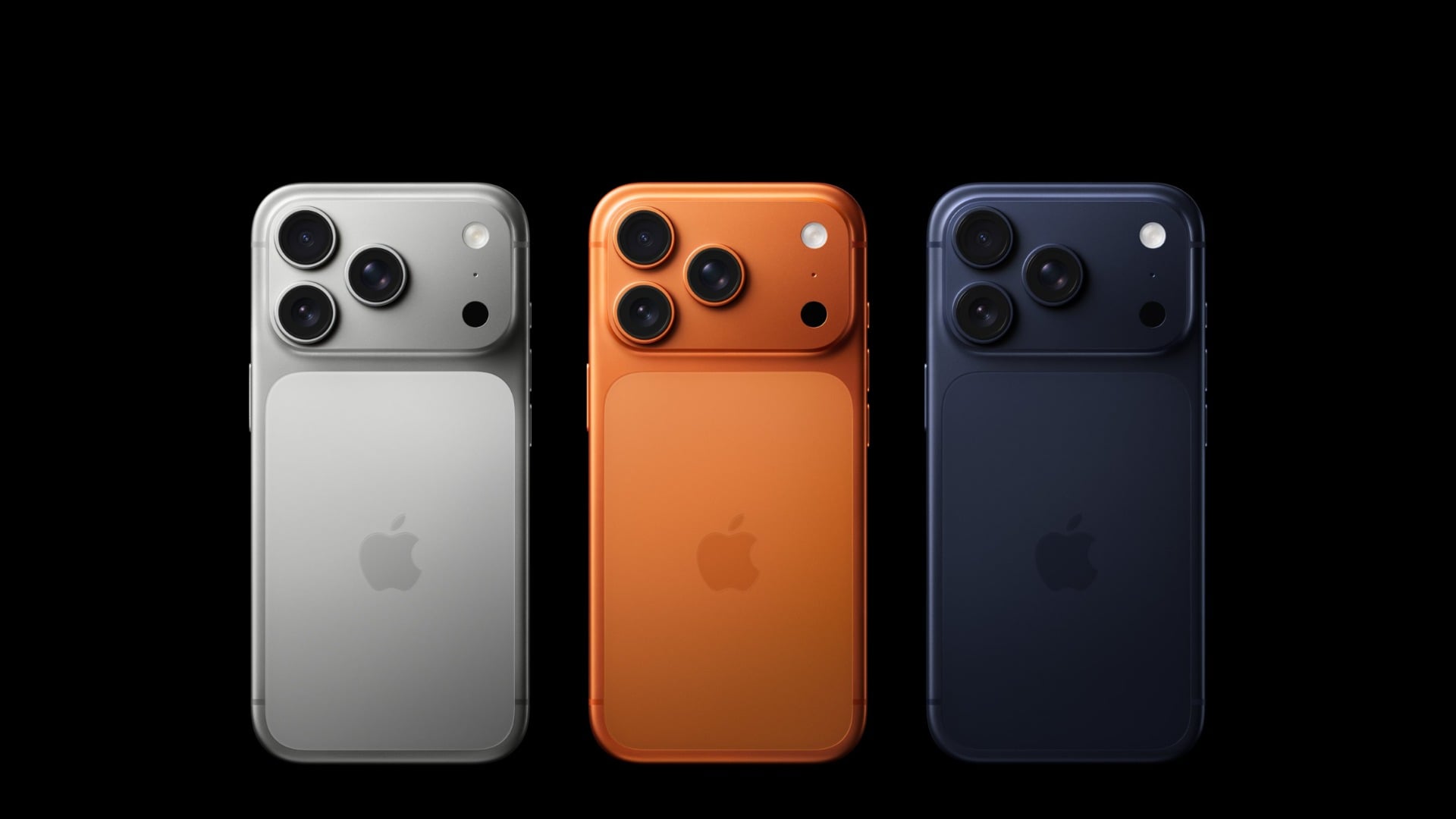
Six weeks before the expected launch, Apple's contract manufacturer is sitting on a backlog of finished processors that no one can process further – they're missing the essential RAM. Initial demand is considered manageable, but waiting times could increase significantly shortly thereafter. And this comes in an autumn when there are hardly any alternatives to the Pro.
Memory shortages have impacted the timeline for the year's most important product. According to a report by semiconductor analyst Tim Culpan at Culpium, Apple and its manufacturing partners are working to quickly procure enough mobile DRAM for the iPhone 18 Pro and its first foldable model. The bottleneck lies in an area where few would have expected it: not in chip manufacturing, but in the assembly of the chips.
Key Facts at a Glance
- According to the report, TSMC has Apple processors worth around one billion dollars that cannot be fully packaged without DRAM.
- According to these reports, the production of the A20 Pro itself is proceeding with good production numbers and good yields.
- Apple and its contract manufacturers still believe that initial demand is manageable, but expect delivery times in the online store to increase rapidly.
- Over the course of the production period, around 200 million devices consisting of iPhone 18, 18 Pro and Ultra are expected to be produced, of which less than ten percent will be Ultra.
- Because the standard model is being discontinued this year, demand is concentrated on the Pro model.
Why finished processors cannot be delivered
The A20 Pro is Apple's first chip from TSMC's N2 manufacturing process, which began mass production earlier this year. Production appears to be proceeding as planned – the problem starts a step later.
The processor is not installed on its own, but rather combined with the main memory in a single package. TSMC uses a new process for this, in which both components are bonded together at the wafer level to form a single module. This step cannot be performed without the appropriate DRAM.
The result is finished wafers that pile up instead of continuing to process. Culpan estimates the value of the Apple processors blocked in this way at around one billion dollars. Apple sources most of its memory from Micron, but also buys from SK Hynix and Samsung.
The bottleneck has shifted, not disappeared
What's remarkable is where the production is stalling this time. For months, the hinge and display of the foldable model were considered critical points, and at the beginning of August, it was announced that the production line was up and running and any delays were averted. Both of those things remain true – but a finished line is of little use if the component that completes the processors is missing.
According to the report, delays in the production of packaged processors would extend all the way to final assembly. Motherboards and final assembly are primarily handled by Foxconn and BYD in China, which could further tighten their delivery windows.
Storage has thus transformed from a cost factor to a delivery time factor within just a few months. At the end of July, Tim Cook warned of significantly larger supply bottlenecks and spoke of considerable restrictions due to limited flexibility in the supply chain. This first became apparent with the Mac, where the MacBook Air became scarce and delivery times extended until the end of the month.
An autumn with only two new iPhones
The shortage coincides with an unusual model situation. The standard iPhone 18 model isn't expected until early 2027, and an iPhone Air 2 isn't anticipated this fall either – leaving the selection limited to Pro models and the foldable iPhone Ultra, which, with a price exceeding $2,000, is likely to be the most expensive iPhone ever.
Anyone wanting a new iPhone in September who doesn't want to invest in the Ultra will almost inevitably end up with the Pro. The expected distribution can be deduced from the production numbers given to the contract manufacturers.
| Model | Share of approximately 200 million devices |
|---|---|
| iPhone 18 (launch early 2027) | almost half |
| iPhone 18 Pro and Pro Max | almost half |
| iPhone Ultra | less than 10 percent |
The figures refer to the entire lifespan of the models, not the first year of sales.
What pre-order customers in German-speaking countries can take away from this
Regarding reliability: Culpan regularly reports on the Taiwanese supply chain and has correctly predicted details of chip manufacturing several times this year. His information comes from sources close to the suppliers, not from Apple – the one billion dollar figure is explicitly his estimate.
In practical terms, this means that if a specific color and storage combination is important to you, the first hour after pre-orders begin is more crucial than usual. Once a model's delivery time drops to several weeks, experience shows it will remain there well into October. Visiting your local Apple Store is the less desirable option this time around, as the store's inventory is expected to be the first to run out, according to reports.
Then there's the financial aspect: Two price estimates exist side-by-side, differing significantly – reports mention a $100 to $200 increase, while a cost analysis from the end of July suggests up to $300. Which figure is closer to reality remains unclear; so far, only the current German prices of the predecessor are reliable, at €1,299 for the Pro and €1,449 for the Pro Max.
Six weeks until the trial by fire
The date itself is not yet set. Following previous patterns, Apple sends out invitations in the last week of August, with the keynote following approximately two weeks later – all expected announcements can be found in our overview of the September event.
Whether the bottleneck will be resolved by then will be decided in the coming weeks at a point beyond Apple's control. The company has just lost its negotiating leverage with memory manufacturers, and the three remaining suppliers are shifting their resources toward AI data centers. A supplier that can sell its goods elsewhere for a higher price has little incentive to save Apple's timeline. (Image: Apple)
- iPhone 20: All models are expected to get larger displays
- iPhone Ultra: Production line is up and running, delays are off the table
- Apple Glasses: Health features not available at launch