
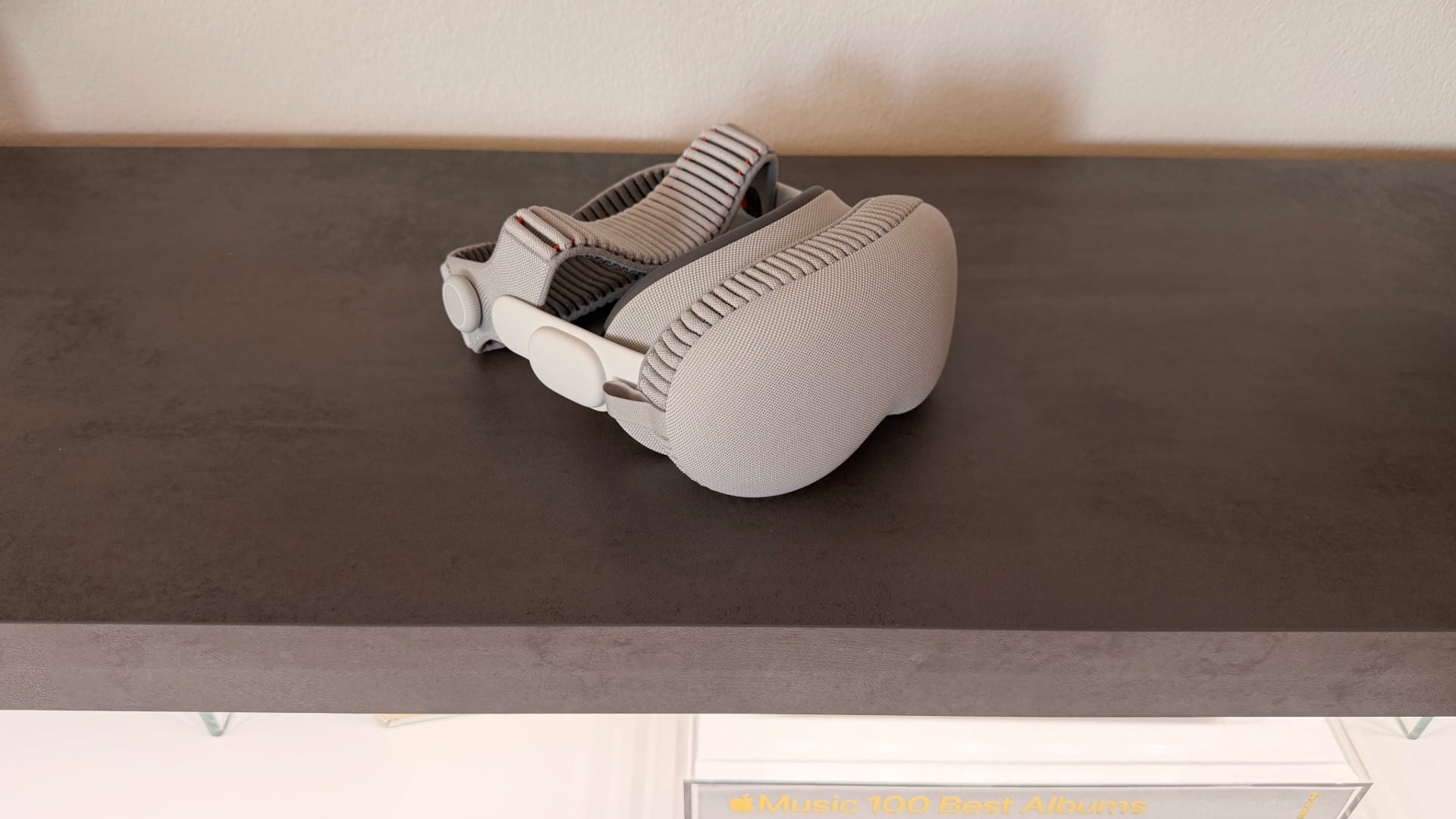
Apple wants to turn its smart glasses into a health and fitness platform – just not immediately. A recently advertised position shows that work on this is only just beginning, while an earlier attempt with the Vision Pro has already failed.
The Apple Watch has been Apple's health device for a decade, and with the heart rate monitoring of the AirPods Pro 3, the company has, for the first time, detached the sensor from the wrist. According to the Bloomberg newsletter Power On, the next step is supposed to lead to the head: The glasses, expected in 2027 and without an AR display, are intended to capture training data and accompany workouts in the medium term. This gives the previously known rumors about Apple Glasses a direction that goes beyond assistance and camera functions – and provides a clear indication of when they won't be available.
Key Facts at a Glance
- Apple's Vision Products Group is looking for someone to define health and fitness experiences for the eyewear and headset division.
- According to the report, these features will not appear in the first generation.
- A Fitness+ version of the Vision Pro with body motion analysis already existed – it never came to market.
- The reasons given are technical hurdles and the weight of the headset.
- Without a display, training glasses must be accompanied by sound – in the DACH region, this is a question of the German audio track.
A failed attempt with the Vision Pro
The idea isn't new for Apple. According to the report, the company developed a version of Apple Fitness+ for the Vision Pro that would run directly in the headset: watching classes, moving around, and closing the rings.
The difference compared to a course on the iPad or Apple TV would have been the body tracking. The headset was supposed to analyze the wearer's movements and assess their performance. The app was never released – technical hurdles and the device's weight prevented its release.
What the job posting reveals
The group, which develops glasses and future headsets, is looking for a product design leader, according to the newsletter. Their task: to define the future of health, well-being, and fitness across the entire Vision product line and to shape a product direction from a still somewhat undefined area between spatial computing, wearables, and health behavior.
A tender is not yet a product. However, it marks the point in time at which a project acquires its own responsibility – and the fact that this position is only now being created aligns with the statement that the functions will no longer reach the first generation.
Without a display, the sound remains
The glasses, planned for 2027, are explicitly not an AR device and do not display any content in the field of vision. This rules out the possibility of watching a fitness class – leaving sensors, camera, and voice output.
The building blocks for this already exist in the product range. The PPG sensor in the AirPods Pro 3 emits invisible infrared light 256 times per second, uses it to measure heart rate, and feeds up to 50 workout types into the fitness app. Glasses sit close enough to the head to use the same principle, and their cameras could additionally record the execution of an exercise – precisely the function that failed in the headset due to its weight.
| Device | Fitness role today | What is planned |
|---|---|---|
| Apple Watch | Training log, activity rings | The point of reference remains |
| AirPods Pro 3 | Heart rate via PPG sensor, up to 50 training modes | — |
| Vision Pro | HealthKit apps, meditation content | Fitness+ version discarded |
| Apple Glasses | not yet on the market | Health platform, but not in Generation 1 |
Construction during ongoing renovation
The timing is noteworthy because Apple's existing fitness organization is itself in flux. Jay Blahnik, who shaped the fitness products for over a decade, retired in July.
At the same time, Fitness+ itself is undergoing a restructuring after subscriber numbers fell short of expectations. Apple is therefore building a second fitness platform, while the first is being revamped and has lost its dominant position.
Added to this is an issue that already accompanies the glasses: cameras and sensors on the head make data privacy the biggest hurdle before launch. Health data further exacerbates this problem.
Why the soundtrack determines success in the DACH region
A training companion without a screen stands or falls on the language it speaks. This was precisely where Fitness+ had its weakness in German-speaking countries for years: The service has been available in Germany since the end of 2021, but the trainers' instructions were exclusively in English. Only since December 15, 2025, has a German audio track been available – and even then, it uses computer-generated voices modeled after the 28 original trainers, not original recordings.
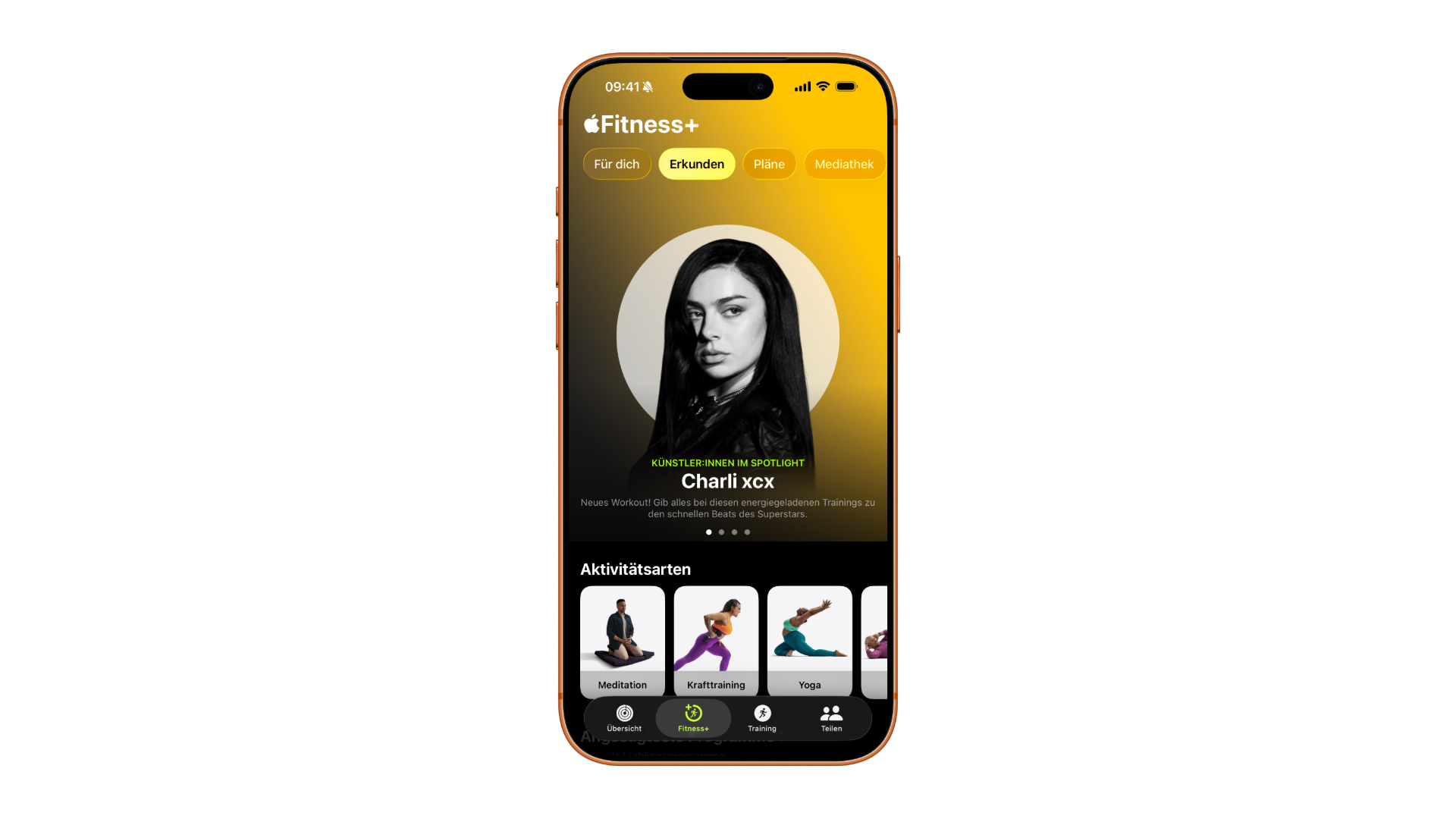
For a device whose only output channel is voice, a convenience feature becomes a fundamental requirement. If you're training in Germany, Austria, or Switzerland, the quality of this synthetic voice prompt determines whether fitness glasses are useful or not—far more so than any sensor detail. In retrospect, Apple's decision to resolve the synchronization issue only two years before the expected launch of the glasses may have been a necessary step in the right direction.
Apple's health strategy is leaving the wrist
Over the course of two years, Apple's health sensors have been migrating from the wrist to the ear and potentially further to the head. The report doesn't describe a finished feature, but rather a personnel decision – the most reliable aspect being that the first generation of Apple Glasses will not be affected.
The question of when the glasses themselves will be launched remains the primary one. Apple has not confirmed either the product or the health plans.
The Bloomberg newsletter Power On is considered the single most reliable source for product roadmaps in the Apple sphere, but here it uses a job posting as evidence – which reveals something about intentions, but nothing about a date. (Image: Apfelpatient)
- AirPods with cameras: Second version expected this year
- iPhone 18 Pro: Up to $300 price increase expected
- iOS 27: Five expected features are still missing in the beta