
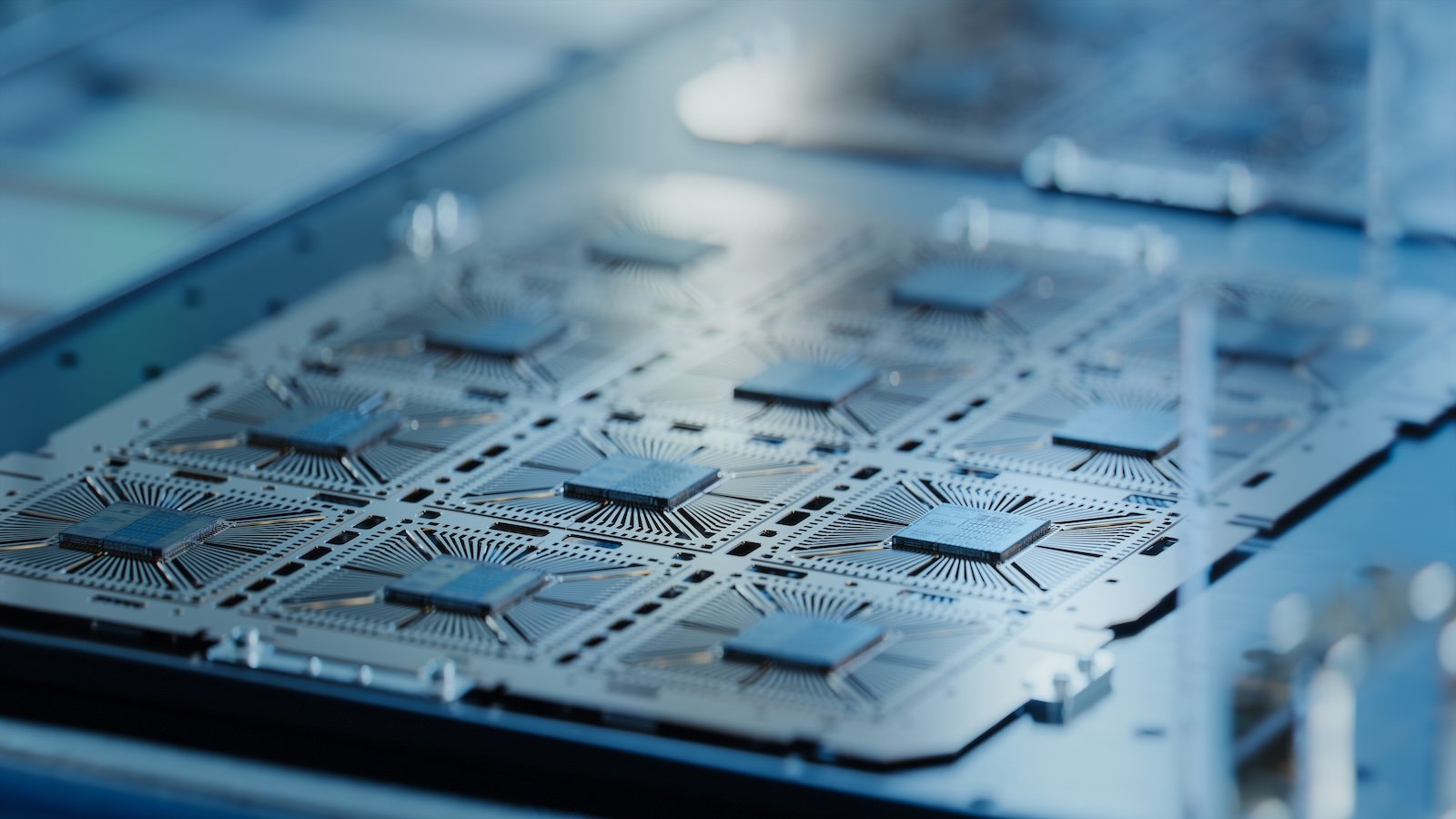
According to a report in the Wall Street Journal, Apple is considering whether to discontinue relying exclusively on TSMC for the production of all its chips. This would call into question a central pillar of its current strategy. Since 2014, Apple has relied solely on the Taiwanese chip giant for the production of its A-series and later M-series processors. Now, alternatives are being considered - especially for chips in the lower performance segment.
Chip production is a key component of Apple's control over its own product quality and performance. The company's in-house developed system-on-a-chip solutions - such as the A-series for the iPhone or the M-series for Mac and iPad - are considered a significant competitive advantage. However, Apple remains dependent on external manufacturers. And with the balance of power in the semiconductor industry currently shifting dramatically, Apple appears to be exploring ways to secure its position.
TSMC in focus – and increasingly busy
TSMC (Taiwan Semiconductor Manufacturing Company) has reliably supplied Apple for many years. However, the company is now under intense pressure from new major customers like Nvidia, who require enormous capacities for AI chips. Nvidia is said to have now overtaken Apple as TSMC's largest customer.
Apple's supply chain is therefore considering whether it would make sense to have some less powerful processors - not necessarily the flagship chips - manufactured by a different company in the future. This consideration primarily concerns the more affordable chips, such as those from the A-series, which are used in non-Pro iPhones.
Intel as a potential new partner
While the report doesn't name a specific company, several analysts believe Intel is a candidate. Jeff Pu of GF Securities stated some time ago that he expects a manufacturing partnership between Intel and Apple starting in 2028 - at least for certain non-Pro iPhone models.
According to reports, Intel could take over production of parts of the A21 or A22 chips for future iPhones. Intel is also apparently an option again for Macs and iPads. Ming-Chi Kuo of Tianfeng Securities says that Intel is expected to begin manufacturing the lowest-performing M-series chip for select devices starting in mid-2027. This is expected to utilize Intel's 18A process.
- The important point is that Intel would only be responsible for manufacturing. Unlike in the past, when Apple used Intel x86 processors in Macs, the chip design is now entirely Apple's own. The architecture itself remains unchanged - control over the final product stays completely in Cupertino.
Diversification for strategic reasons
A potential switch to Intel, or a second manufacturing partner alongside TSMC, would have less to do with technical dissatisfaction than with strategic planning. The boom in AI servers is causing manufacturers like TSMC, Samsung, and SK Hynix to increasingly allocate their production capacities to other major customers - often at better prices than Apple is willing to pay.
Pressure is mounting, particularly regarding RAM and NAND flash for servers. According to sources, Apple is already facing rising prices. Samsung and SK Hynix reportedly now have enough market power to enforce higher prices. For Apple, this is a clear signal to strengthen its supply chain - especially in light of potential future bottlenecks.
Impact on margins and prices
Apple CEO Tim Cook explained in a conference call with analysts that rising memory prices had only a "minimal impact" on gross margins last quarter. However, the company expects a "somewhat greater impact" in the current quarter. Apple intends to explore various options for managing this.
Despite these challenges, Apple reported record revenue of $143.8 billion last quarter - a 16 percent increase year over year. The company expects further growth of between 13 and 16 percent for the current quarter, with a projected gross margin of 48 to 49 percent.
According to analyst Ming-Chi Kuo, there will be no price increases for the iPhone 18 series despite rising costs.
Apple plans to increase flexibility in its supply chain
Apple is not facing a return to old structures, but rather a controlled opening of its own production line. Chip development will remain in-house, but new approaches could be taken in production. Intel would no longer be the technology provider, but purely a manufacturing partner - a clear difference from the previous Intel Mac era.
What's emerging is not a departure from TSMC, but a deliberate expansion of options. In an increasingly volatile chip industry, this is less a reaction than a precautionary step. Apple is hedging its bets - technically, logistically, and economically - without losing control over quality. (Image: Shutterstock / IM Imagery)
- Studio Display Update planned: Here's what we know so far
- Apple is moving towards more subscriptions and upsells
- iPhone Fold: Leak promises exceptional battery life
- iPhone Flip: Apple's answer to the Galaxy Z Flip and Razr?
- CarPlay Ultra is expected to launch in new cars by 2026
- MacBook Pro with M5 Pro and Max: Release likely in February
- Apple pushes ahead with Siri expansion despite staff losses
- Apple is planning a new Siri with Google – Claude almost got the chance.
- Apple changes iPhone strategy and splits the release cycle
- iPhone 18 Pro: New camera leaks regarding aperture and zoom
- Apple keeps iPhone 18 prices stable despite rising storage costs
- iPhone Fold forces Samsung to develop new foldables
- iPhone Air 2: Leak reveals new details about Face ID hardware
- Apple is planning its next chip: Will the M6 arrive sooner than expected?
- Tim Cook in focus: Resignation rumors and Apple's plans
- Apple plans to deeply integrate Siri into core apps in the future
- A new MacBook Pro generation is expected, but not immediately
- Apple will reveal new Siri features in just a few weeks
- Apple plans to manufacture some of its own chips with Intel
- iPhone 18 Pro: This is how much the new Dynamic Island is shrinking
- Apple Design under new leadership: John Ternus in focus
- iPhone Rumors 2027: All-Screen Later Than Expected?
- Report: Apple changes AI strategy under Craig Federighi
- Apple Home Hub: New evidence of a rotatable robot base