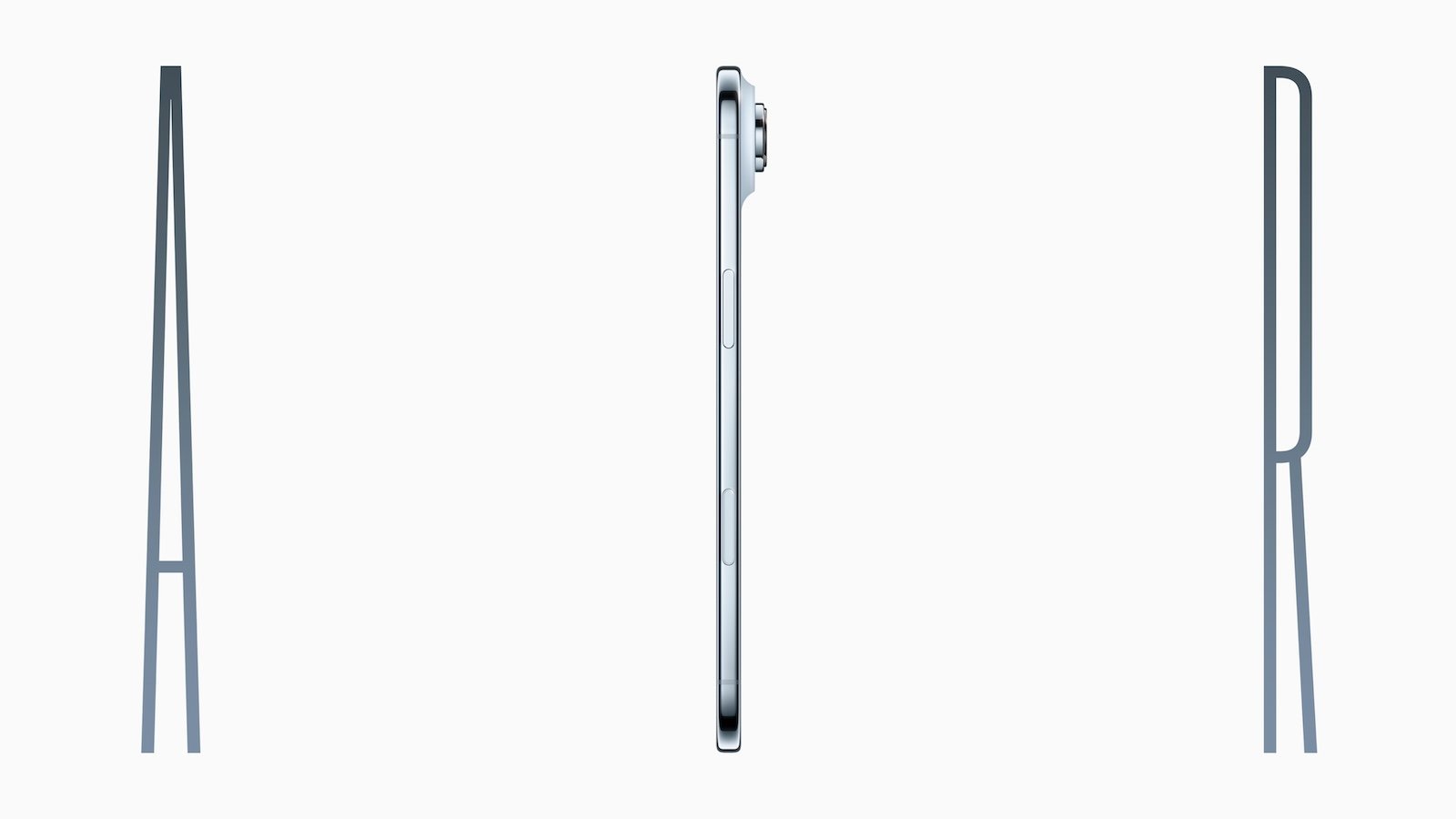
Apple is apparently working on a fundamental overhaul of its Face ID hardware. The goal is to make the module significantly thinner to create more space for additional components in the casing of the upcoming iPhone Air 2. A recent report from a well-known leaker provides new clues as to how Apple might respond to criticism of the first iPhone Air and which technical decisions might play a role.
The iPhone Air polarized opinions with its extremely slim and lightweight design. While its appearance was widely praised, it also drew criticism for its hardware compromises, particularly regarding the camera. With the iPhone Air 2, Apple now seems to be specifically seeking solutions to better combine design and functionality.
Apple is using an ultra-thin Face ID module
According to leaker Instant Digital, who shared his information on the Chinese platform Weibo, Apple is working on significantly more compact Face ID hardware. Reportedly, Apple has asked its suppliers to develop an "ultra-thin" Face ID component. The reason is clear: the current TrueDepth camera system takes up a comparatively large amount of space and limits the possibilities inside the device.
Space for a second camera in the iPhone Air 2
By reducing the size of the Face ID module, the iPhone Air 2 could create space for an additional ultra-wide-angle lens alongside the existing main camera. This is seen as a possible response to user criticism. Many found it problematic that the iPhone Air, despite a price of around $999 / €1,199, only had a single camera. A redesign with two cameras would at least partially address this shortcoming.
Internal challenges posed by the lean design
The iPhone Air's casing is already highly optimized. Several technologies are arranged to maximize battery space. To integrate another camera, Apple would likely have to significantly redesign the internal architecture. Chinese leaker Digital Chat Station stated back in November that Apple is consistently focused on keeping the device ultra-thin and lightweight. This design requirement makes additional hardware solutions technically challenging.
Further information from the supply chain
Shortly after Digital Chat Station's statements, The Information published a report also suggesting that a second camera for the iPhone Air was in development. Taken together, these reports paint a relatively clear picture that Apple intends to functionally enhance the iPhone Air 2 without abandoning the fundamental Air concept.
Comparison with foldable iPhones and Macs
It's interesting to look at other Apple projects. For the iPhone Fold, rumored to be released later this year, Apple is reportedly deliberately foregoing Face ID and instead integrating Touch ID into the side button. The reason is the same: to keep the device as thin as possible. However, further miniaturization of Face ID hardware could eventually lead to future models reverting to facial recognition.
The current leaker even speculates that an ultra-thin Face ID module could one day be used in a MacBook. However, there are currently no concrete rumors about this. Back in 2022, Mark Gurman of Bloomberg reported that Apple had tested Face ID for the iMac. At the time, however, implementation failed because the necessary technology for integrating it into a particularly thin display was not yet available. To date, no Mac has received Face ID integration.
At the same time, an Apple marketing employee also commented, describing Touch ID as more practical because the sensor is closer to the hands. However, this assessment does not rule out the possibility that Apple will incorporate Face ID into Macs in the future, provided the hardware becomes compact enough.
Technical decisions for the iPhone Air 2
Current information doesn't suggest any immediate changes, as the iPhone Air 2 isn't expected until next year. However, reports clearly show that Apple is actively considering how to repackage the Face ID hardware. An ultra-thin solution could pave the way for better cameras and fewer compromises. The iPhone Air 2 would thus address the weaknesses of the first model without losing sight of its core design goals. (Image: Apple)
- Apple is planning its next chip: Will the M6 arrive sooner than expected?
- Tim Cook in focus: Resignation rumors and Apple's plans
- Apple plans to deeply integrate Siri into core apps in the future
- A new MacBook Pro generation is expected, but not immediately
- Apple will reveal new Siri features in just a few weeks
- Apple plans to manufacture some of its own chips with Intel
- iPhone 18 Pro: This is how much the new Dynamic Island is shrinking
- Apple Design under new leadership: John Ternus in focus
- iPhone Rumors 2027: All-Screen Later Than Expected?
- Report: Apple changes AI strategy under Craig Federighi
- Apple Home Hub: New evidence of a rotatable robot base
- Apple plans AI pin: New wearable could arrive in 2027
- iOS 27: Siri becomes a chatbot with deep system access
- Apple is using AI chatbots internally to increase productivity
- iPhone 18: New leak suggests extremely bright display
- iPhone 18 Pro: Smaller Dynamic Island instead of a radical redesign
- iPhone Air 2: Will there be an update in 2026 or not until 2027?
- iPhone 18 Pro: Leaker contradicts rumors about the front camera
- iPhone 18 Pro and Face ID: What Apple is planning for the display
- M5 Max MacBook Pro before release: Performance predictions
- iPhone 18 Pro: New front design with camera on the left?
- MacBook Pro with OLED takes a crucial production step
- iPhone Fold: New details on technology, AI & market strategy
- Apple and TSMC: AI boom puts the chip alliance to the test