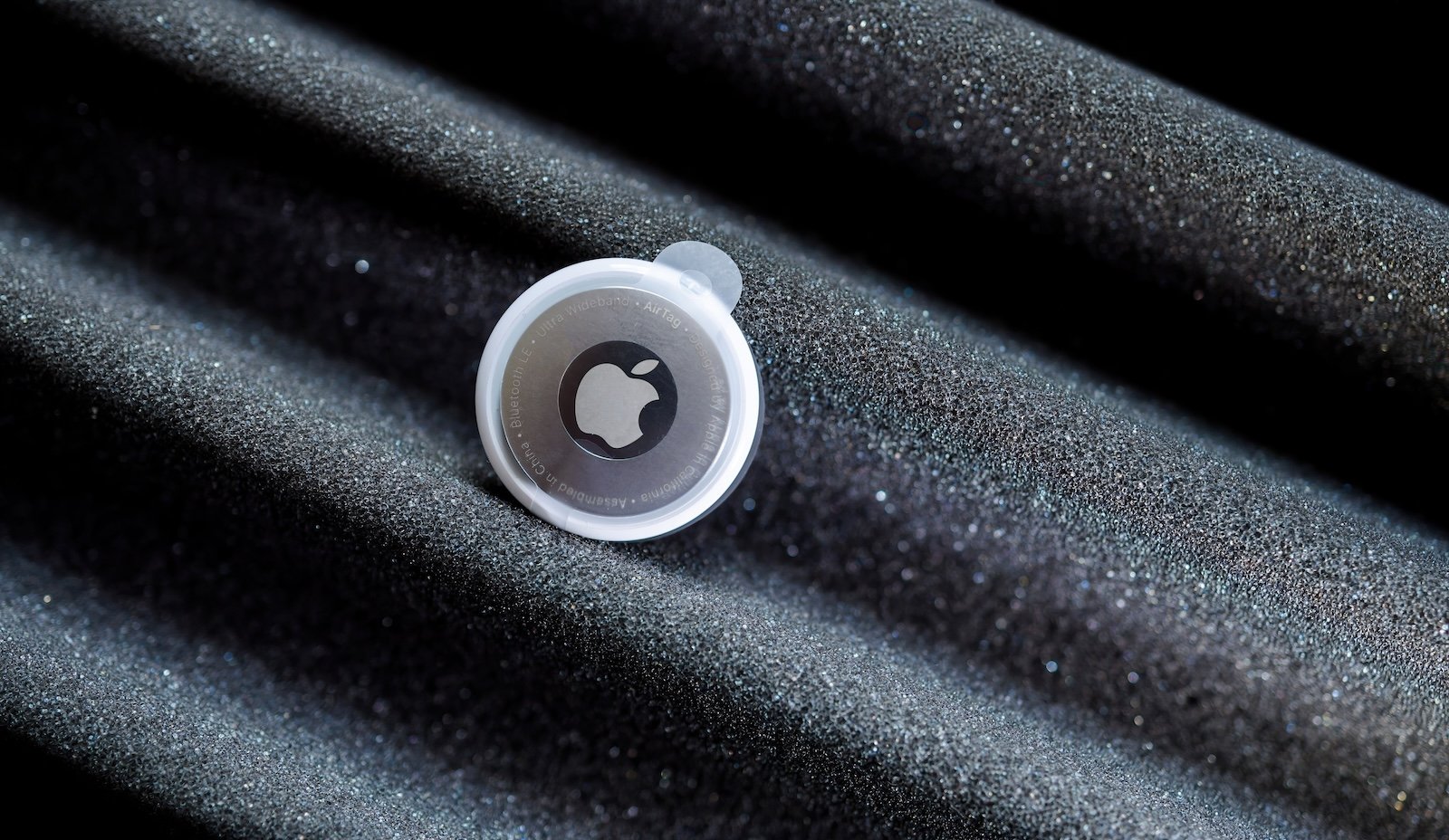
Apple is working on a new wearable device heavily reliant on artificial intelligence. According to a recent report, Apple is developing a small, AI-powered pin, roughly the size of an AirTag, which could be released as early as 2027. While the project is still in its early stages, it already provides concrete clues about Apple's plans in the wearable and AI sectors.
The information comes from a report by The Information. The timing of the release is noteworthy, as Apple is currently in the midst of restructuring its AI strategy. Delays in previous announcements, personnel changes, and new partnerships indicate that Apple is under pressure to catch up in the AI race. In this context, the planned Apple pin is more than just another hardware experiment.
Development status and possible market launch
According to the report, Apple is working on a wearable AI pin, with a planned market launch as early as 2027. At the same time, it is emphasized that development is still in its very early stages and the project could be completely abandoned. Nevertheless, Apple is apparently trying to accelerate the pace to keep up with other providers.
One reason for this is the increasing competition in the field of AI hardware. Particularly relevant here is OpenAI's first wearable, which is reportedly slated for release as early as 2026. Apple wants to avoid being late to the game again in a new product segment.
Design and technical features of the Apple pin
The Apple pin is described as a thin, flat, and round disc made of aluminum and glass. Its size is said to be roughly the same as an AirTag, but slightly thicker. The device will presumably attach magnetically to clothing.
Technically, the pin is extensively equipped for its compact design. Two cameras are located on the front: a standard lens and a wide-angle lens. These are designed to capture photos and videos of the wearer's surroundings. They are complemented by three microphones that record ambient sounds.
Additionally, the pin features an integrated speaker, a physical button on one of the edges, and a magnetic, inductive charging interface on the back. This charging method is similar to the system Apple already uses in the Apple Watch.
Unclear integration with other Apple products
It remains unclear how the Apple pin would fit into the existing Apple ecosystem. The report clarifies that no decision has yet been made regarding whether and how the device will work with other products such as AirPods or a potentially planned pair of Apple smart glasses. Specific use cases or operating concepts are also currently unknown.
Difficult market for AI wearables
The report explicitly points out that the market for AI pins is considered difficult. The failure of the startup Humane is cited as an example. The company, founded by two former Apple employees, launched its own AI pin in 2024.
This device, which used a small projector to display content onto the user's palm, faced massive criticism. Among the complaints were slow response times and poor battery life. According to reports, fewer than 10,000 units were sold. Parts of Humane were eventually sold to HP for $116 million.
This example shows that even innovative concepts in the field of AI wearables are not a sure thing and must meet high technical requirements.
Apple's realignment in the AI sector
The potential Apple pin is emerging at a time when Apple is reorganizing its AI efforts. After years of struggling to deliver on the AI promises made at WWDC 2024, the company's former head of AI, John Giannandrea, left the company.
Shortly thereafter, Apple announced a partnership with Google. The goal is to use Google's AI model Gemini as the basis for the new Siri, as well as other functions in the area of Apple Intelligence.
In parallel, Bloomberg reported that Apple is working on a fundamental overhaul of Siri. The plan is to replace the current interface with a true chatbot experience, which could be introduced with iOS 27.
The Apple pin as part of a larger AI realignment
The planned AI pin demonstrates that Apple continues to work on new hardware concepts in the AI field despite setbacks. The potential market launch starting in 2027 leaves plenty of room for changes, both technical and strategic. At the same time, the report makes it clear that Apple faces considerable competitive pressure and operates in a challenging market segment. Whether the Apple pin will actually be released and successful remains to be seen, but it clearly fits into Apple's current realignment around artificial intelligence. (Image: Shutterstock / Hadrian)
- iOS 27: Siri becomes a chatbot with deep system access
- Apple is using AI chatbots internally to increase productivity
- iPhone 18: New leak suggests extremely bright display
- iPhone 18 Pro: Smaller Dynamic Island instead of a radical redesign
- iPhone Air 2: Will there be an update in 2026 or not until 2027?
- iPhone 18 Pro: Leaker contradicts rumors about the front camera
- iPhone 18 Pro and Face ID: What Apple is planning for the display
- M5 Max MacBook Pro before release: Performance predictions
- iPhone 18 Pro: New front design with camera on the left?
- MacBook Pro with OLED takes a crucial production step
- iPhone Fold: New details on technology, AI & market strategy
- Apple and TSMC: AI boom puts the chip alliance to the test
- iPhone 17e: Dynamic Island is coming, display remains at 60 Hz
- iOS 26.4 could significantly improve Apple Notes
- iPhone Fold: Liquid metal hinge and titanium casing
- iPhone 18 Pro: Leak suggests major changes to the display
- Apple could unveil a high-end MacBook Pro on January 28th
- Apple is hit by the AI boom: Important chip components are in short supply worldwide
- Apple optimizes Gemini for Siri even without Google branding
- Apple Glasses: How the niche market finally becomes a mass market
- Apple and AI: Partnership with Google as a transitional solution
- Apple is preparing new AI server chips and data centers
- Apple, AI and TSMC: Why the balance of power is changing
- iPhone 2027: Why the anniversary model will be less radical
- iPhone Fold paves the way for a thinner display in the iPhone Air 2