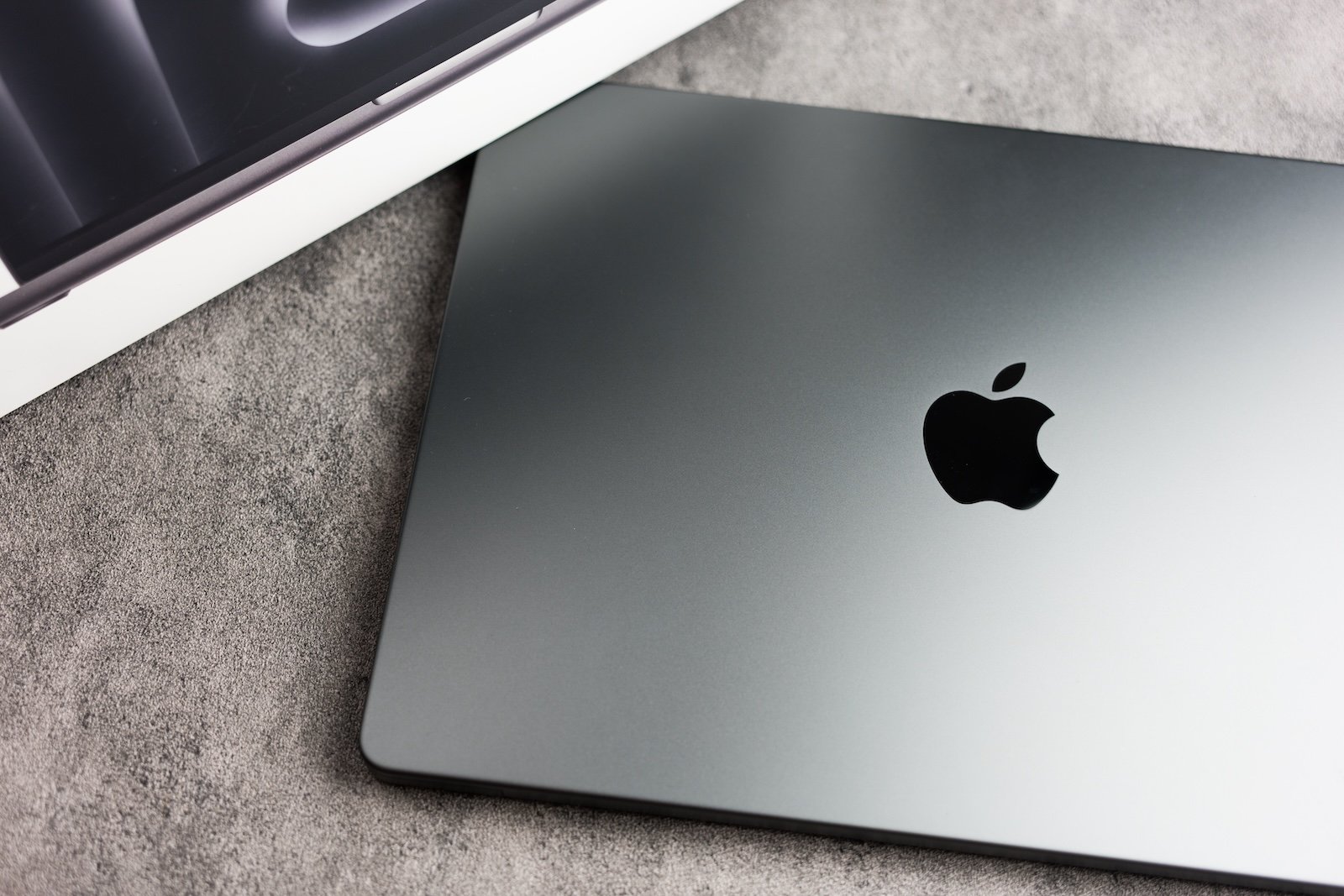
A major technological leap is on the horizon for the MacBook Pro. Apple has been working on a transition from Mini-LED to OLED for some time, and new information indicates that this project is now becoming significantly more concrete. The launch of a dedicated production line for OLED laptop displays is considered a clear signal that the development is no longer in an early concept phase, but is moving towards a later market launch.
The display is one of the most important features of the MacBook Pro. It influences image quality, energy consumption, device height, and ultimately the entire design. While OLED technology has long been established in smartphones and tablets, its use in laptops was technically complex and expensive for a long time. These hurdles now appear to be overcome, paving the way for an OLED MacBook Pro.
Samsung Display starts new OLED production
The panels for the upcoming MacBook Pro are expected to be manufactured by Samsung Display. The company has invested heavily in a new 8.6-generation OLED production line. This line is located at its factory in Asan, South Korea, and is specifically designed for larger displays such as laptop screens.
An 8.6G factory uses significantly larger glass substrates than OLED lines for smartphones. This allows multiple laptop-sized panels to be cut from a single sheet of glass. This improves yield and reduces production costs. This is precisely the crucial point if OLED is to replace Mini-LED in the MacBook Pro in the future without driving prices up further.
Technical details of the OLED panels
The new production line is designed for rigid OLED panels with oxide TFT backplanes. It also utilizes a modern tandem OLED structure. This design is particularly suitable for laptops and offers several advantages over conventional single-stack OLED panels.
These include higher brightness, improved energy efficiency, and a longer display lifespan. These features are particularly important for a high-performance notebook like the MacBook Pro, where high display brightness and long battery life are expected simultaneously.
Start of production as an indication of series production readiness
According to the well-known Naver blog account yeux1122, Samsung has already begun producing panels from this new line. This suggests that Apple and other potential customers have completed the necessary qualification and reliability tests. Typically, such production only starts once the technology is stable enough for mass production.
Touchscreen and thinner design
Analyst Ming-Chi Kuo predicts that Apple's first OLED MacBook Pro will also feature a touchscreen display. This statement was later confirmed by Mark Gurman, reporting for Bloomberg.
Additionally, there is talk of thinner and lighter display bezels. Apple is reportedly focusing on developing the slimmest possible device without compromising battery life or important new features. OLED plays a key role here, as this technology allows for a more compact display design than Mini-LED.
New camera cutout in the display
The redesigned 14-inch and 16-inch MacBook Pro models are also expected to feature a punch-hole camera at the top of the display. This could be housed in a pill-shaped cutout, similar to the Dynamic Island design of the iPhone. This would mark Apple's departure from the notch solution that MacBook Pro users are currently accustomed to.
Schedule and upcoming chips
According to Mark Gurman, the OLED models of the MacBook Pro will be equipped with new M6 chips. The market launch is currently expected in late 2026 or early 2027. However, Apple plans another update to the current generation before then.
New 14-inch and 16-inch MacBook Pro models with M5 Pro and M5 Max chips are expected soon. While two major updates within a year would be unusual, there is a precedent. Apple also updated the MacBook Pro lineup twice in 2023, first with the M2 Pro and M2 Max in January, and later with the M3, M3 Pro, and M3 Max in October.
OLED changes the design and operation of the MacBook Pro
The OLED MacBook Pro is getting noticeably closer. The start of panel production, the use of tandem OLED technology, and the planned design changes show that Apple is preparing a comprehensive generational shift. OLED is expected not only to improve image quality but also to enable thinner devices, new user interfaces like touchscreens, and a modernized design language. Everything indicates that the MacBook Pro will undergo one of the biggest transformations since the introduction of Apple Silicon in the coming years. (Image: Shutterstock / Dontree_M)
- iPhone Fold: New details on technology, AI & market strategy
- Apple and TSMC: AI boom puts the chip alliance to the test
- iPhone 17e: Dynamic Island is coming, display remains at 60 Hz
- iOS 26.4 could significantly improve Apple Notes
- iPhone Fold: Liquid metal hinge and titanium casing
- iPhone 18 Pro: Leak suggests major changes to the display
- Apple could unveil a high-end MacBook Pro on January 28th
- Apple is hit by the AI boom: Important chip components are in short supply worldwide
- Apple optimizes Gemini for Siri even without Google branding
- Apple Glasses: How the niche market finally becomes a mass market
- Apple and AI: Partnership with Google as a transitional solution
- Apple is preparing new AI server chips and data centers
- Apple, AI and TSMC: Why the balance of power is changing
- iPhone 2027: Why the anniversary model will be less radical
- iPhone Fold paves the way for a thinner display in the iPhone Air 2
- iPhone with 200 megapixels? Leaker tempers expectations
- Apple is exploring multispectral imaging for iPhone cameras
- iPhone 18: Apple breaks with its annual release schedule
- iPhone 17e: Mass production is expected to start soon
- Apple remains calm on AI and could ultimately win
- iPhone Fold: This is what Apple's first foldable is supposed to look like, according to leaks
- iPhone 18: This is how expensive Apple's new A20 chip will be
- iPhone Air 2: New evidence contradicts previous rumors
- The iPhone 18 will be the first to feature camera sensors manufactured in the US
- iPhone Fold: Apple continues testing a fold-free display