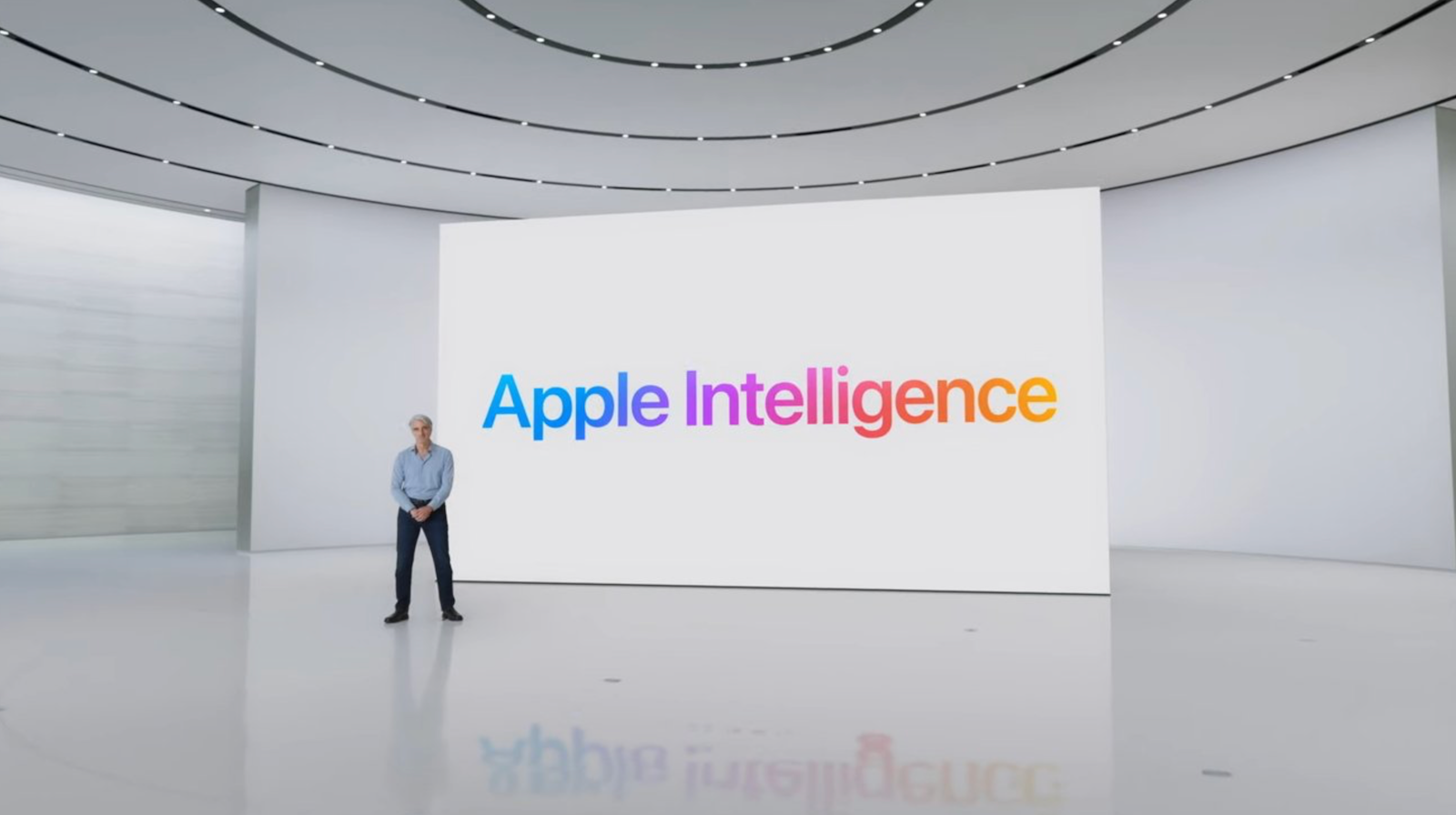
Apple is realigning its artificial intelligence strategy. After years of internal delays, responsibilities conflicts, and cautious decisions, AI is moving more sharply into focus for the software organization. At the heart of this realignment is Craig Federighi, who has now assumed direct responsibility for the AI direction. Particular emphasis is placed on the future of Siri and the use of external AI models within the Apple ecosystem.
A detailed report by The Information reveals how significantly Apple's stance on artificial intelligence has shifted over the past year. Apple is partially abandoning its ambition to develop all AI technologies in-house, instead relying on a combination of its own models and external solutions. This change of course is the result of internal insights, technological limitations, and increasing competitive pressure.
Federighi takes the lead in the AI field
Last fall, Craig Federighi addressed a joint meeting of Apple's software and AI teams. While he emphasized the importance of closer collaboration, he also expressed significant dissatisfaction with the slow pace of progress in AI. Within the Foundation Models team, these statements were interpreted by some as direct criticism of their own work.
In December, Apple officially consolidated its AI leadership under Federighi. Responsibility for Siri was separated from the existing AI group and fully integrated into the software organization. This move completed a transition that had begun at the start of the year and reorganized internal responsibilities.
External AI models as a means to an end
In January, Apple announced that it would also use external AI models in the future. These include Google Gemini, which is intended for future AI upgrades. This decision also affects a redesigned version of Siri.
Federighi believes that by using a third-party model, Apple will be able to release a significantly improved version of Siri this year for the first time. Previously, this update was internally controversial and postponed. Integrating external AI is now seen as a pragmatic solution to catch up on development delays.
Cost awareness shapes Apple's AI strategy
Internally, Federighi is described as very cost-conscious. He views investments with unclear returns with skepticism. This attitude clearly distinguishes Apple from competitors like OpenAI, Meta Platforms, and Google, which invest billions in data centers, specialized chips, and AI research.
Apple, on the other hand, is pursuing a more conservative approach. High infrastructure costs are to be avoided by running AI functions as directly on the devices as possible. This is complemented by Apple's private cloud compute architecture, which is based on Apple's own silicon hardware. Internally, the assumption was apparently that the costs for AI computing power and skilled personnel would decrease in the long term and that many use cases could be solved locally.
Skepticism towards unpredictable AI
Federighi was long critical of artificial intelligence. He preferred deterministic software behavior that could be clearly defined, tested, and precisely described during design reviews. He considered AI difficult to predict and only partially controllable.
This stance was also evident in concrete product ideas. He rejected proposals to dynamically rearrange the iPhone home screen using AI. His reasoning was that such automatic changes would irritate users rather than help them.
Previous internal tensions surrounding AI
Tensions over the direction of Apple's AI strategy had existed for years prior. Around 2019, Mike Rockwell, head of Vision Pro development, proposed a more AI-driven user interface. Rockwell criticized Federighi's software approach as too conservative and was reprimanded internally for it.
Nevertheless, in early 2025, Rockwell took over responsibility for Siri and has since reported directly to Federighi. This personnel decision shows that Apple now assesses past disagreements more pragmatically.
Rethinking after the release of ChatGPT
A crucial turning point was the release of ChatGPT at the end of 2022. After conducting his own experiments, Federighi recognized the potential of large language models. Subsequently, he instructed his teams to investigate similar functionality for Apple products.
It became clear that Apple's internal models, primarily optimized for use on devices, did not achieve the necessary performance. At the same time, members of the Foundation Models team felt unfairly treated, as they were held responsible for optimization problems that, in their view, fell within the purview of the software organization.
Furthermore, some team members complained that they had not been sufficiently informed about how their models were to be used in practice. This lack of transparency weakened internal development compared to external alternatives.
Proprietary AI models remain part of long-term planning
Despite its partnership with Google, Apple plans to continue developing its own AI models. The focus is primarily on efficient, compact models for running on Apple hardware. External models will be miniaturized and optimized to run better on iPhones, iPads, and Macs, thereby reducing reliance on third-party providers in the long term.
To achieve this goal, Apple is reportedly also considering acquiring smaller AI companies that specialize in model compression and optimization.
Apple's new middle ground in artificial intelligence
Apple is now pursuing a significantly more pragmatic approach to artificial intelligence. Under the leadership of Craig Federighi, Apple is combining external AI models with its own development to deliver results faster while maintaining control over costs, privacy, and user experience. This realignment demonstrates Apple's willingness to reconsider previous positions without completely abandoning its core principles. (Image: Apple)
- Apple Home Hub: New evidence of a rotatable robot base
- Apple plans AI pin: New wearable could arrive in 2027
- iOS 27: Siri becomes a chatbot with deep system access
- Apple is using AI chatbots internally to increase productivity
- iPhone 18: New leak suggests extremely bright display
- iPhone 18 Pro: Smaller Dynamic Island instead of a radical redesign
- iPhone Air 2: Will there be an update in 2026 or not until 2027?
- iPhone 18 Pro: Leaker contradicts rumors about the front camera
- iPhone 18 Pro and Face ID: What Apple is planning for the display
- M5 Max MacBook Pro before release: Performance predictions
- iPhone 18 Pro: New front design with camera on the left?
- MacBook Pro with OLED takes a crucial production step
- iPhone Fold: New details on technology, AI & market strategy
- Apple and TSMC: AI boom puts the chip alliance to the test
- iPhone 17e: Dynamic Island is coming, display remains at 60 Hz
- iOS 26.4 could significantly improve Apple Notes
- iPhone Fold: Liquid metal hinge and titanium casing
- iPhone 18 Pro: Leak suggests major changes to the display
- Apple could unveil a high-end MacBook Pro on January 28th
- Apple is hit by the AI boom: Important chip components are in short supply worldwide
- Apple optimizes Gemini for Siri even without Google branding
- Apple Glasses: How the niche market finally becomes a mass market
- Apple and AI: Partnership with Google as a transitional solution
- Apple is preparing new AI server chips and data centers