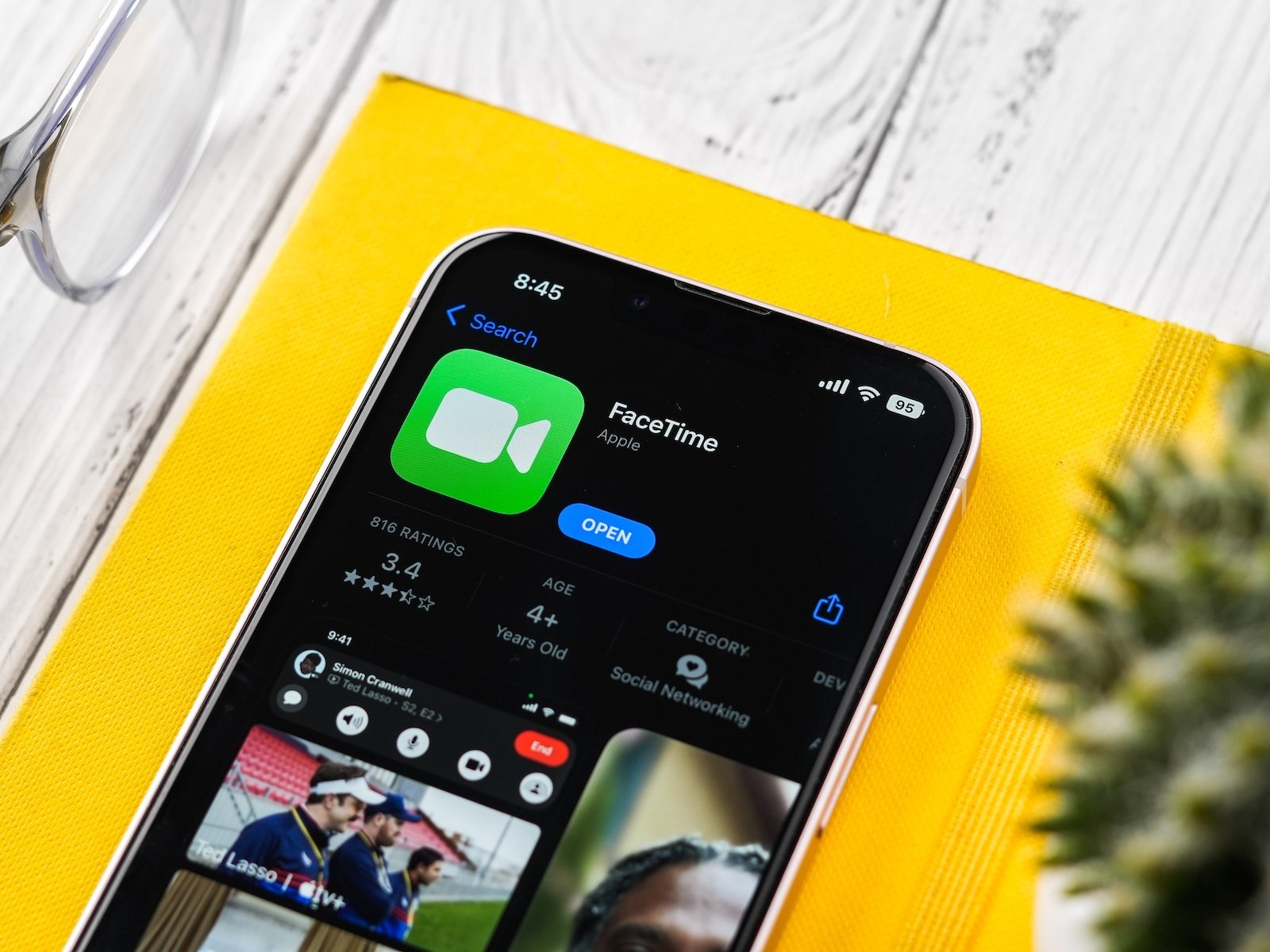
Apple is once again facing a patent lawsuit in Europe. This time, it concerns a software feature that appears inconspicuous at first glance but plays a central role in video calls. Specifically, Apple is accused of infringing a European patent for gaze correction with its FaceTime "Eye Contact" feature. The lawsuit was filed with the Unified Patent Court and is the latest in a series of similar cases involving the same patent holder.
Patent disputes have been a part of Apple's daily business for years. These usually revolve around large technologies or hardware components, such as sensors or medical functions. However, there are also cases where comparatively small software details become legally relevant. This is precisely the case here. Although it concerns a single function within FaceTime, the legal battle could be strategically and economically significant for Apple.
The current legal dispute before the EU Court
On December 5th, a lawsuit was filed against Apple before the Unified Patent Court. The plaintiff is EyesMatch Ltd. According to the company, Apple is infringing European patent EP2,936,439. IP Fray was among those reporting on this.
In parallel to the lawsuit against Apple, EyesMatch is also taking action against Nvidia. In both cases, the company is relying on the same patent and identical technical assumptions.
What the patent is about
The patent is entitled "Method for Capturing and Displaying Appearances." It describes methods for processing camera images that are displayed to the user in real time. Such methods can be used, among other things, for virtual mirrors, for example with makeup effects or other visual adjustments.
A key component of the patent is the targeted modification of the eye area. The goal is to manipulate the gaze direction so that the user appears to be looking straight ahead to others, even if the camera is positioned slightly above or to the side of the display due to technical limitations. This creates the impression of direct eye contact for conversation partners, which is perceived as more natural and personal, especially during video calls. This very eye adjustment is the core of the accusations that EyesMatch is leveling against Apple.
The Eye Contact feature in FaceTime
Apple introduced the "Eye Contact" feature in FaceTime with iOS 14. This feature utilizes augmented reality technologies from the Apple ecosystem. It recognizes the user's face and eyes and digitally adjusts them so that their gaze appears to be directed straight ahead on the screen.
Technically, the user's gaze is slightly shifted, so that it appears to the other person as if the user is looking directly into the camera. In practice, this means that the actual viewing angle to the camera is no longer decisive, but rather the image generated by the software. EyesMatch sees this as a direct implementation of its patented technology.
Possible implications for Apple Vision Pro
The report also mentions that the patent could theoretically be applied to the Apple Vision Pro. The headset relies heavily on eye tracking and the processing of gaze directions.
However, this product has so far played a minor role in the specific legal dispute. From EyesMatch's perspective, FaceTime fits the described patent claims much more closely, which is why the proceedings are currently focused clearly on this function.
Who is EyesMatch?
EyesMatch Ltd is considered a patent exploitation company. Such companies are often also referred to as non-practicing entities or patent trolls. They do not develop end products themselves, but focus on holding, licensing, and, if necessary, enforcing patents in court.
EyesMatch's portfolio includes numerous patents in the field of image processing. These include virtual and digital mirrors, digital makeup mirrors, augmented reality applications, object extraction techniques, and other real-time image processing methods.
The principal developers of the patents are Nissi Vilcovsky and Ofer Saban. Both are founders of EyesMatch and the affiliated company MemoMi Lab Inc. Most of the inventions date back to the late 2000s and early 2010s. The patent in dispute was filed in December 2013, granted in February 2020, and is expected to expire in December 2033.
Previous proceedings against other tech companies
Patent EP2,936,439 has already been the subject of several hearings before the Unified Patent Court. In May 2025, a case was brought against Samsung, followed by another against Microsoft in June 2025.
In both cases, the companies reached agreements with EyesMatch. Worldwide patent licensing agreements were concluded. In Samsung's case, the settlement followed a preliminary injunction in Brazil. In Microsoft's case, the settlement was based on European court proceedings. Google is also involved in a legal dispute with EyesMatch, which is still ongoing.
Why a settlement is likely for Apple
The patent is registered in ten European countries, including the UK, Germany, France, and Italy. The possibility of preliminary injunctions in large markets like Germany, France, and Italy could be particularly problematic for Apple. Even the threat of such measures can exert considerable pressure.
Another factor is cost. In connection with the settlement with Microsoft, the amount in dispute was stated in the court order as approximately €2 million. While the actual payment for a worldwide license was likely higher, it remains manageable for a company like Apple.
Against this background, it might be more economically advantageous for Apple to reach an out-of-court settlement rather than investing time and resources in a lengthy legal process and risking higher penalties.
Apple FaceTime: When seemingly secondary features become a point of contention
This case demonstrates how quickly even minor software features can become a legal issue for Apple. The Eye Contact function in FaceTime is at the center of a patent that has already led to settlements involving other major tech companies. Whether Apple will follow the same path or continue the legal battle remains to be seen. What is clear, however, is that even seemingly insignificant features can acquire considerable importance within the complex European patent system. (Image: Shutterstock / sdx15)
- Apple faces a protracted dispute over fall detection
- iPhone 17 Pro: Tests dispel concerns about discoloration
- Apple clearly prevailed against market trend in China in 2025
- Firehound analyzes app store apps with serious data leaks
- WhatsApp Web: Voice & video group calls are coming soon
- Threads is gaining mobile users and leaving X behind
- OpenAI is specifically preparing for its first hardware launch in 2026
- New MacBook Pro update on the horizon? Delivery times as a hint
- Apple: Lisa Jackson retires after 13 years
- Apple Music shows trailers for the Super Bowl LX Halftime Show
- Apple opens new Sainte-Catherine Store in Montreal
- ChatGPT introduces affordable subscription and tests advertising
- Apple ignores deadlines and angers Indian authorities
- Korea rejects Elon Musk's motion in dispute against Apple
- Gemini Personal Intelligence offers insights into the future of Siri
- Apple Display discovered: New model appears in database
- Apple is redesigning Siri and entering into a billion-dollar deal with Google
- Forecasts and expectations for Apple's Q1 2026 results
- Subscriptions as a growth engine of the global app economy
- Apple Card: The reasons for the end with Goldman Sachs
- Apple Manzano demonstrates progress in multimodal image AI
- Final Cut Pro: New features even without Apple Creator Studio?
- Apple Creator Studio: Icons clearly indicate the subscription version
- Apple Card impacts JP Morgan and causes profit decline