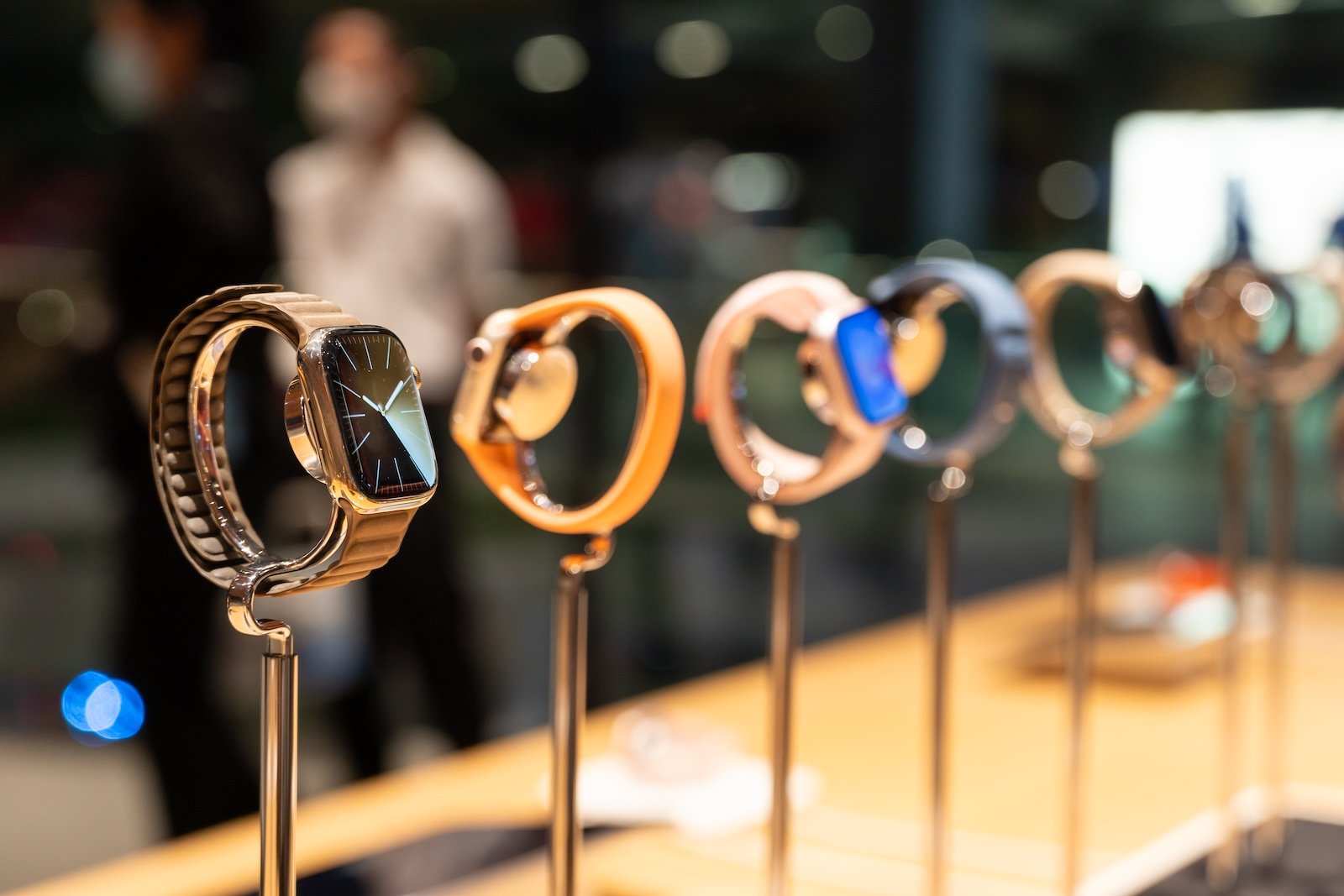
Apple is facing another legal battle over the Apple Watch. This time, the focus is on fall detection, a feature that has been touted as a safety-relevant characteristic for years. The US company UnaliWear accuses Apple and several other manufacturers of infringing on patents related to fall detection. The dispute could be protracted and incur significant costs.
Legal disputes are nothing new for Apple in connection with the Apple Watch. In the past, there have been lawsuits from traditional patent holders, but also from companies that develop their own products. The conflict with the medical technology company Masimo is particularly well-known. Masimo prevailed in court and was awarded $634 million after the International Trade Commission concluded that Apple had infringed patents and trade secrets in the field of pulse oximetry.
The case even led to a temporary sales ban on certain Apple Watch models in the US. Apple responded by disabling the affected feature. It later reappeared without any public explanation of how the legal hurdles were circumvented. This background is important for understanding the significance of UnaliWear's current complaint.
UnaliWear's complaint
UnaliWear, a company based in Austin, Texas, has officially filed a complaint with the USITC. The complaint alleges that the fall detection feature of the Apple Watch, as well as virtually all current smartwatches, infringes on existing UnaliWear patents. In addition to Apple, the complaint also names Google, Samsung Electronics, and Garmin as potential targets.
In the Samsung case, both the South Korean parent company and its US subsidiary are affected. The complaint names three Garmin subsidiaries in different countries. UnaliWear argues that all these manufacturers use technologies that are protected by their own intellectual property rights.
The original complaint was filed on December 12, 2025. Amendments followed on December 31, 2025, and January 5, 2026. The basis for the complaint is Section 337 of the Customs Act of 1930. This section governs violations of intellectual property rights and gives the ITC the power to prohibit the import of products into the U.S. if they infringe patents or contain components that infringe such patents.
Current status of the proceedings
The ITC's announcement is initially a declaration of intent to initiate an investigation. Specific details regarding the individual patent claims or the technical implementation of the alleged infringements have not yet been published. The ITC has requested that Apple and the other accused companies respond to the allegations within 20 days.
At present, none of the companies involved have publicly commented on the complaint. Whether a formal investigation and subsequent sanctions will be imposed remains to be seen.
The Kanega Watch and the business model of UnaliWear
UnaliWear was founded in 2013 and produces a line of smartwatches under the name Kanega Watch. The retail price is $299. An additional annual subscription of $779.40 is required. This subscription is part of the business model and is intended to cover services and monitoring, among other things.
The Kanega Watch's key selling point is its fall detection feature. This very function is now at the heart of the legal dispute. UnaliWear is therefore not a patent troll, but an active manufacturer with its own products on the market.
In this respect, the company is in direct competition with the Apple Watch, at least when it comes to fall detection and triggering emergency calls. UnaliWear's website features comparison charts that portray their watch as clearly superior. However, some of these claims seem dubious. For example, they assert that the Kanega Watch offers three ways to call for help: by pressing a button, by voice, or via fall detection, while the Apple Watch supposedly lacks this capability. This claim hardly stands up to closer scrutiny.
The lack of a touchscreen is also cited as an advantage over the Apple product, which is more a question of the target group than an objective advantage.
Parallels and differences to the Masimo case
The Masimo case demonstrates how unpredictable such legal proceedings can be. Masimo's patents were significantly more specific, yet it only achieved success after a lengthy legal battle. The company obtained a temporary import ban on the Apple Watch in the US and a substantial damages award, but also incurred enormous costs.
To date, Masimo has spent over $100 million on legal fees. Furthermore, the patents remain the subject of legal disputes and could still be invalidated. Therefore, even after an apparent victory, the outcome is not final.
In comparison, UnaliWear's patents are considered less precisely formulated. This could complicate enforcement and make the dispute more dependent on the interpretation of the intellectual property rights.
The late timing of the lawsuit
It's striking that UnaliWear is only now taking legal action. The Apple Watch Series 4 introduced fall detection back in 2018. Theoretically, UnaliWear could have sued back then. The fact that the company waited eight years suggests that other avenues were explored beforehand. These could have included discussions, licensing negotiations, or other out-of-court settlements.
Whether that was actually the case will likely only become clear in the course of the proceedings, if there is even a comprehensive legal dispute.
Apple is the focus of another ITC lawsuit
The dispute over fall detection presents Apple with another legal challenge that could drag on for years. At the same time, UnaliWear is taking a significant financial risk, as proceedings before the ITC and potential subsequent lawsuits are extremely costly. The Masimo case demonstrates that even a victory does not automatically guarantee legal certainty.
It is currently unclear whether there will be an import ban, a settlement, or a complete dismissal of the complaint. What is certain is that the issue of fall detection and intellectual property will continue to occupy the wearables market. By 2026 at the latest, it should become clearer what consequences this new patent dispute will actually have for Apple and the other manufacturers. (Image: Shutterstock / Wongsakorn 2468)
- iPhone 17 Pro: Tests dispel concerns about discoloration
- Apple clearly prevailed against market trend in China in 2025
- Firehound analyzes app store apps with serious data leaks
- WhatsApp Web: Voice & video group calls are coming soon
- Threads is gaining mobile users and leaving X behind
- OpenAI is specifically preparing for its first hardware launch in 2026
- New MacBook Pro update on the horizon? Delivery times as a hint
- Apple: Lisa Jackson retires after 13 years
- Apple Music shows trailers for the Super Bowl LX Halftime Show
- Apple opens new Sainte-Catherine Store in Montreal
- ChatGPT introduces affordable subscription and tests advertising
- Apple ignores deadlines and angers Indian authorities
- Korea rejects Elon Musk's motion in dispute against Apple
- Gemini Personal Intelligence offers insights into the future of Siri
- Apple Display discovered: New model appears in database
- Apple is redesigning Siri and entering into a billion-dollar deal with Google
- Forecasts and expectations for Apple's Q1 2026 results
- Subscriptions as a growth engine of the global app economy
- Apple Card: The reasons for the end with Goldman Sachs
- Apple Manzano demonstrates progress in multimodal image AI
- Final Cut Pro: New features even without Apple Creator Studio?
- Apple Creator Studio: Icons clearly indicate the subscription version
- Apple Card impacts JP Morgan and causes profit decline
- Apple Arcade will significantly expand its offerings in February 2026