
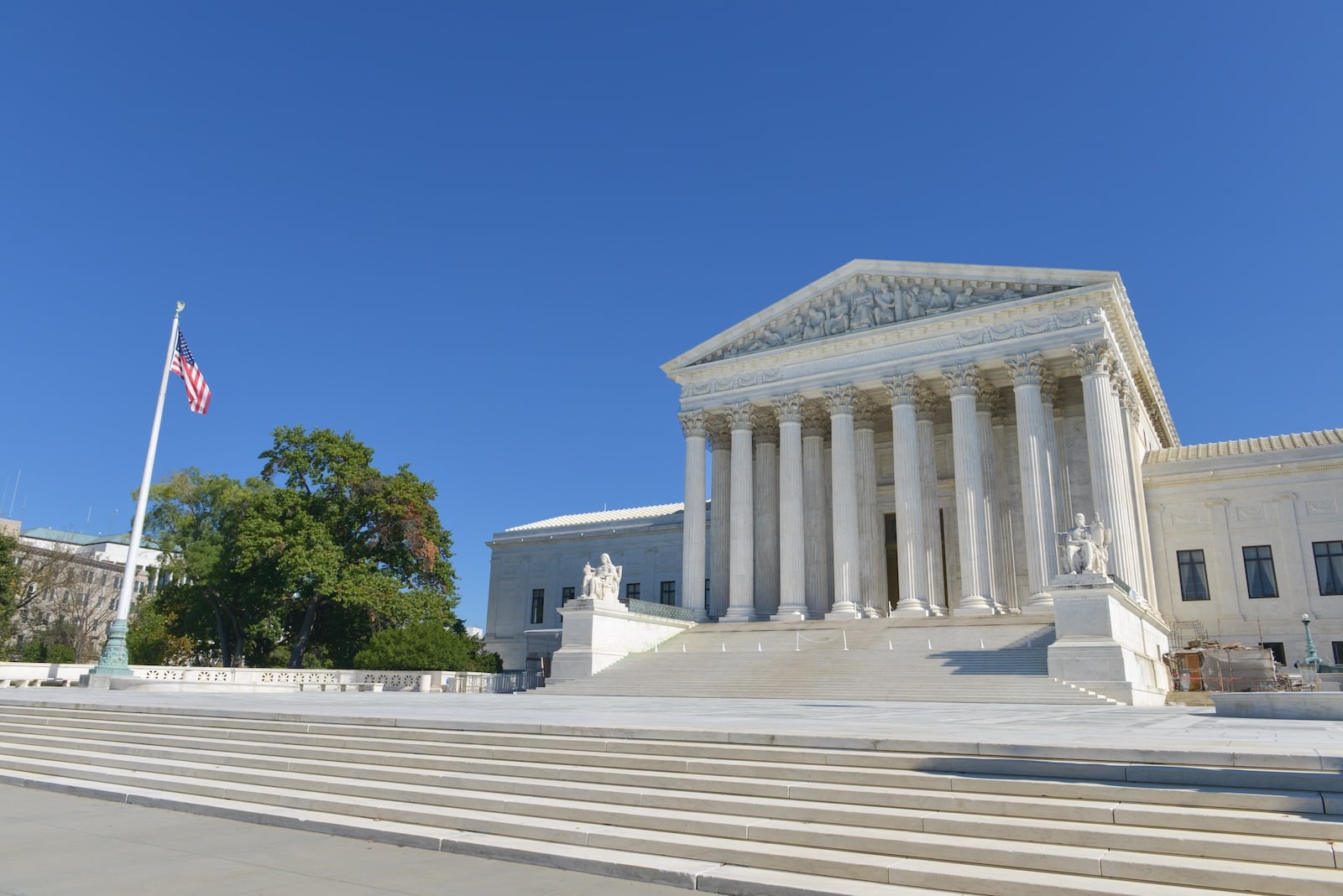
On May 4, 2026, Apple filed an emergency motion directly with the US Supreme Court. The company wants to prevent a US federal court from setting a commission rate for third-party purchases in the App Store in the coming weeks, before the Supreme Court has decided whether to even accept the case.
This move is the latest escalation in a legal battle that has been fundamentally challenging the App Store's business model for over five years. After the Ninth Circuit Court of Appeals recently overturned Apple's request for a stay of proceedings, the only remaining avenue is Washington. Apple argues that without this stay, "irreparable damage" threatens – with global repercussions.
At its core, the case boils down to a single question: Is Apple allowed to charge a commission on purchases made by users via external links within iOS apps – and if so, how much? This question runs through all instances of the Apple v. Epic Games case, which began in 2020 with the controversial removal of Fortnite from the App Store. What started as a dispute between two companies has now become a precedent with repercussions far beyond the US.
What Apple is now demanding
In its emergency motion, Apple is asking the Supreme Court to suspend the proceedings to determine a reasonable commission until the court decides whether to hear the case at all. Apple's reasoning is clear: If the commission rate were determined in federal court without this suspension, the company would have to publicly debate the foundations of its business model - and, according to Apple, under the shadow of a contempt-of-court ruling that Apple itself considers legally vulnerable.
Specifically, Apple raises two arguments. First, it argues that irreparable damage is likely because the proceedings would lead to the disclosure of confidential business information. This information cannot be retrieved once it becomes part of the case file. Second, regulators worldwide are monitoring the proceedings – any commission rate set in the US could serve as a benchmark for other markets. Apple warns that courts would be slipping into a kind of "rate-setting" to which they are not legally entitled.
The road to a legal dead end
To understand the current situation, it's worth looking at the stages of the legal proceedings. In 2021, Federal Judge Yvonne Gonzalez Rogers ruled that Apple had to relax its so-called anti-steering rules. Developers should be allowed to direct users to alternative payment options outside the app. Apple complied with this order - but with a 27 percent commission on such external purchases, which made the model practically unattractive for developers.
In April 2025, the court ruled that Apple had violated the spirit of the original order - a contempt of court ruling. Apple was prohibited from charging any fees on link-based purchases. Apple immediately appealed and failed in June 2025 with an emergency stay of execution.
In December 2025, the appeals court issued a mixed ruling: The violation of the original order was upheld, but the appeals court deemed the lower court's complete ban on commissions excessive. Apple is, in principle, entitled to compensation for the use of its intellectual property. The case was remanded to the federal court to determine an appropriate commission rate. Apple now seeks to suspend precisely this process.
Apple's second argument: The scope
In addition to the issue of commissions, Apple's motion aims to leverage another legal argument: the scope of the original order. The company argues that the injunction should only apply to Epic Games, and not to all developers in the US App Store. Apple cites the Supreme Court ruling in Trump v. Casa, which established that courts cannot issue orders that exceed what is necessary to remedy the specific harm suffered by a plaintiff.
If the Supreme Court accepts this argument, not only the commission rate but the entire scope of the app store opening in the US would be up for debate. Competitors like Spotify, Microsoft, or Amazon, who have benefited from the order so far, could then find themselves outside its scope.
Why this process has global impact
Apple's reference to international scrutiny is more than just rhetorical exaggeration. The proceedings have already left their mark far beyond the US. The EU, through its Digital Markets Act, has enforced similar interventions in the App Store model – including a €500 million fine in April 2025 for persistent anti-steering practices. Regulators in Brazil and Japan are also implementing their own regulations.
A US ruling on the specific commission rate would not only regulate the domestic market but also serve as an international benchmark. This is precisely Apple's concern: a low commission rate in the US could increase pressure in other markets to enforce similar rates.
A high-stakes procedure
Apple's motion is the next step in a conflict that fundamentally challenges the App Store's business model. Back in 2020, Apple explicitly warned its investors of the potential financial consequences of lowering commissions. Today, more than five years later, this very scenario is closer than ever.
Whether the Supreme Court will accept the request remains to be seen. In 2024, the court rejected a joint appeal by Apple and Epic. This time, however, a different legal argument is at stake – namely the Contempt ruling and the scope of the injunction. The coming weeks will determine whether Apple gains more time – or whether the federal court will soon establish a commission rate that will shape the App Store's business model for a long time to come.
Cupertino's last card
Apple has exhausted almost every legal option during the proceedings. The emergency appeal to the Supreme Court is its last remaining card to halt the proceedings at the federal level. Should the appeal fail, Federal Judge Gonzalez Rogers would decide on the amount of commission in the coming weeks—in a case that Apple could hardly stop. Thus, more than just a procedural matter hangs in the balance before the Supreme Court. It is the decision about how much control Apple can retain in one of its most important business areas. (Image: Shutterstock / Orhan Cam)
- The iPhone 17 is the world's best-selling smartphone
- iOS 26.5 RC prepares for sideloading in Brazil
- OpenAI brings ChatGPT for Intune to the App Store
- Apple confirms end-to-end encryption for RCS in iOS 26.5
- iOS 26.5 Release Candidate: Final version is imminent
- Mac shortages persist: Hope rests on TSMC's 2-nanometer chips
- Apple unveils the new Pride Collection 2026
- Apple escalates dispute with India's antitrust authority
- WhatsApp is working on Liquid Glass for the chat interface
- Apple Hearing Study: New insights into hearing health
- Apple discontinues 256GB version of the Mac mini
- Tim Cook cites five reasons for the iPhone 17's success
- Apple CFO hints at delay in next iPad
- Apple Q2 2026 Earnings Call: The most important details and division figures
- Apple applies for customs refunds – and plans reinvestment in the USA
- Apple Q3 2026: Guidance promises double-digit growth
- China business: Cook explains why Apple is gaining ground again
- John Ternus: First earnings call appearance as Apple's designated CEO
- iPhone 17: Apple's most popular lineup ever
- Mac lineup is booming: Cook confirms supply shortage of the Mac mini
- iPhone 17: Tim Cook speaks of demand "off the charts"
- Apple Q2 2026: Record quarter with $111.2 billion in revenue
- iPhone 17 Pro and iPhone Air: Charging problem after completely empty battery