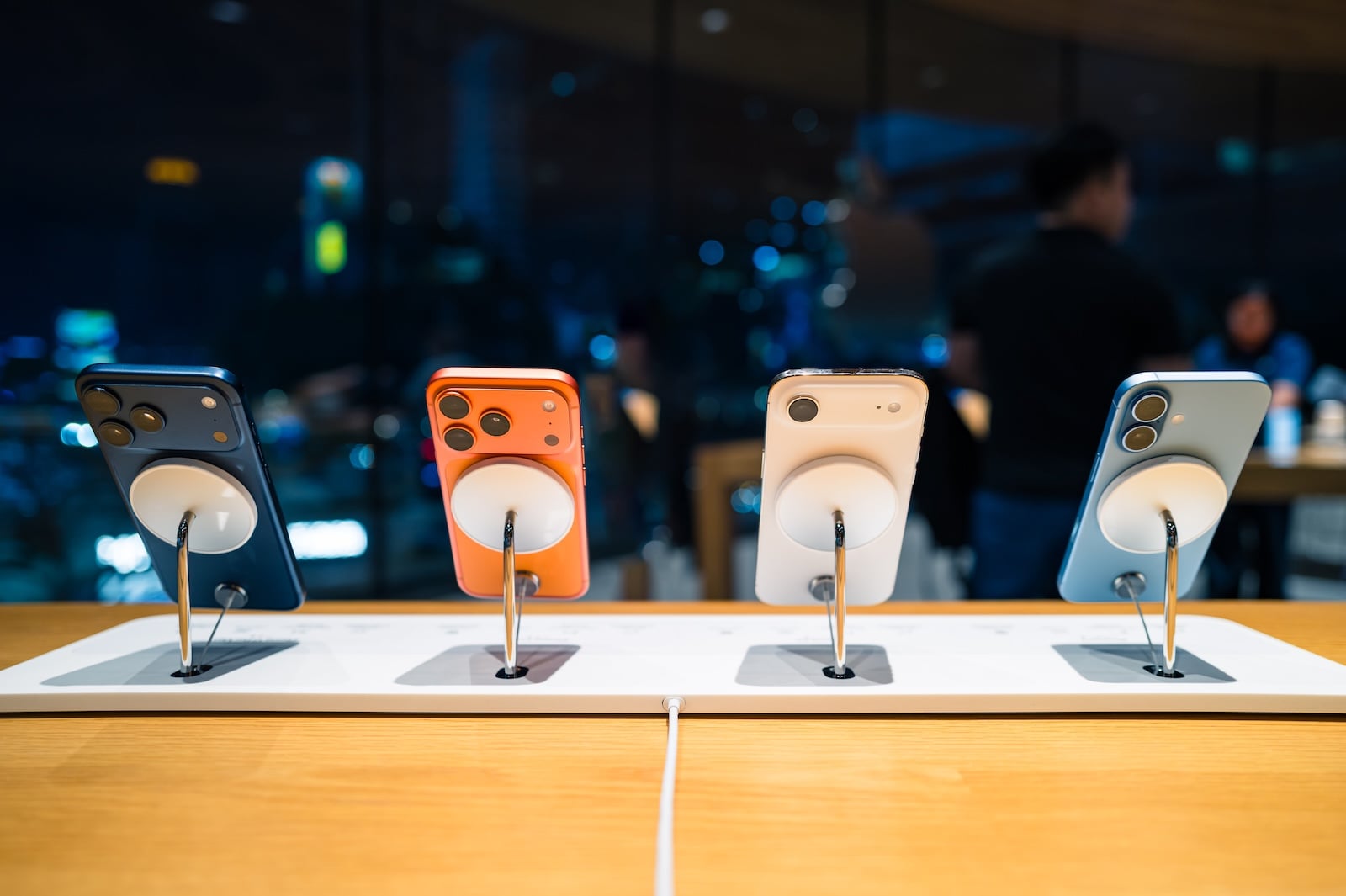
The iPhone 17 Pro, iPhone Air, and iPhone 17 appear to be experiencing a recurring charging issue: If the battery is completely drained, the device often won't recharge via USB-C cable. We've summarized what's known so far – and a workaround in an emergency.
The process is actually quite simple: dead iPhone battery, plug in the cable, wait a moment, the red battery symbol appears, and the device restarts. However, for a growing number of users of the current iPhone generation, this isn't happening – the display remains black, the symbol is missing, and even after several minutes plugged in, nothing changes. What initially appeared to be a faulty power adapter or a broken wall socket is apparently turning out to be a systemic problem.
Where the problem first arose
The issue was brought to light by Benjamin Mayo of 9to5Mac. He described how his iPhone Air stopped charging via USB-C after reaching zero percent battery. Despite the cable being plugged in, the display showed neither the familiar red battery symbol nor any other sign of life. Mayo then researched the issue in forums and found similar reports – including on Reddit and iFixit Answers, where users described the same behavior.
Shortly afterward, Joe Rossignol of MacRumors also confirmed that he had experienced the bug on his own iPhone 17 Pro Max. His device had switched off overnight in the hotel, and the next morning it didn't respond to either the power outlet or various chargers. It was only by chance that he stumbled upon the crucial clue.
Which models are affected?
As things stand, the phenomenon affects all three models of the 2025 generation:
- iPhone 17 Pro (and iPhone 17 Pro Max)
- iPhone Air
- iPhone 17 (standard model)
It's currently impossible to say with any certainty how widespread the problem actually is. There are no official figures, and by no means every device exhibits the behavior. Some users report that their iPhones restart without any issues – others are left with completely unresponsive devices. This makes the bug difficult to pinpoint: it doesn't occur reliably, but rather seems to happen randomly.
The MagSafe trick as a last resort
Both Mayo and Rossignol independently found the same workaround: simply use a MagSafe charger instead of USB-C. After about 10 to 15 minutes on the MagSafe charging pad – this also works with a MagSafe power bank when you're on the go – the iPhone revives and begins charging normally. Afterward, the USB-C cable can be used again without any problems.
It's unclear exactly why MagSafe circumvents the problem. It's possible that the charging electronics initialize the USB-C port differently than the inductive charging pad when the battery is completely discharged – and that's precisely where the issue lies with affected devices. Apple has not yet issued an official statement.
iOS updates have not solved the problem
The software aspect is interesting: the problem apparently persists even after the latest iOS updates. Neither iOS 26.4.1 nor the recently released iOS 26.4.2 have fixed the bug. Apple has so far neither commented on the issue nor announced which upcoming update might include a fix. However, since the issue is now receiving significantly more attention due to media coverage, it's likely only a matter of time before Apple reacts – either with a software patch or an official statement.
What you can do now
For affected users, there are currently two sensible strategies:
Prevention: Don't let the battery drain completely in the first place. It sounds obvious, but it's currently the simplest way to protect yourself. If you regularly experience battery life issues, our guide on iPhone battery draining quickly will provide specific tips for battery optimization. For generally slow charging, take a look at our guide on iPhone charging slowly.
In an emergency: If your iPhone 17, 17 Pro, or iPhone Air no longer responds to USB-C after a completely depleted battery, place it on a MagSafe charger for 10 to 15 minutes. A MagSafe power pack will also suffice. Only then will the device reliably respond to any form of power again.
It's Apple's turn
As long as Apple doesn't release an official patch, the bug remains a real nuisance – especially for frequent travelers who rely on a working charging solution while on the go. That MagSafe works reliably as a workaround is fortunate. However, for a premium device like the iPhone 17 Pro or iPhone Air, which costs well over €1,000, this workaround shouldn't be the permanent solution. We expect Apple to address the problem with one of the next iOS updates – and we will report on an official fix as soon as it's available. (Image: Shutterstock / Wongsakorn 2468)
- Apple AI is testing multiple solutions in parallel
- Satellite smartphones: Apple clearly dominates the market
- Ternus needs to decide on iPhone prices and US production early
- Apple vs. Epic Games: Appeals Court lifts suspension
- Apple TV receives six nominations at the Gotham TV Awards
- UBS raises price target for Apple – shortly before the quarterly results
- Apple Vision Pro: First cataract surgery worldwide successful
- Claude is getting nine new connectors for creative tools
- Ted Lasso Season 4: Starts August 5 on Apple TV
- Apple TV: Survey of subscribers on content and sports
- App Store: New monthly subscriptions with a 12-month commitment are coming
- Severance: Adam Scott knows the ending and promises surprises
- iOS 26.5 Beta 4: Apple concludes the testing phase
- John Ternus on Apple Services: "So many opportunities" for growth
- Why September 1st is crucial for Ternus' CEO start
- Will the next entry-level iPad be called the "iPad Neo"?
- Ternus speaks about Vision Pro: „We are only at the beginning“
- Apple TV wins two Peabody Awards 2026
- GPT-5.5 is here: OpenAI introduces a "new intelligence class" for ChatGPT and Codex
- Perplexity CEO: AI will make the iPhone more important, not obsolete
- Apple's entry-level Mac mini is sold out
- Apple Maps was Cook's "first big mistake" – Apple Watch his pride and joy
- OpenAI introduces ChatGPT Images 2.0 with Thinking capabilities